


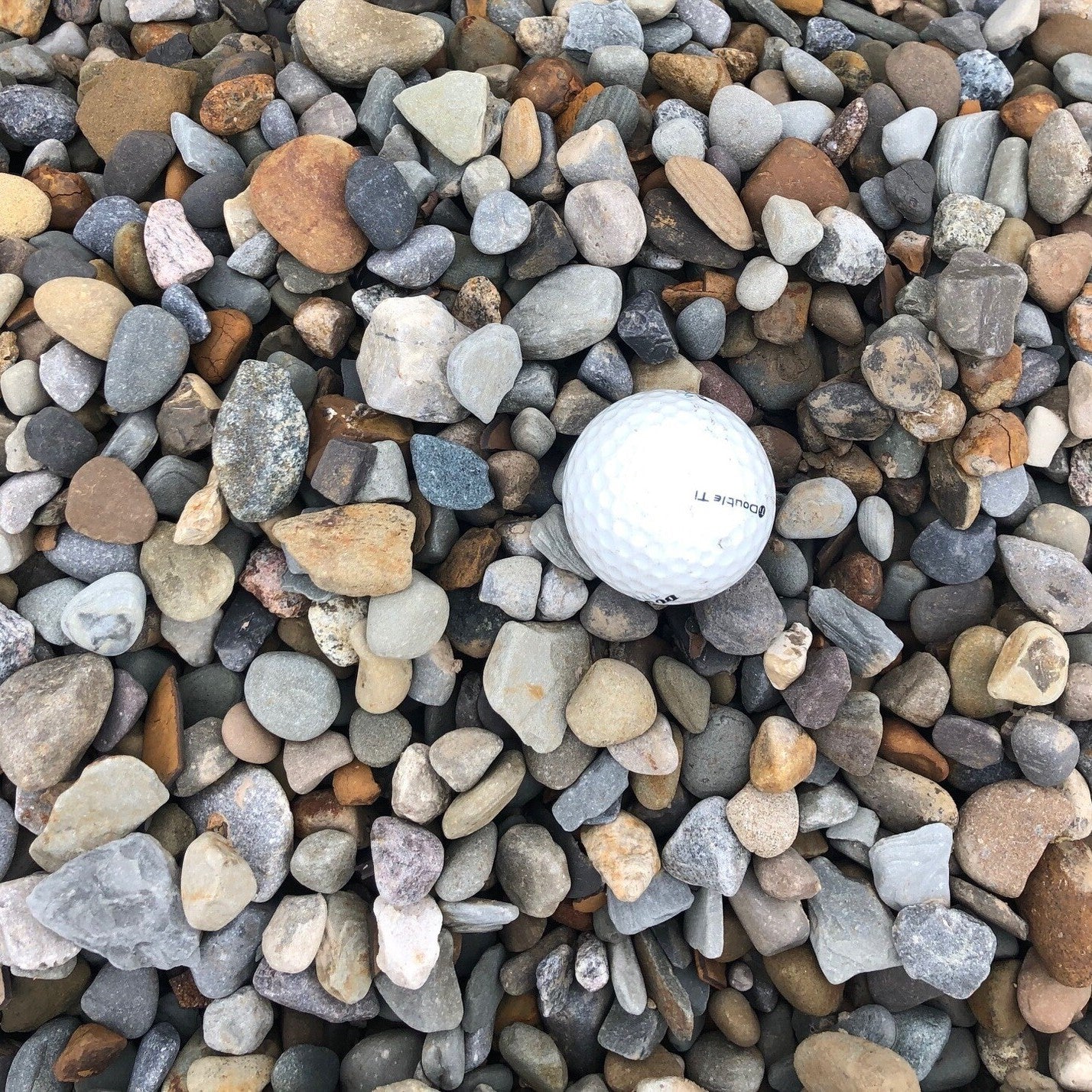

The driver nailed it on putting the gravel I ordered in front of my trailer and between the sidewalk. Very satisfied with how my flowerbeds look now.
About this stone
Number 57 crushed stone, angular limestone graded to about three quarters of an inch. The standard driveway, base and drainage gravel, it locks together under traffic and drains fast.
The driver nailed it on putting the gravel I ordered in front of my trailer and between the sidewalk. Very satisfied with how my flowerbeds look now.
Tell us what you're looking for
Thanks! We received your request.
Something went wrong. Please try again.
How Much Material Do I Need?
How Much Material Do I Need?
For most decorative stone applications in Ames, a 2 to 3 inch depth over landscape fabric provides adequate weed suppression and visual coverage. Drainage features like dry creek beds and French drain backfill require deeper placement, typically 4 to 6 inches, to handle the water volume that Ames spring rain events can generate across clay loam terrain.
Use our free gravel calculator
What is a ton?
What is a ton?
FAQs
FAQs
Ames Gravel Delivery
Ames Gravel Delivery
Regular price
$133.00
per
ton
Regular price
Sale price
$133.00
Unit price
per
Shipping calculated at checkout.
Minimum of 3 ton
Couldn't load pickup availability
Not currently available
We can't take orders for this right now. Tell us what you need and we'll get back to you.
Hand-picked local yards
4,000+ regional deliveries
Dedicated support
Why order through Mulch Mound
The best local stone, without the guesswork.
We hand-pick and partner with the best yards in your region, keep only the ones our buyers rate well, and back each load with our guarantee.
Mulch Mound Guarantee
If your stone isn't the quantity or quality you ordered, we'll make it right.
About this stone
Number 57 crushed stone, angular limestone graded to about three quarters of an inch. The standard driveway, base and drainage gravel, it locks together under traffic and drains fast.
The driver nailed it on putting the gravel I ordered in front of my trailer and between the sidewalk. Very satisfied with how my flowerbeds look now.
How Much Material Do I Need?
How Much Material Do I Need?
For most decorative stone applications in Ames, a 2 to 3 inch depth over landscape fabric provides adequate weed suppression and visual coverage. Drainage features like dry creek beds and French drain backfill require deeper placement, typically 4 to 6 inches, to handle the water volume that Ames spring rain events can generate across clay loam terrain.
Use our free gravel calculator
What is a ton?
What is a ton?
FAQs
FAQs
Tell us what you're looking for
Thanks! We received your request.
Something went wrong. Please try again.
How It Works
Getting started is easy — just follow these simple steps
1
Choose your stone
Make sure you adjust the quantity to your home's needs. You can use our calculator to estimate how much you'll need.
2
Select your delivery date
Select a delivery date you'd like for the product to be dropped off at your home
3
Sit back and wait
Sit back, wait, and let us work our magic to make sure the highest quality product is delivered to your driveway.

ordering was smooth and easy. couldn't be happier

Product quality was outstanding and the customer service was amazing
Need Help Calculating How Much Gravel You Need?
Use our NEW Trace from Satellite tool to get an estimate for your project based on an aerial view of your property
Try Our CalculatorMeasure your project area length and width in feet, then multiply to get square footage. For a 2-inch stone depth, divide by 162 to get cubic yards. For a 3-inch depth, divide by 108. Because Ames clay loam compresses slightly under stone weight during the first season, many homeowners order 10 to 15 percent extra material to account for settling and top off thin areas after the ground stabilizes.
Stone Types We Deliver in Ames
When you need bulk stone by the yard in Ames, Mulch Mound delivers cubic yard quantities straight to your property for residential and commercial projects alike. Whether you are improving drainage in Iowa's clay-heavy soil, building a decorative ground cover, or creating a dry creek bed, the right stone makes a lasting difference. We keep the process straightforward so your project gets moving faster.
1-2" River Stone
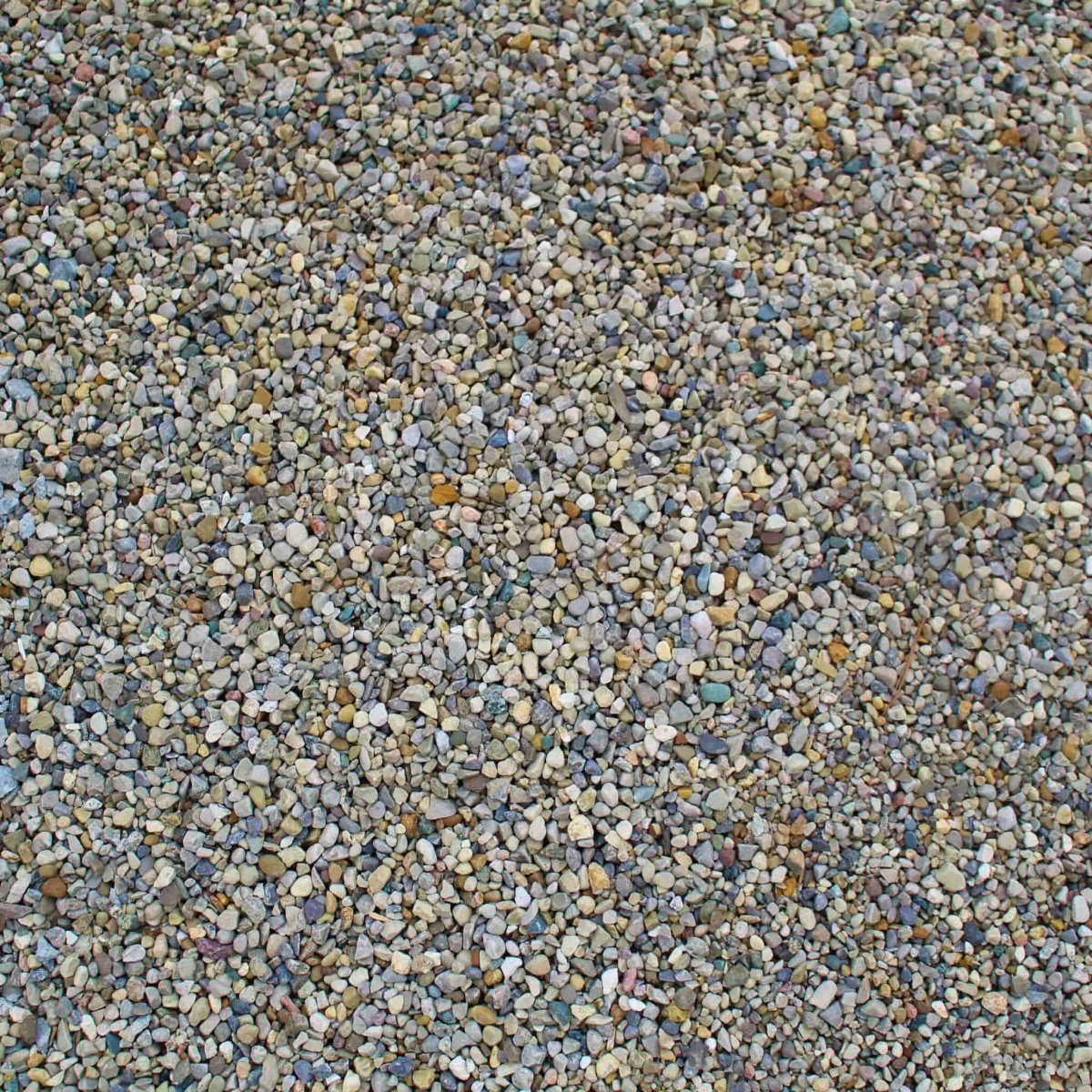
These smooth, rounded stones measure one to two inches across and bring a polished, natural look to decorative beds, dry creek channels, and feature landscaping. In Ames, where spring rain and flat terrain can send water pooling across yards, river stone is a practical and attractive way to guide runoff away from foundations and plantings.
Complete Your Outdoor Stone Project
Stone borders pair naturally with bulk mulch in adjacent planting beds, creating a defined edge that reduces weed migration and eliminates the muddy transition zones that clay loam Ames yards commonly develop along bed borders. Adding topsoil to regrade low areas before placing stone ensures a stable, level surface that minimizes settling and shifting through central Iowa winters.



Service area
Areas we deliver stone and gravel in Ames, Iowa
Mulch Mound Pro Tip
Ames clay loam stays soft and pliable well into May after wet springs, which makes it tempting to rush stone installation before the soil surface is truly stable. Wait until your yard can support foot traffic without leaving deep impressions before laying stone pathways or borders. Installing stone over saturated clay results in uneven settling and product migration that is very difficult to correct once the ground dries and hardens through summer.
Mulch Mound Pro Tip
Central Iowa winters put significant stress on hardscape transitions between stone and lawn areas through repeated freeze-thaw events. Use steel or aluminum edging buried 3 to 4 inches deep to contain your stone borders through Ames winters. Without a solid physical edge, frost heave gradually pushes stone into adjacent lawn areas each season, requiring annual cleanup and raking that adds up considerably over the life of the installation.
Mulch Mound Pro Tip
With 36 inches of annual rainfall and clay loam soil that drains slowly, Ames properties are well-suited for rain garden features lined with river rock. A shallow depression planted with native Iowa species and rimmed with stone can capture and infiltrate runoff from downspouts and low-lying lawn areas. This approach converts a persistent drainage problem into a functional, attractive landscape feature that reduces the erosion and pooling that affect so many Ames yards throughout the spring season.
The Unique Landscape of Ames
Decorative and utility stone fills a role in Ames landscapes that mulch and soil simply cannot replicate. Properties built on clay loam soil frequently struggle with erosion along slopes, washout near foundation beds after spring downpours, and pathway areas that become muddy and impassable from March through May. Stone provides permanent, low-maintenance coverage that holds up through the full range of Ames weather, from spring thaw and heavy rains to summer heat and the freeze-thaw cycles of a zone 5b winter. River rock and crushed limestone are particularly effective for creating drainage channels and dry creek beds that direct excess water away from foundations and low spots, a common challenge across central Iowa neighborhoods. Pathway stone eliminates the seasonal mud problem along heavily traveled routes between garden beds, garages, and back entries that clay loam creates every spring without fail. With 36 inches of annual rainfall concentrated heavily in spring, Ames homeowners who invest in stone drainage and hardscape features gain significant functional and aesthetic returns that last for decades.