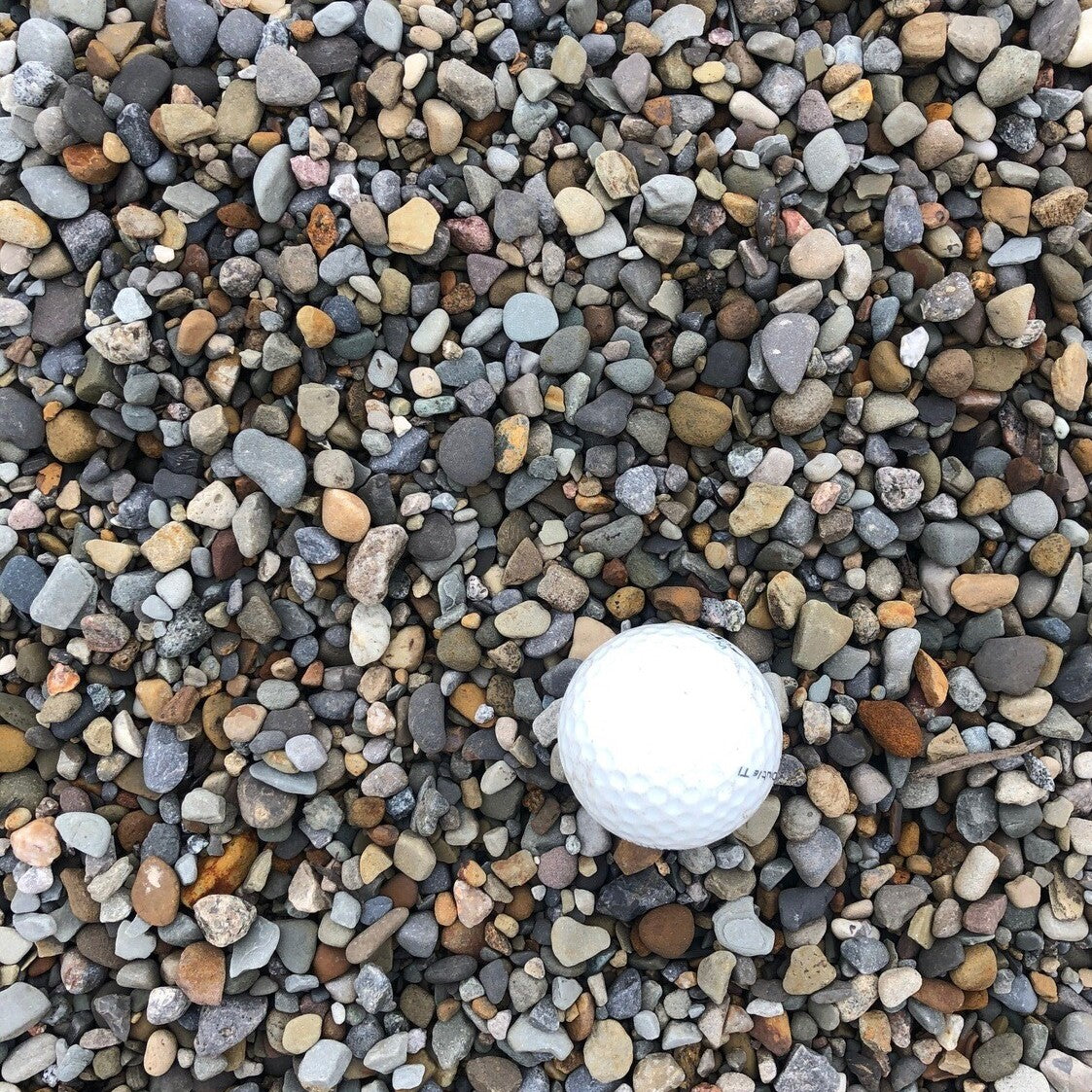
Classic pea gravel with smooth, rounded edges and natural earth tones. A versatile favorite for pathways, patios, drainage, and decorative ground cover.
Mulch Mound delivered a yard of pea gravel to us. Delivery was on time, driver was friendly and hit a bullseye on the “tarp target”. We used the pea gravel (which was diameter as specified) to fill several muskrat holes around our pond. I would definitely recommend Mulch Mo...
Classic pea gravel with smooth, rounded edges and natural earth tones. A versatile favorite for pathways, patios, drainage, and decorative ground cover.
Mulch Mound delivered a yard of pea gravel to us. Delivery was on time, driver was friendly and hit a bullseye on the “tarp target”. We used the pea gravel (which was diameter as specified) to fill several muskrat holes around our pond. I would definitely recommend Mulch Mo...
How Much Material Do I Need?
For decorative and pathway applications in Eugene, 2 to 3 inches of stone provides adequate coverage and weed suppression, while drainage applications under Eugene's heavy rainfall conditions benefit from 4 to 6 inches of clean drain rock to move water effectively through the dense silty clay soil layer. Structural applications under patios and load-bearing surfaces should go deeper still for long-term stability.
Use our free stone calculator
What is a yard?
A yard is approximately 27 cubic feet. As a general guideline, one yard of material can cover an area of about 100-160 square feet at a 2-3 inch depth.
Mulch Mound delivered a yard of pea gravel to us. Delivery was on time, driver was friendly and hit a bullseye on the “tarp target”. We used the ...
Read full review
Mulch Mound delivered a yard of pea gravel to us. Delivery was on time, driver was friendly and hit a bullseye on the “tarp target”. We used the pea gravel (which was diameter as specified) to fill several muskrat holes around our pond. I would definitely recommend Mulch Mound to a friend!
Placing an order online was so easy. Delivery was on time. When the driver realized we had a newly poured driveway they erred on the side of cautio...
Read full review
Placing an order online was so easy. Delivery was on time. When the driver realized we had a newly poured driveway they erred on the side of caution and opted not ti drive in it. The company even sent me a message explaining that call. Would recommend!
To estimate stone for an Eugene project, measure length and width in feet, multiply for square footage, and plan for 2 to 3 inches of depth for decorative surface coverage. In Eugene's rainy climate, 3 inches is the better choice over silty clay because shallow stone applications get displaced more easily during heavy downpours and regular foot traffic through the wet months. Divide your square footage by 100 at 3-inch depth to get approximate cubic yards needed.
Complete Your Outdoor Stone Project
Stone borders and pathways pair naturally with mulched planting beds, and our bulk mulch is a great complement for the soft landscaped areas surrounding your stone features, keeping Eugene's wet-season weeds out of both zones year-round. Our bulk soil is the ideal partner for any raised bed or grading project adjacent to your stone work, giving you a complete landscape that handles both Eugene's rainy winters and dry summers with minimal ongoing effort.
In Eugene, frost heave between November and early April can shift smaller gravel out of position along pathway edges and borders. Installing plastic or metal landscape edging along both sides of gravel paths keeps stone contained through freeze-thaw cycles and prevents migration into adjacent lawn or bed areas during heavy winter rains. Edging also makes the annual raking and light maintenance much easier because stone stays where you originally placed it even after Eugene's wettest months.
Mulch Mound Pro Tip
Eugene homeowners who install decorative stone over landscape fabric sometimes find that the fabric breaks down and allows weeds within five to seven years, especially in areas with heavy leaf fall and organic debris accumulation during the rainy season. Choosing a heavier commercial-grade woven fabric rather than standard residential poly fabric significantly extends the life of your weed barrier under Eugene's wet and organically active conditions, saving you a costly full regravel and reinstallation project further down the road.
Mulch Mound Pro Tip
When using crushed stone for drainage along Eugene's foundation borders or in low spots, make sure the stone you select is labeled as clean drain rock, meaning it contains no fine particles or crusher dust mixed in. Eugene's silty clay soil is already full of fine particles that will gradually migrate into any stone containing dust, clogging its drainage capacity over time. Clean drain rock maintains its water-moving performance through Eugene's heavy rainy season for many years without significant maintenance or replacement.
The Unique Landscape of Eugene
Decorative and functional stone is one of the most practical investments for Eugene homeowners managing the challenges of a high-rainfall, clay-heavy landscape. With 47 inches of rain falling annually, mulched pathways and bare ground areas quickly become muddy and difficult to navigate through the wet season, while stone surfaces remain firm and passable all year long. Eugene's silty clay soil also struggles to drain quickly, making gravel and crushed stone drainage layers essential under patios, along foundation borders, and in low-lying yard areas that collect standing water through winter. Stone requires no seasonal replacement, will not decompose under Eugene's long wet season the way organic materials do, and adds structure to landscape designs that remain neat and defined through the rainy months. Whether you are building a dry creek bed to manage hillside runoff, laying a pathway between raised garden beds, or creating a low-maintenance front yard border, stone delivers lasting results in the Willamette Valley climate.
Frequently Asked Questions
Click a question to see the answer
Answer
What kind of stone works best for a garden pathway in my Eugene backyard?
Pea gravel and crushed rock are both popular pathway choices in Eugene, with some key differences. Pea gravel stays comfortable underfoot but tends to migrate on slopes, which can be an issue given the varied terrain found in many Eugene neighborhoods. Crushed rock compacts into a firmer surface and handles Eugene's heavy rain events better without washing or shifting. For flat pathways between vegetable beds, either works well, but for sloped areas or any path connecting to a driveway, crushed rock holds its form through a wet Eugene winter far more reliably.
Answer
Will gravel actually help with the drainage problems my Eugene yard develops in winter?
Gravel and crushed drain rock are highly effective for improving drainage in Eugene's clay-heavy soil because they create void space that water moves through quickly, bypassing the slow-draining silty clay entirely. A gravel drainage trench or dry creek bed installed in a low spot can redirect winter water that would otherwise pool for weeks at a time. For best results, lay drain rock over landscape fabric to prevent Eugene's fine silty clay from migrating upward and gradually clogging the gravel layer over several seasons.
Answer
How much stone do I need to cover my front yard with a low-maintenance gravel landscape?
For a decorative gravel or crushed rock surface, plan on 2 to 3 inches of depth for good coverage and weed suppression. Measure your area in square feet and divide by 100 for cubic yards needed at a 3-inch depth. In Eugene, laying landscape fabric under gravel is strongly recommended because the moist, fertile soil supports aggressive weed growth that pushes through thin gravel layers within one season. A full 3-inch depth over quality fabric will stay weed-suppressed through multiple wet seasons without major maintenance.
Answer
I want to build a dry creek bed to handle the runoff on my sloped Eugene backyard. What stone should I use?
River rock in a mix of sizes, typically ranging from 2 to 6 inches in diameter, creates the most natural-looking and functional dry creek bed for Eugene's heavy winter runoff. Use smaller crushed rock or pea gravel to fill gaps around larger river rock so water flows through the channel rather than tunneling underneath it. During Eugene's heaviest rain months from November through February, a well-built dry creek bed handles significant flow volume, so make sure your channel is wide enough to accommodate the water your slope actually produces.
Answer
Does decorative stone require much maintenance once it is installed in Eugene's climate?
Stone requires very little maintenance compared to mulch or lawn areas, which is one of its biggest advantages in Eugene's high-maintenance wet climate. The main upkeep tasks are occasional raking to redistribute gravel that shifts during heavy rain events and periodic weed spot-treatment where wind-blown seeds germinate in accumulated surface debris. In Eugene, where organic matter accumulates quickly through the wet season, a light raking or blowing once a year keeps stone areas looking clean and prevents the soil buildup that eventually allows weeds to root in gravel beds.
Answer
Can I use stone around my home's foundation to protect it from Eugene's heavy annual rainfall?
Yes, a foundation border of clean drain rock or decorative gravel is one of the most protective things you can do for a Eugene home. Eugene's 47 inches of annual rainfall saturates the silty clay soil right up against foundation walls, and a 12 to 18-inch band of gravel allows that water to drain away from the structure quickly rather than sitting in prolonged contact with the foundation. Keep the stone layer sloped slightly away from the house, and make sure your gutters and downspouts direct roof water beyond the gravel border for maximum protection.
Answer
What is the difference between river rock and crushed gravel, and when should I use each in my Eugene yard?
River rock is smooth and rounded, making it visually appealing for decorative beds, borders, and water features, but it does not compact, so it is not ideal for paths that need a firm walking surface. Crushed gravel has angular edges that lock together when compacted, creating a stable surface for walkways, driveways, and utility areas that take regular foot traffic. In Eugene, where winter rain constantly tests the stability of outdoor surfaces, crushed gravel is the practical choice for high-traffic areas, while river rock shines in decorative applications where aesthetics matter more than firmness underfoot.




 +2
+2



