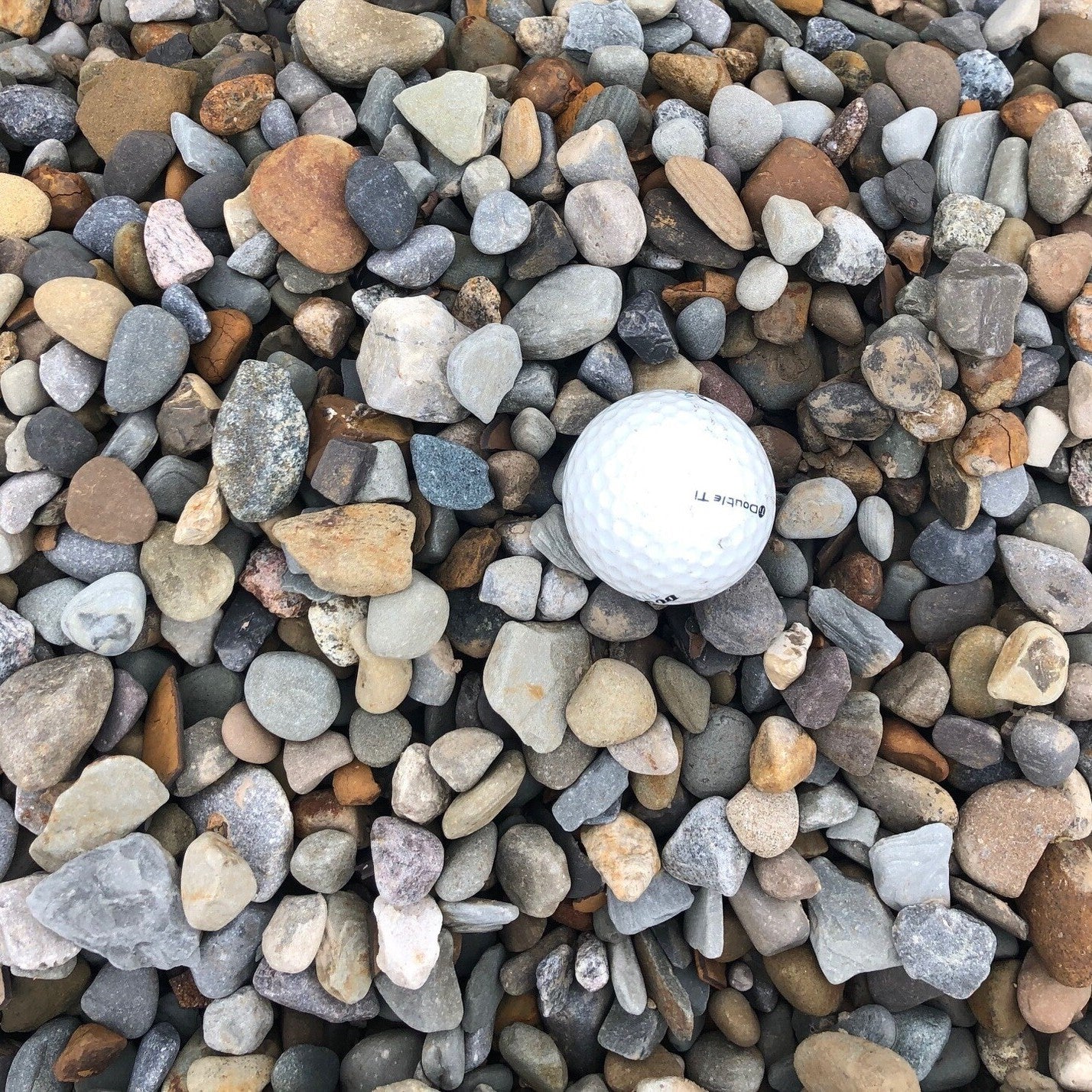
Number 57 crushed stone, angular limestone graded to about three quarters of an inch. The standard driveway, base and drainage gravel, it locks together under traffic and drains fast.
My experience with Mulch Mound was great and super easy. I ordered two yards of screened topsoil and was able to get it delivered within 2 days. They came in my requested time frame (afternoon) and dropped it off where I asked on my driveway. The topsoil was exactly what was a...
Tell us what you're looking for
Thanks! We received your request.
Something went wrong. Please try again.
How Much Material Do I Need?
Use 2 to 3 inches of stone for decorative ground cover, 4 inches of compacted base for driveways and parking areas, and 6 to 8 inches in drainage trenches and dry creek beds. One ton covers roughly 100 square feet at 2 to 3 inches deep.
Use our free gravel calculator
What is a Yard?
A yard is approximately 27 cubic feet. As a general guideline, one yard of material can cover an area of about 100-160 square feet at a 2-3 inch depth.
We can't take orders for this right now. Tell us what you need and we'll get back to you.
What do you need?
Thanks! We received your request.
Something went wrong. Please try again.
Hand-picked local yards
4,000+ regional deliveries
Dedicated support
Why order through Mulch Mound
The best local , without the guesswork.
We hand-pick and partner with the best yards in your region, keep only the ones our buyers rate well, and back each load with our guarantee.
Mulch Mound Guarantee
If your isn't the quantity or quality you ordered, we'll make it right.
About this stone
Number 57 crushed stone, angular limestone graded to about three quarters of an inch. The standard driveway, base and drainage gravel, it locks together under traffic and drains fast.
My experience with Mulch Mound was great and super easy. I ordered two yards of screened topsoil and was able to get it delivered within 2 days. They came in my requested time frame (afternoon) and dropped it off where I asked on my driveway. The topsoil was exactly what was a...
How Much Material Do I Need?
Use 2 to 3 inches of stone for decorative ground cover, 4 inches of compacted base for driveways and parking areas, and 6 to 8 inches in drainage trenches and dry creek beds. One ton covers roughly 100 square feet at 2 to 3 inches deep.
Use our free gravel calculator
What is a Yard?
A yard is approximately 27 cubic feet. As a general guideline, one yard of material can cover an area of about 100-160 square feet at a 2-3 inch depth.
My experience with Mulch Mound was great and super easy. I ordered two yards of screened topsoil and was able to get it delivered within 2 days. Th...
Read full review
My experience with Mulch Mound was great and super easy. I ordered two yards of screened topsoil and was able to get it delivered within 2 days. They came in my requested time frame (afternoon) and dropped it off where I asked on my driveway. The topsoil was exactly what was advertised, clean with no rocks or other debris. The price was reasonable. I plan to use them again in a couple weeks to order compost for my garden beds.
Stone is sold by weight, so measure your length and width in feet and pick a depth in inches, then let the calculator convert it to tons. For dry creek beds and irregular drainage runs around Fort Leonard Wood, measure the average width along the whole run rather than the widest point. Add about ten percent for settling and edge losses.
Complete Your Outdoor Stone Project
Add heavy woven landscape fabric under the stone to keep it from sinking into silt loam, and pair it with steel or paver edging so the stone stays where you placed it through our heavy spring rains.
Choose your stone shape by function. Angular crushed limestone locks together and stays put, which makes it the right pick for driveways, paths, and anything on a slope around Fort Leonard Wood. Smooth river rock rolls underfoot and migrates downhill, so save it for flat decorative beds and dry creek bottoms where the rounded look matters. Using the wrong one means raking stone back uphill after every big storm.
Mulch Mound Pro Tip
Compact stone in layers, not all at once. On a driveway or parking pad, spread 2 inches, run a plate compactor or drive over it repeatedly, then add the next 2 inches and repeat. Fort Leonard Wood silt loam subgrade needs that gradual loading to firm up properly. Dumping 5 inches at once leaves a soft middle layer that ruts the first time you drive on it after a rain.
Mulch Mound Pro Tip
Do not skip edging. Freeze and thaw cycles run all winter here in Zone 6b, heaving stone outward a little at a time, and by March you will find gravel scattered in the lawn where the mower will find it. A steel edge set flush with grade or a row of set pavers keeps everything contained. It costs far less than replacing lost stone and it makes mowing along the bed line much simpler.
The Unique Landscape of Fort Leonard Wood
Water management is the defining landscape challenge in Fort Leonard Wood, where 46 inches of annual rain meets rolling Ozark terrain and silt loam that seals over when it gets hit hard. Stone gives you a surface that does not wash away, does not break down, and does not need replacing every spring the way organic mulch does. Around downspouts, along swales, and on the sloped side yards common in Pulaski County, crushed limestone and river rock keep soil in place and channel water where you want it. Stone also solves the freeze and thaw problem, since Zone 6b winters heave and shift loose materials but a properly bedded stone surface just settles in tighter. And with limestone and chert underlying much of this area, stone ground cover looks completely at home against the natural landscape.
Frequently Asked Questions
Click a question to see the answer
Answer
What size stone works best around downspouts here?
Use 1 to 2 inch river rock or 3/4 inch clean limestone in a splash basin about 3 feet across. Fort Leonard Wood downspouts move a lot of water during our spring storms, and smaller pea gravel simply gets blasted out of place. Put landscape fabric down first so the stone does not sink into the silt loam over a couple of wet seasons.
Answer
Should I use stone instead of mulch in my beds?
Stone makes sense on slopes, along foundations, in narrow strips beside driveways, and anywhere runoff moves through. It is a poor choice around perennials and vegetables because it does not feed the soil and it radiates heat that stresses plants during our humid July stretches. Many Fort Leonard Wood homeowners use stone on the drainage side of the house and hardwood mulch on the planting beds.
Answer
How much stone do I need for a driveway or parking pad?
Plan on 4 inches of compacted base for a residential pad, more if you are parking heavy equipment. One ton of crushed limestone covers roughly 80 to 100 square feet at 3 inches deep. A 12 by 30 foot pad at 4 inches works out to about 5 to 6 tons. Given how soft silt loam gets after a wet week here, do not skimp on base depth.
Answer
Will stone sink into my soil over time?
It will without a barrier. Silt loam softens considerably after our frequent rains, and stone gradually works down into it, especially under foot or tire traffic. Lay a heavy woven geotextile fabric before you spread stone. On drainage runs, use a permeable fabric rather than solid plastic so water can still move into the ground instead of pooling.
Answer
Can I build a dry creek bed for my runoff problem?
That is one of the best solutions for Fort Leonard Wood lots. Follow the natural drainage path, dig a shallow channel about 2 feet wide and 8 inches deep, line it with fabric, then place 2 to 4 inch river rock in the center with larger stones along the edges. It handles the volume from a heavy Ozark thunderstorm and looks intentional rather than like a repair.
Answer
Does limestone stone change my soil pH?
Crushed limestone will slowly raise pH as it weathers, which is worth knowing since some areas around Pulaski County already run neutral to alkaline over the limestone bedrock. It is not an issue for walkways or drainage areas. Avoid limestone gravel directly around blueberries, azaleas, hydrangeas, and other acid loving plants, and use river rock or granite there instead.
Answer
How do I keep leaves and debris out of my stone beds?
Blow them out with a leaf blower on a low setting a few times each fall, since Fort Leonard Wood properties near wood lines collect a lot of leaf drop after the October 20 frost. If organic debris breaks down in the stone, you get a soil layer on top and weeds follow quickly. A quick blowout in November and again in early spring keeps stone beds clean for many years.