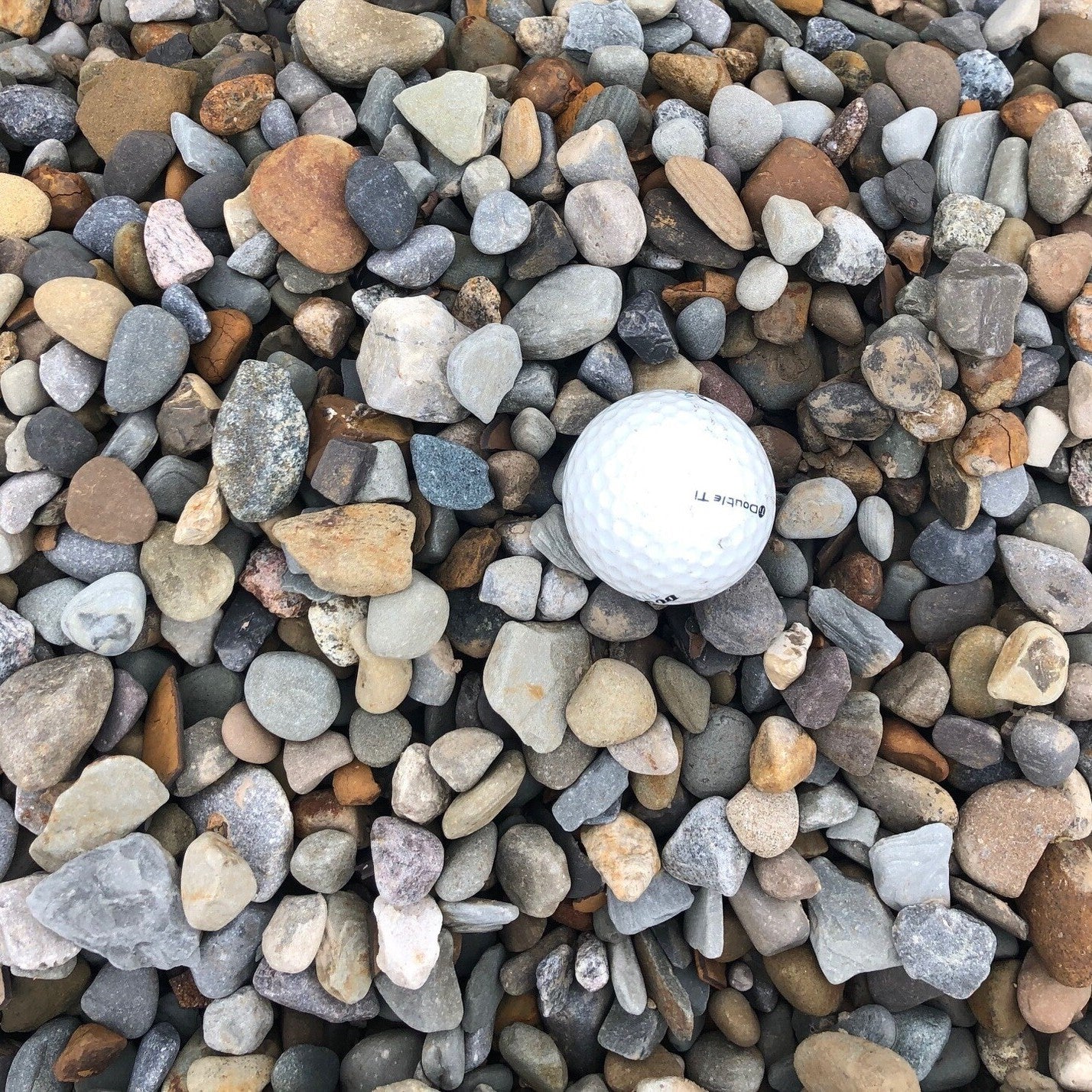
Number 57 crushed stone, angular limestone graded to about three quarters of an inch. The standard driveway, base and drainage gravel, it locks together under traffic and drains fast.
Mulch Mound delivered a yard of pea gravel to us. Delivery was on time, driver was friendly and hit a bullseye on the “tarp target”. We used the pea gravel (which was diameter as specified) to fill several muskrat holes around our pond. I would definitely recommend Mulch Mo...
Tell us what you're looking for
Thanks! We received your request.
Something went wrong. Please try again.
How Much Material Do I Need?
Use 2 inches of depth for decorative stone in beds and 3 to 4 inches for pathways and drainage runouts. One cubic yard covers roughly 160 square feet at 2 inches deep.
Use our free stone calculator
What is a Yard?
A yard is approximately 27 cubic feet. As a general guideline, one yard of material can cover an area of about 100-160 square feet at a 2-3 inch depth.
We hand-pick and partner with the best yards in your region, keep only the ones our buyers rate well, and back each load with our guarantee.
Mulch Mound Guarantee
If your isn't the quantity or quality you ordered, we'll make it right.
About this stone
Number 57 crushed stone, angular limestone graded to about three quarters of an inch. The standard driveway, base and drainage gravel, it locks together under traffic and drains fast.
Mulch Mound delivered a yard of pea gravel to us. Delivery was on time, driver was friendly and hit a bullseye on the “tarp target”. We used the pea gravel (which was diameter as specified) to fill several muskrat holes around our pond. I would definitely recommend Mulch Mo...
How Much Material Do I Need?
Use 2 inches of depth for decorative stone in beds and 3 to 4 inches for pathways and drainage runouts. One cubic yard covers roughly 160 square feet at 2 inches deep.
Use our free stone calculator
What is a Yard?
A yard is approximately 27 cubic feet. As a general guideline, one yard of material can cover an area of about 100-160 square feet at a 2-3 inch depth.
Mulch Mound delivered a yard of pea gravel to us. Delivery was on time, driver was friendly and hit a bullseye on the “tarp target”. We used the ...
Read full review
Mulch Mound delivered a yard of pea gravel to us. Delivery was on time, driver was friendly and hit a bullseye on the “tarp target”. We used the pea gravel (which was diameter as specified) to fill several muskrat holes around our pond. I would definitely recommend Mulch Mound to a friend!
Placing an order online was so easy. Delivery was on time. When the driver realized we had a newly poured driveway they erred on the side of cautio...
Read full review
Placing an order online was so easy. Delivery was on time. When the driver realized we had a newly poured driveway they erred on the side of caution and opted not ti drive in it. The company even sent me a message explaining that call. Would recommend!
Measure length and width in feet, multiply by the depth in feet, and divide by 27 to get cubic yards. Most Franklin stone projects need 2 to 3 inches of surface coverage plus base material underneath, so calculate those layers separately. If you are ordering by the ton instead of by yard, figure about 1.4 tons per cubic yard for crushed limestone.
Complete Your Outdoor Stone Project
Round out your stone order with woven landscape fabric, which is essential over Franklin's fine silt loam, plus paver base or crusher run for anything you plan to walk or drive on. Steel edging keeps decorative stone from migrating into the lawn after heavy rain.
Use woven geotextile fabric, not the thin spun plastic sold as weed barrier. Franklin silt loam is fine enough to pump right through cheap fabric during the saturated stretches we get in February and March, and once silt fills the voids in your gravel the drainage is finished. Woven fabric separates soil from stone while still letting water pass, and it is the difference between a gravel area that lasts two years and one that lasts fifteen.
Mulch Mound Pro Tip
Compact base stone in lifts, not all at once. Spread 3 inches of crusher run, run a plate compactor over it, then add the next lift. A single deep pour never reaches full density in the bottom, and Franklin's wet winters plus freeze and thaw cycling will expose that soft layer as ruts and dips by the second spring. Dampening the stone lightly before compacting also helps the fines lock the aggregate together.
Mulch Mound Pro Tip
Think about where stone sends water before you place it. A gravel runout that dumps toward your foundation or your neighbor's yard causes bigger problems than the erosion it was meant to fix, and with 52 inches of rain a year Franklin gives you plenty of chances to find out. Set a slope of at least 2 percent away from structures, and end drainage runs in a planted area or a rain garden that can absorb the volume.
The Unique Landscape of Franklin
Franklin gets 52 inches of rain a year and much of it comes in fast, heavy events that overwhelm gutters and cut channels through mulched beds. Decorative and functional stone gives you a surface that does not float away, which is why river rock downspout runouts and gravel swales are so common across Williamson County. Our silt loam holds water at the surface and turns soft underfoot, so gravel paths, patio bases, and driveway repairs all depend on a properly compacted stone foundation to stay level. Stone also fits the local look, since limestone is the bedrock under Franklin and gray crushed aggregate reads as native rather than imported. Unlike mulch, stone does not decompose in our humid summers, so a well built stone feature stays put for years with almost no maintenance. For any spot where water moves or feet travel, stone is the durable answer.
Frequently Asked Questions
Click a question to see the answer
Answer
What size stone works best for a French drain in Franklin?
Washed number 57 limestone is the standard choice around here. The one inch nominal size leaves plenty of void space for the water volume our 52 inch rainfall produces, and washing removes the fines that would otherwise silt up quickly in Franklin's fine textured soil. Wrap the trench in filter fabric, because silt loam migrates into unprotected gravel faster than most soils.
Answer
Will gravel keep sinking into my yard?
It will if you place it directly on Franklin silt loam. This soil softens with every rain and stone works its way down until the surface is more mud than gravel. Excavate 4 to 6 inches, lay woven geotextile fabric, then build up with a compacted crusher run base before the surface layer. That fabric is the single most important step here.
Answer
Is river rock or crushed stone better for the area under my downspouts?
River rock looks better and stays put well in Franklin's typical roof runoff volume, and the rounded shape does not lock together so water passes through easily. Crushed limestone is cheaper and locks tightly, which is better where you have real velocity coming off a steep roof. Either way, extend the splash zone at least 4 feet from the foundation.
Answer
How thick should the base be for a gravel driveway here?
Plan on a minimum of 6 inches of compacted crusher run over fabric for a Franklin residential drive, and 8 inches or more if the subgrade is a soft low area or if you park anything heavier than a pickup. Our freeze and thaw cycles at 643 feet plus wet winters will find any thin spot in the base within a season or two.
Answer
Does stone mulch work in planting beds here?
It works for succulents, ornamental grasses, and low water plantings, but be careful using it broadly in Franklin. Stone absorbs summer heat and radiates it, which stresses hydrangeas, azaleas, and other zone 7b favorites that already struggle in August. Stone also adds no organic matter to silt loam. Reserve it for drainage areas, paths, and hot dry strips along pavement.
Answer
How do I keep weeds out of my gravel areas?
Weeds in Franklin gravel grow in the organic debris that settles into the voids, not up from the soil. With our long frost free stretch from April 10 to October 26 and steady rain, that debris accumulates fast. Blow leaves and pine needles out a couple of times a year and use a quality woven fabric underneath, and you will cut the problem down dramatically.
Answer
How much does a yard of stone weigh for planning purposes?
Roughly 2,600 to 2,800 pounds per cubic yard for crushed limestone and river rock, which is well over a ton. That matters on Franklin driveways, especially older concrete or any drive with a spanned section. Tell us where the load is going and we will suggest a safe drop spot rather than risking cracks.