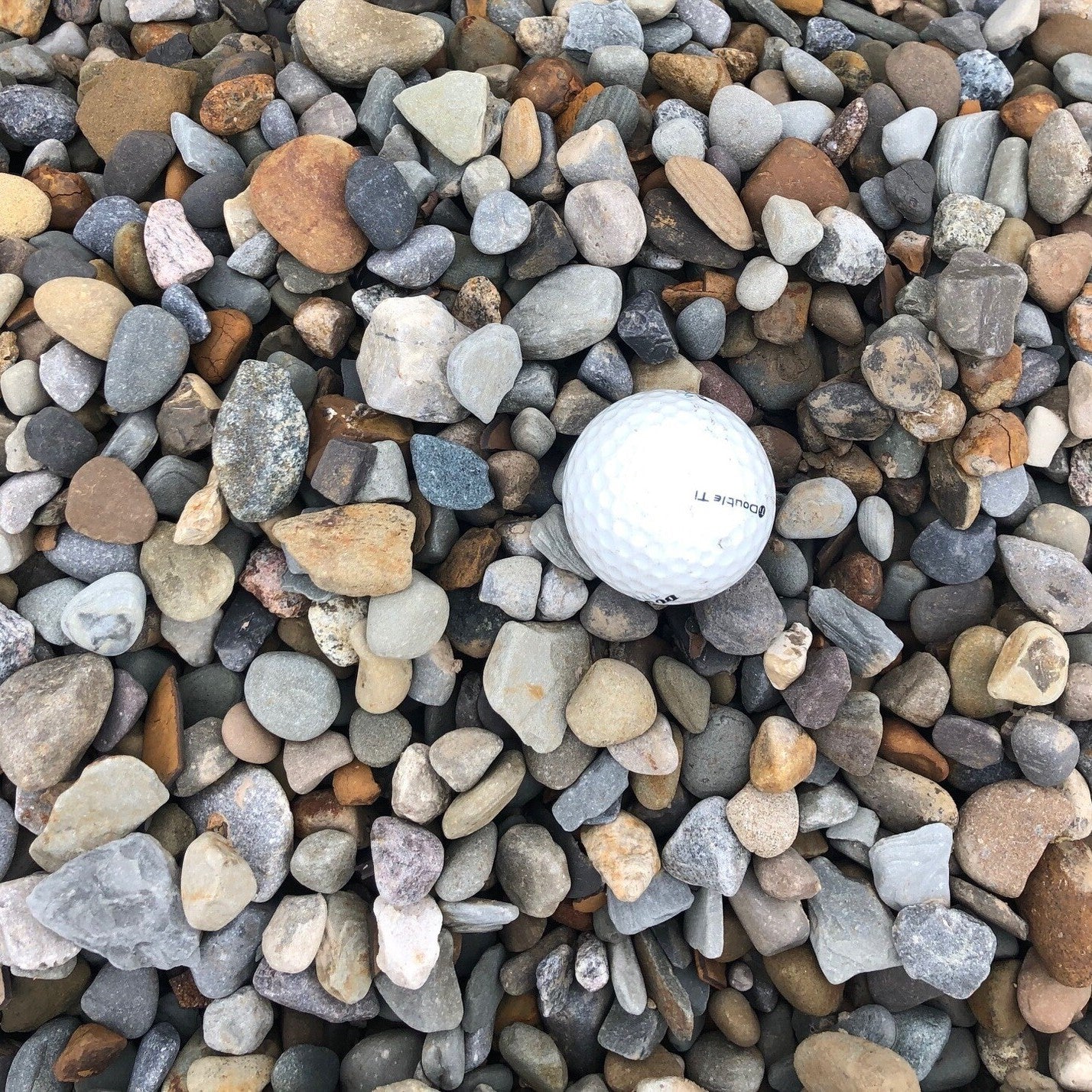
Number 57 crushed stone, angular limestone graded to about three quarters of an inch. The standard driveway, base and drainage gravel, it locks together under traffic and drains fast.
My experience with Mulch Mound was great and super easy. I ordered two yards of screened topsoil and was able to get it delivered within 2 days. They came in my requested time frame (afternoon) and dropped it off where I asked on my driveway. The topsoil was exactly what was a...
Tell us what you're looking for
Thanks! We received your request.
Something went wrong. Please try again.
How Much Material Do I Need?
In Godfrey's silt loam landscape, a 3-inch layer of stone is the recommended minimum depth for decorative coverage or erosion control applications. Areas that channel active runoff during rain events may benefit from 4 to 5 inches of material to remain stable and intact through Godfrey's spring storm season.
Use our free gravel calculator
What is a yard?
A yard is approximately 27 cubic feet. As a general guideline, one yard of material can cover an area of about 100-160 square feet at a 2-3 inch depth.
We can't take orders for this right now. Tell us what you need and we'll get back to you.
What do you need?
Thanks! We received your request.
Something went wrong. Please try again.
Hand-picked local yards
4,000+ regional deliveries
Dedicated support
Why order through Mulch Mound
The best local stone, without the guesswork.
We hand-pick and partner with the best yards in your region, keep only the ones our buyers rate well, and back each load with our guarantee.
Mulch Mound Guarantee
If your stone isn't the quantity or quality you ordered, we'll make it right.
About this stone
Number 57 crushed stone, angular limestone graded to about three quarters of an inch. The standard driveway, base and drainage gravel, it locks together under traffic and drains fast.
My experience with Mulch Mound was great and super easy. I ordered two yards of screened topsoil and was able to get it delivered within 2 days. They came in my requested time frame (afternoon) and dropped it off where I asked on my driveway. The topsoil was exactly what was a...
How Much Material Do I Need?
In Godfrey's silt loam landscape, a 3-inch layer of stone is the recommended minimum depth for decorative coverage or erosion control applications. Areas that channel active runoff during rain events may benefit from 4 to 5 inches of material to remain stable and intact through Godfrey's spring storm season.
Use our free gravel calculator
What is a yard?
A yard is approximately 27 cubic feet. As a general guideline, one yard of material can cover an area of about 100-160 square feet at a 2-3 inch depth.
My experience with Mulch Mound was great and super easy. I ordered two yards of screened topsoil and was able to get it delivered within 2 days. Th...
Read full review
My experience with Mulch Mound was great and super easy. I ordered two yards of screened topsoil and was able to get it delivered within 2 days. They came in my requested time frame (afternoon) and dropped it off where I asked on my driveway. The topsoil was exactly what was advertised, clean with no rocks or other debris. The price was reasonable. I plan to use them again in a couple weeks to order compost for my garden beds.
Really appreciate the care and follow thru that this company had with our order. A hiccup came up but they were quick to respond and address all co...
Read full review
Really appreciate the care and follow thru that this company had with our order. A hiccup came up but they were quick to respond and address all concerns, which made our garden day a success! Thank you for your prompt care.
Measure your coverage area in feet and multiply length by width to get square footage, then multiply by your desired depth in inches, divide by 12 to convert to feet, and divide by 27 to get the cubic yards you need. In Godfrey, where heavy spring rains can displace lighter or shallower stone applications, adding a 10 percent buffer to your calculated volume ensures you have enough material for a full, stable layer that holds through the wet season.
Stone Types We Deliver in Godfrey
Mulch Mound delivers bulk stone by the cubic yard straight to homes and properties across Godfrey, Illinois. Whether you are searching for bulk gravel by the yard in Godfrey or planning a larger landscaping project, we make it simple to get the right material without hauling it yourself. Our delivery is measured and priced by the cubic yard so you order exactly what your project needs.
Pea Gravel
Pea gravel is one of the most popular choices for Godfrey homeowners thanks to its smooth, rounded edges and warm earth tones that complement the natural surroundings of this part of southwestern Illinois. It works beautifully for garden pathways, patio bases, and drainage solutions in yards where clay-heavy soil can hold excess moisture.
Complete Your Outdoor Stone Project
Combining stone borders with a fresh layer of hardwood mulch inside your planting beds creates a polished, finished look while solving two common Godfrey landscape challenges at once. Adding quality topsoil beneath stone in raised or graded applications ensures proper drainage that holds up through the wet spring conditions that define the Godfrey growing season.
Godfrey's silt loam expands slightly when fully saturated and contracts as it dries out, creating subtle ground movement over the course of a year. When installing stone pathways or patio areas, set a compacted gravel base beneath your decorative stone layer before adding the finished surface material. That base layer absorbs the minor soil movement beneath and keeps your pathway level and stable through the multiple freeze-thaw cycles that occur between November and April each year.
Mulch Mound Pro Tip
For Godfrey homeowners converting a traditional lawn area to a stone ground cover, take time to fully remove or kill existing grass before laying landscape fabric. Godfrey's silt loam is fertile enough that grass and perennial weeds will push through gaps in fabric if the vegetation is not addressed first. Using a sod cutter, smothering with cardboard, or applying a targeted herbicide a few weeks before installation gives you a clean base that the fabric and stone can effectively hold long-term.
Mulch Mound Pro Tip
When using stone for erosion control along slopes or drainage channels in Godfrey, orient larger stones so they interlock slightly rather than sitting fully loose and round on the surface. Godfrey receives 42 inches of rain per year, and concentrated spring runoff exerts real force on surface materials in drainage paths. Interlocking placement and choosing angular rather than smooth rounded stone in high-flow areas significantly improves how well the installation holds its position through multiple rainy seasons.
The Unique Landscape of Godfrey
Decorative and functional stone is a smart long-term investment for Godfrey, IL homeowners because it provides stable ground cover that holds up to the area's 42 inches of annual rainfall without washing away, fading, or breaking down over time. Godfrey's silt loam soil, while fertile, is prone to erosion in areas without vegetative cover, especially on sloped lots and along drainage paths where concentrated spring runoff can quickly cut channels through bare ground. Stone pathways, dry creek beds, and foundation borders provide lasting stability that does not require seasonal replacement the way organic materials do. The freeze-thaw cycles between Godfrey's November 1 first frost and April 12 last frost mean that any hardscape or drainage feature needs materials that resist movement and remain intact through repeated temperature swings. Whether you are creating a decorative focal point or solving a persistent drainage problem, bulk stone is one of the most durable and low-maintenance solutions available for the Godfrey landscape.
Frequently Asked Questions
Click a question to see the answer
Answer
What type of stone works best for a backyard pathway in Godfrey?
For foot-traffic pathways in Godfrey, pea gravel and crushed limestone are both popular and practical choices. Pea gravel is comfortable underfoot and drains very well, which matters given that Godfrey receives 42 inches of rainfall annually and pathways need to manage that moisture without becoming muddy. Crushed limestone compacts into a firmer surface that holds its position better over time and is easier to walk on for those who find loose gravel uncomfortable. Both materials handle Godfrey's freeze-thaw cycles without cracking or shifting significantly.
Answer
I have a low spot in my Godfrey yard that stays soggy after every rain. Could stone actually help with that?
A dry creek bed lined with river rock or larger decorative stone is one of the most effective and attractive solutions for persistently wet areas in Godfrey. By creating a defined drainage channel filled with stone, you give water a clear path away from the problem area without eroding the silt loam soil underneath. The stone protects channel walls from washing out during the heavy spring rains common in Godfrey while adding a natural, landscaped appearance to what was previously just a muddy low spot.
Answer
How do I keep decorative stone from sinking into the silt loam soil in my Godfrey yard over time?
Silt loam's fine particle structure means stone can gradually work its way downward into the soil, especially in areas that receive significant foot traffic or regular water flow. Installing quality landscape fabric beneath your stone before spreading it is the most reliable way to prevent sinking and keep the stone layer separate from the soil below. In Godfrey, where spring rains frequently saturate the ground, that fabric barrier keeps your stone application clearly defined and stable season after season.
Answer
Can I use stone around my Godfrey home's foundation to help manage drainage and moisture?
Stone is an excellent choice for foundation borders in Godfrey. A 12 to 18 inch band of coarse gravel or river rock around your foundation keeps organic material away from the structure, reduces moisture contact with siding or masonry, and improves water movement away from the house. Given Godfrey's 42 inches of annual rainfall and the freeze-thaw cycles of Zone 6b winters, keeping the foundation perimeter well-drained is an important step in protecting the structure over the long term.
Answer
What size stone is best for controlling erosion on a sloped part of my Godfrey yard?
For slope erosion control in Godfrey, larger stones in the 2 to 4 inch range are significantly more effective than pea gravel because they resist displacement during heavy rain events. Godfrey's spring storm season can produce fast-moving runoff on even moderately sloped ground, and smaller stones simply wash away or shift downhill over time. River rock or large angular riprap placed on slopes and along drainage channels holds its position through repeated rain events and provides lasting protection for the silt loam soil beneath.
Answer
Are there areas in a Godfrey yard where stone makes more sense than grass or mulch?
Definitely. Areas under dense tree canopy, along fence lines, or between hardscape features often produce patchy and struggling grass in Godfrey because the combination of shade, root competition, and variable soil moisture from the area's rainfall patterns makes consistent turf difficult to maintain. Replacing these problem areas with a 3 to 4 inch layer of decorative stone over landscape fabric creates a clean, finished look that requires essentially no seasonal maintenance and holds up year-round through Godfrey's full range of weather conditions.
Answer
How much stone would I need to cover a 10 by 20 foot area in my Godfrey landscape?
A 10 by 20 foot area covered at 3 inches deep requires approximately 2.2 cubic yards of stone. Because stone is considerably denser than organic materials, even a modest cubic yardage covers a meaningful area. In Godfrey's silt loam landscape, going a full 3 inches deep is important because shallower applications tend to shift and thin out more quickly given the substantial rainfall the area receives each year, particularly during the heavy spring storm season.