


About this sand
Washed and finely screened masonry sand for mortar, paver joints, and pool bases. Consistent grain, ready to screed.

Tell us what you're looking for
Thanks! We received your request.
Something went wrong. Please try again.
How Much Sand Do I Need?
How Much Sand Do I Need?
One cubic yard of mason sand covers about 324 square feet at a 1 inch depth, so a small patio or paver project might only need a fraction of a yard while a full driveway apron or larger mortar job will need more. Since typical install depth runs 1 to 2 inches for bedding and jointing work, double your square footage estimate if you are laying at the deeper end. Order by the cubic yard and round up slightly, running short mid pour is the more expensive problem.
What is a Yard?
What is a Yard?
FAQs
FAQs
Little Rock Sand Delivery
Little Rock Sand Delivery
Regular price
$74.00
per
Yard
Regular price
Sale price
$74.00
Unit price
per
Shipping calculated at checkout.
Minimum of 3 Yard
Couldn't load pickup availability
Hand-picked local yards
4,000+ regional deliveries
Dedicated support
Why order through Mulch Mound
The best local sand, without the guesswork.
We hand-pick and partner with the best yards in your region, keep only the ones our buyers rate well, and back each load with our guarantee.
Mulch Mound Guarantee
If your sand isn't the quantity or quality you ordered, we'll make it right.
About this sand
Washed and finely screened masonry sand for mortar, paver joints, and pool bases. Consistent grain, ready to screed.
How Much Sand Do I Need?
How Much Sand Do I Need?
One cubic yard of mason sand covers about 324 square feet at a 1 inch depth, so a small patio or paver project might only need a fraction of a yard while a full driveway apron or larger mortar job will need more. Since typical install depth runs 1 to 2 inches for bedding and jointing work, double your square footage estimate if you are laying at the deeper end. Order by the cubic yard and round up slightly, running short mid pour is the more expensive problem.
What is a Yard?
What is a Yard?
FAQs
FAQs
Tell us what you're looking for
Thanks! We received your request.
Something went wrong. Please try again.

How It Works
Getting started is easy — just follow these simple steps
1
Choose your quantity
Adjust the quantity to match your project. One cubic yard covers about 100 to 160 square feet at a 2 to 3 inch depth.
2
Select your delivery date
Select a delivery date you'd like for the product to be dropped off at your home
3
Sit back and wait
Sit back, wait, and let us work our magic to make sure the highest quality product is delivered to your driveway.

First time going with this company for mulch and it was an efficient process from start to finish. Website was easy—I told them exactly where I wan...
Read full review
First time going with this company for mulch and it was an efficient process from start to finish. Website was easy—I told them exactly where I wanted the mulch put on my driveway, and it was delivered perfectly when I got home from work the next day. Best deal around when I compared it to competitors and I will definitely be becoming back.

Ordered Dirt. Received Dirt. Would Buy Again.
Complete Your Outdoor Project
Most mason sand orders in Little Rock go out alongside pavers, brick, or a chip stone base layer for patios and walkways. If you are mixing mortar, having crushed stone or gravel on site for the sub base keeps the whole job on one delivery schedule. Pool installers often pair it with a compacted gravel base beneath the sand layer.


Service area
Areas we deliver sand in Little Rock, Arkansas
Mulch Mound Pro Tip
Mason sand's fine, uniform grain is what makes it different from concrete sand or fill sand, and that difference matters most in mortar mixing. Coarser sand leaves mortar gritty and harder to trowel smooth, which shows on brick joints around older Little Rock homes where matching original mortar texture counts. If your project is repointing historic brick rather than new paver work, mason sand is the right call, not a generic sand substitute from a hardware store bag.
Mulch Mound Pro Tip
A common mistake with mason sand under pavers is skipping compaction of the base layer beneath it, which lets the sand shift after our spring rains soak through Little Rock's clay soil. The clay does not drain fast, so water sits and moves the bedding layer over a season or two. Compact your gravel sub base thoroughly before screeding sand, and consider chip stone instead if the project sees heavy water flow.
Mulch Mound Pro Tip
If you are ordering for both mortar mixing and paver bedding on the same job, it is worth asking whether chip stone makes more sense for the bedding portion, since it resists washout better in our clay heavy soil and rainy stretches. Save the mason sand specifically for mortar and joint work where its fine texture is actually needed, and you will use less overall.
Working With Sand in Little Rock
Little Rock sits on clay and silt soil that drains slowly, which is exactly why mason sand matters here as a bedding and joint material rather than something you rely on for drainage in the ground. Masons use it to keep mortar workable through our humid, warm construction season, and it is a common choice for pool base work given how many backyard pools go in around town. With growing zone 7b winters rarely freezing the ground deep, hardscape crews can work most months, but spring through fall is when order volume picks up. Chip stone is replacing sand under pavers in some newer builds here because it will not pump up through joints after our heavy spring rains.
Masonry vs Fill Sand
Masonry sand is washed and finely screened, the right choice for mortar work, paver joints, and sandboxes. Fill sand is coarser and less processed, better suited to leveling, bedding pipe, and filling low spots.
Bedding and Leveling
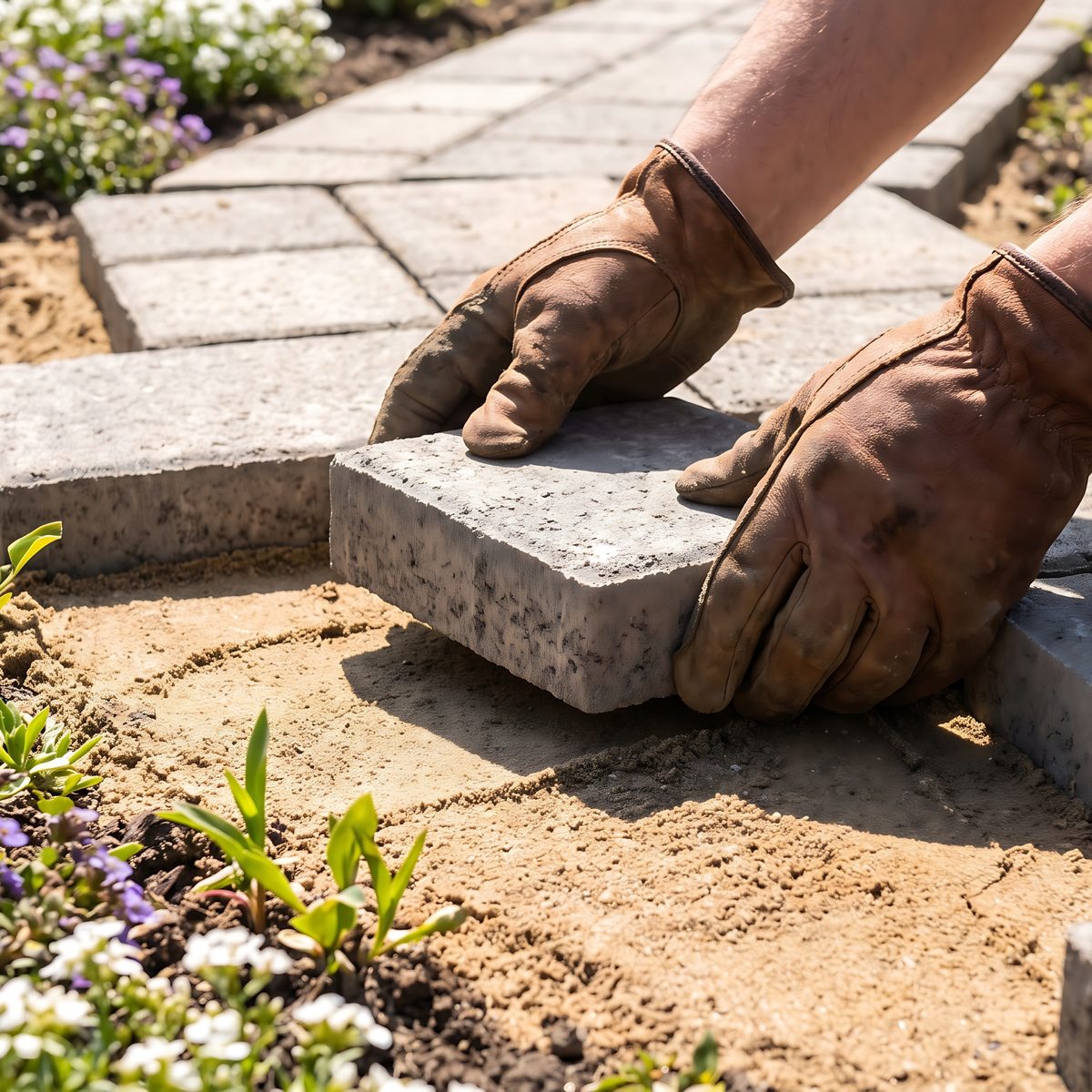
For pavers, screed a 1 inch sand bed over a compacted base rather than using sand to fix deep grade problems. A thin, even bed locks pavers in place. A thick one shifts underfoot.
Working With Moisture
Slightly damp sand spreads, screeds, and compacts far more easily than bone dry sand, which just flows back into your screed lines. Lightly wetting the pile before you work it saves real effort.