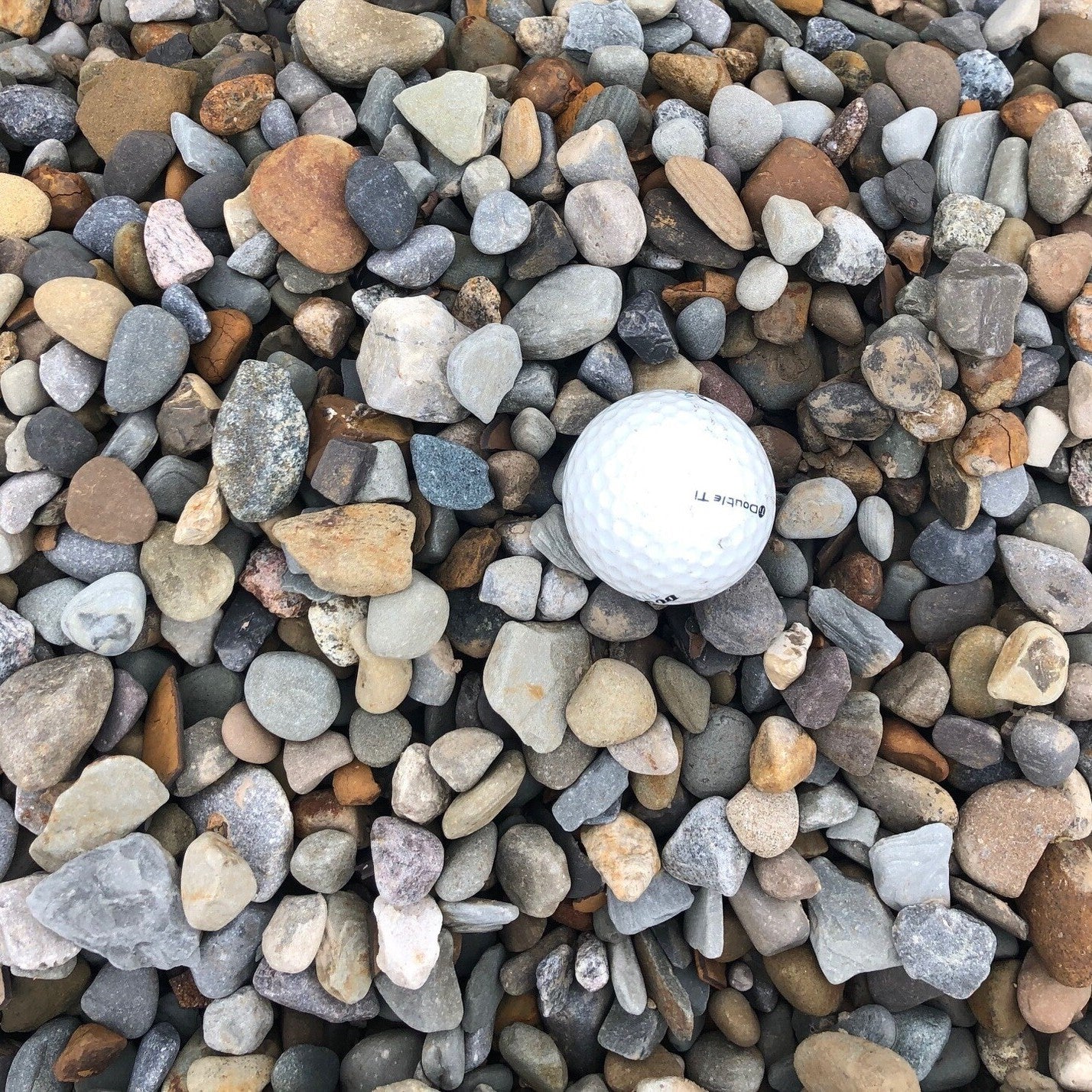
Number 57 crushed stone, angular limestone graded to about three quarters of an inch. The standard driveway, base and drainage gravel, it locks together under traffic and drains fast.
My experience with Mulch Mound was great and super easy. I ordered two yards of screened topsoil and was able to get it delivered within 2 days. They came in my requested time frame (afternoon) and dropped it off where I asked on my driveway. The topsoil was exactly what was a...
Tell us what you're looking for
Thanks! We received your request.
Something went wrong. Please try again.
How Much Material Do I Need?
Two to three inches of decorative stone is the right depth for most Livonia planting beds and pathway applications, providing good weed suppression and a finished appearance that holds up through freeze-thaw seasons. Drainage installations like dry creek beds and French drain trenches require deeper stone fills of six inches or more depending on the application, so plan your material order accordingly for those functional projects.
Use our free gravel calculator
What is a Yard?
A yard is approximately 27 cubic feet. As a general guideline, one yard of material can cover an area of about 100-160 square feet at a 2-3 inch depth.
We can't take orders for this right now. Tell us what you need and we'll get back to you.
What do you need?
Thanks! We received your request.
Something went wrong. Please try again.
Hand-picked local yards
4,000+ regional deliveries
Dedicated support
Why order through Mulch Mound
The best local , without the guesswork.
We hand-pick and partner with the best yards in your region, keep only the ones our buyers rate well, and back each load with our guarantee.
Mulch Mound Guarantee
If your isn't the quantity or quality you ordered, we'll make it right.
About this stone
Number 57 crushed stone, angular limestone graded to about three quarters of an inch. The standard driveway, base and drainage gravel, it locks together under traffic and drains fast.
My experience with Mulch Mound was great and super easy. I ordered two yards of screened topsoil and was able to get it delivered within 2 days. They came in my requested time frame (afternoon) and dropped it off where I asked on my driveway. The topsoil was exactly what was a...
How Much Material Do I Need?
Two to three inches of decorative stone is the right depth for most Livonia planting beds and pathway applications, providing good weed suppression and a finished appearance that holds up through freeze-thaw seasons. Drainage installations like dry creek beds and French drain trenches require deeper stone fills of six inches or more depending on the application, so plan your material order accordingly for those functional projects.
Use our free gravel calculator
What is a Yard?
A yard is approximately 27 cubic feet. As a general guideline, one yard of material can cover an area of about 100-160 square feet at a 2-3 inch depth.
My experience with Mulch Mound was great and super easy. I ordered two yards of screened topsoil and was able to get it delivered within 2 days. Th...
Read full review
My experience with Mulch Mound was great and super easy. I ordered two yards of screened topsoil and was able to get it delivered within 2 days. They came in my requested time frame (afternoon) and dropped it off where I asked on my driveway. The topsoil was exactly what was advertised, clean with no rocks or other debris. The price was reasonable. I plan to use them again in a couple weeks to order compost for my garden beds.
Really appreciate the care and follow thru that this company had with our order. A hiccup came up but they were quick to respond and address all co...
Read full review
Really appreciate the care and follow thru that this company had with our order. A hiccup came up but they were quick to respond and address all concerns, which made our garden day a success! Thank you for your prompt care.
Measure the length and width of your stone project area in feet and multiply to get square footage, then use the following guide: one cubic yard of stone covers roughly 100 square feet at three inches deep or 160 square feet at two inches deep. Stone is also sold by the ton in many cases, and one ton of typical river rock or pea gravel equals approximately one cubic yard, so you can use those figures interchangeably for most Livonia projects. Always round up slightly when ordering stone because running short mid-installation means a second delivery and a potential wait.
Complete Your Outdoor Stone Project
Pairing your stone delivery with a landscape fabric order ensures you get the weed suppression foundation you need before the stone goes down, making your Livonia installation last longer with far less maintenance. If you are refreshing existing beds that need new soil before the stone layer goes in, a bulk topsoil delivery at the same time lets you address both layers of the project in one efficient weekend.
Livonia homeowners planning stone pathways or patios should account for frost heave in their base preparation, not just their stone selection. Zone 6b winters with multiple freeze-thaw cycles will push poorly prepared stone installations out of level within a single season. For any stone surface that needs to stay flat, excavate at least four inches below the finished grade, compact a gravel base layer thoroughly, and install your decorative stone on top of that stable platform. Cutting corners on the base is the most common reason Livonia stone projects look great in October and uneven by the following May.
Mulch Mound Pro Tip
When using bulk stone as a mulch alternative around trees in Livonia, keep the stone pulled back several inches from the trunk and never pile it against the bark. Stone retains and radiates heat during Livonia's summer, and stone piled against a trunk creates an artificially warm, humid microclimate that promotes fungal issues and insect problems. Use a ring of stone around the drip line of the tree rather than piling it at the base, and your trees will stay healthier while still benefiting from the weed suppression and clean appearance the stone provides.
Mulch Mound Pro Tip
One of the most underused applications for bulk stone in Livonia is downspout erosion control. When roof runoff exits a downspout at high velocity during one of southeast Michigan's heavy spring storms, it excavates a channel in the soil and carries topsoil away from the foundation. Placing a splash pad of large river rock or fieldstone at the base of each downspout, extending outward about three feet in the direction of flow, dissipates that energy and protects your soil. It is a small quantity of stone with a big protective payoff for Livonia homes.
The Unique Landscape of Livonia
Decorative and functional stone is one of the most durable landscape investments a Livonia homeowner can make, holding up through the repeated freeze-thaw cycles that zone 6b winters deliver without fading, compressing, or breaking down the way organic materials do. While mulch and soil need annual attention, a well-placed bulk stone installation can look sharp for a decade or more with minimal upkeep. Livonia's 33 inches of annual rainfall also makes stone a practical drainage solution, whether you are installing a dry creek bed to redirect stormwater away from a low-lying backyard or surfacing a path that turns to mud every spring. The city's clay-influenced loam subsoil means water pools in low spots readily during wet periods, and permeable stone coverage gives that water somewhere to infiltrate rather than sitting on the surface. Stone is equally effective as a mulch alternative around trees and foundation plantings where you want a permanent, non-decomposing ground cover that does not need to be refreshed each spring. Choosing the right stone size and type for your Livonia project is the key to getting results that are both functional and visually cohesive with the rest of your property.
Frequently Asked Questions
Click a question to see the answer
Answer
What size stone works best for a dry creek bed in my Livonia backyard?
Dry creek beds in Livonia are a popular and practical solution for yards that collect standing water during the heavy spring rain events that push through southeast Michigan each year. A combination of three different sizes creates the most natural look and best hydraulic function. Use a finer crushed stone or pea gravel as the base layer to allow water infiltration, a mid-size river rock of two to four inches for the main creek channel, and larger accent boulders of six inches or more along the edges. This layered approach handles Livonia's spring runoff events while looking like a genuine natural feature.
Answer
Will river rock or pea gravel shift and migrate in my Livonia landscape over winter?
Stone migration is a real issue in zone 6b landscapes because the freeze-thaw cycles between October and March cause the ground to heave and shift, which can gradually displace loose stone over several seasons. Installing a sturdy landscape fabric underneath your stone layer and using physical edging such as steel or aluminum border strips around the perimeter significantly reduces migration. Pea gravel is more prone to migrating than larger river rock simply due to its smaller particle size, so if migration is a concern, a one to two inch river rock is a more stable choice for Livonia beds.
Answer
Can I use bulk stone instead of mulch around my foundation plants in Livonia?
Stone is a popular mulch alternative for Livonia foundation beds, particularly for homeowners who do not want to refresh organic mulch every spring. The trade-off is that stone does not contribute organic matter to your loam soil the way mulch does, so plants in stone-covered beds may benefit from occasional fertilization to compensate. Stone also absorbs and radiates heat more intensely than organic mulch, which can stress some moisture-sensitive plants during Livonia's hotter July and August periods. Heat-tolerant shrubs, ornamental grasses, and junipers do very well in stone-covered Livonia foundation beds.
Answer
How much stone do I need to cover a Livonia garden bed at the right depth?
For decorative stone ground cover in Livonia planting beds, a two-inch depth is the functional minimum for weed suppression and visual coverage, while three inches gives you a more substantial look and better long-term performance. One cubic yard of stone covers approximately 100 square feet at three inches deep. Measure your beds carefully because stone is denser than mulch and you will pay by weight or by the yard, so an accurate measurement before ordering saves you from a costly overage or a frustrating shortage mid-project.
Answer
What is the best stone for a Livonia driveway border or pathway?
For pathways and driveway borders in Livonia, crushed limestone and crushed granite are both excellent choices because they compact well under foot and vehicle traffic and drain quickly so they do not become slippery during Livonia's icy winter transitions. A quarter-inch crushed stone is a popular pathway material because it compacts firmly, stays in place reasonably well, and gives a clean finished look. If you prefer a more decorative stepping stone path with loose fill between pavers, pea gravel or small river rock in a one-inch size fills gaps naturally and handles freeze-thaw movement without cracking.
Answer
Does stone help with the drainage problems that are common in Livonia's low-lying yards?
Stone is genuinely one of the most effective drainage tools available for Livonia homeowners dealing with low spots, downspout runoff, or the slow-draining conditions that Livonia's clay-influenced loam creates. A French drain system backfilled with washed gravel, a dry creek bed surfaced with river rock, or a permeable stone patio all work by giving water a pathway to infiltrate into the soil gradually rather than pooling on the surface. These installations are particularly valuable in Livonia neighborhoods where lots are relatively flat and do not have enough natural slope to carry stormwater away from structures.
Answer
How do I keep weeds from growing up through my stone beds in Livonia?
The most effective weed control under stone in Livonia is a combination of a commercial-grade woven landscape fabric installed before the stone goes down and a sufficient stone depth of at least two to three inches above the fabric. The fabric blocks weed seeds in the soil below from getting light, while the stone depth prevents airborne weed seeds that land on the surface from reaching moist soil below. Over time some organic debris will accumulate on top of the stone and allow surface weeds to root, so an annual raking and spot treatment keeps Livonia stone beds looking clean with minimal effort.