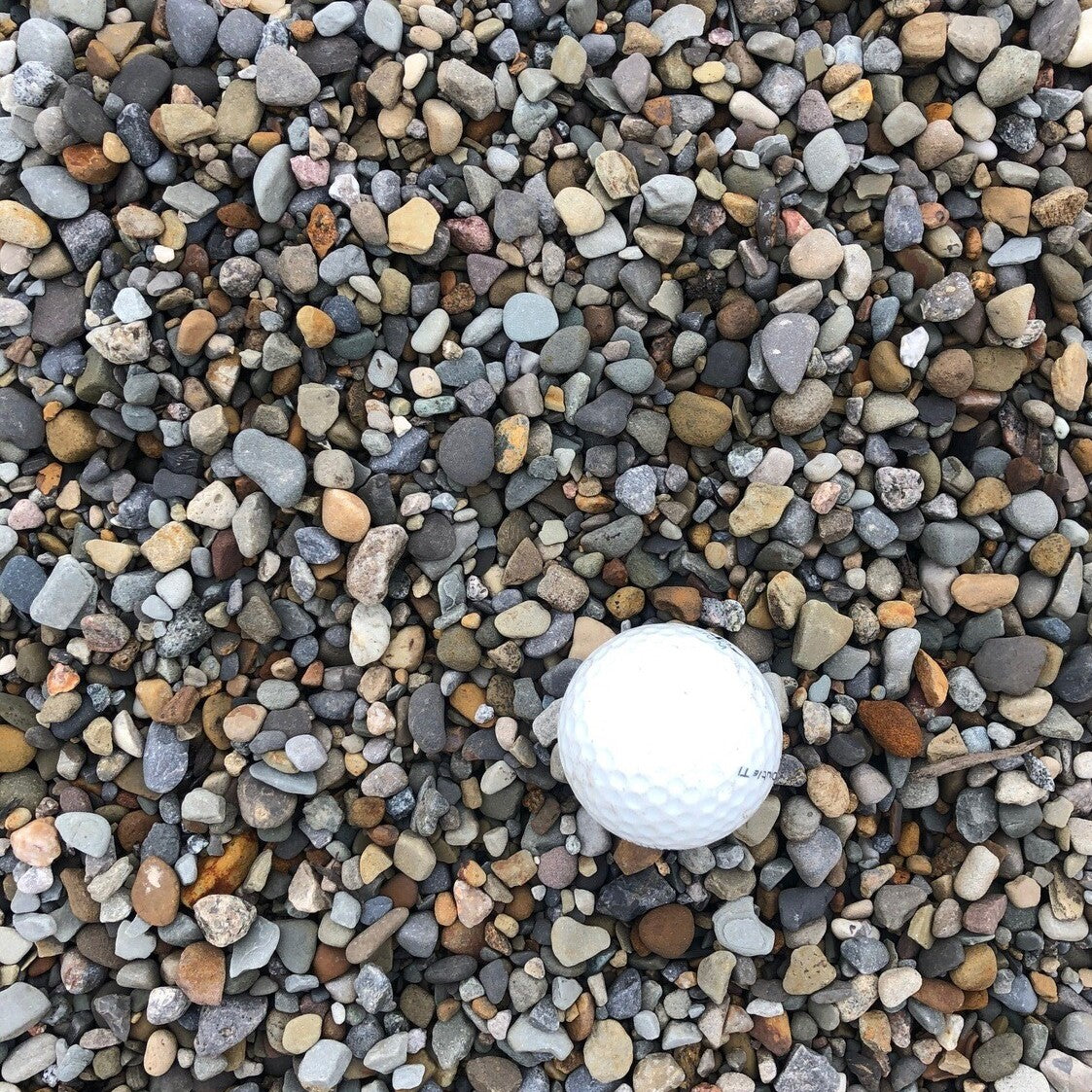
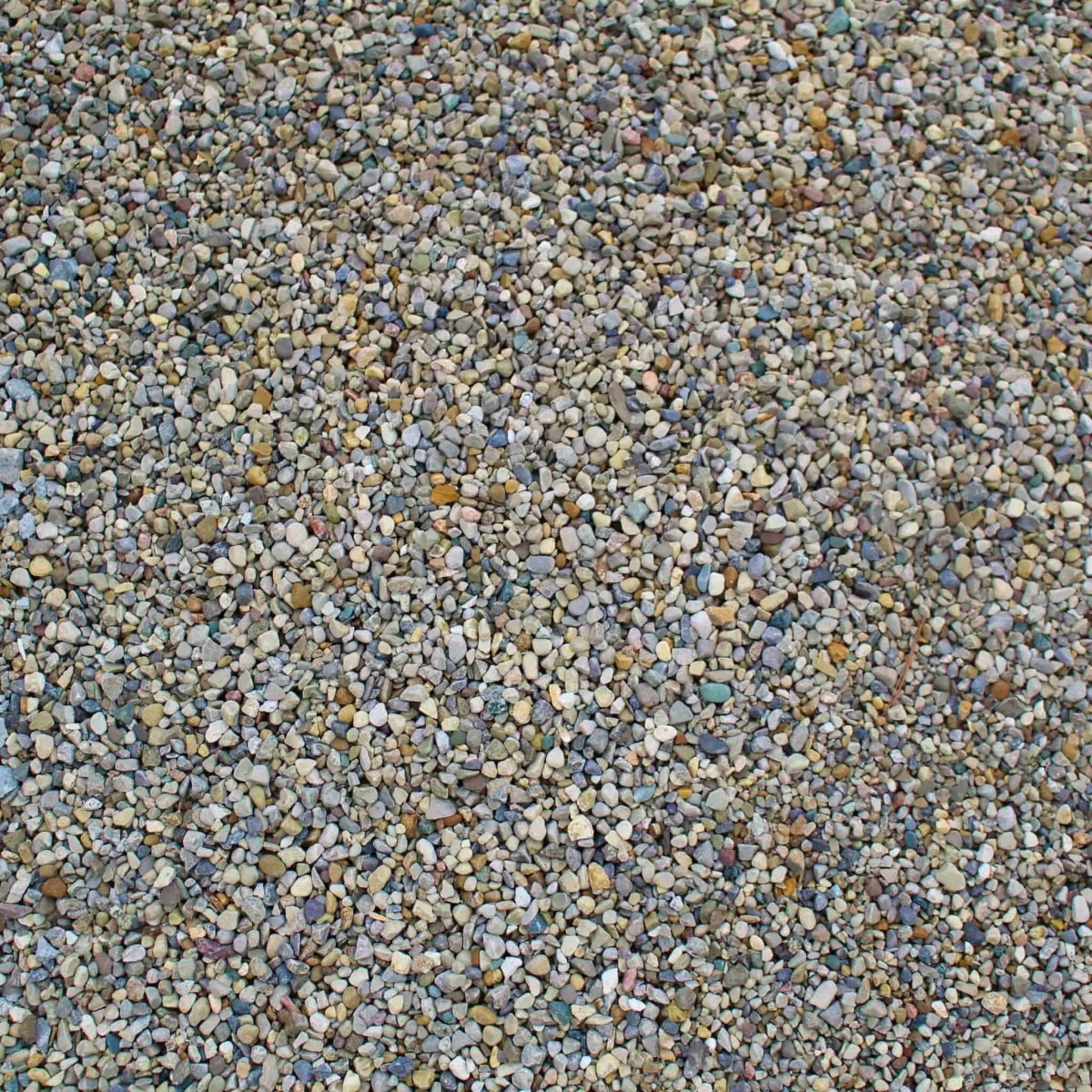
Classic pea gravel with smooth, rounded edges and natural earth tones. A versatile favorite for pathways, patios, drainage, and decorative ground cover.
Classic pea gravel with smooth, rounded edges and natural earth tones. A versatile favorite for pathways, patios, drainage, and decorative ground cover.
The driver nailed it on putting the gravel I ordered in front of my trailer and between the sidewalk. Very satisfied with how my flowerbeds look now.
How Much Material Do I Need?
For walkways and patios on Medford clay, plan for a four-inch compacted depth of crushed base rock, which requires about five inches of loose stone before compaction. Decorative top-dressing with river rock or pea gravel can be applied at two to three inches over the compacted base for a clean finished look.
Use our free stone calculator
What is a yard?
A yard is approximately 27 cubic feet. As a general guideline, one yard of material can cover an area of about 100-160 square feet at a 2-3 inch depth.
For stone projects, measure your area in feet and multiply length by width to get square footage, then decide on your depth in inches and divide the total cubic feet by 27 to reach cubic yards. Keep in mind that Medford's uneven clay subgrade often means you will need ten to fifteen percent more material than a flat-surface calculation suggests, particularly for drainage swales and pathway projects where a consistent compacted depth is critical. Our team is happy to check your numbers before you confirm your order.
Complete Your Outdoor Stone Project
Pair your stone delivery with bulk soil to build up graded areas before laying pathways, or add mulch to the planting beds surrounding your stone features for a finished, cohesive Medford landscape. Combining stone, soil, and mulch in a single order saves time and reduces the need for multiple scheduling windows.
Before laying any stone pathway or patio on Medford clay, compact the subgrade thoroughly using a plate compactor. Clay that appears firm when dry can turn soft and unstable after the first heavy winter rain, causing stone surfaces to sink unevenly. Compacting the clay base and adding a two-inch layer of compacted sand over it gives the stone a stable platform that resists the seasonal movement Medford's freeze and thaw winters produce each year.
Mulch Mound Pro Tip
Weed pressure in Medford stone areas can be surprisingly aggressive because Rogue Valley clay is mineral-rich and seeds that settle into gravel joints find it hospitable. Use a professional-grade landscape fabric rather than thin plastic sheeting under all decorative stone, and plan to apply a pre-emergent herbicide each spring around the time of the last frost in mid-April. This two-layer approach keeps stone areas looking clean through the growing season without constant hand-weeding.
Mulch Mound Pro Tip
River rock dry streambeds are especially functional in Medford because they solve drainage problems while also looking attractive during the long dry months when they carry no water. Design your dry streambed to follow the natural low path your yard takes during winter rain, typically toward the street or a planted absorption area. A well-placed dry streambed handles the clay soil runoff that would otherwise erode your lawn edges during the November through March wet season, and it requires no maintenance beyond occasional raking to refresh the stone placement.
The Unique Landscape of Medford
Stone is one of the most practical materials a Medford homeowner can invest in, particularly given the challenges that clay soil and seasonal rainfall create for outdoor spaces. Pathways built on compacted clay tend to erode, puddle, and shift through winter freeze and thaw cycles, and a well-laid gravel or crushed stone base solves all three problems at once. Stone used as ground cover in low-water areas dramatically reduces maintenance compared to organic mulch, which requires annual replenishment during Medford's warm decomposition-friendly summers. Drainage swales filled with river rock or crushed drain stone are especially valuable in the Rogue Valley, where clay soil cannot absorb heavy winter rainfall fast enough to prevent pooling near foundations and lawn areas. At 1,384 feet elevation, Medford's winters are cold enough to heave poorly supported edging and borders, and a properly bedded stone installation resists that frost movement far better than wood or plastic alternatives.
Frequently Asked Questions
Click a question to see the answer
Answer
What size gravel works best for Medford walkways built over clay soil?
Three-quarter inch crushed gravel is the most popular choice for Medford walkways because it packs firmly enough to create a stable surface while still allowing water to drain through. On clay soil, drainage is critical because water that cannot escape will soften the base and cause the path to shift and rut through winter. For a long-lasting installation, excavate four to six inches of clay, lay a fabric weed barrier, and fill with compacted three-quarter inch crushed stone to create a base that handles Medford winters without movement.
Answer
Can I use river rock to fix the drainage problems in my Medford yard?
River rock works very well in Medford drainage swales and low spots where clay prevents water from soaking in quickly enough. A French drain or dry streambed filled with one-and-a-half to two inch river rock can redirect winter runoff away from foundations and lawn areas that stay saturated through December and February. The key is to slope the swale away from structures and give the water somewhere useful to go, such as a planted area that can absorb it gradually over time.
Answer
Will decorative stone get too hot in Medford summers to use near plants?
Dark crushed stone and black lava rock can get very hot on the surface during Medford's summer afternoons, potentially raising soil temperatures enough to stress shallow roots. Light-colored river rock or buff-toned pea gravel absorbs less heat and is a better choice for planting bed borders and ground cover areas around ornamental shrubs. In full-sun areas, any stone used as ground cover should be combined with a thick weed barrier to prevent the heat-amplifying effect from damaging desirable plant roots below.
Answer
How much stone do I need to create a gravel parking pad on Medford clay?
For a gravel parking pad on Medford clay, plan on a four-inch compacted depth of three-quarter inch crushed base rock, which translates to about five inches of loose material before compaction. A standard two-car pad measuring twenty by twenty feet would need roughly six to seven cubic yards. Because Medford clay does not drain well, excavating the pad area before adding stone is essential, otherwise the gravel will slowly sink into soft clay after winter rains.
Answer
Is pea gravel a good choice for a dog run or play area in Medford?
Pea gravel works well for dog runs and play surfaces in Medford because it is smooth underfoot, drains far better than bare clay, and does not hold heat as aggressively as darker crushed stone. Lay it at a three-inch depth over a permeable fabric barrier to keep the clay from slowly swallowing the gravel over multiple wet seasons. The clay soil here will naturally work its way up through loose stone over time, so the fabric barrier is not optional if you want the surface to stay clean and functional for several years.
Answer
What stone is best for erosion control on a slope in the Rogue Valley?
Angular crushed rock, such as crushed basalt or decomposed granite, is far more effective than round river rock for slope erosion control. Angular stones interlock when placed and resist rolling under the heavy rain events Medford sees in December and January. For steeper slopes, larger four-to-six inch angular rip-rap holds soil in place even during the brief but intense storms Rogue Valley winters sometimes produce. Always install erosion control stone over filter fabric to prevent the clay below from washing out through the voids.
Answer
Can a stone border help protect my Medford home's foundation through the wet winter?
Yes, a properly graded crushed stone border along the foundation is one of the most effective ways to manage the drainage problems that Medford clay creates near structures. A twelve to eighteen inch band of three-quarter inch crushed drain rock, graded to slope away from the foundation, allows rainwater to percolate down and away from the wall rather than pooling against it. Combined with clean gutters and downspout extensions, a stone foundation border significantly reduces the moisture pressure that causes Medford clay to expand and stress foundations over time.





 +5
+5



