

















Mulch Mound is an excellent supplier. My online ordering process was quick and easy and they stuck to their delivery date. Highly recommend!
About this mulch
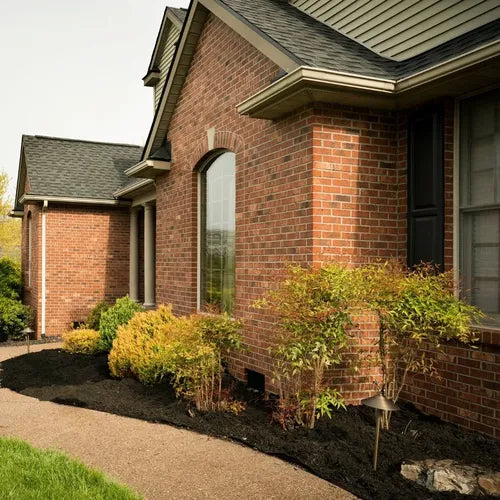
Double-shredded mulch dyed a rich, even brown that holds its color through the season.
Mulch Mound is an excellent supplier. My online ordering process was quick and easy and they stuck to their delivery date. Highly recommend!
Tell us what you're looking for
Thanks! We received your request.
Something went wrong. Please try again.
How Much Material Do I Need?
How Much Material Do I Need?
Plan on two to three inches for established beds and three to four inches for new installations where weed pressure is high. One cubic yard covers about 108 square feet at three inches deep.
Use our free mulch calculator
What is a yard?
What is a yard?
FAQs
FAQs
Mount Pleasant Mulch Delivery
Mount Pleasant Mulch Delivery
Regular price
$55.00
per
Yard
Regular price
Sale price
$55.00
Unit price
per
Shipping calculated at checkout.
Minimum of 3 Yard
Couldn't load pickup availability
Not currently available
We can't take orders for this right now. Tell us what you need and we'll get back to you.
Hand-picked local yards
4,000+ regional deliveries
Dedicated support
Why order through Mulch Mound
The best local , without the guesswork.
We hand-pick and partner with the best yards in your region, keep only the ones our buyers rate well, and back each load with our guarantee.
Mulch Mound Guarantee
If your isn't the quantity or quality you ordered, we'll make it right.
About this mulch
Double-shredded mulch dyed a rich, even brown that holds its color through the season.
Mulch Mound is an excellent supplier. My online ordering process was quick and easy and they stuck to their delivery date. Highly recommend!
How Much Material Do I Need?
How Much Material Do I Need?
Plan on two to three inches for established beds and three to four inches for new installations where weed pressure is high. One cubic yard covers about 108 square feet at three inches deep.
Use our free mulch calculator
What is a yard?
What is a yard?
FAQs
FAQs
Tell us what you're looking for
Thanks! We received your request.
Something went wrong. Please try again.

How It Works
Getting started is easy — just follow these simple steps
1
Choose your Mulch
Make sure you adjust the quantity to your home's needs. You can use our calculator to estimate how much you'll need.
2
Select your delivery date
Select a delivery date you'd like for the product to be dropped off at your home
3
Sit back and wait
Sit back, wait, and let us work our magic to make sure the highest quality product is delivered to your driveway.

They are thorough and very helpful to ensure the proper selection and delivery coordination. The driver was kind, respectful and very conscience no...
Read full review
They are thorough and very helpful to ensure the proper selection and delivery coordination. The driver was kind, respectful and very conscience not to damage anything. will recommend Mulch Mound to anyone.

Great experience using Mulch Mound! Ordering was super quick and easy. I placed my order Tues evening and my order was delivered on Thurs morning!<...
Read full review
Great experience using Mulch Mound! Ordering was super quick and easy. I placed my order Tues evening and my order was delivered on Thurs morning!
Quality of product was great. And delivery driver dropped all product perfectly on a trap I had laid out. Not a grain was spilt!
Wonderful experience start to finish! Highly recommended!
Calculate mulch for your Mount Pleasant project
For Mount Pleasant's type of soil, we recommend 2-3 inches for best weed suppression and moisture retention
Try Our CalculatorMeasure each bed separately with a tape or by pacing it off, then multiply length by width for square footage. Curved Lowcountry beds are easiest to estimate by breaking them into rectangles and half circles. Enter your total and a three inch depth, and add ten percent for settling into sandy loam.



Best Mulch Choice for Mount Pleasant Lawns
Most yards in the Mount Pleasant area sit on type of soil. Sandy loam across Mount Pleasant drains beautifully but holds almost no water or nutrients, so plant beds swing from saturated after a storm to bone dry within forty eight hours. That whiplash stresses azaleas, hydrangeas, and newly planted shrubs more than the heat itself does.
Hardwood Mulch
Hardwood mulch is the fix because it decomposes into fine organic matter that binds with sand particles and dramatically improves water and nutrient holding capacity. Each season it breaks down, your Mount Pleasant beds get a little richer, a little more moisture retentive, and a lot easier on your irrigation.
Complete Your Outdoor Mulch Project
Pair your mulch with a few yards of compost or garden soil worked in first, since sandy loam benefits from organic matter underneath. Steel or paver edging keeps mulch from migrating into the lawn during our heavy summer downpours.
Mulch Mound Pro Tip
Water your beds thoroughly the day before mulch arrives. Sandy loam in Mount Pleasant dries out to a powder within a couple of days of heat, and dry soil under fresh mulch can actually repel the next rain instead of absorbing it. Pre wetting means the first storm soaks straight down to the roots rather than sheeting off the top of the new layer.
Mulch Mound Pro Tip
Rake and fluff old mulch before you add new material. After a Lowcountry summer, the bottom of an aging layer often mats into a crust that sheds water and grows a felt of fungal mycelium. Breaking that crust with a hard rake restores infiltration, lets air reach roots, and means you may only need an inch and a half of fresh mulch instead of three.
Mulch Mound Pro Tip
Keep mulch out of the crown zone. Live oaks, crepe myrtles, and palmettos all over Mount Pleasant get buried in volcano shaped mounds that trap moisture against the bark in ninety percent humidity. Spread the mulch flat and taper it to nothing at the trunk flare. You want to see where the tree widens and meets the ground.
The Unique Landscape of Mount Pleasant
Mount Pleasant sits barely 13 feet above sea level on sandy loam that drains almost as fast as the tide runs out of Shem Creek. Water and nutrients slip past root zones quickly here, and 51 inches of annual rain, most of it falling in heavy summer downpours, washes the fines right out of bare beds. A steady mulch layer slows that runoff, holds moisture between storms, and keeps root zones from cooking during the long Zone 9a summer that runs from late March through mid November. It also buys you a real weed advantage against Bermuda runners, dollarweed, and the volunteer live oak and wax myrtle seedlings that pop up in every East Cooper yard. Because our frost window is narrow, from November 17 to March 25, mulch here works less as winter insulation and more as year round moisture and salt spray buffering for azaleas, camellias, and loropetalum.