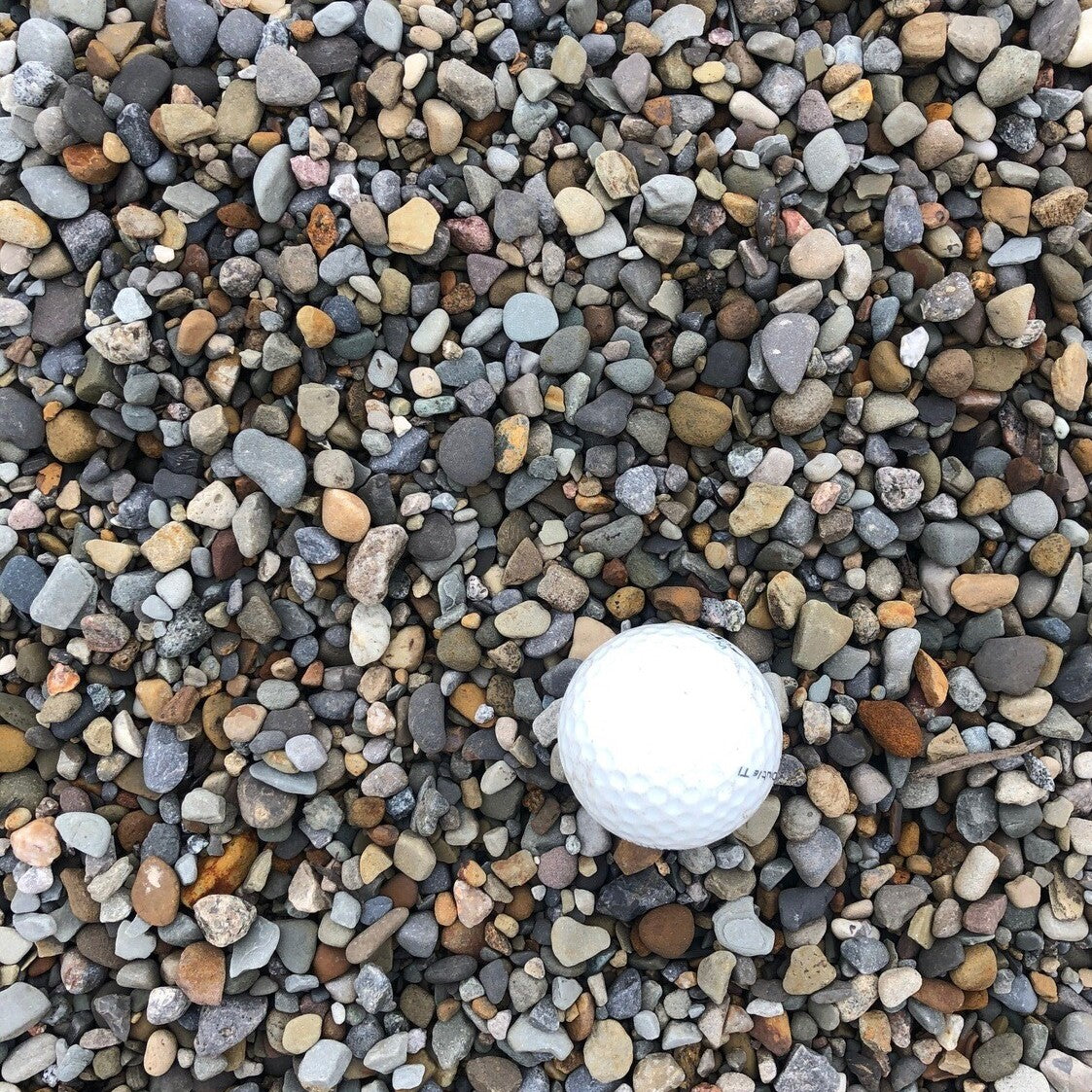
Classic pea gravel with smooth, rounded edges and natural earth tones. A versatile favorite for pathways, patios, drainage, and decorative ground cover.
My experience with Mulch Mound was great and super easy. I ordered two yards of screened topsoil and was able to get it delivered within 2 days. They came in my requested time frame (afternoon) and dropped it off where I asked on my driveway. The topsoil was exactly what was a...
Classic pea gravel with smooth, rounded edges and natural earth tones. A versatile favorite for pathways, patios, drainage, and decorative ground cover.
My experience with Mulch Mound was great and super easy. I ordered two yards of screened topsoil and was able to get it delivered within 2 days. They came in my requested time frame (afternoon) and dropped it off where I asked on my driveway. The topsoil was exactly what was a...
How Much Material Do I Need?
For gravel pathways and drainage installations over New York's urban fill, a minimum depth of 3 inches provides stable footing and meaningful water management capacity. Decorative stone borders and accent areas typically perform well at 2 to 3 inches, which is enough to suppress weed germination and provide a clean visual surface without requiring excessive material volume.
Use our free stone calculator
What is a yard?
A yard is approximately 27 cubic feet. As a general guideline, one yard of material can cover an area of about 100-160 square feet at a 2-3 inch depth.
My experience with Mulch Mound was great and super easy. I ordered two yards of screened topsoil and was able to get it delivered within 2 days. Th...
Read full review
My experience with Mulch Mound was great and super easy. I ordered two yards of screened topsoil and was able to get it delivered within 2 days. They came in my requested time frame (afternoon) and dropped it off where I asked on my driveway. The topsoil was exactly what was advertised, clean with no rocks or other debris. The price was reasonable. I plan to use them again in a couple weeks to order compost for my garden beds.
Measure the length and width of your stone project area in feet, multiply them together for total square footage, then multiply by the intended depth in feet and divide by 27 to convert to cubic yards. For drainage applications in New York, plan slightly deeper than your calculation since urban fill below the stone will compact and settle over time, reducing your effective drainage layer. For decorative and pathway applications, 2 to 3 inches of depth is a reliable starting point that suits most residential projects.
Complete Your Outdoor Stone Project
Pair your stone delivery with a topsoil order to build up any planting areas adjacent to your new stone features before adding mulch and plants. In New York, combining stone drainage elements with quality garden soil in nearby beds creates a balanced landscape that manages the 47 inches of annual rainfall without waterlogging plants or leaving exposed urban fill vulnerable to erosion.
New York's urban fill creates predictable drainage failures wherever compacted soil cannot absorb or move water through the soil profile. Installing a 4-inch layer of clean crushed stone in chronically wet areas gives rainfall a path to percolate slowly rather than pooling on the surface or sheeting off onto neighboring properties. Combining stone with a perforated drain pipe buried beneath the gravel layer can solve even severe drainage problems that have persisted for years in fill-heavy New York yards without the cost of excavating and replacing the fill itself.
Mulch Mound Pro Tip
A well-laid gravel pathway through a New York side yard or garden area reduces the mud and compaction that foot traffic causes on urban fill, especially during the wet months between April 7 and early summer when soil is soft and saturated from spring rains. Compacted decomposed granite or fine crushed stone gives a firm, walkable surface that sheds water and stays in place better than loose pea gravel in New York's seasonal wind and rain. Installing steel or stone edging along both sides of the pathway keeps material contained and reduces spreading after the heavy rain events that arrive throughout the growing season.
Mulch Mound Pro Tip
Stone is not completely weed-free in New York, where seeds blow in from surrounding urban areas and settle onto any surface that offers even minimal moisture and organic debris. Laying a quality non-woven landscape fabric beneath your stone layer before installation blocks light from reaching the disturbed urban fill below and dramatically reduces weed pressure through the entire growing season. Refreshing your stone with a thin top-dressing layer every few years improves the appearance and buries the fine particle buildup at the surface that can accumulate enough material over time to support light weed growth.
The Unique Landscape of New York
Stone is one of the most practical landscape materials available for New York properties because it solves problems that urban fill soil and heavy annual rainfall create year after year. With 47 inches of rain annually, gravel and crushed stone improve drainage in areas where compacted fill has no capacity to absorb or move excess water effectively. Stone pathways and borders require no seasonal replanting and hold up through Zone 7b winters without heaving or washing away the way organic materials can. New York's growing season runs from April 7 to November 11, and low-maintenance landscape solutions that perform without annual investment are especially valuable in a city where time and access are limited. Whether you are creating a dry creek bed to manage runoff, a clean pathway through a narrow side yard, or a decorative border around planting beds, stone performs reliably in New York's challenging urban conditions year after year.
Frequently Asked Questions
Click a question to see the answer
Answer
What type of stone works best for fixing drainage problems caused by urban fill soil in my New York yard?
Clean crushed stone, often called drainage stone or clean gravel, is the most effective choice for drainage applications over New York's urban fill. Its angular, washed particles create consistent void space that allows water to percolate down and move laterally rather than pooling on the compacted fill surface. Sizes in the half-inch to 1-inch range work well for French drain trenches and drainage beds, while larger 1.5-inch clean stone is better for deep drainage layers beneath pathways and patio areas where load-bearing is also a concern.
Answer
How deep should I lay gravel for a walkway in my New York yard?
A minimum of 3 inches of compacted gravel base provides a stable, well-draining walkway surface over New York's urban fill. If your fill layer is especially soft or prone to settling, a 4-inch depth is more appropriate, particularly in side yards that carry regular foot traffic. Compact the gravel in layers rather than all at once, and consider laying landscape fabric beneath it to prevent the fine particles in urban fill from migrating up into your stone over time.
Answer
Will stone wash away or shift during New York's heavy rain storms?
Angular crushed stone locks together after it settles and resists displacement far better than smooth river rock or pea gravel during New York's intense rain events. Containing your stone areas with solid edging, whether steel, aluminum, or concrete, is the most effective way to prevent migration along the edges where water flow is greatest. For sloped areas, a coarser stone size in the 1.5-inch to 2-inch range provides better stability than finer material that can be carried by sheet flow across a grade.
Answer
Can I use decorative stone instead of mulch for low-maintenance areas in my New York yard?
Stone is an excellent low-maintenance alternative to mulch in New York for areas where you are not trying to improve soil health or feed plants. It never needs annual replenishment, does not decompose, and handles New York's 47 inches of annual rainfall without compacting or washing away. The trade-off is that stone does not add organic matter to the urban fill below, so it is best suited for areas around hardscape, foundation plantings with established shrubs, or purely decorative zones where soil improvement is not a goal.
Answer
What size stone should I use for a dry creek bed to handle runoff in my New York backyard?
A combination of sizes works best for a functional dry creek bed in New York. Use 2-inch to 4-inch cobble or river stone as the visible surface layer to simulate a natural creek appearance, and line the channel below with 1-inch clean crushed stone to allow water to percolate down through the base rather than shedding sideways into adjacent planting areas. The channel should be sized to handle the peak runoff volume your yard generates during a 1-inch-per-hour rain event, which New York experiences several times each year.
Answer
How do I stop weeds from growing up through my stone areas in New York?
Landscape fabric installed beneath your stone before delivery is the most effective first line of defense against weeds in New York's urban fill environments. Weed seeds blown in from surrounding areas will still germinate on top of the stone, but without soil contact beneath them they struggle to establish deep roots and are easier to pull. Keeping your stone layer at a consistent 3-inch depth also limits light reaching the fabric and reduces the thin film of fine debris that accumulates at the surface over time and can support light weed growth.
Answer
Is gravel or stone a good option for the narrow side yards that are so common in New York City?
Stone is arguably the best possible material for New York City side yards. These tight spaces get heavy foot traffic, receive erratic rainfall runoff from the main yard and building gutters, and are often too shaded for grass or groundcovers to thrive. A 3-inch layer of compacted crushed stone over landscape fabric creates a clean, permeable surface that handles drainage, withstands foot traffic, and requires zero seasonal maintenance. It also dramatically reduces the mud and urban fill erosion that makes most New York side yards an ongoing maintenance problem.