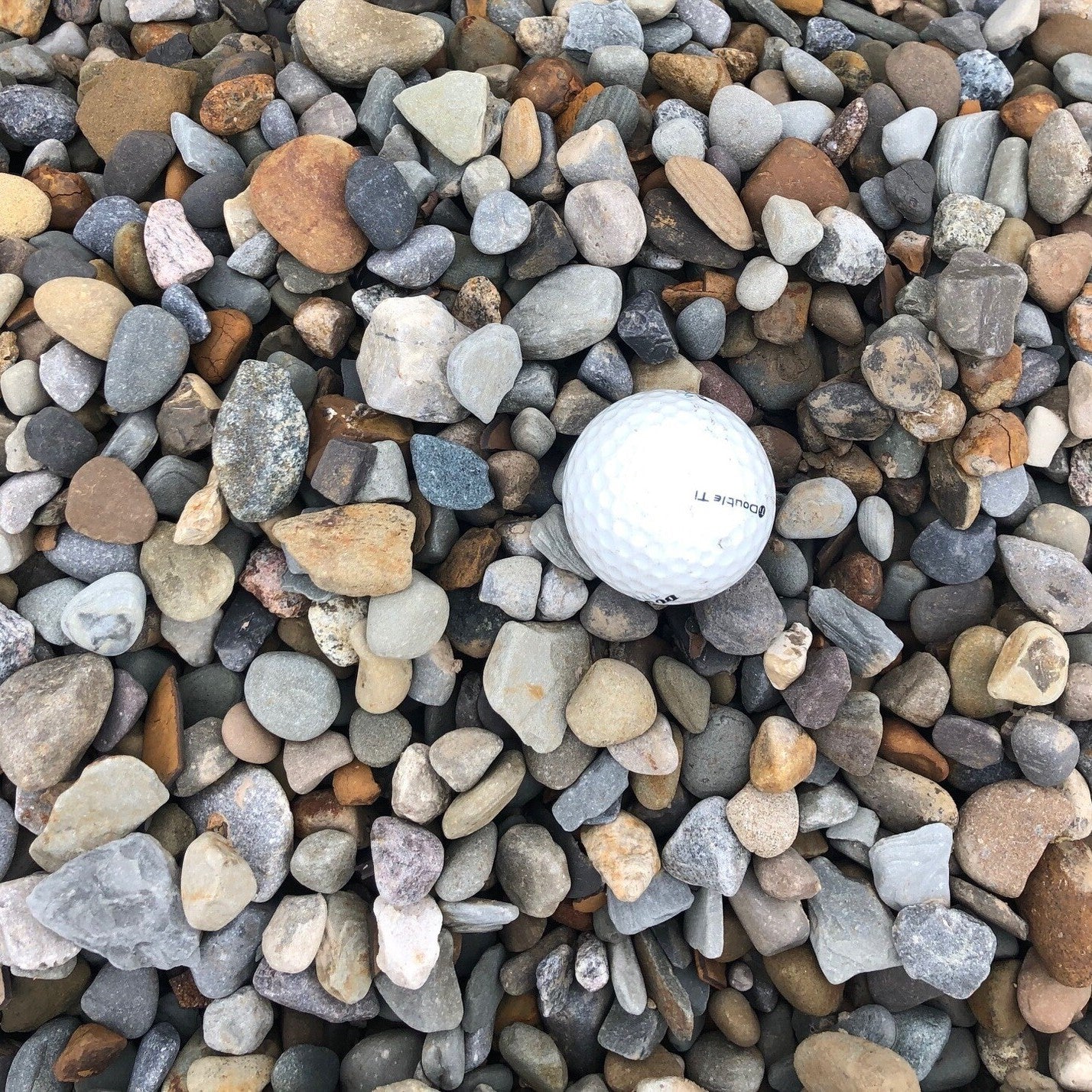
Number 57 crushed stone, angular limestone graded to about three quarters of an inch. The standard driveway, base and drainage gravel, it locks together under traffic and drains fast.
My experience with Mulch Mound was great and super easy. I ordered two yards of screened topsoil and was able to get it delivered within 2 days. They came in my requested time frame (afternoon) and dropped it off where I asked on my driveway. The topsoil was exactly what was a...
Tell us what you're looking for
Thanks! We received your request.
Something went wrong. Please try again.
How Much Material Do I Need?
For decorative coverage in Ashland, plan on 2 to 3 inches of stone depth over landscape fabric for most beds and borders. For drainage applications around foundations or in low spots that collect water from the area's regular rainfall, a 4-inch layer gives better long-term performance.
Use our free gravel calculator
What is a yard?
A yard is approximately 27 cubic feet. As a general guideline, one yard of material can cover an area of about 100-160 square feet at a 2-3 inch depth.
We can't take orders for this right now. Tell us what you need and we'll get back to you.
What do you need?
Thanks! We received your request.
Something went wrong. Please try again.
Hand-picked local yards
4,000+ regional deliveries
Dedicated support
Why order through Mulch Mound
The best local stone, without the guesswork.
We hand-pick and partner with the best yards in your region, keep only the ones our buyers rate well, and back each load with our guarantee.
Mulch Mound Guarantee
If your stone isn't the quantity or quality you ordered, we'll make it right.
About this stone
Number 57 crushed stone, angular limestone graded to about three quarters of an inch. The standard driveway, base and drainage gravel, it locks together under traffic and drains fast.
My experience with Mulch Mound was great and super easy. I ordered two yards of screened topsoil and was able to get it delivered within 2 days. They came in my requested time frame (afternoon) and dropped it off where I asked on my driveway. The topsoil was exactly what was a...
How Much Material Do I Need?
For decorative coverage in Ashland, plan on 2 to 3 inches of stone depth over landscape fabric for most beds and borders. For drainage applications around foundations or in low spots that collect water from the area's regular rainfall, a 4-inch layer gives better long-term performance.
Use our free gravel calculator
What is a yard?
A yard is approximately 27 cubic feet. As a general guideline, one yard of material can cover an area of about 100-160 square feet at a 2-3 inch depth.
My experience with Mulch Mound was great and super easy. I ordered two yards of screened topsoil and was able to get it delivered within 2 days. Th...
Read full review
My experience with Mulch Mound was great and super easy. I ordered two yards of screened topsoil and was able to get it delivered within 2 days. They came in my requested time frame (afternoon) and dropped it off where I asked on my driveway. The topsoil was exactly what was advertised, clean with no rocks or other debris. The price was reasonable. I plan to use them again in a couple weeks to order compost for my garden beds.
Really appreciate the care and follow thru that this company had with our order. A hiccup came up but they were quick to respond and address all co...
Read full review
Really appreciate the care and follow thru that this company had with our order. A hiccup came up but they were quick to respond and address all concerns, which made our garden day a success! Thank you for your prompt care.
To estimate stone for your Ashland project, start by measuring your coverage area in square feet and decide on your desired depth. For most decorative stone applications, 2 to 3 inches is standard, but drainage-focused installations in Ashland's wet climate may need 4 inches to function properly. One cubic yard of stone covers approximately 100 square feet at 3 inches deep, and ordering a little extra is always wise since stone cannot be easily added mid-project without a second delivery fee.
Stone Types We Deliver in Ashland
Mulch Mound delivers bulk stone by the cubic yard directly to your property, making it simple to complete any landscape project without hauling material yourself. Homeowners searching for bulk gravel by the yard in Ashland can count on reliable delivery with no trip to a stone yard required. Kentucky's humid climate and heavy clay soils put real demands on landscape materials, and we carry stone that is well suited to hold up and perform in those local conditions.
Pea Gravel
Pea Gravel is a smooth, rounded stone that drains well through Ashland's wet spring seasons, keeping pathways and patios free of standing water. Its warm, natural earth tones suit the brick and wood home styles common across this part of Kentucky, and it layers neatly as decorative ground cover or beneath raised garden beds.
Complete Your Outdoor Stone Project
Stone and mulch work together well in many Ashland landscapes, with stone handling high-traffic areas and borders while mulch covers planting beds. If you are doing significant grading or drainage work alongside your stone installation, a delivery of quality topsoil helps ensure proper slope and base preparation before the stone goes down.
In Ashland, always install landscape fabric before placing decorative stone, particularly in areas where silt clay loam soil is close to the surface. That fine-textured soil has a tendency to migrate upward into gravel layers over time, especially after the repeated wetting and drying cycles that come with 43 inches of annual rain. Without fabric, you will find your stone layer mixing with silty soil within a couple of seasons, which muddies the appearance and reduces drainage performance.
Mulch Mound Pro Tip
For stone pathways in Ashland, consider using a compactable gravel like crusher run or 3/4 inch crushed limestone as your base layer before adding decorative stone on top. Zone 6b winters bring frost heave that can shift a pathway surface if it lacks a firm, well-compacted base. Laying 3 to 4 inches of compactable gravel and tamping it firmly before your finish stone layer results in a pathway that stays level and attractive through multiple freeze-thaw cycles.
Mulch Mound Pro Tip
Dry creek beds have become one of the most functional and visually appealing stone features in Ashland landscapes, and for good reason. By designing a creek bed that follows the natural low-flow path across your property, you create a defined channel that handles the heavy runoff from Ashland's summer and fall rain events while looking like an intentional design feature rather than a drainage fix. Use a mix of river rock sizes for the most natural appearance, placing larger stones along the edges and smaller gravel in the center channel.
The Unique Landscape of Ashland
Ashland's combination of silt clay loam soil, sloped terrain, and 43 inches of annual rainfall creates conditions where poorly managed water is a constant landscaping challenge. Decorative stone and gravel installations offer a practical solution that native soil and plant material alone cannot match, providing stable pathways, drainage channels, and foundation borders that hold up through wet Kentucky winters and heavy summer storms. Zone 6b weather in Ashland means freeze-thaw cycles hit the ground hard each winter, and stone-based landscape features survive those temperature swings far better than organic materials. The Boyd County area also includes hillside lots where erosion control is a real concern, and stone is one of the most effective materials for stabilizing slopes and preventing topsoil loss. Beyond function, decorative stone gives Ashland homes low-maintenance curb appeal that looks sharp year-round without the fading or replenishment needs of mulch. Whether you are creating a dry creek bed to manage yard drainage or laying a simple gravel path between garden areas, stone installations add lasting value to Ashland properties.
Frequently Asked Questions
Click a question to see the answer
Answer
What size gravel works best for a walkway in an Ashland yard?
For foot traffic pathways in Ashland, pea gravel and 3/4 inch crushed stone are both popular choices. Pea gravel feels comfortable underfoot but can shift and scatter on slopes, which is worth considering on Boyd County lots with any grade change. Crushed stone compacts more firmly and handles Ashland's heavy rain events without washing out as easily, making it the more practical choice for paths that see regular use.
Answer
How can stone help with the drainage problems in my Ashland backyard?
Stone is one of the most effective drainage tools available for Ashland homeowners dealing with the water management challenges of silt clay loam soil. A dry creek bed filled with river rock channels water away from low spots and foundations, guiding it to a better outlet point. French drain installations using washed gravel also work well in Ashland's consistently wet climate, moving subsurface water away from saturated areas before it pools or damages plant roots.
Answer
Will decorative stone hold up through Ashland's winter freeze-thaw cycles?
Stone is one of the few landscape materials that genuinely improves in reliability through Ashland's zone 6b winters. Unlike mulch or organic groundcovers that break down from repeated freezing and thawing, stone stays stable through the temperature swings common between November and March in Boyd County. Large decorative rock may shift slightly in frost heave conditions, but gravel and smaller stone beds require almost no maintenance after a winter season.
Answer
How thick of a stone layer do I need to suppress weeds in my Ashland beds?
For effective weed suppression with stone in Ashland, a depth of 3 to 4 inches over a quality landscape fabric provides good results. Ashland's clay-heavy soil is surprisingly good at holding weed seeds near the surface, so skipping the fabric layer and relying on stone depth alone is less reliable here than in sandier soils. The combination of landscape fabric plus a proper stone depth gives you much better long-term weed control.
Answer
What kind of stone works well along the foundation of a home in Ashland's wet climate?
River rock or washed gravel in the 1 to 2 inch size range is a practical choice for foundation borders in Ashland. The goal is to create a fast-draining zone around the foundation that moves water away from the structure rather than letting it pool against the siding or basement wall. Ashland's 43 inches of annual rain make this kind of drainage-focused foundation border particularly important, and stone beats mulch in this application because it does not hold moisture against the structure.
Answer
Can I use stone to control erosion on a sloped section of my Ashland property?
Absolutely, and stone is one of the better long-term erosion control options for sloped Ashland lots. Larger river rock or fieldstone can be laid in a pattern that slows water movement across the slope, reducing the velocity of runoff during heavy rain. For steeper grades, a dry-stacked stone retaining wall or a series of rock check dams across the slope can stop topsoil from washing away during the intense summer storms that regularly move through the area.
Answer
How do I calculate how much stone I need for a gravel driveway or large area in Ashland?
For a gravel driveway or large coverage area in Ashland, measure the length and width in feet and multiply for square footage, then determine your desired depth in inches. Dividing square footage by 100 and multiplying by the depth in inches gives a rough cubic yard estimate. For driveways in Ashland where freeze-thaw cycles can cause settling, plan for at least 4 inches of depth on a compacted base, and add 10 to 15 percent to your order to account for the first season of compaction and any low spots that appear.
Answer
Is there a stone yard near Ashland?
Crushed Stone is a solid choice in Ashland for drainage channels and firm pathways, since the silt clay loam soil and steady rainfall can leave bare ground soft and muddy. It is the same stone you would buy at a stone yard, delivered to your door instead. Mulch Mound brings it by the cubic yard, so you never have to visit a quarry.