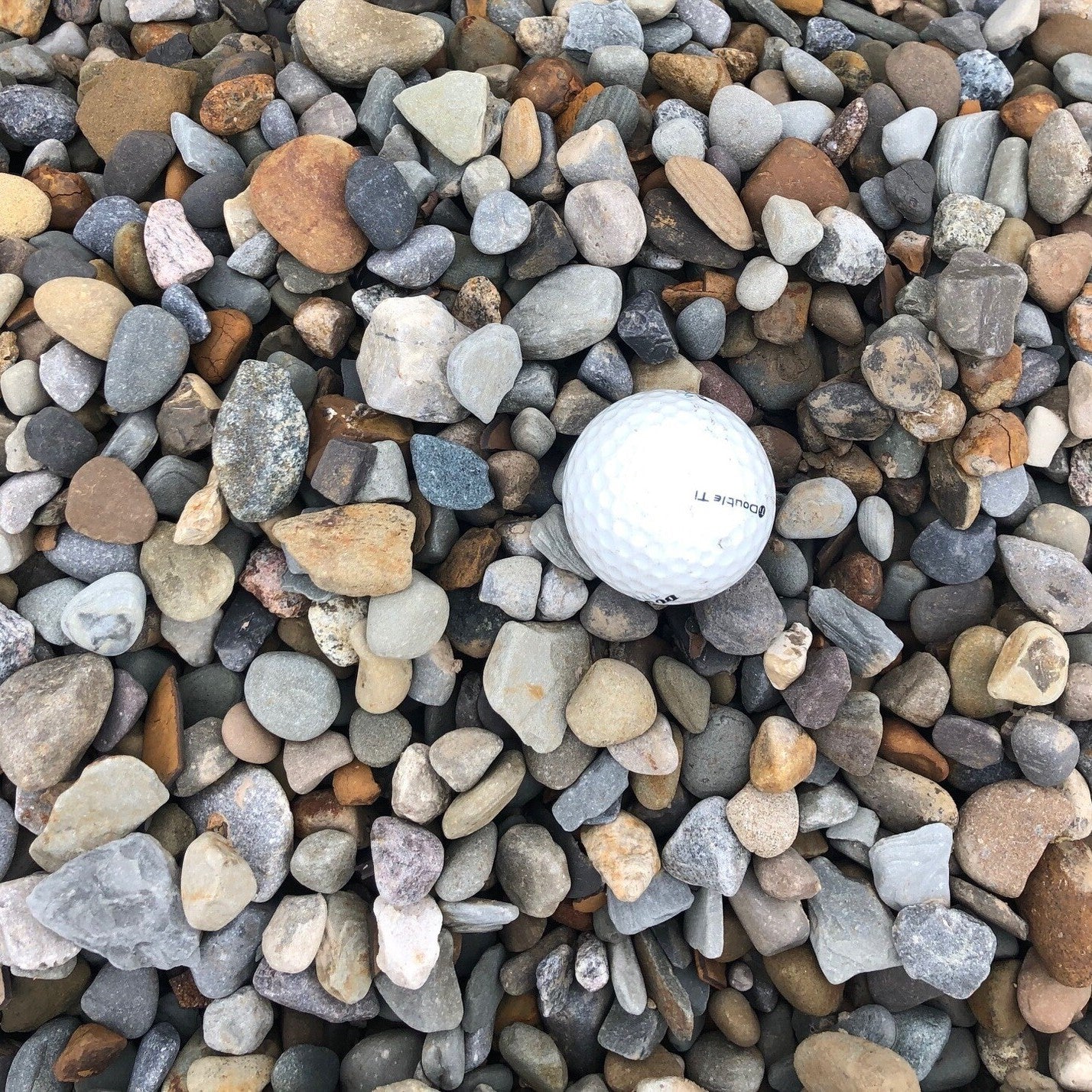
Number 57 crushed stone, angular limestone graded to about three quarters of an inch. The standard driveway, base and drainage gravel, it locks together under traffic and drains fast.
My experience with Mulch Mound was great and super easy. I ordered two yards of screened topsoil and was able to get it delivered within 2 days. They came in my requested time frame (afternoon) and dropped it off where I asked on my driveway. The topsoil was exactly what was a...
Tell us what you're looking for
Thanks! We received your request.
Something went wrong. Please try again.
How Much Material Do I Need?
Decorative ground cover stone in Athens planting beds and border areas typically performs best at a 2 to 3 inch finished depth, which is enough to suppress weeds and cover landscape fabric cleanly while staying light enough not to compress soil and root systems below. Pathway and high-traffic areas benefit from a full 4 inch depth to maintain coverage as material shifts and settles through the freeze-thaw season.
Use our free gravel calculator
What is a yard?
A yard is approximately 27 cubic feet. As a general guideline, one yard of material can cover an area of about 100-160 square feet at a 2-3 inch depth.
We can't take orders for this right now. Tell us what you need and we'll get back to you.
What do you need?
Thanks! We received your request.
Something went wrong. Please try again.
Hand-picked local yards
4,000+ regional deliveries
Dedicated support
Why order through Mulch Mound
The best local stone, without the guesswork.
We hand-pick and partner with the best yards in your region, keep only the ones our buyers rate well, and back each load with our guarantee.
Mulch Mound Guarantee
If your stone isn't the quantity or quality you ordered, we'll make it right.
About this stone
Number 57 crushed stone, angular limestone graded to about three quarters of an inch. The standard driveway, base and drainage gravel, it locks together under traffic and drains fast.
My experience with Mulch Mound was great and super easy. I ordered two yards of screened topsoil and was able to get it delivered within 2 days. They came in my requested time frame (afternoon) and dropped it off where I asked on my driveway. The topsoil was exactly what was a...
How Much Material Do I Need?
Decorative ground cover stone in Athens planting beds and border areas typically performs best at a 2 to 3 inch finished depth, which is enough to suppress weeds and cover landscape fabric cleanly while staying light enough not to compress soil and root systems below. Pathway and high-traffic areas benefit from a full 4 inch depth to maintain coverage as material shifts and settles through the freeze-thaw season.
Use our free gravel calculator
What is a yard?
A yard is approximately 27 cubic feet. As a general guideline, one yard of material can cover an area of about 100-160 square feet at a 2-3 inch depth.
My experience with Mulch Mound was great and super easy. I ordered two yards of screened topsoil and was able to get it delivered within 2 days. Th...
Read full review
My experience with Mulch Mound was great and super easy. I ordered two yards of screened topsoil and was able to get it delivered within 2 days. They came in my requested time frame (afternoon) and dropped it off where I asked on my driveway. The topsoil was exactly what was advertised, clean with no rocks or other debris. The price was reasonable. I plan to use them again in a couple weeks to order compost for my garden beds.
For loose stone coverage like pathways and ground cover areas, measure the length and width of your project space in feet, decide on your finished depth in inches, then multiply length times width times depth and divide by 324 to get cubic yards. Athens properties with irregular terrain often have non-rectangular areas, so breaking your space into smaller rectangular sections and adding them together gives you a more accurate total than trying to estimate one large irregular shape as a single calculation.
Stone Types We Deliver in Athens
Mulch Mound brings bulk stone right to your door in Athens, making it easy to tackle drainage fixes, pathways, and landscaping projects without hauling a thing. Whether you are searching for bulk gravel by the yard in Athens or just need a clean, natural ground cover, we measure and deliver exactly what your project calls for. Our stone is sold by the cubic yard so you get the right amount without waste.
Pea Gravel
Smooth and rounded, pea gravel is a natural fit for the varied terrain and clay-heavy soils common across southeastern Ohio. Its gentle earth tones complement the wooded, cottage-style landscapes typical of this region, and its excellent drainage performance makes it a reliable choice for pathways, patios, and garden beds year-round.
Complete Your Outdoor Stone Project
Stone borders and pathways look most finished when the adjacent planting beds are properly mulched, and pairing your stone delivery with a mulch order keeps your entire landscape project on the same schedule. If your project involves building up grade or improving drainage beneath the stone installation, a bulk soil order for any regrading work ensures your surface is properly prepared before the stone goes down.
When installing a crushed stone pathway in Athens, the most important step is base preparation, not the decorative stone itself. Excavate 4 to 6 inches below the finished grade, compact the subgrade firmly, and add a layer of crushed limestone base material before your top stone goes in. This base layer is what prevents the sinking, rutting, and uneven settling that make pathways look neglected within a season or two. Athens's freeze-thaw cycles will heave any pathway that lacks adequate base depth, and repairing sunken stone after the fact is far more work than doing the base correctly from the start.
Mulch Mound Pro Tip
Landscape fabric under decorative stone is a topic that generates strong opinions, and in Athens's climate the right answer depends on where you are installing it. Under a pathway or foundation border where you genuinely want zero vegetation, a heavy woven geotextile fabric provides long-term weed control that justifies the cost. In planting beds where you want perennials or shrubs to spread naturally over time, fabric can become a frustrating obstacle as plants try to expand and fabric edges curl and surface with age. In active planting areas, a generous layer of stone over bare soil without fabric is easier to manage long-term and lets the silt loam breathe more naturally.
Mulch Mound Pro Tip
Athens receives consistent rainfall throughout all four seasons, which means drainage design matters even in July, not just during spring runoff season. When planning a stone installation near your home, take note of where water naturally flows across your property during a heavy rain. Running stone pathways and decorative features parallel to natural drainage lines rather than across them prevents the pathway from acting as a dam that redirects water toward your foundation or a neighbor's yard. A dry creek bed that follows the natural low line of your property can serve as both a functional drainage solution and a landscape feature that adds genuine character to Athens's hillside terrain.
The Unique Landscape of Athens
Athens landscapes present a distinctive set of challenges that make decorative and functional stone one of the most versatile materials a homeowner can work with. The rolling Appalachian foothills terrain means that erosion control, slope stabilization, and drainage management are recurring concerns, and stone addresses all three while requiring almost no seasonal maintenance. Unlike organic materials that break down in Athens's 39 inches of annual rainfall and humid growing season, stone holds its position and appearance year after year without decomposition or replacement. Zone 6b freeze-thaw cycles that run from November through March test the stability of landscape installations, and properly set stone resists heaving far better than wood or plastic edging alternatives. From foundation borders and pathway installations to dry creek beds that manage stormwater runoff on sloped properties, stone is a durable investment that works with Athens's natural landscape character rather than against it.
Frequently Asked Questions
Click a question to see the answer
Answer
What type of stone holds up best through Athens's winter freeze-thaw cycles without shifting or cracking?
Freeze-thaw movement is a real factor in Athens, where temperatures cycle above and below freezing repeatedly from November through March. Crushed limestone and pea gravel handle this well because they are loose materials that shift slightly with ground movement and then resettle without cracking. For flagstone or stepstone applications, denser stones like bluestone and natural sandstone perform better than softer limestones that absorb water and crack when it expands during a hard freeze. Proper base preparation matters as much as stone selection. Setting flagstone over a 4 to 6 inch compacted gravel base keeps moisture from pooling beneath the stone where freeze-thaw heaving originates.
Answer
Will stone help with the drainage problem I have in a low spot in my backyard?
Stone is one of the most effective tools for managing drainage on Athens properties, particularly for the low-lying wet spots that form in yards near the Hocking River floodplain or in neighborhoods where heavy subsoil sits just beneath the silt loam surface layer. A dry creek bed lined with river rock or rounded fieldstone creates a defined channel that moves water off the low spot and toward a natural outlet during heavy rain events. For smaller problem areas, a French drain trench filled with washed gravel wrapped in landscape fabric moves subsurface water horizontally toward better drainage. Both approaches work with Athens's natural rainfall patterns rather than fighting them.
Answer
How much stone do I need for a simple garden pathway, and how deep should I go?
For a crushed stone or pea gravel pathway in Athens, a finished depth of 3 to 4 inches on a prepared base is sufficient for pedestrian use and provides enough coverage to prevent weeds from pushing through. A typical single-file pathway 2 feet wide and 20 feet long requires roughly 0.5 cubic yards at that depth. For stepping stone pathways, plan for a 2 inch sand or gravel setting bed beneath each stone to allow for leveling and minor adjustment as the ground moves through winter. Measuring your pathway length and width before ordering saves time and prevents a frustrating shortage partway through the project.
Answer
Is stone a better choice than mulch for the strip directly along my foundation?
For the strip immediately against a foundation, stone is the more practical choice in Athens's climate. The consistent rainfall Athens receives year-round means that organic mulch in this location stays persistently moist, creating conditions that encourage wood rot, mold, and insect activity against siding and framing. A 12 to 18 inch border of clean river rock or washed gravel along the foundation drains quickly after rain, stays dry between storms, and provides a clean visual break between the structure and the planting beds beyond it. Stone in this location also slopes naturally away from the foundation with a properly graded surface, helping direct surface water outward rather than allowing it to pond near the structure.
Answer
I have a steep slope in my backyard that erodes every time it rains hard. Can stone actually solve that?
Slope erosion is one of the most common landscape challenges in Athens given the Appalachian foothills terrain and the rainfall volume the area receives each year. Stone addresses it in a few different ways depending on the severity of the slope. For moderate grades, a layer of larger river rock or fieldstone spread over landscape fabric slows runoff velocity and prevents soil displacement during heavy storms. For steeper grades, dry-stacked stone retaining walls create horizontal terraces that interrupt the slope, reduce the length of runoff flow, and give you usable flat planting areas between the walls. Either approach is far more durable than organic ground covers alone on a slope that sees hard rain regularly throughout the year.
Answer
What stone looks most natural and fits the character of Athens neighborhoods?
Athens sits within the broader Appalachian Plateau landscape, and materials that echo that natural geology tend to look most at home here. Buff and gray natural sandstone, rounded river rock in earthy tones, and tumbled fieldstone in warm browns and grays all complement the wooded, hillside character that defines much of Athens's residential landscape. Highly polished or brightly colored imported stones can look out of place against the naturalistic backdrop of mature deciduous trees and native plantings common in the area. If you are working near an older home or in a neighborhood with established tree canopy, choosing a stone with regional warmth and texture will look intentional rather than imported.
Answer
Can I put stone around the base of my trees, or will it damage the root system?
Stone can be used near trees safely, but the installation details matter. Keep stone pulled back at least 6 inches from the trunk flare and avoid piling it against the bark. More importantly, do not lay a solid compacted stone base or thick landscape fabric directly over the root zone of established trees, as this restricts the gas exchange and water infiltration that surface roots depend on. A thin layer of pea gravel or small decorative stone 1 to 2 inches deep over a permeable weed barrier allows water and air to move through while still suppressing grass and weeds. Athens's mature tree canopy is one of the city's most valued features, and protecting root zones during landscape projects keeps those trees healthy for decades.
Answer
Is there a stone yard near Athens?
Stabilizing a slope in the Athens foothills usually means either hauling crushed stone from a stone yard in your own truck or having it delivered right to the spot. Mulch Mound does the second, so you order online and the stone is dropped where you need it. We are not a quarry, so there is no pickup trip.