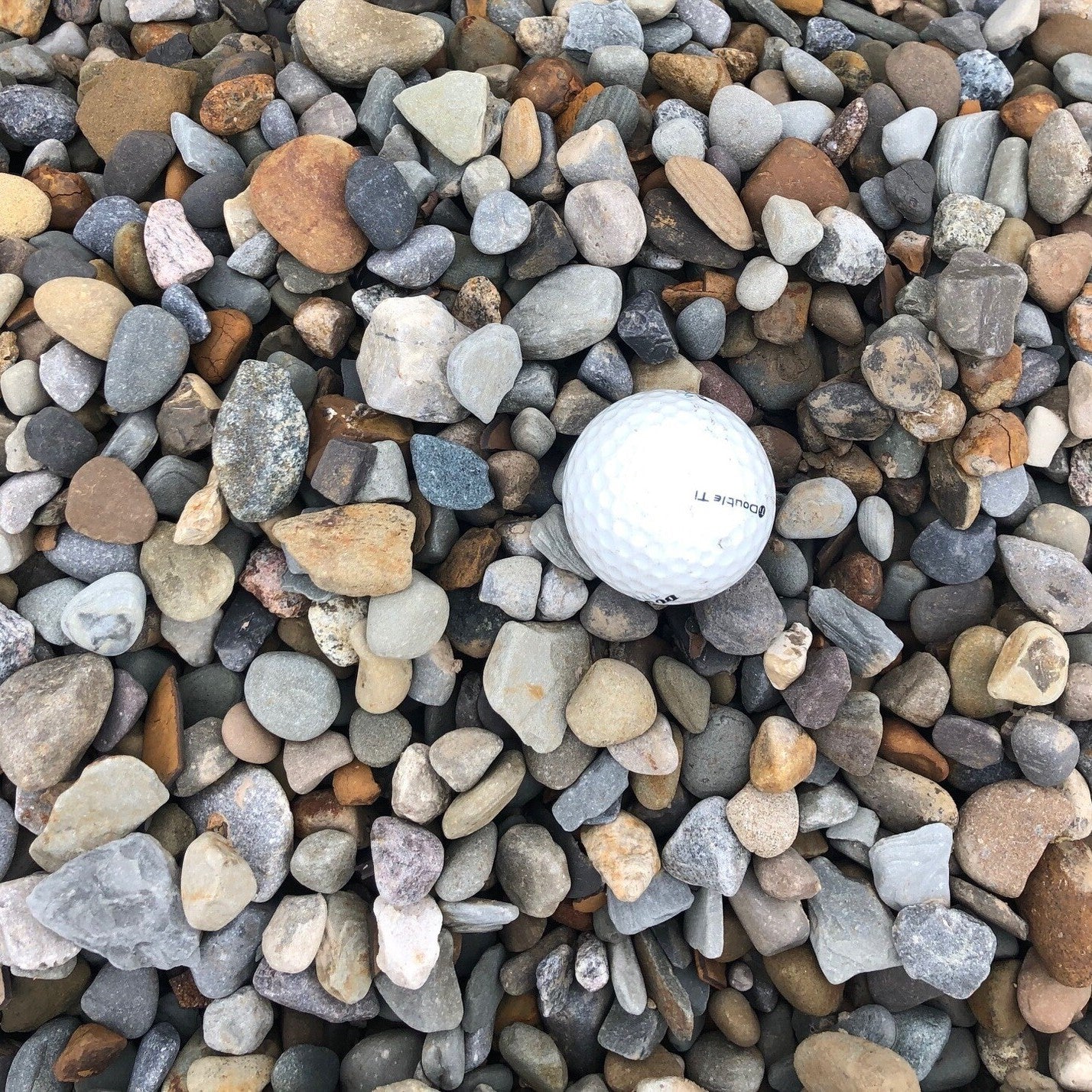
Number 57 crushed stone, angular limestone graded to about three quarters of an inch. The standard driveway, base and drainage gravel, it locks together under traffic and drains fast.
I used Mulch Mound to have 3 cubic yards of garden soil delivered. The process was easy and I love that I didn't have to call anyone. I placed my order online, picked my delivery date, laid out my tarp and the dirt was delivered. My delivery had to be pushed back, but I was ke...
Tell us what you're looking for
Thanks! We received your request.
Something went wrong. Please try again.
How Much Material Do I Need?
For decorative groundcover on Boone's sloped lots, a 2 to 3 inch layer of stone provides solid coverage and enough mass to resist displacement during the heavy rainfall events the area receives regularly. For drainage swales or compacted pathway bases where stability under foot traffic and frost heave is the priority, a 4 to 6 inch depth installed over the native clay gives you a long-lasting and reliable foundation.
Use our free gravel calculator
What is a yard?
A yard is approximately 27 cubic feet. As a general guideline, one yard of material can cover an area of about 100-160 square feet at a 2-3 inch depth.
We can't take orders for this right now. Tell us what you need and we'll get back to you.
What do you need?
Thanks! We received your request.
Something went wrong. Please try again.
Hand-picked local yards
4,000+ regional deliveries
Dedicated support
Why order through Mulch Mound
The best local stone, without the guesswork.
We hand-pick and partner with the best yards in your region, keep only the ones our buyers rate well, and back each load with our guarantee.
Mulch Mound Guarantee
If your stone isn't the quantity or quality you ordered, we'll make it right.
About this stone
Number 57 crushed stone, angular limestone graded to about three quarters of an inch. The standard driveway, base and drainage gravel, it locks together under traffic and drains fast.
I used Mulch Mound to have 3 cubic yards of garden soil delivered. The process was easy and I love that I didn't have to call anyone. I placed my order online, picked my delivery date, laid out my tarp and the dirt was delivered. My delivery had to be pushed back, but I was ke...
How Much Material Do I Need?
For decorative groundcover on Boone's sloped lots, a 2 to 3 inch layer of stone provides solid coverage and enough mass to resist displacement during the heavy rainfall events the area receives regularly. For drainage swales or compacted pathway bases where stability under foot traffic and frost heave is the priority, a 4 to 6 inch depth installed over the native clay gives you a long-lasting and reliable foundation.
Use our free gravel calculator
What is a yard?
A yard is approximately 27 cubic feet. As a general guideline, one yard of material can cover an area of about 100-160 square feet at a 2-3 inch depth.
I used Mulch Mound to have 3 cubic yards of garden soil delivered. The process was easy and I love that I didn't have to call anyone. I placed my o...
Read full review
I used Mulch Mound to have 3 cubic yards of garden soil delivered. The process was easy and I love that I didn't have to call anyone. I placed my order online, picked my delivery date, laid out my tarp and the dirt was delivered. My delivery had to be pushed back, but I was kept informed via text, which was great. So why not 5 stars? The description of garden soil on the website is "A balanced mix of topsoil and organic amendments ready for raised beds, flower gardens, and new planting areas. Good drainage, solid nutrients, easy to work with." What I got was more like fill dirt. It had a lot of gravel, a lot of clay, and random trash mixed in. I didn't test the soil to see if it actually had "amendments" because I already have compost and alpaca manure ready to add, but if I'd known the quality of the dirt was going to be the same as the bagged dirt I bought last year, I probably would have gotten 2 yards of top soil and a yard of leaf compost for better quality, especially since the leaf compost is cheaper. Photo of my mountain of dirt and just some of the trash I found in it.
Measure your project area in feet and multiply length by width to get total square footage, then choose your target depth, typically 2 inches for a light decorative surface and 4 to 6 inches for a pathway or drainage application that needs to hold up under weight and frost. Multiply square footage by depth in feet and divide by 27 to get cubic yards, keeping in mind that stone is significantly denser than mulch or soil so a single yard covers less area per ton. On Boone lots with notable grade changes, measure at several points across the area and average them for the most accurate estimate.
Stone Types We Deliver in Boone
Mulch Mound delivers bulk stone by the cubic yard to properties across the High Country, making it simple to complete landscaping projects without repeated supplier trips. If you have been searching for bulk gravel by the yard in Boone, we bring the material directly to your driveway or job site. Our team handles the heavy lifting so you can focus on building the outdoor space you have in mind.
Pea Gravel
Pea gravel is a popular choice for homeowners in this mountain region who want a low maintenance ground cover that handles heavy rainfall well. Its smooth, rounded stones in warm earth tones complement the wooded surroundings typical of Boone yards, making it a natural fit for pathways, patios, and garden borders.
Complete Your Outdoor Stone Project
Pairing a stone delivery with bulk mulch lets you use each material where it performs best on a Boone property, stone for drainage areas, steep slopes, and high-traffic paths and mulch for planting beds and tree rings where organic matter feeds the soil. Adding a layer of quality topsoil in any garden or lawn areas before covering with stone permanently ensures the native clay beneath has some improved structure to support surrounding plantings.
Boone's repeated freeze-thaw cycles through October and November can shift lightweight decorative stone and displace pathway edges if the base layer beneath has not been properly prepared. Before spreading any stone on a path or border feature, compact the underlying clay and add 2 to 3 inches of crushed gravel as a transitional base layer to absorb the frost heave movement that would otherwise disturb the surface material above it. Taking the time to do this preparation work in late September before the ground hardens for winter pays off in a level and stable surface every spring.
Mulch Mound Pro Tip
Stone absorbs solar heat during the day and re-radiates it at night, which can be a meaningful advantage in Boone's short growing season when used thoughtfully near vegetable beds or tender perennials. Placing a border of darker river rock on the south-facing side of a garden bed captures radiant heat through the day and releases it slowly after sunset, subtly extending warmth around plants as temperatures drop toward the October frost date. This passive thermal benefit is most noticeable during the shoulder months of May and September when overnight temperatures can still dip unexpectedly.
Mulch Mound Pro Tip
With 53 inches of annual rainfall flowing across Boone's hilly terrain, it pays to map out where water naturally travels across your property before placing any permanent stone features. Installing stone along existing natural drainage paths as dry creek beds or linear swales works with the landscape rather than redirecting flow into unintended areas. Ignoring natural flow lines and placing stone features purely for aesthetics without accounting for water movement can create new drainage problems faster than it resolves the original ones.
The Unique Landscape of Boone
Stone is one of the most durable and practical landscaping materials available for Boone's demanding mountain environment, where repeated freeze-thaw cycles, steep slopes, and 53 inches of annual rainfall create constant erosion and maintenance pressure. At 3,333 feet in elevation, Boone landscapes go through aggressive frost cycles each fall and spring that shift mulch, wash topsoil, and undermine planting beds on any grade. Stone does not decompose, compress, or wash away under normal conditions, making it an ideal material for high-traffic paths, drainage channels, and erosion-prone slopes throughout Watauga County. The rocky clay soil that underlies most Boone properties also sheds water poorly, and a properly installed stone feature can redirect surface runoff and reduce the standing water that damages lawns and threatens foundations after heavy rain events. Decorative stone also adds year-round visual structure to a landscape that loses much of its color and plant interest during the long Boone winters. Whether you are building a pathway, lining a drainage swale, or establishing a low-maintenance groundcover in a shaded or dry area, bulk stone is one of the most weather-resistant investments a Boone homeowner can make in their outdoor space.
Frequently Asked Questions
Click a question to see the answer
Answer
What type of stone works best for a pathway on a sloped yard in Boone?
For sloped pathways in Boone, a crushed angular gravel like crusher run or NCDOT 57 stone compacts firmly and stays in place far better than smooth rounded pebbles that shift and roll underfoot. The angular edges lock together under foot traffic, which is especially important given the steep grades found on many Watauga County residential lots. Pairing the gravel with a solid landscape edging border on the downhill side keeps material from migrating gradually downhill over time, particularly after the heavy summer rainstorms that move through the area.
Answer
Will decorative stone actually help control the erosion on my sloped backyard in Boone?
Stone is one of the most effective erosion control materials you can use on Boone's challenging mountain terrain. A layer of river rock or larger gravel applied to a slope absorbs the direct impact of heavy rain, slows surface water velocity, and holds soil in place far more reliably than mulch or bare ground can. For more severe slopes, combining stone with a geotextile fabric underlayment gives you additional stability through the repeated wet seasons that Boone experiences each year.
Answer
Does stone hold up through Boone's freeze-thaw cycles in the fall and spring without shifting or heaving?
Stone handles Boone's frequent freeze-thaw cycles much more reliably than organic materials do. While very fine gravels can shift slightly as ground frost heaves in late fall and again in early spring, larger stones and properly compacted gravel bases remain largely stable through multiple winters. For areas with heavy frost exposure, installing stone over a compacted gravel base layer rather than directly on native clay helps absorb the movement that can otherwise disrupt pathways and decorative borders over time.
Answer
I get standing water near my foundation every time it rains hard. Can stone actually help fix that drainage problem?
A drainage swale or French drain filled with clean washed gravel is one of the most effective solutions for the foundation drainage problems that Boone's clay soil and heavy annual rainfall routinely create. The stone provides the void space that moving water flows through freely, redirecting it away from your foundation and toward a more appropriate outlet. This is a common and straightforward project in Boone neighborhoods and can be completed with a bulk stone delivery and a modest amount of digging.
Answer
Is stone a good low-maintenance option for the shaded areas under large trees in my Boone yard?
Stone is an excellent choice for shaded areas in Boone where growing grass is a losing battle and maintaining organic mulch becomes frustrating. Dense tree canopy in the mountains keeps soil beneath it consistently moist and cool, conditions that can promote mold growth and slugs in organic mulch over time. A layer of river stone or pea gravel under large trees provides a clean and permanent groundcover that looks tidy year-round and requires almost no ongoing maintenance through any season.
Answer
How much stone do I need to refresh a gravel driveway in Boone that has been damaged by winter weather?
Boone's freeze-thaw cycles and heavy snowmelt can push gravel out of place and leave driveway surfaces uneven, muddy, and rutted by spring. For a surface refresh layer, 2 to 3 inches of fresh crushed stone is typically enough to restabilize the surface and fill in the worst low spots. For a more complete rebuild after significant deterioration, 4 to 6 inches of angular crushed stone compacted over a stable base gives you a driveway surface that holds up through multiple mountain winters without constant regrading.
Answer
What size and type of stone works best for decorative borders around garden beds here in Boone?
River rock in the 2 to 4 inch size range is a popular and practical choice for bed borders in Boone because the rounded natural appearance suits the mountain landscape and the heavier individual pieces do not scatter as easily as small pea gravel. The greater weight of larger stones also means the border stays in place when Boone's summer rainstorms send fast-moving sheets of water across landscape areas. A single layer of river rock creates a clean visual edge that holds up year-round without decomposing, fading, or requiring seasonal replacement.
Answer
Is crush and run the same as crusher run?
Same product, different name. Crush and run refers to crushed stone blended with stone dust that compacts into a solid base for driveways and walkways. For Boone's steep grades and freeze-thaw cycles, we deliver Crushed Stone #57, a clean, freely draining stone that resists shifting on slopes without relying on fines to bind it.
Answer
Is there a stone yard near Boone?
Boone's repeated freeze and thaw cycles and heavy mountain rainfall call for a durable base like crushed stone, which resists washing out on slopes and drainage areas. You can have it delivered by the cubic yard without visiting a stone yard or a quarry. Just order online and we drop it where you need it.