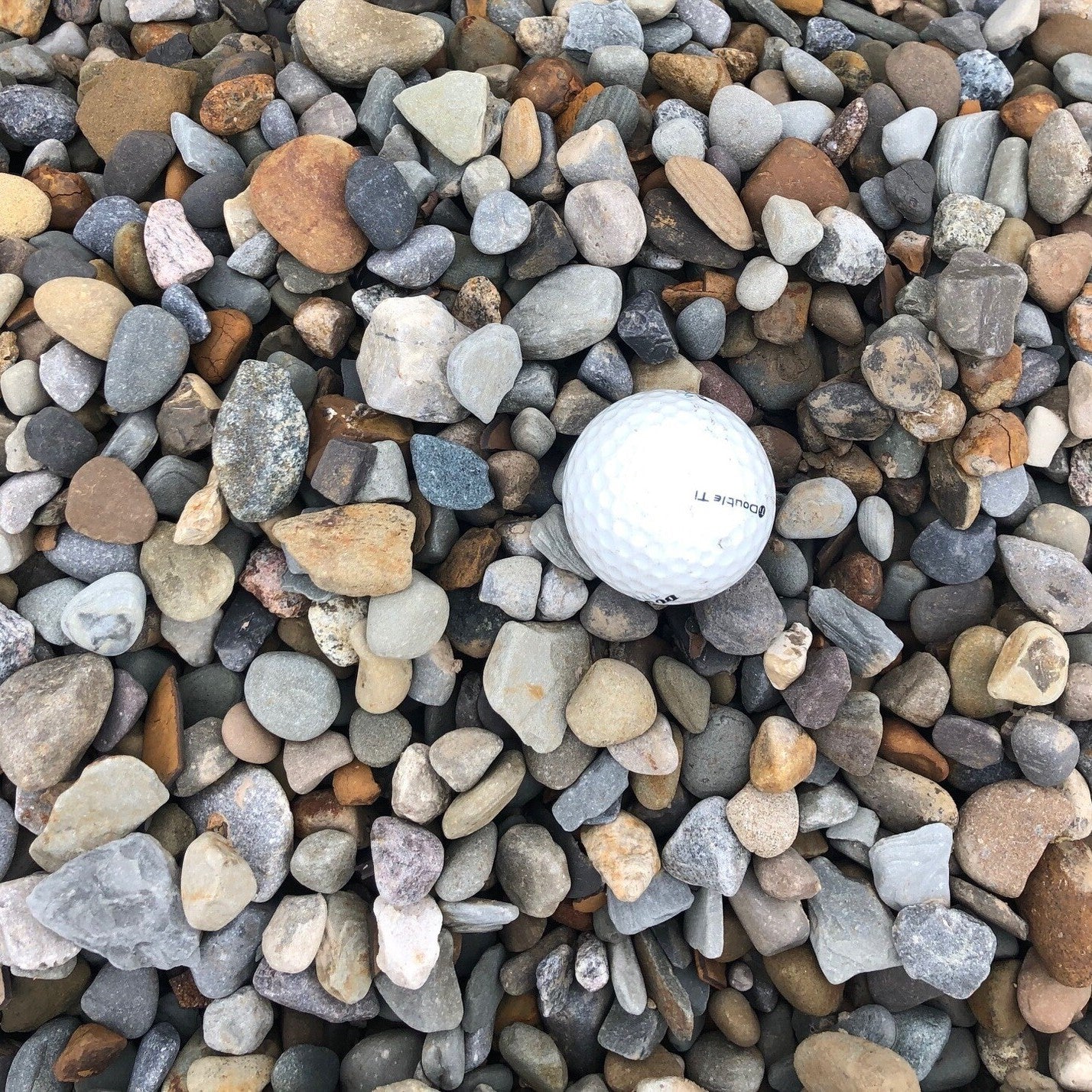
Number 57 crushed stone, angular limestone graded to about three quarters of an inch. The standard driveway, base and drainage gravel, it locks together under traffic and drains fast.
I contacted Mulch Mound for #57 river rocks and it was easy and fast to get a delivery right before the holiday weekend. Stone was delivered as promised and place exactly where I asked. Excellent service! I will be ordering mulch next!
Tell us what you're looking for
Thanks! We received your request.
Something went wrong. Please try again.
How Much Material Do I Need?
For pathways and ground cover areas in Columbia Falls, a 3 to 4 inch stone depth achieves a stable, weed-resistant surface that holds up reliably through our elevation's freeze-thaw cycles. Foundation border applications typically work well with a 2 to 3 inch layer that allows water to drain freely away from structures during snowmelt and the rain events we receive through the growing season.
Use our free gravel calculator
What is a yard?
A yard is approximately 27 cubic feet. As a general guideline, one yard of material can cover an area of about 100-160 square feet at a 2-3 inch depth.
We can't take orders for this right now. Tell us what you need and we'll get back to you.
What do you need?
Thanks! We received your request.
Something went wrong. Please try again.
Hand-picked local yards
4,000+ regional deliveries
Dedicated support
Why order through Mulch Mound
The best local stone, without the guesswork.
We hand-pick and partner with the best yards in your region, keep only the ones our buyers rate well, and back each load with our guarantee.
Mulch Mound Guarantee
If your stone isn't the quantity or quality you ordered, we'll make it right.
About this stone
Number 57 crushed stone, angular limestone graded to about three quarters of an inch. The standard driveway, base and drainage gravel, it locks together under traffic and drains fast.
I contacted Mulch Mound for #57 river rocks and it was easy and fast to get a delivery right before the holiday weekend. Stone was delivered as promised and place exactly where I asked. Excellent service! I will be ordering mulch next!
How Much Material Do I Need?
For pathways and ground cover areas in Columbia Falls, a 3 to 4 inch stone depth achieves a stable, weed-resistant surface that holds up reliably through our elevation's freeze-thaw cycles. Foundation border applications typically work well with a 2 to 3 inch layer that allows water to drain freely away from structures during snowmelt and the rain events we receive through the growing season.
Use our free gravel calculator
What is a yard?
A yard is approximately 27 cubic feet. As a general guideline, one yard of material can cover an area of about 100-160 square feet at a 2-3 inch depth.
I contacted Mulch Mound for #57 river rocks and it was easy and fast to get a delivery right before the holiday weekend. Stone was delivered as pro...
Read full review
I contacted Mulch Mound for #57 river rocks and it was easy and fast to get a delivery right before the holiday weekend. Stone was delivered as promised and place exactly where I asked. Excellent service! I will be ordering mulch next!
To estimate stone for a Columbia Falls project, multiply the length and width of your coverage area in feet to get square footage, then multiply by the depth in feet and divide by 27 for cubic yards. For pathways and drainage applications in our area, a 3 to 4 inch depth is standard and accounts for the settling that occurs in sandy loam soil after the first freeze-thaw cycle. Adding 10 percent to your calculated quantity is a practical buffer since stone compacts and settles more than mulch or loose soil after installation.
Stone Types We Deliver in Columbia Falls
Mulch Mound delivers bulk stone by the cubic yard directly to homes and properties across the area, so you get the volume your project demands without the hassle of multiple store runs. If you have been searching for bulk gravel by the yard in Columbia Falls, we bring the right product straight to your site and handle the heavy logistics for you. Our stone suits the rugged outdoor lifestyle and naturalistic landscape styles common to this part of northwestern Montana.
Pea Gravel
Smooth and rounded with natural earth tones, pea gravel suits homeowners across this part of Montana who want a surface that holds up through winter freeze and spring thaw. It works well along pathways, patios, and garden beds, and its open texture helps drainage in areas prone to seasonal moisture.
Complete Your Outdoor Stone Project
Stone borders pair naturally with mulched garden beds in Columbia Falls landscapes, creating a defined edge that keeps mulch in place through spring snowmelt and the breezy conditions common in the Flathead Valley. Adding a quality amended bulk soil to planting areas adjacent to new stone borders also ensures that the transition zone between hardscape and garden bed drains efficiently through our sandy loam subsoil without pooling at the edge.
Setting stone pathways and borders on a compacted gravel base rather than directly on native sandy loam significantly extends the life of any installation in Columbia Falls. Sandy loam shifts and settles noticeably during spring thaw at our elevation, and even heavy stepping stones or edging pieces can tilt or sink into loose soil over a single winter. A 2 to 3 inch compacted crushed gravel base beneath larger decorative stones or pathway pavers distributes weight more evenly and reduces the need for annual releveling after each freeze-thaw season.
Mulch Mound Pro Tip
For Columbia Falls homeowners near the Flathead River corridor or on properties with natural slopes, larger crushed stone placed in drainage swales is a low-maintenance way to manage the significant water movement that comes with our snowmelt season. A properly sized swale lined with 1.5 to 2 inch crushed stone can move substantial volumes of runoff away from foundations and low spots without the ongoing maintenance that planted drainage areas require. Stone swales also handle our freeze-thaw cycles without cracking or heaving the way poured concrete channels eventually do over multiple winters.
Mulch Mound Pro Tip
Decorative stone ground cover is one of the lowest-maintenance landscaping choices available in Columbia Falls given our short growing season between April 15 and September 16. Unlike mulched beds that need annual refreshing or lawn areas that require consistent irrigation through our dry summers with only 18 inches of annual rainfall, a well-installed stone area needs little more than an occasional rake and a quick weed check each spring. For shaded spots under mature trees or along fence lines where grass struggles at our elevation, stone is often the most practical and attractive long-term solution.
The Unique Landscape of Columbia Falls
Columbia Falls landscapes face a combination of conditions that make functional and decorative stone one of the most practical and durable investments a homeowner can make in their yard. Spring snowmelt from the peaks surrounding the Flathead Valley, combined with our 18 inches of annual rainfall, creates erosion and drainage challenges in yards with any degree of slope or unprotected soil surface. At 3,092 feet, freeze-thaw cycles are pronounced and repeated, and stone pathways, borders, and drainage features hold up to those temperature swings far better than wood, mulch, or organic edging materials. Columbia Falls's sandy loam soil is prone to shifting during wet periods, and compacted gravel or crushed stone bases help stabilize surfaces along walkways, driveways, and foundation borders through the frost season. Stone also requires virtually no seasonal maintenance, which is a genuine advantage given Columbia Falls's short gardening window between the April 15 last frost and the September 16 first frost.
Frequently Asked Questions
Click a question to see the answer
Answer
What type of stone works best for garden pathways in Columbia Falls?
For walkways and garden paths in Columbia Falls, crushed gravel or decomposed granite in the 3/8 to 3/4 inch range is a reliable choice. Those sizes compact firmly underfoot but still allow water to drain through, which is critical during spring snowmelt when the ground is saturated and our 3,092-foot elevation keeps overnight temperatures near freezing. Avoid very fine stone dust in areas prone to standing water, as it can compact into a muddy surface during Columbia Falls's wetter spring weeks. A 2 to 3 inch compacted base layer beneath the walking surface adds long-term stability through repeated freeze-thaw cycles.
Answer
Can decorative stone help with the drainage issues caused by snowmelt in my Columbia Falls yard?
Stone is one of the most effective and lowest-maintenance drainage solutions available to Columbia Falls homeowners dealing with wet spots or slow-draining low areas. A layer of clean crushed stone or river rock placed over a fabric barrier in problem areas allows water to percolate through freely rather than pooling on the surface or saturating the sandy loam below. This approach is especially useful in areas where snowmelt from the surrounding mountains creates seasonal wet zones in early spring before the ground fully thaws and drainage normalizes around the April 15 frost date.
Answer
Will stone hold up to Columbia Falls's repeated freeze-thaw cycles at our elevation?
Stone is among the most freeze-thaw-resistant landscape materials you can use in Columbia Falls, which is a significant advantage at 3,092 feet where temperature fluctuations through winter and early spring are substantial. Unlike wood edging or organic borders that expand, contract, and eventually deteriorate, stone maintains its form through repeated freeze-thaw events year after year. Larger stones used as edging or stepping elements can shift slightly over time in loose sandy loam soil, so setting them on a compacted gravel base from the start keeps them level through multiple winters without needing constant adjustment.
Answer
How do I calculate how much stone I need for a gravel path or ground cover area?
Measure the length and width of your path or coverage area in feet, multiply those numbers together to get square footage, then multiply by the depth you want in feet and divide by 27 to convert to cubic yards. For a path that is 3 feet wide and 20 feet long with a 3-inch layer, you would need approximately 0.56 cubic yards of stone. Because stone settles over time in Columbia Falls's sandy loam soil, especially after the first freeze-thaw season, ordering about 10 percent more than your calculated quantity gives you material to top off any low spots that develop.
Answer
Is river rock or crushed gravel better for foundation borders around a Columbia Falls home?
Both materials work well for foundation borders in Columbia Falls, but they serve slightly different purposes and are often used together effectively. Crushed gravel packs tightly and creates excellent drainage away from foundations, which is important for managing the combined effect of our 18 inches of annual rainfall and spring snowmelt near building footings. River rock is smoother and more visually appealing, making it a popular choice for the visible portions of front-yard foundation borders where appearance matters. Many Columbia Falls homeowners use crushed gravel as the base layer closest to the foundation and finish the visible surface with river rock for a clean, attractive result.
Answer
Can bulk stone help control erosion on a sloped area of my Flathead Valley property?
Stone is one of the most effective and durable erosion control materials available for Columbia Falls properties with slopes. Exposed slopes in our area are particularly vulnerable during spring snowmelt and during the heavier rain events we receive through summer and fall, which can quickly displace the sandy loam that makes up much of our local soil. A layer of larger crushed stone or rip rap placed on exposed slopes holds soil in place and significantly slows water runoff compared to bare ground. Pairing the stone with a woven landscape fabric beneath it prevents soil from migrating up through the rock layer over time, keeping the installation effective and tidy for years.
Answer
How do I prevent weeds from growing up through my decorative stone areas in Columbia Falls?
The most reliable approach in Columbia Falls is to install a quality woven landscape fabric beneath the stone before spreading it. The fabric blocks sunlight from reaching weed seeds in the sandy loam below, and because stone areas are not tilled or regularly disturbed, the barrier stays intact for many seasons. Even with fabric, wind-blown seeds may occasionally germinate on top of the stone surface, so a quick hand-weeding pass each spring just after the April 15 frost date is typically all the maintenance a well-installed stone area requires through the rest of the growing season.
Answer
Is there a stone yard near Columbia Falls?
Ask for a few yards of crushed stone at a stone yard and you'd usually haul it yourself, but we skip the trip and drop it right where you want it in Columbia Falls. Crushed stone locks together and drains well, so it holds up through spring snowmelt and repeated freeze and thaw, with no gravel pit run needed.