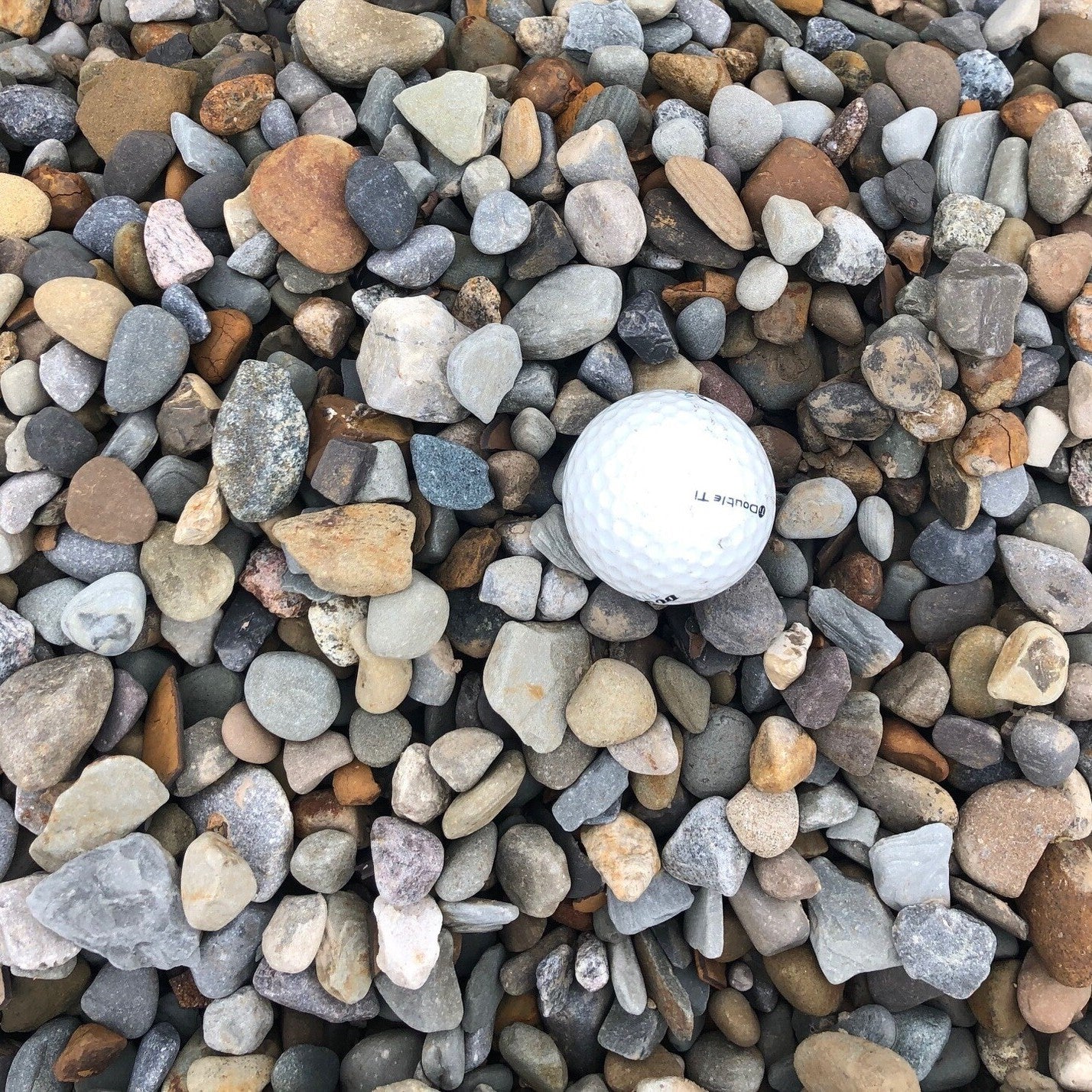
1” West Texas Black Crushed Stone landscape rock, sourced from our local supply yard. Color and gradation may vary slightly by quarry lot. Sold by the yard.
I contacted Mulch Mound for #57 river rocks and it was easy and fast to get a delivery right before the holiday weekend. Stone was delivered as promised and place exactly where I asked. Excellent service! I will be ordering mulch next!
Tell us what you're looking for
Thanks! We received your request.
Something went wrong. Please try again.
How Much Material Do I Need?
For decorative ground cover and weed suppression in Conroe beds, a 2 to 3 inch layer of stone is sufficient on flat areas. For drainage swales, erosion-prone slopes, or foundation borders where water moves actively across the surface during rain events, increase depth to 3 to 4 inches to ensure stones remain stable and in place.
Use our free gravel calculator
What is a yard?
A yard is approximately 27 cubic feet. As a general guideline, one yard of material can cover an area of about 100 square feet at 3 inches deep.
We can't take orders for this right now. Tell us what you need and we'll get back to you.
What do you need?
Thanks! We received your request.
Something went wrong. Please try again.
Hand-picked local yards
4,000+ regional deliveries
Dedicated support
Why order through Mulch Mound
The best local stone, without the guesswork.
We hand-pick and partner with the best yards in your region, keep only the ones our buyers rate well, and back each load with our guarantee.
Mulch Mound Guarantee
If your stone isn't the quantity or quality you ordered, we'll make it right.
About this stone
1” West Texas Black Crushed Stone landscape rock, sourced from our local supply yard. Color and gradation may vary slightly by quarry lot. Sold by the yard.
I contacted Mulch Mound for #57 river rocks and it was easy and fast to get a delivery right before the holiday weekend. Stone was delivered as promised and place exactly where I asked. Excellent service! I will be ordering mulch next!
How Much Material Do I Need?
For decorative ground cover and weed suppression in Conroe beds, a 2 to 3 inch layer of stone is sufficient on flat areas. For drainage swales, erosion-prone slopes, or foundation borders where water moves actively across the surface during rain events, increase depth to 3 to 4 inches to ensure stones remain stable and in place.
Use our free gravel calculator
What is a yard?
A yard is approximately 27 cubic feet. As a general guideline, one yard of material can cover an area of about 100 square feet at 3 inches deep.
I contacted Mulch Mound for #57 river rocks and it was easy and fast to get a delivery right before the holiday weekend. Stone was delivered as pro...
Read full review
I contacted Mulch Mound for #57 river rocks and it was easy and fast to get a delivery right before the holiday weekend. Stone was delivered as promised and place exactly where I asked. Excellent service! I will be ordering mulch next!
To estimate stone for a path or ground cover area, measure the length and width of the space in feet and multiply to get square footage. For a 3-inch layer, divide that number by 12 to get cubic feet and then divide by 27 for cubic yards. Conroe homeowners often underestimate coverage needs for drainage swales and slopes because those areas have more surface irregularity than a flat bed, so add 15 percent to your calculated estimate when ordering for uneven or sloped terrain.
Stone Types We Deliver in Conroe
Mulch Mound delivers bulk stone by the cubic yard straight to homes and properties across Conroe, saving you the hassle of hauling materials yourself. Whether you are searching for bulk gravel by the yard in Conroe or planning a larger landscape project, we bring the right stone right to your driveway. Our delivery team handles the heavy lifting so you can focus on the work.
Pea Gravel
Pea gravel is one of the most popular choices for Conroe homeowners thanks to its smooth, rounded edges and warm earth tones that complement the natural tree cover common across this part of East Texas. It works beautifully for garden pathways, patio borders, and drainage beds in the region's clay-heavy soil.
Complete Your Outdoor Stone Project
Pair stone ground cover areas with our bulk mulch in adjacent planting beds to create defined zones that work together both visually and functionally across your Conroe landscape. If you are establishing new planting areas alongside your stone features, our bulk garden soil gives you the bed quality needed to grow plants successfully despite Conroe's challenging sandy clay native profile.
Before spreading stone in any Conroe bed or path, install a quality woven landscape fabric beneath it. With nearly 49 inches of annual rain keeping the soil surface moist for extended periods, fine sediment naturally accumulates between stones over time and creates a thin layer where weed seeds germinate. Fabric will not eliminate weeds permanently, but it dramatically extends the time between interventions and prevents the stone layer from gradually mixing down into the clay below.
Mulch Mound Pro Tip
Choose your stone color with Conroe's long outdoor season in mind. Neutral tones like buff, tan, and gray complement nearly any house color and plant palette through all seasons, while bold choices like red lava rock or bright white chips can look striking in early spring but feel visually overwhelming once summer plantings fill in around them. Walk your yard at different times of day and in varied light conditions before committing to a color, because stone in full afternoon sun looks very different from the same stone sitting in morning shade under a tree canopy.
Mulch Mound Pro Tip
Stone used in drainage applications in Conroe does its most critical work during the intense spring storm season that typically runs from April through June. Before that season begins each year, walk your stone-lined swales and channels and look for areas where stones have shifted or sediment has built up high enough to restrict water flow. A quick redistribution of existing stone and removal of accumulated debris in late March keeps drainage features performing at full capacity when the heaviest rain events of the year arrive.
The Unique Landscape of Conroe
In Conroe, where 49 inches of annual rainfall puts constant pressure on landscape drainage, decorative and functional stone plays a role that goes well beyond aesthetics. Stone is one of the most effective tools available for managing water movement across a lot, whether that means lining a drainage swale, creating a permeable path, or establishing a stable foundation border around a home. Conroe's sandy clay soil is prone to erosion along slopes and bed edges during heavy rain events, and a properly installed stone edge or drainage channel holds the ground in place without the maintenance demands of turf or mulched plantings. Because Zone 9a delivers a long outdoor season running nearly eight months between the last frost in mid-March and the first frost in late November, hardscape features like stone paths and patios see serious use and need to be durable enough to handle that exposure. Stone also excels as a low-maintenance ground cover in the spots of a Conroe yard that are difficult to mow or irrigate, such as steep slopes, tight foundation borders, and shaded dry zones under large pine trees. Unlike organic mulch, stone does not break down in Conroe's heat and humidity, so the investment delivers returns for years without annual replacement costs.
Frequently Asked Questions
Click a question to see the answer
Answer
What size stone works best for a drainage swale in Conroe?
For a drainage swale in Conroe, river rock in the 2 to 4 inch range is a strong choice because it is large enough to stay in place during the high-volume storm flows the area receives, but small enough to interlock and create a stable channel surface. Smaller pea gravel tends to shift and wash out of swales during intense runoff events. Larger rock over 4 inches is more stable individually but leaves gaps that trap debris and require more frequent cleaning to maintain flow capacity.
Answer
Will stone get too hot during Conroe summers to use near a patio or sitting area?
Light-colored stones like buff limestone or white pea gravel reflect more sunlight and stay significantly cooler than dark options like black lava rock, which absorb and radiate heat intensely in Zone 9a summers. If you are planning a seating area bordered by stone, choose lighter tones and consider the orientation relative to afternoon sun, which strikes from the southwest in Conroe during the hottest months. A nearby shade structure or canopy tree makes any stone surface dramatically more comfortable from June through September.
Answer
Can I use stone instead of mulch in my foundation beds to reduce termite risk?
Yes, and this is a practical and common choice in Conroe. Organic mulch close to a home's foundation can provide habitat and sustained moisture that attracts termites and other wood-boring insects, which are a genuine concern in this part of East Texas. A 2 to 3 inch layer of river pebble or crushed granite along the foundation provides the same weed suppression and ground cover function as mulch without the organic material that insects are attracted to. Stone also does not break down, so you will not be replacing it on an annual cycle the way you would with wood mulch.
Answer
What type of stone is best for a garden path in Conroe?
Decomposed granite compacted to about 3 inches is one of the most popular path materials in Conroe because it packs firm underfoot, drains well, and holds up through wet seasons without becoming muddy or slippery. Pea gravel is another option that drains well but shifts underfoot more than compacted decomposed granite, which some homeowners find less comfortable on frequently used paths. For a more formal look, flagstone stepping stones set into a gravel base offer stability and visual interest that suits Conroe's mix of traditional and contemporary landscape styles.
Answer
How do I keep decorative stone from sinking into Conroe's clay soil over time?
The key is installing landscape fabric and a compacted base layer beneath the stone before spreading. Conroe's sandy clay, when saturated by heavy rains, becomes soft enough that stone will gradually press into the soil and sink unevenly over time without a stabilizing barrier. A 2-inch compacted base of crushed limestone or road base material installed under landscape fabric, followed by your decorative stone on top, creates a foundation that resists sinking even after the area's heaviest storms. Edging around the perimeter also keeps the base and stone layers from migrating outward at the edges.
Answer
How much stone do I need to control erosion on a sloped area of my yard?
For erosion control on a slope in Conroe, a 3 to 4 inch layer of river rock or large gravel is the minimum depth that will reliably stay in place during heavy rain. On steeper slopes, use larger individual stones in the 4 to 6 inch range and place them with intention to create an interlocking surface rather than a loose pile. To calculate quantity, multiply your square footage by 0.33 for a 4-inch depth to get cubic feet, then divide by 27 for cubic yards. Order slightly more than the calculation suggests rather than leaving thin spots that concentrated water flow will quickly exploit.
Answer
Is stone a good ground cover option for shaded areas under large pine trees in Conroe?
Stone is one of the best solutions for shaded zones under large pines in Conroe. Grass struggles in heavy shade combined with the acidic needle drop that pine trees produce, and even shade-tolerant ground covers thin out under the densest canopies. A layer of river pebble or crushed granite creates a clean, low-maintenance surface that does not compete with the tree's roots, requires no mowing or irrigation, and handles constant needle and cone drop easily. A leaf blower clears debris in minutes without disturbing the stone at all.
Answer
Is crush and run the same as crusher run?
Crush and run refers to crushed stone blended with fine stone dust that packs into a dense, stable surface, which is exactly what Conroe driveways need to resist shifting in our sandy clay soil. We deliver our Road Base 0.75 inch as this equivalent material, while Crushed Stone #57 stays cleaner for drainage but won't compact the same way.
Answer
Is there a stone yard near Conroe?
Lining a drainage swale to handle Conroe's heavy rainfall is a common reason homeowners need stone, and the Crushed Stone for it comes straight to your driveway instead of a trip to a stone yard. Mulch Mound is not a rock yard, so you order online by the cubic yard and we drop it where you want it.