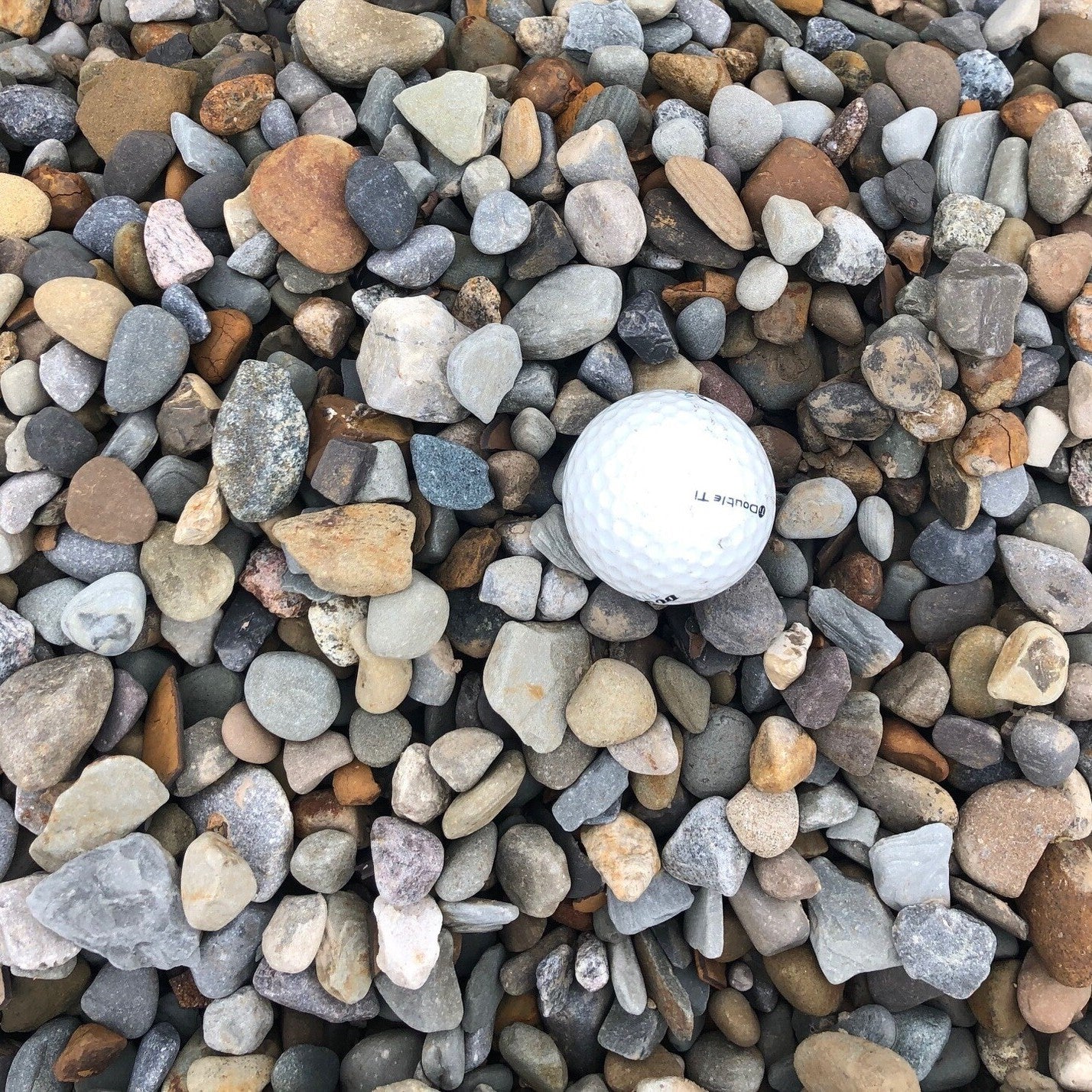
Number 57 crushed stone, angular limestone graded to about three quarters of an inch. The standard driveway, base and drainage gravel, it locks together under traffic and drains fast.
I contacted Mulch Mound for #57 river rocks and it was easy and fast to get a delivery right before the holiday weekend. Stone was delivered as promised and place exactly where I asked. Excellent service! I will be ordering mulch next!
Tell us what you're looking for
Thanks! We received your request.
Something went wrong. Please try again.
How Much Material Do I Need?
Two to three inches of stone is the functional minimum for decorative ground cover and weed suppression in Danville, with three inches recommended for full-sun areas where weeds germinate readily through the warm Zone 7b growing season. Pathway applications benefit from a slightly deeper four-inch layer of compactable stone to maintain a stable surface through Danville's seasonal frost cycles.
Use our free gravel calculator
What is a yard?
A yard is approximately 27 cubic feet. As a general guideline, one yard of material can cover an area of about 100-160 square feet at a 2-3 inch depth.
We can't take orders for this right now. Tell us what you need and we'll get back to you.
What do you need?
Thanks! We received your request.
Something went wrong. Please try again.
Hand-picked local yards
4,000+ regional deliveries
Dedicated support
Why order through Mulch Mound
The best local stone, without the guesswork.
We hand-pick and partner with the best yards in your region, keep only the ones our buyers rate well, and back each load with our guarantee.
Mulch Mound Guarantee
If your stone isn't the quantity or quality you ordered, we'll make it right.
About this stone
Number 57 crushed stone, angular limestone graded to about three quarters of an inch. The standard driveway, base and drainage gravel, it locks together under traffic and drains fast.
I contacted Mulch Mound for #57 river rocks and it was easy and fast to get a delivery right before the holiday weekend. Stone was delivered as promised and place exactly where I asked. Excellent service! I will be ordering mulch next!
How Much Material Do I Need?
Two to three inches of stone is the functional minimum for decorative ground cover and weed suppression in Danville, with three inches recommended for full-sun areas where weeds germinate readily through the warm Zone 7b growing season. Pathway applications benefit from a slightly deeper four-inch layer of compactable stone to maintain a stable surface through Danville's seasonal frost cycles.
Use our free gravel calculator
What is a yard?
A yard is approximately 27 cubic feet. As a general guideline, one yard of material can cover an area of about 100-160 square feet at a 2-3 inch depth.
I contacted Mulch Mound for #57 river rocks and it was easy and fast to get a delivery right before the holiday weekend. Stone was delivered as pro...
Read full review
I contacted Mulch Mound for #57 river rocks and it was easy and fast to get a delivery right before the holiday weekend. Stone was delivered as promised and place exactly where I asked. Excellent service! I will be ordering mulch next!
Measure your stone coverage area in square feet and decide on your target depth before calculating how much material you need. At a two-inch depth, one cubic yard of stone covers approximately 160 square feet, while a three-inch depth covers around 108 square feet. For Danville drainage projects like dry creek beds or French drain fills, measuring the trench length and width carefully and adding 20 percent will account for settling and any irregular sections.
Stone Types We Deliver in Danville
Whether you are refreshing a garden bed or tackling a full drainage project, finding bulk gravel by the yard in Danville has never been easier with Mulch Mound delivering directly to your door. The piedmont region's dense clay soil and humid summers create real challenges for water management, making quality stone an investment that pays off season after season. Our pricing by the cubic yard means you get exactly the volume you need, with no wasted material and no extra trips to the store.
Pea Gravel
Pea Gravel is a versatile favorite for homeowners in the Danville area who want a polished, natural look throughout their yard. The smooth, rounded stones drain quickly and resist shifting, which is especially valuable in areas with heavy clay soil and regular summer rainfall. Use it for walkways, patios, garden borders, or decorative ground cover.
Complete Your Outdoor Stone Project
Many Danville homeowners pair stone installations with a border of hardwood mulch in nearby planting beds to create a clean visual transition between hard and soft landscape areas. If drainage stone is part of your project, adding a topsoil order to build up adjacent grade away from the drainage channel helps direct water more effectively on properties with Danville's typical red clay base.
Install a quality woven landscape fabric under all decorative stone areas before you spread material. Danville's warm, wet growing season means weed seeds that land on bare soil between stone pieces will germinate within days during the summer months. Fabric does not eliminate weeds at the edges where soil and stone meet, but it dramatically reduces the volume of weeds pushing up through the body of the installation and extends the time between maintenance visits.
Mulch Mound Pro Tip
When designing a stone pathway in Danville, account for the freeze and thaw cycles that occur between November and early March at the city's 515-foot elevation. Fine compacted stone like crusher run handles these cycles well, but large flagstone or stepping stones set directly in unstable red clay will heave and shift noticeably over winter. Setting larger stones in a compacted gravel base rather than straight into clay gives them a stable foundation that resists the seasonal movement common in this region.
Mulch Mound Pro Tip
Use stone strategically along the downslope edges of your property to slow water moving across the surface during Danville's heavy spring rain events. A simple river rock channel or stone-lined swale intercepts sheet flow before it erodes your lawn or carries topsoil off your beds. Danville's 45 inches of annual rainfall, combined with the low permeability of red clay, means even moderate storms produce meaningful surface runoff that well-placed stone hardscaping can redirect safely away from vulnerable areas.
The Unique Landscape of Danville
Danville's red clay soil and 45 inches of annual rainfall create drainage challenges that stone is uniquely equipped to solve in ways that plants or mulch cannot. Hard surfaces and stone pathways shed water cleanly rather than absorbing it, which is critical in a landscape where the native clay holds moisture so long that standing water is a recurring problem after heavy spring storms. Decorative stone also eliminates the need for mowing, mulching, and replanting in areas where maintaining plant material is impractical, making it an attractive low-maintenance option for Danville homeowners dealing with slopes, utility corridors, or shaded dry zones under large trees. Crushed stone and river rock are particularly effective for drainage beds and French drain backfill, where getting water away from foundations is a priority in Danville's wet spring season. From a purely aesthetic standpoint, natural stone contrasts beautifully with the region's red clay tones and the deep greens common in Zone 7b landscapes.
Frequently Asked Questions
Click a question to see the answer
Answer
What size crushed stone works best for a backyard pathway in Danville?
A quarter-inch to three-eighths-inch crushed angular stone, often called crusher run or chat stone, is the most stable choice for pathways in Danville. It compacts firmly under foot traffic, resists shifting during the freeze and thaw cycles that Danville sees between November and early March, and drains well so the surface does not become slippery after rain. Smooth round stones like pea gravel are less stable underfoot and tend to scatter, especially on any slope.
Answer
Will heavy rain wash stone out of my beds or pathways in Danville?
Angular crushed stone locks together and stays put through the heavy rain events that Danville experiences in spring and early summer. Round stone like pea gravel is more prone to displacement on any grade, so it works better in flat, contained areas with a solid border. For any stone application on a slope, using a larger size of at least one to two inches and installing a landscape fabric base helps keep material in place during high-rainfall events.
Answer
Can I use stone to fix a drainage problem in my Danville yard?
Stone is one of the most effective materials for managing the drainage issues that Danville's red clay creates. A French drain filled with clean crushed stone intercepts surface and subsurface water before it saturates your yard or reaches your foundation. Dry creek beds lined with river rock serve a similar purpose while adding a natural aesthetic element, channeling water away from problem areas during Danville's rainy spring season.
Answer
Does stone get too hot near plants during a Danville summer?
Light-colored stone like white marble chips or tan pea gravel reflects heat rather than absorbing it, making it a safer choice around plants in Danville's hot Zone 7b summers. Dark stone, particularly black or charcoal crushed rock, absorbs significant heat and can raise soil temperatures at the root zone to stressful levels during July and August. If you are using stone near ornamentals or foundation shrubs, stick to lighter colors or keep a buffer of mulch between the stone and plant crowns.
Answer
How deep should I lay stone for a low-maintenance ground cover area in Danville?
A minimum of two to three inches of stone over landscape fabric is the standard depth for weed-suppressing ground cover in Danville. That depth provides enough material to block light from reaching the fabric surface while still looking full and finished. Danville's aggressive weed seed pressure, driven by 45 inches of annual rainfall and a long Zone 7b growing season, means thin stone coverage will be infiltrated by weeds within one season, so depth matters.
Answer
What is the best stone to use along a foundation in Danville?
Clean crushed stone in a one-inch to one-and-a-half-inch size is the best choice for foundation borders in Danville. It drains fast, which is exactly what you want against a foundation in a climate with significant annual rainfall, and it does not hold moisture against the structure the way mulch or organic material can. A properly installed foundation border with crushed stone and a slight grade away from the house also directs heavy spring rains away from the footing.
Answer
How do I keep weeds from growing up through stone beds in Danville?
The combination of quality landscape fabric and adequate stone depth is your best defense against weeds in Danville stone beds. Use a woven, permeable fabric rather than plastic sheeting so water can still drain through, then cover with at least two to three inches of stone. Danville's warm, moist growing season encourages weed seeds to germinate quickly in any gap, so inspect edges and borders each spring and pull stragglers before they establish.
Answer
Is crush and run the same as crusher run?
Crush and run and crusher run are the same product, a mix of crushed stone and stone dust that compacts into a firm base for driveways and paver projects. Given Danville's heavy clay soil and frequent spring rain, our clean Crushed Stone #57 is the better choice, since it drains freely instead of holding water like a compacted base would.