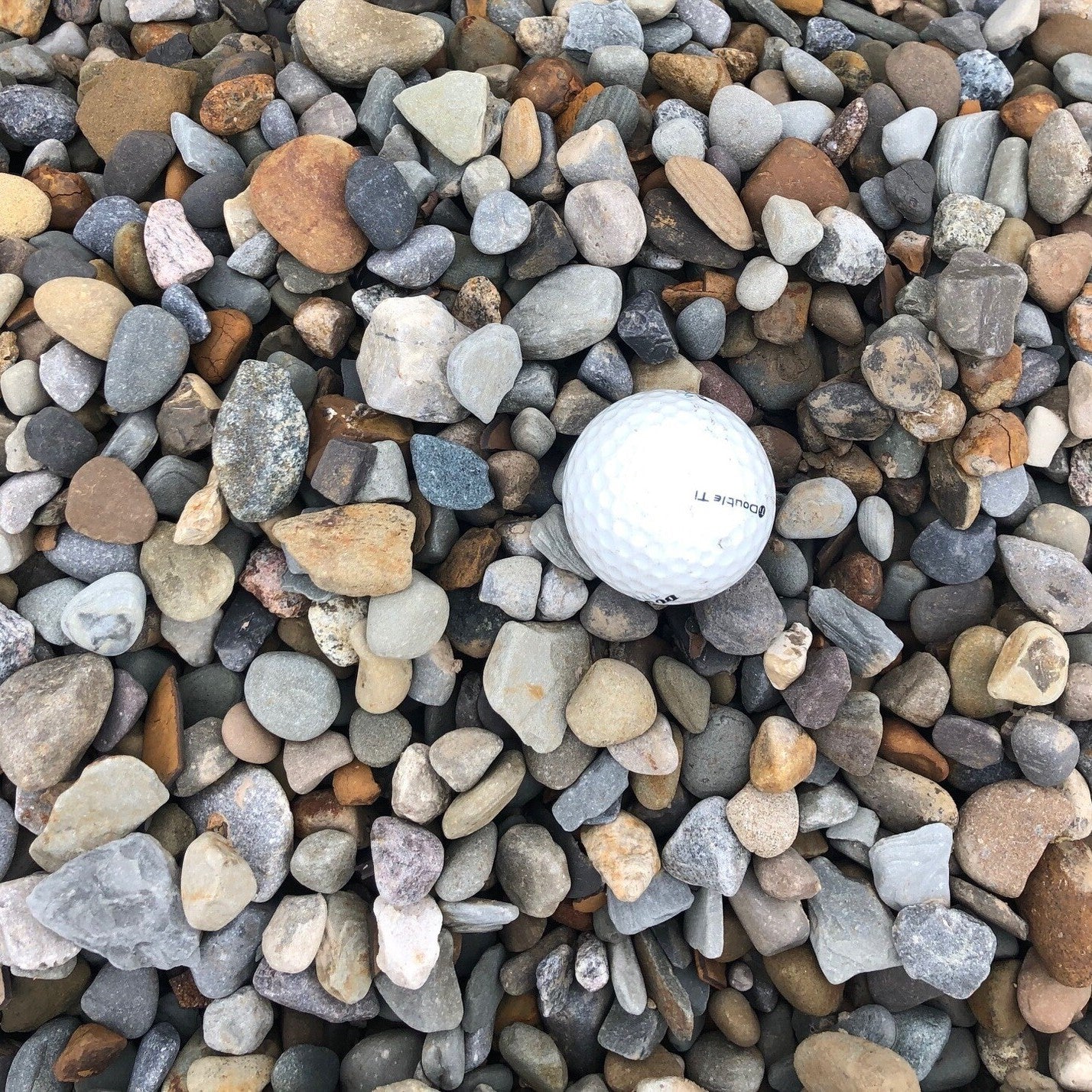
Number 57 crushed stone, angular limestone graded to about three quarters of an inch. The standard driveway, base and drainage gravel, it locks together under traffic and drains fast.
I used Mulch Mound to have 3 cubic yards of garden soil delivered. The process was easy and I love that I didn't have to call anyone. I placed my order online, picked my delivery date, laid out my tarp and the dirt was delivered. My delivery had to be pushed back, but I was ke...
Tell us what you're looking for
Thanks! We received your request.
Something went wrong. Please try again.
How Much Material Do I Need?
For decorative surface coverage in Indiana, a 2 to 3 inch depth of stone provides good weed suppression and a finished appearance while staying stable under rainfall. Drainage trenches and dry creek beds typically need a minimum of 4 to 6 inches of stone depth to move the volume of water that Indiana's annual rainfall can generate during peak storm events.
Use our free gravel calculator
What is a yard?
A yard is approximately 27 cubic feet. As a general guideline, one yard of material can cover an area of about 100-160 square feet at a 2-3 inch depth.
We can't take orders for this right now. Tell us what you need and we'll get back to you.
What do you need?
Thanks! We received your request.
Something went wrong. Please try again.
Hand-picked local yards
4,000+ regional deliveries
Dedicated support
Why order through Mulch Mound
The best local stone, without the guesswork.
We hand-pick and partner with the best yards in your region, keep only the ones our buyers rate well, and back each load with our guarantee.
Mulch Mound Guarantee
If your stone isn't the quantity or quality you ordered, we'll make it right.
About this stone
Number 57 crushed stone, angular limestone graded to about three quarters of an inch. The standard driveway, base and drainage gravel, it locks together under traffic and drains fast.
I used Mulch Mound to have 3 cubic yards of garden soil delivered. The process was easy and I love that I didn't have to call anyone. I placed my order online, picked my delivery date, laid out my tarp and the dirt was delivered. My delivery had to be pushed back, but I was ke...
How Much Material Do I Need?
For decorative surface coverage in Indiana, a 2 to 3 inch depth of stone provides good weed suppression and a finished appearance while staying stable under rainfall. Drainage trenches and dry creek beds typically need a minimum of 4 to 6 inches of stone depth to move the volume of water that Indiana's annual rainfall can generate during peak storm events.
Use our free gravel calculator
What is a yard?
A yard is approximately 27 cubic feet. As a general guideline, one yard of material can cover an area of about 100-160 square feet at a 2-3 inch depth.
I used Mulch Mound to have 3 cubic yards of garden soil delivered. The process was easy and I love that I didn't have to call anyone. I placed my o...
Read full review
I used Mulch Mound to have 3 cubic yards of garden soil delivered. The process was easy and I love that I didn't have to call anyone. I placed my order online, picked my delivery date, laid out my tarp and the dirt was delivered. My delivery had to be pushed back, but I was kept informed via text, which was great. So why not 5 stars? The description of garden soil on the website is "A balanced mix of topsoil and organic amendments ready for raised beds, flower gardens, and new planting areas. Good drainage, solid nutrients, easy to work with." What I got was more like fill dirt. It had a lot of gravel, a lot of clay, and random trash mixed in. I didn't test the soil to see if it actually had "amendments" because I already have compost and alpaca manure ready to add, but if I'd known the quality of the dirt was going to be the same as the bagged dirt I bought last year, I probably would have gotten 2 yards of top soil and a yard of leaf compost for better quality, especially since the leaf compost is cheaper. Photo of my mountain of dirt and just some of the trash I found in it.
To estimate stone quantity in cubic yards, multiply the length and width of your area in feet, then multiply by your desired depth in feet, and divide by 27. Stone is denser than mulch or soil, so even a 2-inch layer adds up quickly in weight, which is why bulk delivery is far more practical than bagged stone for Indiana projects covering more than a small area. For drainage applications where a consistent depth matters for function, measure your trench or channel carefully and add 10 percent to your estimate to ensure full and even coverage.
Stone Types We Deliver in Indiana
Mulch Mound brings bulk stone delivery straight to homeowners and contractors in Indiana, Pennsylvania, with no hauling hassle on your end. Whether you are searching for bulk gravel by the yard in Indiana or planning a larger landscape project, we load and drop off exactly what you need. Orders are measured and priced by the cubic yard so you only pay for what your project actually requires.
Pea Gravel
Smooth and rounded, pea gravel fits naturally into the landscape styles common across Indiana, where front walkways and backyard patios are popular weekend projects. Its earthy tones complement the region's wooded settings, and its free-draining character helps manage Pennsylvania's wet spring soils without washing away.
Complete Your Outdoor Stone Project
Stone borders pair beautifully with bulk mulch from MulchMound, creating a clean defined edge between your planting beds and pathways that also helps contain mulch during Indiana's heavy rainfalls. If your project involves raised beds or regraded lawn areas, our bulk topsoil gives you a solid, workable foundation before stone borders and decorative accents are put in place.
Indiana's clay loam soil tends to creep upward through stone layers over time, a process called clay migration, especially in areas that go through repeated freeze and thaw cycles at this elevation. Before installing any stone area that you want to stay clean and weed-free long term, lay a commercial-grade landscape fabric over the prepared clay loam base. It is a small extra step that will keep your stone looking sharp for years and prevent the muddy, contaminated appearance that develops when clay works its way to the surface through stone.
Mulch Mound Pro Tip
When building a stone pathway in Indiana, the most common mistake homeowners make is skimping on the compacted gravel base beneath the finish stone. Indiana experiences meaningful frost heave from late October through early spring at 1,309 feet of elevation, and a shallow path will buckle and shift with every freeze cycle. Investing in a proper 4-inch compacted crusher run base before laying your decorative stone is the single best thing you can do to ensure your path stays level and attractive without constant re-leveling every spring.
Mulch Mound Pro Tip
With 47 inches of annual rainfall, Indiana homeowners often underestimate how much water moves across their property during a heavy storm. Before placing stone in a low-lying area or along a slope, observe where water naturally flows on your property during and after a significant rain event. Positioning stone dry creek beds and gravel drainage paths along those natural water channels means the stone works with your site's hydrology rather than against it, giving you the best possible drainage and erosion results without fighting the natural landscape.
The Unique Landscape of Indiana
Indiana, PA's combination of heavy annual rainfall, clay loam soil, and hilly terrain makes stone one of the most practical landscape materials available to local homeowners. Where mulch and bare soil are carried away or shifted by rain on steeper ground, properly placed stone stays put and manages water movement at the same time. With 47 inches of rain per year, drainage is a constant concern, and stone-lined channels, dry creek beds, and gravel borders offer functional solutions that also look intentional and attractive. Indiana's short growing season, bookended by a May 7 last frost and an October 11 first frost, means that low-maintenance areas covered in stone require almost no seasonal attention, freeing up time and budget for more demanding planting beds. Whether you are building a pathway through a hillside garden, stabilizing a slope, or creating a clean border along your foundation, stone fits naturally into Indiana's challenging landscape conditions.
Frequently Asked Questions
Click a question to see the answer
Answer
What type of stone works best for managing drainage in Indiana's clay loam soil?
Crushed limestone or crusher run gravel works well for improving drainage in areas where Indiana's clay loam creates wet, poorly draining spots in your yard. A layer of clean crushed stone over a trench or low area allows water to filter through and move away from the surface, giving relief that a clay loam surface alone cannot provide. For dry creek beds that manage larger volumes of stormwater from Indiana's 47 inches of annual rainfall, rounded river rock in the 2 to 3 inch size range provides both function and a natural finished appearance.
Answer
How deep should I install stone for a pathway in Indiana?
For a stable walking path in Indiana, plan on 4 inches of compacted gravel base material topped with 2 inches of finish stone for a total depth of about 6 inches. Indiana's freeze and thaw cycles, which are active from late October through early spring at 1,309 feet of elevation, can shift shallow stone paths significantly if there is not enough depth to resist frost heave. A proper base depth keeps your pathway level and reduces the need for re-leveling every spring after the ground thaws.
Answer
Will stone help with the erosion on my sloped yard in Indiana?
Stone is one of the most effective solutions for erosion control on the hillside properties that are common throughout Indiana, PA. Unlike mulch, which can wash downhill during heavy rain events, properly sized stone anchors in place and slows the speed of water moving across the surface. For steeper slopes, a combination of landscape fabric beneath a 3 to 4 inch layer of larger river rock or crushed stone creates a durable erosion control surface that handles Indiana's most intense rain events without shifting.
Answer
Is stone a good option around my foundation to protect against Indiana's heavy rainfall?
A 12 to 18 inch border of clean crushed stone or river rock around your home's foundation is a smart investment in Indiana given the 47 inches of annual rainfall. Stone in this location allows rain that falls off the roof or flows toward the house to drain quickly rather than saturating the soil against your foundation wall. Keeping stone rather than mulch or bare soil in direct contact with your foundation also reduces moisture-related issues like mold growth and pest attraction that are common concerns in this wet climate.
Answer
What size stone is best for a decorative landscape bed in Indiana?
For decorative landscape beds in Indiana, a 1.5 to 2 inch river rock or decorative gravel gives a clean finished look while being large enough to stay in place during the heavy rainfalls this area regularly receives. Smaller pea gravel tends to scatter and track into lawns and onto sidewalks after intense rain, while larger cobble-size stone can be difficult to navigate during routine bed maintenance. A medium-sized rounded stone hits the sweet spot between stability and visual appeal for most Indiana landscapes.
Answer
How does stone compare to mulch for low-maintenance areas in Indiana?
Stone wins decisively for low-maintenance areas in Indiana because it never needs annual replenishment, does not break down in the humid summers, and holds its appearance through freeze and thaw cycles without shifting the way lightweight mulch can. While mulch improves soil over time through decomposition, stone is the right choice for areas where you want a permanent, nearly maintenance-free surface, such as foundation borders, side yard paths, utility areas, or slopes where mulch would wash away with Indiana's rainfall. The higher upfront material cost pays off quickly when you factor in zero replacement expense for many years.
Answer
Can I install stone over existing clay loam soil without it sinking or shifting?
Installing stone directly over Indiana's clay loam soil without any preparation will result in sinking and shifting over time, especially in areas that receive foot traffic. Before laying decorative or pathway stone, removing the top few inches of clay loam and replacing it with a compacted base of crusher run gravel gives the finish stone a stable foundation to rest on. Using a layer of landscape fabric between the clay loam and your base material also helps prevent clay from migrating upward and contaminating your stone layer over multiple seasons.