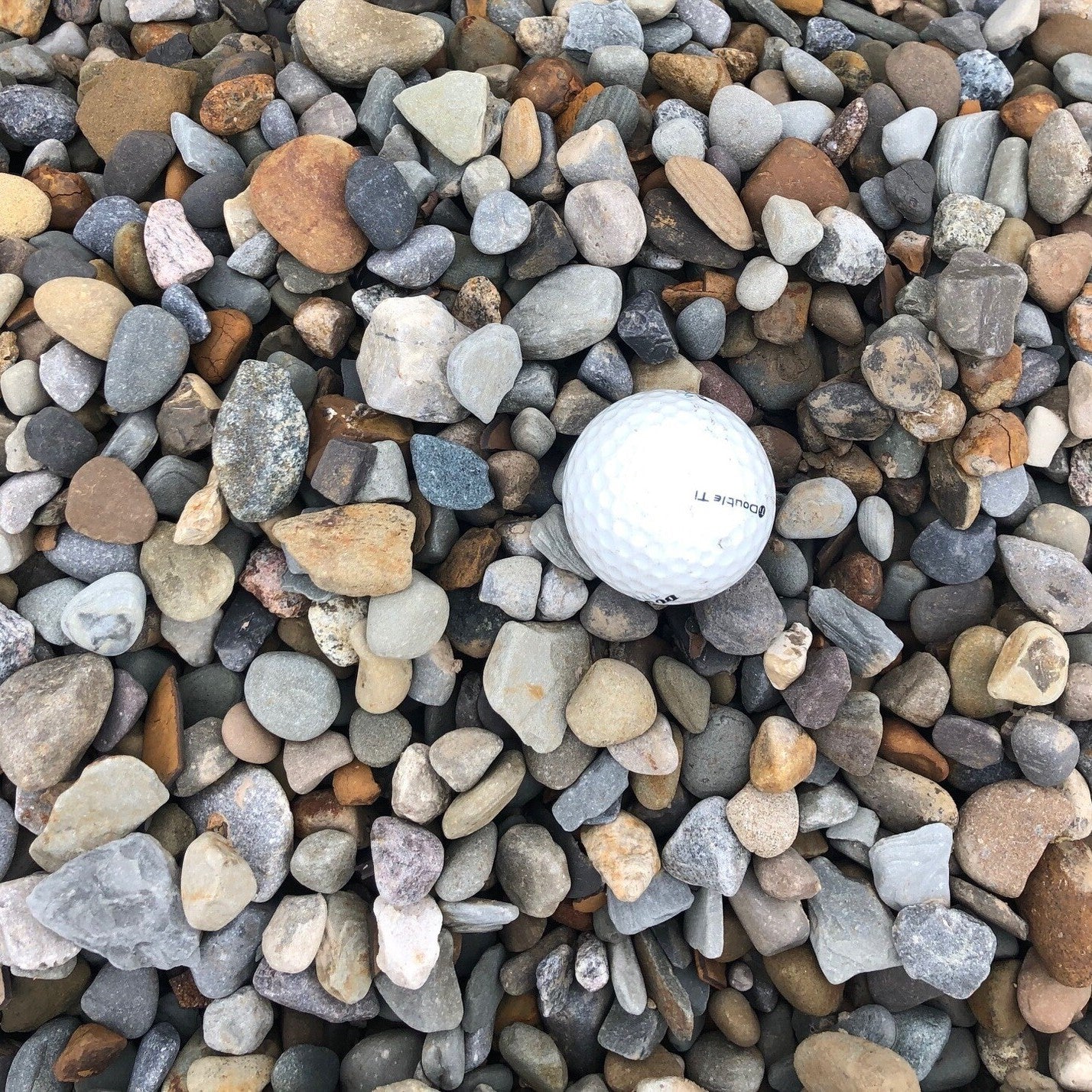
Number 57 crushed stone, angular limestone graded to about three quarters of an inch. The standard driveway, base and drainage gravel, it locks together under traffic and drains fast.
I contacted Mulch Mound for #57 river rocks and it was easy and fast to get a delivery right before the holiday weekend. Stone was delivered as promised and place exactly where I asked. Excellent service! I will be ordering mulch next!
Tell us what you're looking for
Thanks! We received your request.
Something went wrong. Please try again.
How Much Material Do I Need?
For most Jackson landscape applications, a 3 to 4 inch depth of stone is the working standard. Clay soil requires a slightly deeper layer than sandy soils because surface water moves slowly through the ground and you need the stone bed thick enough to keep moisture from wicking back up through the material and softening the surface.
Use our free gravel calculator
What is a yard?
A yard is approximately 27 cubic feet. As a general guideline, one yard of material can cover an area of about 100-160 square feet at a 2-3 inch depth.
We can't take orders for this right now. Tell us what you need and we'll get back to you.
What do you need?
Thanks! We received your request.
Something went wrong. Please try again.
Hand-picked local yards
4,000+ regional deliveries
Dedicated support
Why order through Mulch Mound
The best local stone, without the guesswork.
We hand-pick and partner with the best yards in your region, keep only the ones our buyers rate well, and back each load with our guarantee.
Mulch Mound Guarantee
If your stone isn't the quantity or quality you ordered, we'll make it right.
About this stone
Number 57 crushed stone, angular limestone graded to about three quarters of an inch. The standard driveway, base and drainage gravel, it locks together under traffic and drains fast.
I contacted Mulch Mound for #57 river rocks and it was easy and fast to get a delivery right before the holiday weekend. Stone was delivered as promised and place exactly where I asked. Excellent service! I will be ordering mulch next!
How Much Material Do I Need?
For most Jackson landscape applications, a 3 to 4 inch depth of stone is the working standard. Clay soil requires a slightly deeper layer than sandy soils because surface water moves slowly through the ground and you need the stone bed thick enough to keep moisture from wicking back up through the material and softening the surface.
Use our free gravel calculator
What is a yard?
A yard is approximately 27 cubic feet. As a general guideline, one yard of material can cover an area of about 100-160 square feet at a 2-3 inch depth.
I contacted Mulch Mound for #57 river rocks and it was easy and fast to get a delivery right before the holiday weekend. Stone was delivered as pro...
Read full review
I contacted Mulch Mound for #57 river rocks and it was easy and fast to get a delivery right before the holiday weekend. Stone was delivered as promised and place exactly where I asked. Excellent service! I will be ordering mulch next!
To calculate stone needs, measure your area in square feet and multiply by the depth in inches, then divide by 324 to get cubic yards. Jackson homeowners should add about 10 percent to their estimate to account for settling in clay soil and the slight compaction that happens after the first few rain events soak through the material. For drainage applications along a foundation, measuring the linear footage and multiplying by your border width in feet gives you the square footage to work from before calculating depth.
Stone Types We Deliver in Jackson
Homeowners and contractors across Jackson searching for bulk gravel by the yard have a reliable local delivery partner in Mulch Mound. We deliver stone by the cubic yard straight to your property, saving you the hassle of hauling materials yourself. Whether you are tackling drainage challenges in clay-heavy West Tennessee soil or refreshing a backyard patio, we make the ordering process simple.
Pea Gravel
Smooth and rounded, pea gravel suits homeowners who want a clean, natural finish in their outdoor spaces. It moves water efficiently through the clay-heavy soils common in West Tennessee, making it a smart choice for drainage. Its earthy tones complement the traditional home styles found throughout the region and look great along walkways and garden borders.
Complete Your Outdoor Stone Project
Stone borders look even sharper when the adjacent planting beds are filled with fresh bulk topsoil and topped with a contrasting mulch layer that ties the design together. If you are installing stone paths or patios on Jackson's clay-heavy ground, consider ordering a load of crushed gravel base material to create a stable, draining sub-base before placing your decorative stone surface on top.
Jackson's clay soil expands significantly when it absorbs moisture from the 54 inches of rain the area receives each year, and this expansion puts lateral pressure on stone borders and edging, slowly pushing them out of alignment over time. Using a compacted crushed gravel base beneath any stone border or edging feature gives the clay somewhere to shift without disrupting your layout above. Check and reset any drifting borders each spring before the heavy rain season begins in earnest.
Mulch Mound Pro Tip
For drainage stone placed beside downspouts or along swales in your Jackson yard, resist the temptation to place landscape fabric under the stone in those specific areas. Fabric clogs over time with sediment carried by clay-heavy runoff and reduces drainage performance just when you need it most during heavy storms. In purely decorative or low-traffic areas away from active water flow, fabric works fine to suppress weeds, but keep it out of your functional drainage zones.
Mulch Mound Pro Tip
Decorative stone installed around the foundation of a Jackson home does double duty as a pest barrier worth considering. A 12 to 18 inch wide band of stone between your mulched beds and the foundation discourages termites and other wood-boring insects that prefer the moist organic material that mulch provides when it sits directly against wood framing. Given that West Tennessee has active termite pressure, this simple design choice adds practical protection while also improving how water sheds away from your home during heavy rains.
The Unique Landscape of Jackson
Stone is one of the most practical landscaping investments a Jackson homeowner can make, and not just for curb appeal. West Tennessee's 54 inches of annual rainfall creates real erosion challenges on bare slopes, along fence lines, and beside downspouts where water concentrates and tears at unprotected soil. A layer of decorative or utility stone absorbs the impact of heavy rain, holds soil in place, and channels water away from foundations and plant beds before it can cause damage. Jackson's clay soil also means that foot traffic paths turn to muddy trenches during wet weather, and a properly installed stone path solves that problem permanently without any ongoing maintenance. With mild winters where temperatures rarely stay below freezing for extended periods, stone features require almost no seasonal upkeep and look great year-round in zone 7b landscapes where other materials wear out and fade.
Frequently Asked Questions
Click a question to see the answer
Answer
What size stone works best for drainage around a Jackson home's foundation?
For foundation drainage borders in Jackson, a 1.5 to 2 inch river rock or washed gravel works well because the larger particle size keeps gaps open so water flows through freely rather than clogging with sediment over time. Jackson's clay soil does not absorb foundation runoff easily, so a 12 to 18 inch wide stone border along the foundation perimeter helps direct water away quickly during the heavy rains that are common through spring and summer.
Answer
Will stone paths hold up in my yard without sinking into Jackson's clay soil?
Stone paths can sink in Jackson's clay soil without a proper base layer. Clay expands when wet and contracts when dry, which causes shifting over time especially through the freeze-thaw cycles that occur between November and February in West Tennessee. A 2 to 4 inch compacted gravel base beneath your stepping stones or path stone gives you a stable platform that drains water away from the clay surface and prevents the heaving that ruins improperly installed paths after a few seasons.
Answer
How do I keep stone from washing out during heavy rainstorms?
Lighter stones like small pea gravel are the most vulnerable to wash-out during Jackson's intense summer thunderstorms. Using a heavier stone, 1.5 inches or larger, in any area that receives concentrated runoff from downspouts or slopes keeps material in place far better through the storm season. Installing a simple metal or plastic edging border around stone areas also helps contain material when water is moving fast across the surface during heavy downpours.
Answer
Is stone a good option for areas where nothing seems to grow in my yard?
Stone is an excellent solution for the tough spots in Jackson yards where clay soil, shade, or root competition from trees makes growing grass nearly impossible. A 3 to 4 inch layer of decorative stone over landscape fabric eliminates the mowing and re-seeding cycle in those dead zones and handles the wet-dry swings of Jackson's climate without any seasonal maintenance or watering. River rock and brown pea gravel are popular choices for shaded beds near large oaks and maples that are common in West Tennessee neighborhoods.
Answer
How much stone do I need for a 10-foot-by-10-foot area?
For a 10x10 area at a 3-inch depth, you need roughly 0.93 cubic yards of stone, so most Jackson homeowners order 1 cubic yard to have a small amount left over. Keep in mind that stone compacts slightly when it settles under foot traffic and rainfall, so having a modest overage on hand is useful. For drainage applications where you want 4 inches of depth, bump your order to about 1.25 cubic yards for that same size area to hit your target after settling.
Answer
Can stone fix the muddy spots that show up every spring in my Jackson yard?
Stone is one of the best permanent fixes for the muddy high-traffic areas that plague Jackson yards every spring. Clay soil loses its structure under repeated foot traffic and turns into a slick surface after rain events. A 3 to 4 inch layer of compacted crushed stone or gravel in those areas gives you a firm, permeable surface that handles foot traffic and lets water drain through rather than pool on top, and it requires no replanting or reseeding year after year.
Answer
What is the difference between pea gravel and crushed stone for a backyard patio area?
Pea gravel has smooth, rounded edges that feel comfortable underfoot but the particles shift easily because they do not lock together under pressure. Crushed stone has angular edges that compact and interlock, making it a far more stable surface for patios and high-traffic areas. In Jackson where clay movement and rainfall are both significant factors, crushed stone is the better base material for patios, while pea gravel works well as a decorative top layer in low-traffic areas or as a finishing layer around plants.
Answer
Is crush and run the same as crusher run?
Crush and run is another name for crusher run, a mix of crushed stone and stone dust that compacts into a solid base for driveways and paver projects. Given Jackson's heavy rainfall and clay soil, our Crushed Stone #57 drains better and resists the erosion that builds up along slopes and downspouts.