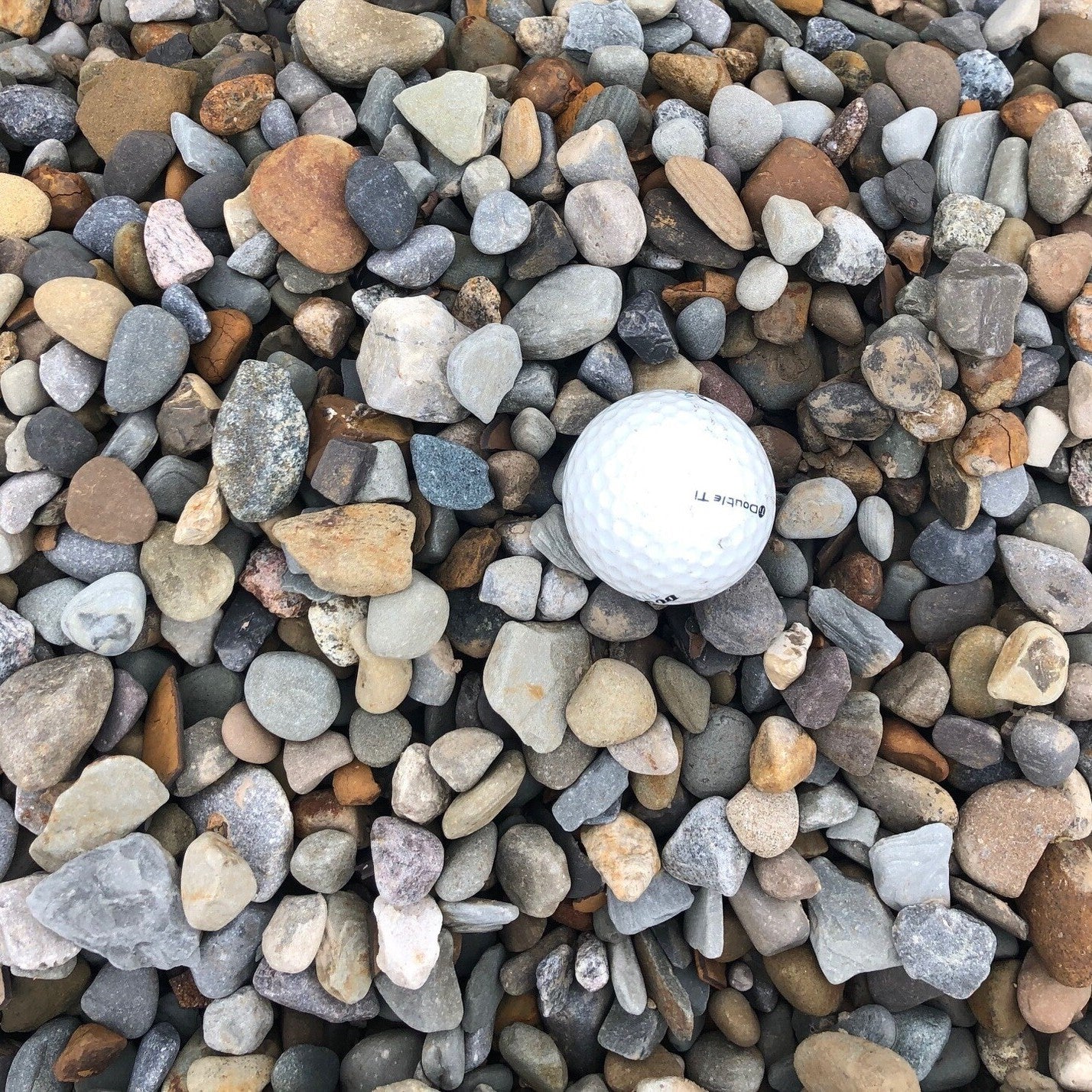
About this stone

#8 washed gravel: small angular crushed stone perfect for drainage, French drains, and concrete bases.

Mulch Mound delivered a yard of pea gravel to us. Delivery was on time, driver was friendly and hit a bullseye on the “tarp target”. We used the pea gravel (which was diameter as specified) to fill several muskrat holes around our pond. I would definitely recommend Mulch Mo...

Decorative stone beds need 2 to 3 inches of depth over fabric, while driveways and drainage trenches want 4 to 6 inches to handle Jamestown's freeze and thaw cycles and heavy spring runoff. Deeper is better anywhere vehicles drive or water concentrates.
Use our free stone calculator

A yard is approximately 27 cubic feet. As a general guideline, one yard of material can cover an area of about 100-160 square feet at a 2-3 inch depth.

Jamestown Stone Delivery

Jamestown Stone Delivery

4.7
137 reviews
Regular price $101.00 per Yard
Regular price Sale price $101.00
Sale Sold out
Shipping calculated at checkout.
Type
Size
Hand-picked local yards
4,000+ regional deliveries
Dedicated support
Why order through Mulch Mound

The best local , without the guesswork.

We hand-pick and partner with the best yards in your region, keep only the ones our buyers rate well, and back each load with our guarantee.

Mulch Mound Guarantee

If your isn't the quantity or quality you ordered, we'll make it right.

About this stone

#8 washed gravel: small angular crushed stone perfect for drainage, French drains, and concrete bases.

Mulch Mound delivered a yard of pea gravel to us. Delivery was on time, driver was friendly and hit a bullseye on the “tarp target”. We used the pea gravel (which was diameter as specified) to fill several muskrat holes around our pond. I would definitely recommend Mulch Mo...

Decorative stone beds need 2 to 3 inches of depth over fabric, while driveways and drainage trenches want 4 to 6 inches to handle Jamestown's freeze and thaw cycles and heavy spring runoff. Deeper is better anywhere vehicles drive or water concentrates.
Use our free stone calculator

A yard is approximately 27 cubic feet. As a general guideline, one yard of material can cover an area of about 100-160 square feet at a 2-3 inch depth.

View full details

How It Works

Getting started is easy — just follow these simple steps

1

Choose your stone

Make sure you adjust the quantity to your home's needs. You can use our calculator to estimate how much you'll need.

2

Select your delivery date

Select a delivery date you'd like for the product to be dropped off at your home

3

Sit back and wait

Sit back, wait, and let us work our magic to make sure the highest quality product is delivered to your driveway.

From The Mouths of Jamestown Folks

4.7
out of 5 based on 137 reviews
Google Reviews

Need Help Calculating How Much Stone & Gravel You Need?

Use our NEW Trace from Satellite tool to get an estimate for your project based on an aerial view of your property

Try Our Calculator
📍

Measure your area in feet and pick a depth, generally 2 inches for decorative beds and 4 or more for driveways and drainage. Multiply length by width by depth in feet, divide by 27 for cubic yards, then multiply by roughly 1.4 to convert to tons. Round up, because coming up short on a Jamestown stone project usually means paying a second delivery fee.

Complete Your Outdoor Stone Project

Add geotextile fabric to keep stone separated from silt loam, and pick up edging or boulders to define the border so material stays contained during Jamestown's heavy rains.

Map of the stone delivery area around Jamestown, New York

Service area

Areas we deliver stone and gravel in Jamestown, New York

Mulch Mound Pro Tip

Choose angular over rounded for anything functional. Jamestown's freeze and thaw cycles, which run heavy at 1,380 feet with over a hundred cycles some winters, work rounded river rock loose and spread it across the lawn. Angular crushed stone interlocks and stays in place through the winter. Save the smooth river rock for decorative dry creek beds and drainage areas where you actually want water to move freely through the voids.

Mulch Mound Pro Tip

Extend your downspouts into a stone splash bed rather than letting them dump on grass. A Jamestown roof sheds thousands of gallons a year given our 52 inches of rainfall, and concentrated discharge onto silt loam carves channels and saturates the foundation zone. A 3 foot by 3 foot bed of 1 to 2 inch stone over fabric, sloped away from the house, spreads and slows that flow. It is one of the cheapest basement protection measures available.

Mulch Mound Pro Tip

Compact in lifts, not all at once. When building a Jamestown driveway or parking pad, spread stone in 3 to 4 inch layers and run a plate compactor over each before adding the next. Silt loam subgrade does not offer much support, so the strength has to come from a properly compacted stone base. Skipping this step is why so many local gravel drives develop ruts and potholes within a single winter.

The Unique Landscape of Jamestown

Stone earns its keep in Jamestown because water is the constant here, 52 inches of it a year plus snowmelt draining off 1,380 foot terrain. Silt loam sheds and puddles rather than absorbing, so gravel beds, dry creek channels, and drainage trenches give that water somewhere to go instead of into a basement. Stone also solves the mud problem that plagues Jamestown driveways and side yards through the long shoulder seasons of March, April, and November. Unlike mulch, it does not decompose in our damp climate, so a properly installed stone bed lasts decades with only an occasional top off. For homeowners tired of replacing washed out material every spring, stone is the permanent answer.

Frequently Asked Questions

Click a question to see the answer

Answer

What stone works best for a Jamestown driveway that turns to mud every spring?

Start with a base of crusher run, which is a mix of angular fragments and stone dust that locks together and compacts hard. Top it with 3/4 inch clean crushed stone for the wearing surface. The angular edges are essential here because rounded river rock will not knit together and simply pushes into soft silt loam.

Answer

How do I keep stone from sinking into my soil?

Lay commercial grade woven geotextile fabric under the stone. Jamestown silt loam gets soft and pumps upward through gravel when saturated, which is exactly how a nice stone bed turns into a gravel and mud mix in three seasons. Fabric separates the layers and roughly doubles the useful life of the installation.

Answer

Will stone mulch work around my foundation plantings instead of bark?

It works well on the sunny sides of the house and near downspout discharge, where it handles the water Jamestown roofs shed. Keep in mind stone stores heat and does not feed the soil, so it is less suitable around moisture loving shade plants. Many local homeowners use stone along the drip line and bark mulch in the outer bed.

Answer

How much stone do I need for a dry creek bed?

For a typical Jamestown backyard channel 2 feet wide and 20 feet long, plan on about 1.5 to 2 tons of assorted river rock at 4 to 6 inches deep. Size the channel to your actual runoff, and remember that heavy May thunderstorms here can move a surprising volume of water in twenty minutes.

Answer

Does salt from winter roads damage stone?

Limestone is somewhat susceptible to chemical weathering from repeated salt exposure, which matters on Jamestown driveways that see plenty of it. Granite and river rock hold up better in salt zones. If you use limestone near the road, expect to top off the apron every few years.

Answer

How is stone priced, by the yard or by the ton?

Stone sells by the ton because weight varies with material and moisture, and in a climate as wet as ours moisture is always a factor. As a rough guide, a ton of 3/4 inch crushed stone covers about 100 square feet at 2 inches deep. Our calculator converts your square footage to tonnage automatically.

Answer

Can I install stone in late fall before the ground freezes?

Yes, and October and early November are actually a good window in Jamestown. The first frost hits around October 13 but the ground does not lock up for several more weeks. Just make sure your base is compacted before hard freeze, because loose stone over unfrozen soft ground will heave and settle unevenly by spring.