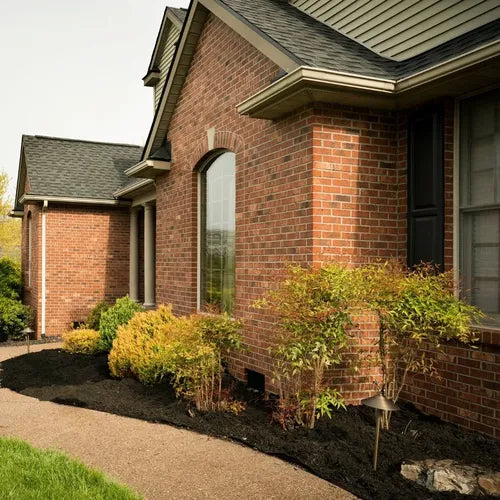
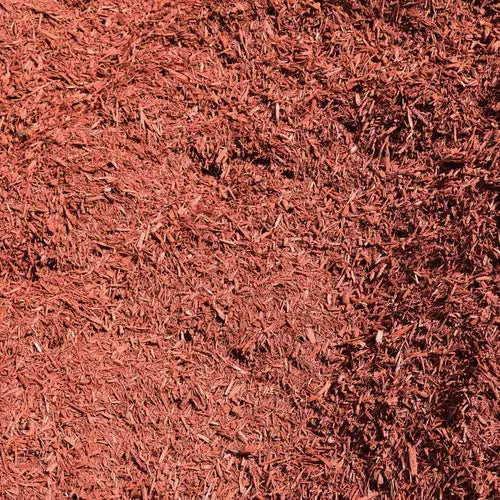
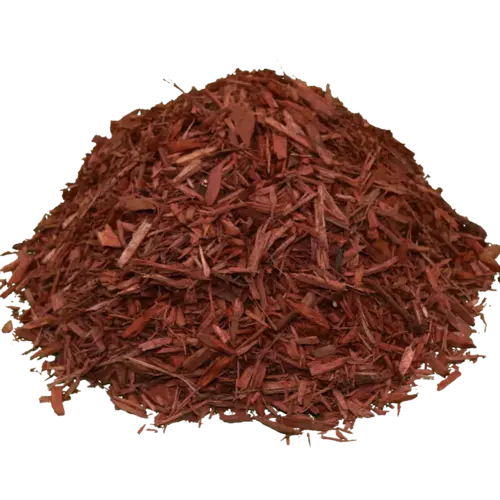
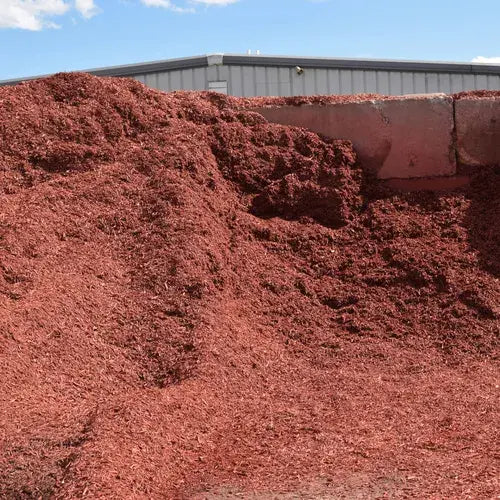
Warm brown double shredded mulch with lasting color that looks freshly applied for weeks. Spreads smooth, stays put, and gives beds a natural, polished appearance.
I can’t say enough good things about Mulch Mound! If you read my review below you will see I had a problem with my order. Mulch Mound was quick to respond and solved the issue with my delivery. Will definitely be a customer next year.
First time purchase...
Tell us what you're looking for
Thanks! We received your request.
Something went wrong. Please try again.
How Much Material Do I Need?
For Kalamazoo's fast-draining sandy loam, a 3-inch depth is the minimum effective layer for moisture retention and weed suppression in planting beds — go up to 4 inches in areas that get full afternoon sun and dry out fastest. Avoid exceeding 4 inches near woody stems and tree trunks, where excess mulch can trap moisture against bark.
Use our free mulch calculator
What is a yard?
A yard is approximately 27 cubic feet. As a general guideline, one yard of material can cover an area of about 10 feet by 10 feet at a few inches deep.
We can't take orders for this right now. Tell us what you need and we'll get back to you.
What do you need?
Thanks! We received your request.
Something went wrong. Please try again.
Hand-picked local yards
4,000+ regional deliveries
Dedicated support
Why order through Mulch Mound
The best local mulch, without the guesswork.
We hand-pick and partner with the best yards in your region, keep only the ones our buyers rate well, and back each load with our guarantee.
Mulch Mound Guarantee
If your mulch isn't the quantity or quality you ordered, we'll make it right.
About this mulch
Warm brown double shredded mulch with lasting color that looks freshly applied for weeks. Spreads smooth, stays put, and gives beds a natural, polished appearance.
I can’t say enough good things about Mulch Mound! If you read my review below you will see I had a problem with my order. Mulch Mound was quick to respond and solved the issue with my delivery. Will definitely be a customer next year.
First time purchase...
How Much Material Do I Need?
For Kalamazoo's fast-draining sandy loam, a 3-inch depth is the minimum effective layer for moisture retention and weed suppression in planting beds — go up to 4 inches in areas that get full afternoon sun and dry out fastest. Avoid exceeding 4 inches near woody stems and tree trunks, where excess mulch can trap moisture against bark.
Use our free mulch calculator
What is a yard?
A yard is approximately 27 cubic feet. As a general guideline, one yard of material can cover an area of about 10 feet by 10 feet at a few inches deep.
I can’t say enough good things about Mulch Mound! If you read my review below you will see I had a problem with my order. Mulch Mou...
Read full review
UPDATE!
I can’t say enough good things about Mulch Mound! If you read my review below you will see I had a problem with my order. Mulch Mound was quick to respond and solved the issue with my delivery. Will definitely be a customer next year.
First time purchase from Mulch Mound!! First what I liked! Easy to order online and straight forward pricing and delivery. The driver was on time and courteous and delivered my Mulch exactly where I requested! The product is of good quality and comparable to others I have purchased from before. Now what I DID’NT LIKE! I have been mulching the same house and yard for almost 20 years. I always order the same amount and don’t have any issues with covering the same area but this year I fell about a yard short. I was home when the mulch was delivered and when the driver dumped it I noticed that it seemed a bit less than I was used to. I didn’t apply it any thicker than usual and probably a bit thinner than usual because I was worried about running out.
Mulch Mound made it so easy! So happy with the pricing, turn around time, delivery and product. I submitted my online order on a Thursday. The mu...
Read full review
Mulch Mound made it so easy! So happy with the pricing, turn around time, delivery and product. I submitted my online order on a Thursday. The mulch was delivered to the designated location by a local landscape company at 8:30 a.m. the following Saturday morning. We had the job completed by that afternoon. We chose the natural brown mulch, and the plant beds are beautiful.
To estimate mulch for your Kalamazoo beds, measure the length and width of each area in feet and multiply for square footage, then use 100 square feet per cubic yard as your guide for a 3-inch depth. Keep in mind that sandy loam beds tend to compact and settle slightly through our wet spring season, so it's smart to add 10–15% to your estimate to account for settling and any spots you find were undercovered. Measuring twice before ordering avoids the hassle of a second delivery.
Mulch vs. No Mulch: The Difference
Kalamazoo's four-season climate puts mulch through more stress than most homeowners realize — freeze-thaw cycles from November through March, snowmelt saturation in spring, and intense UV exposure through a full summer all affect how mulch holds up and breaks down. Natural hardwood mulch weathers predictably and feeds your sandy loam as it decomposes, while dyed mulches offer a sharper look at installation but are more prone to color loss after a single southwest Michigan winter. Understanding that tradeoff helps you choose based on your priorities — long-term soil health or season-to-season aesthetics.
Before
After
Best Mulch Choice for Kalamazoo Lawns
Most yards in the Kalamazoo area sit on Sandy Loam type of soil. Kalamazoo's sandy loam soil holds nutrients and moisture poorly on its own, which means plant beds need consistent organic inputs to stay productive — bare sandy soil between plants is essentially a blank invitation for weeds and rapid moisture loss. The right mulch acts as a slow-release soil amendment and a protective barrier at the same time, addressing both problems simultaneously.
Hardwood Mulch
Hardwood mulch is particularly well-suited to Kalamazoo's sandy loam because as it decomposes over one to two seasons, it contributes humus directly to the soil profile, gradually increasing the soil's cation exchange capacity and helping it hold onto the moisture and nutrients that sandy loam would otherwise lose quickly — it's one of the most cost-effective ways to slowly improve the structure of a sandy southwest Michigan garden bed over several years.
Mulch Types We Deliver in Kalamazoo
Mulch Mound makes bulk mulch delivery in Kalamazoo straightforward, bringing the exact cubic yardage you need directly to your property. Whether you are refreshing a few flower beds or covering a large yard, ordering by the yard saves you the time and effort of hauling bags. Each variety below performs well through Michigan winters and spreads evenly in the clay soils common to this region.
Dyed Black Mulch
Dyed black mulch is double shredded for a smooth, uniform texture that spreads easily across beds of any size. The bold color holds well through Michigan summers and contrasts sharply with green foliage. A popular pick for homeowners who want a clean, modern look that stays sharp from spring through fall.
Dyed Brown Mulch
Warm in tone and consistent in texture, dyed brown mulch is double shredded for a neat, even spread. The lasting color stays looking fresh for weeks, making it a natural fit for the traditional brick and wood home styles found throughout this part of southwest Michigan.
Cedar Mulch
Cedar mulch is double shredded and carries natural oils that help repel insects and slow decay. It holds up well through the humid summers typical of southwest Michigan and breaks down more slowly than most other mulch types. The pleasant, natural aroma makes it a favorite for beds near porches and entryways.
Complete Your Outdoor Mulch Project
If your sandy loam beds need more than a surface refresh, pair your mulch order with a bulk topsoil or garden mix delivery to rebuild depleted planting areas before you mulch over them — Kalamazoo's fast-draining soil benefits from that one-two punch of added organic matter topped with a protective mulch layer. Decorative stone works beautifully alongside mulch for defining bed edges, creating low-maintenance borders along driveways, or anchoring areas where Kalamazoo's spring runoff tends to wash lighter materials away.
In Kalamazoo, apply fresh mulch in late October after the ground cools but before it freezes — typically between the first frost around October 11 and mid-November. This timing locks in soil warmth from the growing season rather than insulating already-cold ground. Perennial roots stay protected through the hard freezes of a southwest Michigan winter without the added risk of crown rot that can happen when you mulch too late into wet, saturated conditions.
Mulch Mound Pro Tip
Sandy loam loses nitrogen faster than heavier soils because water moves through it quickly, leaching nutrients before plants can absorb them. Fresh wood-based mulch can temporarily tie up surface nitrogen as it decomposes. In Kalamazoo gardens, consider a light application of balanced granular fertilizer worked into the top inch of soil before you lay down fresh mulch each spring — it gives your plants a nutrient head start and counteracts the brief nitrogen draw-down period as the mulch begins breaking down.
Mulch Mound Pro Tip
With 36 inches of annual rainfall in Kalamazoo, you'd think moisture wouldn't be a problem — but much of that precipitation comes in late winter and spring, leaving summer beds surprisingly dry. Mulch is your bridge across those dry gaps. Pull your mulch back slightly from plant crowns and direct it toward the drip line of shrubs and perennials, where roots are actively absorbing water. This channels the benefit of every rain event and every irrigation cycle to exactly where your plants need it most.
Frequently Asked Questions
Click a question to see the answer
Answer
How thick should I apply mulch in Kalamazoo given how fast our sandy soil dries out?
Because Kalamazoo's sandy loam drains and dries faster than heavier soils, we recommend a full 3-inch layer in most planting beds. That depth gives you genuine moisture retention through the dry stretches that often hit in July and August, without going so deep that you risk suffocating shallow roots or inviting vole habitat. For newly seeded lawn areas, keep it thinner — around half an inch — so seedlings can push through.
Answer
When should I mulch in the spring around Kalamazoo? I don't want to do it too early.
Aim for mid-to-late May, after the last frost date of around May 10 has passed and soil has had a chance to warm up. If you mulch too early — say in late April when we still get cold nights — you can actually insulate cold soil and slow down root activity on perennials trying to wake up. Once daytime temps are consistently in the 50s and overnight lows stay above freezing, you're in the right window.
Answer
Does the color in dyed mulch hold up through a Kalamazoo winter?
Dyed mulch will fade over a full southwest Michigan winter — freeze-thaw cycles, snowmelt, and spring rain all work against color retention. Most homeowners in Kalamazoo find that dyed mulch looks sharp for one full season but needs to be refreshed or topped off the following spring. If long-term color stability matters to you, natural hardwood mulch that has been allowed to age to a consistent gray-brown can actually look more intentional and requires less maintenance year over year.
Answer
Will mulch help protect my perennials through a Kalamazoo freeze?
Yes, significantly. Kalamazoo sits in Zone 6a, and the first frost typically arrives around October 11. A 3 to 4-inch layer of mulch applied in late October — after the ground has cooled but before it freezes hard — insulates root systems against the sharp temperature swings we get in November and early December. This is especially valuable for marginally hardy perennials like ornamental grasses and some salvias that sit right at the edge of survivability in our zone.
Answer
I have a lot of weeds coming up through the sandy soil in my beds. Will mulch actually help?
Sandy loam gives weed seeds an easy place to germinate, so yes — mulch is one of your best tools. A 3-inch layer blocks light from reaching the soil surface, which interrupts the germination of most annual weeds like crabgrass and purslane that thrive in Kalamazoo landscapes. It won't stop every perennial weed that's already rooted, but it dramatically cuts down on the constant seeding cycle. For best results, clean the bed and apply a fresh layer each spring before the soil warms past 55°F.
Answer
How much mulch do I actually need for an average Kalamazoo yard?
A typical residential property in Kalamazoo with established foundation plantings and a few garden beds usually needs between 3 and 6 cubic yards to get a fresh 3-inch application across all planting areas. Use our calculator as a starting point — measure each bed's length and width in feet, multiply to get square footage, and divide by 100 to estimate cubic yards at 3 inches deep. When in doubt, it's worth ordering a half yard extra; sandy soil beds tend to settle and could use the additional coverage.
Answer
Is hardwood or softwood mulch better for the kind of sandy loam soil we have here in Kalamazoo?
Hardwood mulch is generally the better choice for Kalamazoo's sandy loam. As hardwood mulch breaks down over one to two seasons, it contributes organic matter directly into the soil, slowly improving its ability to hold nutrients and moisture — exactly what sandy loam needs. Softwood mulches like pine decompose faster and tend to be more acidic, which can be useful around acid-loving plants like blueberries or azaleas, but hardwood is the more versatile everyday option for most southwest Michigan landscapes.
The Unique Landscape of Kalamazoo
Kalamazoo's sandy loam soil drains quickly and loses moisture faster than heavier clay-based soils found elsewhere in Michigan, making mulch an essential tool rather than a decorative afterthought. With only 36 inches of annual rainfall distributed unevenly across the growing season, plant beds can stress between rain events — a consistent 3-inch mulch layer acts as a buffer, slowing evaporation and keeping root zones stable. Zone 6a winters here can swing dramatically, with ground temperatures fluctuating enough in late October and early November to cause frost heave in shallow-rooted perennials — mulch insulates the soil and smooths those transitions. The last frost typically arrives as late as May 10, meaning mulch also keeps soil warmer in spring and allows you to extend planting a bit earlier without exposing bare roots to cold snaps. Summers around Kalamazoo bring stretches of heat that dry sandy loam fast, and a quality mulch layer can cut your watering frequency nearly in half during July and August. Keeping beds mulched also suppresses the aggressive weeds common to southwest Michigan, like crabgrass and bindweed, that exploit any exposed sandy soil.