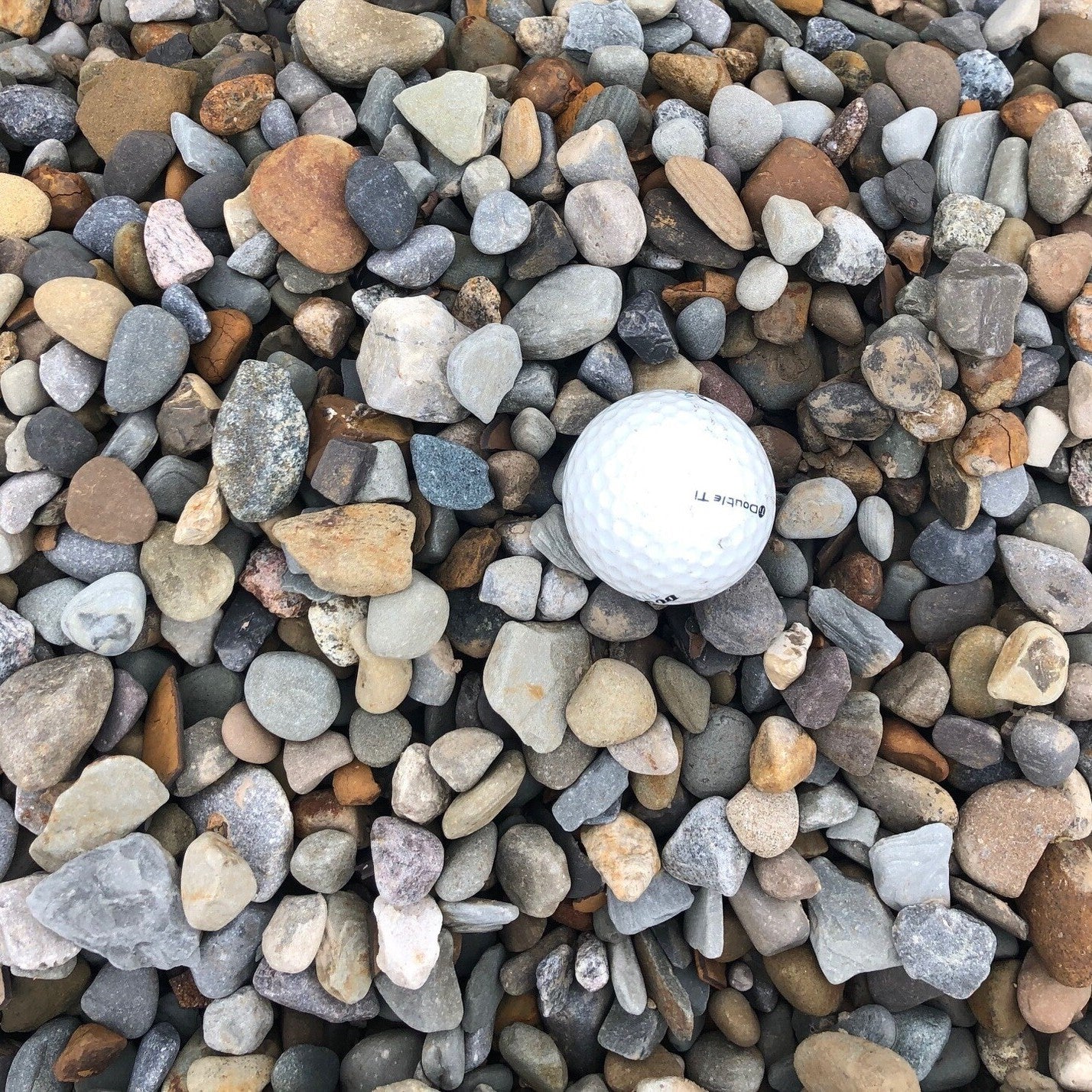
Number 57 crushed stone, angular limestone graded to about three quarters of an inch. The standard driveway, base and drainage gravel, it locks together under traffic and drains fast.
Mulch Mound delivered a yard of pea gravel to us. Delivery was on time, driver was friendly and hit a bullseye on the “tarp target”. We used the pea gravel (which was diameter as specified) to fill several muskrat holes around our pond. I would definitely recommend Mulch Mo...
Tell us what you're looking for
Thanks! We received your request.
Something went wrong. Please try again.
How Much Material Do I Need?
For decorative stone beds and borders in Kalamazoo, a 2-inch depth is typically sufficient over landscape fabric on sandy loam — the free-draining native soil means you don't need thick stone layers to prevent waterlogging. For driveways, service areas, or any surface that will see vehicle weight, step up to a minimum 4-inch depth over a compacted base to handle the pressure and prevent rutting through spring thaw.
Use our free gravel calculator
What is a yard?
A yard is approximately 27 cubic feet. As a general guideline, one yard of material can cover an area of about 10 feet by 10 feet at a few inches deep.
We can't take orders for this right now. Tell us what you need and we'll get back to you.
What do you need?
Thanks! We received your request.
Something went wrong. Please try again.
Hand-picked local yards
4,000+ regional deliveries
Dedicated support
Why order through Mulch Mound
The best local stone, without the guesswork.
We hand-pick and partner with the best yards in your region, keep only the ones our buyers rate well, and back each load with our guarantee.
Mulch Mound Guarantee
If your stone isn't the quantity or quality you ordered, we'll make it right.
About this stone
Number 57 crushed stone, angular limestone graded to about three quarters of an inch. The standard driveway, base and drainage gravel, it locks together under traffic and drains fast.
Mulch Mound delivered a yard of pea gravel to us. Delivery was on time, driver was friendly and hit a bullseye on the “tarp target”. We used the pea gravel (which was diameter as specified) to fill several muskrat holes around our pond. I would definitely recommend Mulch Mo...
How Much Material Do I Need?
For decorative stone beds and borders in Kalamazoo, a 2-inch depth is typically sufficient over landscape fabric on sandy loam — the free-draining native soil means you don't need thick stone layers to prevent waterlogging. For driveways, service areas, or any surface that will see vehicle weight, step up to a minimum 4-inch depth over a compacted base to handle the pressure and prevent rutting through spring thaw.
Use our free gravel calculator
What is a yard?
A yard is approximately 27 cubic feet. As a general guideline, one yard of material can cover an area of about 10 feet by 10 feet at a few inches deep.
Mulch Mound delivered a yard of pea gravel to us. Delivery was on time, driver was friendly and hit a bullseye on the “tarp target”. We used the ...
Read full review
Mulch Mound delivered a yard of pea gravel to us. Delivery was on time, driver was friendly and hit a bullseye on the “tarp target”. We used the pea gravel (which was diameter as specified) to fill several muskrat holes around our pond. I would definitely recommend Mulch Mound to a friend!
Placing an order online was so easy. Delivery was on time. When the driver realized we had a newly poured driveway they erred on the side of cautio...
Read full review
Placing an order online was so easy. Delivery was on time. When the driver realized we had a newly poured driveway they erred on the side of caution and opted not ti drive in it. The company even sent me a message explaining that call. Would recommend!
To estimate stone needs for Kalamazoo projects, measure your coverage area in square feet and decide on your installation depth — 2 inches for decorative surface applications, 4 inches for driveways and high-traffic pathways, and 6 or more inches for drainage trenches. Divide total cubic feet by 27 to get cubic yards. Stone is denser than mulch, so a cubic yard covers significantly less ground, and it's worth double-checking your math before ordering since under-ordering on stone means a second delivery trip rather than a quick extra bag.
Stone Types We Deliver in Kalamazoo
Mulch Mound delivers bulk stone by the cubic yard right to your door, making it easy for homeowners across the region to tackle landscaping projects without hauling bags from the store. If you have been searching for bulk gravel by the yard in Kalamazoo, we carry the smooth, natural varieties that suit southwest Michigan's clay-heavy soils and four-season climate. Each order is dropped precisely where you need it, so you can get straight to spreading.
Pea Gravel
Pea gravel suits Kalamazoo homeowners who want a clean, low-maintenance ground cover that handles southwest Michigan's freeze-thaw cycles well. Its smooth, rounded edges feel comfortable underfoot on paths and patios, and the warm earth tones blend with the brick and wood exteriors common across this region.
1-2" River Stone
River stone in the 1 to 2 inch range adds a bold, natural texture to garden beds and borders that smaller gravel cannot match. Its water-worn surface stays stable through wet Michigan springs and looks striking alongside native plantings, making it a popular upgrade for homeowners who want more visual weight in their landscape.
Complete Your Outdoor Stone Project
Stone works best as part of a complete landscape plan — pair your stone delivery with bulk topsoil to grade and stabilize any low areas before placing stone for drainage applications, so water moves where you direct it rather than pooling beneath your new installation. Adding hardwood mulch to adjacent planting beds alongside stone edging or borders creates the kind of layered, finished look that Kalamazoo landscapes need to handle both curb appeal and the practical demands of southwest Michigan's four-season climate.
Kalamazoo's freeze-thaw cycles are hard on any landscape installation, but stone handles them better than almost any other material when properly set. The weak point is usually the base — if you're installing a pathway or patio using flagstone or stepping stones, excavate 6 to 8 inches and fill with compacted Class II gravel before placing your surface stone. This depth gets your base below the active frost zone and dramatically reduces the heaving and shifting that frustrates homeowners who set stones directly into sandy loam.
Mulch Mound Pro Tip
Decorative stone around downspout outlets is one of the highest-return landscape investments for Kalamazoo homeowners. Southwest Michigan gets a significant portion of its 36 annual inches of rainfall in intense spring events, and downspouts that discharge onto bare soil or turf quickly create muddy channels and erosion. A 6-foot splash zone of 1.5 to 2-inch river rock around each downspout outlet disperses that water energy, protects the soil below, and eliminates one of the most common eyesores in residential Kalamazoo landscapes.
Mulch Mound Pro Tip
If you're converting a mulched area to decorative stone in Kalamazoo, don't skip the excavation step. Removing 2 to 3 inches of existing soil and organic material before installing fabric and stone gives you a finished surface that sits flush with surrounding areas rather than mounding above grade. Stone installed over unexcavated ground tends to creep, scatter into the lawn, and look sloppy within a season — especially after snowplow contact or heavy southwest Michigan rains wash the edges loose.
The Unique Landscape of Kalamazoo
Stone is one of the most practical landscaping investments a Kalamazoo homeowner can make, precisely because it solves problems that southwest Michigan's climate creates season after season. Freeze-thaw cycles from November through March heave and shift soft landscape materials, but properly installed stone holds its position year after year regardless of what the winter throws at it. Kalamazoo's sandy loam base actually pairs well with stone because the native soil drains freely underneath, reducing the risk of water pooling beneath pathway or border installations. With 36 inches of annual rainfall concentrated heavily in spring, areas without hardscape or ground cover become erosion channels — gravel and decorative stone stabilize those trouble spots permanently. The aesthetic versatility of stone also means it works across Kalamazoo's wide range of home styles, from mid-century ranch houses to newer construction, as pathway material, bed edging, or dry riverbed drainage features. Once installed, stone requires almost none of the seasonal maintenance that mulch or turf demands, making it the true low-maintenance choice for Kalamazoo homeowners who want a landscape that looks intentional without constant upkeep.
Frequently Asked Questions
Click a question to see the answer
Answer
What size gravel works best for pathways in a Kalamazoo backyard?
For foot-traffic pathways in Kalamazoo yards, 3/8-inch pea gravel or 3/4-inch crushed limestone are both popular options. Pea gravel is comfortable underfoot but can scatter; crushed angular stone compacts better and stays in place more reliably after Kalamazoo's spring rain and snowmelt events. Either way, install it over a 4-inch compacted stone dust or Class II base for stability — skipping the base layer leads to gravel sinking into the sandy loam below within a season or two.
Answer
Will stone edging hold up through Kalamazoo winters? I've had other borders shift and heave.
Properly installed stone is far more frost-resistant than plastic or metal edging, but the key is setting it deep enough. Kalamazoo's freeze-thaw cycles can push anything placed at surface level right out of position. For heavier decorative stones used as border edging, set the bottom third to half of the stone below grade — this anchors them against frost heave and keeps them looking level and intentional through spring thaw.
Answer
I have a low spot near my foundation that stays wet every spring. Can stone help with drainage?
Absolutely — a French drain or dry riverbed design using 1.5-inch or 2-inch washed drainage stone is one of the most effective fixes for chronic wet spots near Kalamazoo foundations. The stone creates a subsurface channel that moves water away from the foundation and toward a lower area of the yard or a storm drain connection. Because Kalamazoo's sandy loam drains reasonably well once water is moving, a shallow stone-filled trench often resolves foundation moisture issues that have plagued a property for years.
Answer
How do I keep weeds from growing up through my decorative stone beds?
A quality non-woven landscape fabric underneath your stone is the most effective weed barrier for Kalamazoo conditions — it blocks light from reaching the sandy loam below while still allowing water to drain through. Avoid cheaper woven or paper-based barriers that break down within a season or two. Even with good fabric, wind-blown organic material will accumulate on top of stone over time, so a quick rake in spring is the only real ongoing maintenance a stone bed needs in southwest Michigan.
Answer
What's the difference between river rock and crushed stone, and which is better for my Kalamazoo landscaping?
River rock has smooth, rounded edges from natural water erosion and is primarily used for decorative applications — dry riverbeds, accent borders, and container drainage. Crushed stone is angular and irregular, which causes it to interlock and compact tightly, making it the better choice for functional uses like driveways, pathways, and drainage installations. In Kalamazoo landscapes, most homeowners use a combination: crushed stone for functional areas and pathways, river rock for purely decorative beds and drainage features where aesthetics matter.
Answer
How much stone do I need to cover my driveway apron or a large mulched area I want to convert?
For a 2-inch surface layer of decorative stone, plan on roughly 1 cubic yard per 160 square feet of coverage. For a functional gravel driveway apron, a 4-inch depth is more appropriate, which means 1 cubic yard covers about 80 square feet. Measure your area carefully and use those ratios to estimate — ordering a bit extra is smart since Kalamazoo's sandy loam base can shift slightly under new material during the first freeze-thaw season, and you'll want extra on hand to top off any low spots.
Answer
Can I use stone around my tree bases instead of mulch in Kalamazoo?
Stone around tree bases is a common choice but comes with trade-offs worth understanding in Kalamazoo's climate. Stone doesn't add organic matter back to the soil as it breaks down, so trees mulched with rock miss out on the gradual soil improvement that organic mulch provides over time — a real consideration given how nutrient-lean sandy loam can be. Stone also absorbs and radiates heat in summer, which can stress tree roots. If you go with stone, leave a clear gap of several inches between the stone and the trunk and consider periodic organic fertilizer applications to compensate for the missing decomposition cycle.
Answer
Is there a stone yard near Kalamazoo?
Laying crushed stone over a low, soggy spot in your Kalamazoo yard so water drains away before the winter freeze and thaw cycle takes hold is a job we can handle without any pickup runs. Mulch Mound brings the crushed stone straight to your driveway by the cubic yard, so there's no need to haul it from a stone yard or deal with a quarry.