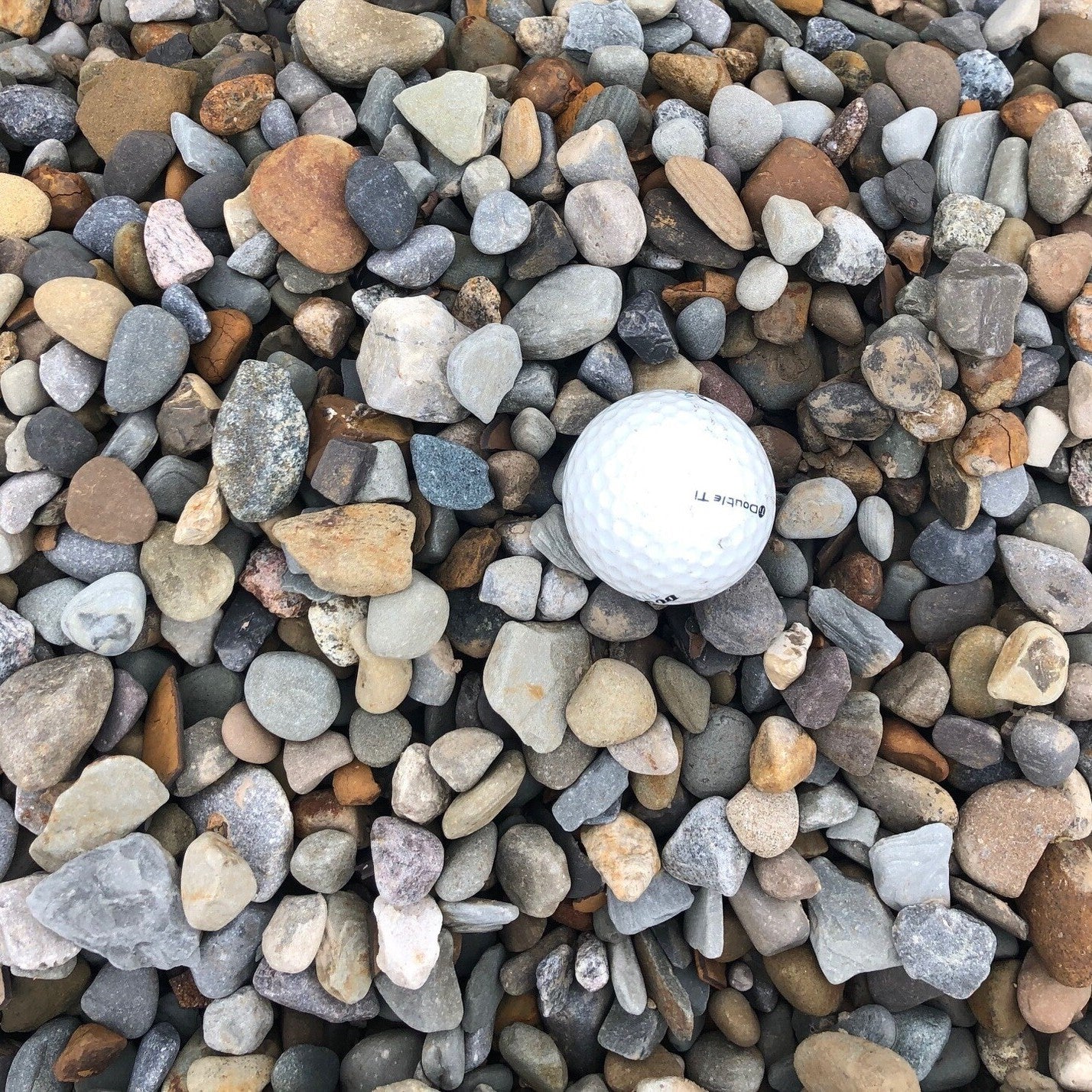
Number 57 crushed stone, angular limestone graded to about three quarters of an inch. The standard driveway, base and drainage gravel, it locks together under traffic and drains fast.
I contacted Mulch Mound for #57 river rocks and it was easy and fast to get a delivery right before the holiday weekend. Stone was delivered as promised and place exactly where I asked. Excellent service! I will be ordering mulch next!
Tell us what you're looking for
Thanks! We received your request.
Something went wrong. Please try again.
How Much Material Do I Need?
For decorative ground cover and weed suppression in Long Branch, two to three inches of stone is the effective minimum depth, especially given how readily weed seeds germinate in the sandy loam surrounding most beds. For drainage channels and French drain applications, four to six inches of washed stone gives the void space needed for water to move freely through the material.
Use our free gravel calculator
What is a yard?
A yard is approximately 27 cubic feet. As a general guideline, one yard of material can cover an area of about 100-160 square feet at a 2-3 inch depth.
We can't take orders for this right now. Tell us what you need and we'll get back to you.
What do you need?
Thanks! We received your request.
Something went wrong. Please try again.
Hand-picked local yards
4,000+ regional deliveries
Dedicated support
Why order through Mulch Mound
The best local stone, without the guesswork.
We hand-pick and partner with the best yards in your region, keep only the ones our buyers rate well, and back each load with our guarantee.
Mulch Mound Guarantee
If your stone isn't the quantity or quality you ordered, we'll make it right.
About this stone
Number 57 crushed stone, angular limestone graded to about three quarters of an inch. The standard driveway, base and drainage gravel, it locks together under traffic and drains fast.
I contacted Mulch Mound for #57 river rocks and it was easy and fast to get a delivery right before the holiday weekend. Stone was delivered as promised and place exactly where I asked. Excellent service! I will be ordering mulch next!
How Much Material Do I Need?
For decorative ground cover and weed suppression in Long Branch, two to three inches of stone is the effective minimum depth, especially given how readily weed seeds germinate in the sandy loam surrounding most beds. For drainage channels and French drain applications, four to six inches of washed stone gives the void space needed for water to move freely through the material.
Use our free gravel calculator
What is a yard?
A yard is approximately 27 cubic feet. As a general guideline, one yard of material can cover an area of about 100-160 square feet at a 2-3 inch depth.
I contacted Mulch Mound for #57 river rocks and it was easy and fast to get a delivery right before the holiday weekend. Stone was delivered as pro...
Read full review
I contacted Mulch Mound for #57 river rocks and it was easy and fast to get a delivery right before the holiday weekend. Stone was delivered as promised and place exactly where I asked. Excellent service! I will be ordering mulch next!
To estimate stone volume, multiply the length, width, and depth of your project area in feet, then divide by 27 to convert to cubic yards. Stone is significantly denser than mulch or soil, so even a modest cubic yard goes a long way in a typical Long Branch bed or pathway project. If you are filling a narrow drainage channel or foundation border, measure the full length carefully and use the actual width and depth of the channel to capture the true volume needed.
Stone Types We Deliver in Long Branch
Mulch Mound delivers bulk stone by the cubic yard to residential and commercial properties across coastal New Jersey. If you have been searching for bulk gravel by the yard in Long Branch, we make it easy to order exactly what your project calls for with direct-to-site delivery and flexible scheduling. The combination of a coastal climate, sandy soil, and a wide variety of home styles in this area makes stone one of the most practical and versatile landscape materials available.
Pea Gravel
Pea Gravel is a smooth, rounded stone with warm earth tones that fits naturally with the relaxed coastal aesthetic common to homes in this part of New Jersey. It performs well for pathways, patios, and drainage applications where sandy soil benefits from added texture. It requires minimal upkeep and holds its appearance through wet coastal winters.
Complete Your Outdoor Stone Project
Stone borders and pathways pair naturally with mulched beds in Long Branch, with stone handling the high-traffic and drainage zones while mulch covers the planted areas that benefit from moisture retention. If you are also building up garden areas near your stone work, a quality topsoil delivery gives you the nutrient-rich planting medium that Long Branch's sandy loam lacks on its own.
Long Branch's coastal location means wind-driven rain during nor'easters and heavy summer storms hits landscaping from unusual angles. Lightweight decorative stones under about three-eighths of an inch in diameter can scatter noticeably during these events. Choosing a stone in the half-inch to three-quarter-inch crushed range gives you much better stability during coastal weather while still providing excellent drainage and a clean appearance along borders and pathways.
Mulch Mound Pro Tip
Sandy loam in Long Branch has almost no natural weed-blocking ability on its own, so skipping landscape fabric under your stone is a mistake that most homeowners regret by mid-summer. Install a quality non-woven landscape fabric before laying stone in any bed or pathway, and fold the edges up against borders or edging to prevent gaps where weeds can enter from the sides. This single step cuts your annual weeding time in stone areas dramatically compared to stone laid directly on bare sandy soil.
Mulch Mound Pro Tip
Stone is one of the best long-term investments for Long Branch's erosion-prone areas because it does not break down the way organic materials do over time. Slopes, drainage channels, and any area where water concentrates after heavy rain events are ideal candidates for stone installation. Once placed correctly with a stable base and proper grade, stone in these locations can last decades without replacement, making it the most cost-effective material per year for addressing the persistent drainage and erosion challenges that come with Long Branch's sandy terrain.
The Unique Landscape of Long Branch
In Long Branch, stone is one of the most practical and durable landscaping materials available because it requires no seasonal replacement, holds up against coastal weather, and solves drainage problems that sandy loam alone cannot always handle. Decorative stone along walkways, driveways, and foundation borders gives your property a finished look that survives Long Branch's wet springs and occasional coastal storms without washing away or decomposing over time. Sandy loam is prone to surface erosion where water concentrates after heavy rain, and gravel or crushed stone placed in those channels redirects flow and stabilizes the ground without ongoing maintenance. Stone also works well as a low-maintenance ground cover in areas of your yard that get full sun and dry out quickly, which is a recurring challenge in Long Branch's Zone 7b summers. With a relatively mild winter thanks to the coastal temperature buffer, stone stays in place year-round without the frost-heaving issues that affect stone in colder inland climates.
Frequently Asked Questions
Click a question to see the answer
Answer
What type of stone works best for a backyard pathway in Long Branch?
Crushed gravel in the three-eighth to three-quarter inch range is one of the most practical choices for Long Branch pathways. It packs down well, drains freely when Long Branch gets heavy spring rain, and does not shift the way larger rounded stones can underfoot. Pea gravel is a popular alternative for a softer look, though it moves more easily and may need occasional redistribution after heavy rain events wash it toward the edges of the path.
Answer
Will stone help with the drainage issues I have in a low spot in my Long Branch yard?
Absolutely, and Long Branch's sandy loam actually makes stone drainage solutions more effective than they would be in heavy clay soils. A French drain or dry creek bed filled with washed drainage stone channels water away from low spots quickly because the sandy loam beneath it drains freely as well. For persistent puddle zones that collect water after Long Branch's heavier spring rains, a simple gravel-filled trench can eliminate the problem without expensive grading work.
Answer
How deep should I lay stone for a decorative bed in Long Branch?
Two to three inches of stone depth is the standard for decorative beds in Long Branch. That depth is enough to suppress weed growth, create a clean visual barrier, and stay in place during moderate rain events. Thin applications below one and a half inches tend to scatter and allow weeds to push through, especially in sandy loam where weed seeds germinate readily in any small exposed gap.
Answer
Does stone heat up too much in Long Branch summers to use near plants?
Light-colored stones like pea gravel or white marble chips reflect heat reasonably well, while darker stone absorbs and holds it. In Long Branch's Zone 7b summers, dark stone placed immediately around heat-sensitive plants can raise soil surface temperatures meaningfully during July and August. A buffer of mulch around plant bases with stone used in the surrounding open area is a practical way to get the visual appeal of stone without concentrating heat directly at the root zone.
Answer
How much stone do I need for a ten-by-ten foot area in my Long Branch yard?
For a ten-by-ten foot area at two inches deep, you need roughly half a cubic yard of stone. At three inches deep, that increases to about three-quarters of a cubic yard. Stone is heavier than it looks, so most Long Branch homeowners find that ordering by the cubic yard and having it delivered directly to the project site is much easier than trying to transport bags from a store.
Answer
Can I use stone around my foundation in Long Branch without trapping moisture against the house?
Yes, and gravel is actually one of the best materials to use along a foundation in Long Branch. Because sandy loam drains freely, a gravel border along your foundation improves drainage even further, pulling water away from the base of the house quickly after rain. Use a clean washed stone rather than a stone-and-sand mix, and slope the grade gently away from the foundation so water moves outward rather than pooling at the base of the wall.
Answer
Is stone a good low-maintenance option for a side yard in Long Branch that I do not want to mow?
Stone is one of the best choices for no-mow side yards in Long Branch, particularly narrow strips between fences and driveways that are awkward to maintain. Lay a landscape fabric barrier first, then cover with two to three inches of gravel or decorative stone to minimize weed pressure through the season. In Long Branch's sandy loam, weeds can push through thin coverage more aggressively than in clay soils, so the fabric layer is worth the extra step for truly long-term low maintenance.