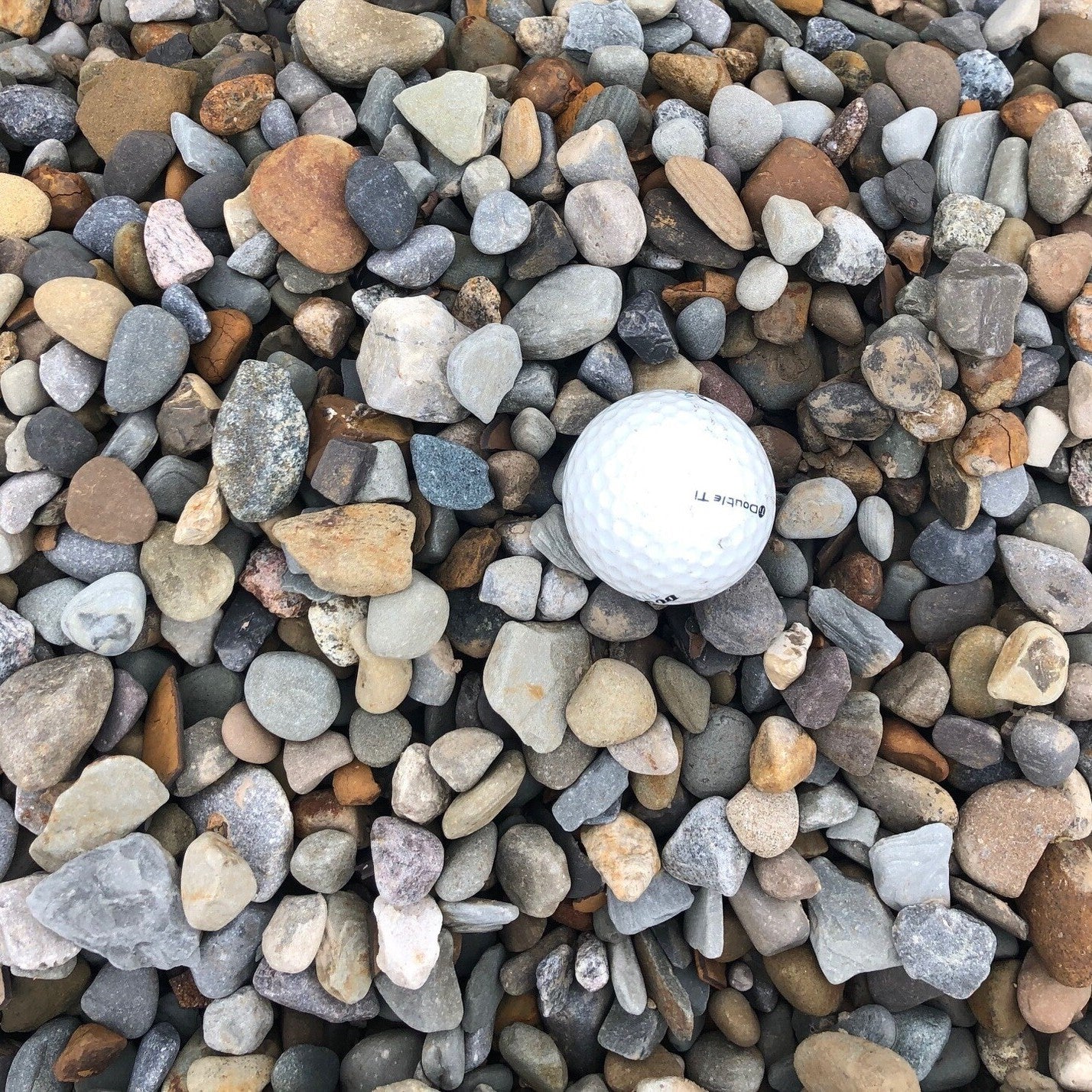
Number 57 crushed stone, angular limestone graded to about three quarters of an inch. The standard driveway, base and drainage gravel, it locks together under traffic and drains fast.
I contacted Mulch Mound for #57 river rocks and it was easy and fast to get a delivery right before the holiday weekend. Stone was delivered as promised and place exactly where I asked. Excellent service! I will be ordering mulch next!
Tell us what you're looking for
Thanks! We received your request.
Something went wrong. Please try again.
How Much Material Do I Need?
For decorative beds in Mankato, plan on two to three inches of stone over landscape fabric for effective weed suppression and a finished appearance. For drainage applications around foundations or in swales where you are managing runoff from Mankato's annual rainfall, a four-inch layer of washed river rock provides better water movement through the slow-draining silty clay loam subgrade.
Use our free gravel calculator
What is a ton?
A ton is approximately 2,000 pounds. Coverage varies by stone type and depth, but as a general guideline, one ton covers roughly 80-100 square feet at 2 inches deep.
We can't take orders for this right now. Tell us what you need and we'll get back to you.
What do you need?
Thanks! We received your request.
Something went wrong. Please try again.
Hand-picked local yards
4,000+ regional deliveries
Dedicated support
Why order through Mulch Mound
The best local stone, without the guesswork.
We hand-pick and partner with the best yards in your region, keep only the ones our buyers rate well, and back each load with our guarantee.
Mulch Mound Guarantee
If your stone isn't the quantity or quality you ordered, we'll make it right.
About this stone
Number 57 crushed stone, angular limestone graded to about three quarters of an inch. The standard driveway, base and drainage gravel, it locks together under traffic and drains fast.
I contacted Mulch Mound for #57 river rocks and it was easy and fast to get a delivery right before the holiday weekend. Stone was delivered as promised and place exactly where I asked. Excellent service! I will be ordering mulch next!
How Much Material Do I Need?
For decorative beds in Mankato, plan on two to three inches of stone over landscape fabric for effective weed suppression and a finished appearance. For drainage applications around foundations or in swales where you are managing runoff from Mankato's annual rainfall, a four-inch layer of washed river rock provides better water movement through the slow-draining silty clay loam subgrade.
Use our free gravel calculator
What is a ton?
A ton is approximately 2,000 pounds. Coverage varies by stone type and depth, but as a general guideline, one ton covers roughly 80-100 square feet at 2 inches deep.
I contacted Mulch Mound for #57 river rocks and it was easy and fast to get a delivery right before the holiday weekend. Stone was delivered as pro...
Read full review
I contacted Mulch Mound for #57 river rocks and it was easy and fast to get a delivery right before the holiday weekend. Stone was delivered as promised and place exactly where I asked. Excellent service! I will be ordering mulch next!
Measure the length and width of each area where you plan to install stone and multiply to get the square footage. At a two-inch depth one cubic yard covers roughly 160 square feet, and at three inches it covers about 100 square feet, so adjust your calculation based on the look and function you want to achieve. For drainage applications in Mankato's clay-heavy soil, a deeper layer of four inches is often more effective at moving water through the bed during heavy rain events.
Stone Types We Deliver in Mankato
Mulch Mound delivers bulk stone and sand by the cubic yard to homeowners and contractors in Mankato, so you can skip the retail markup and get the right material hauled straight to your property. Whether you are searching for bulk gravel by the yard or need a clean sand base for a patio project, we carry the sizes that suit southern Minnesota homes and landscapes.
3/4" River Stone
This smooth, rounded river rock is one of the most popular sizes for local yards. It works well as decorative ground cover, lines drainage swales in clay-heavy soil, and gives walkway borders a clean, polished look that holds up through Minnesota winters.
1-2" River Stone
The larger 1 to 2 inch smooth river rock adds bold texture to dry creek beds and feature landscaping. Its size keeps it in place through heavy spring rains, making it a solid choice for drainage in the clay-heavy soils of southern Minnesota.
Washed Sand
Clean washed sand serves as a reliable base for paver patios, walkways, and concrete mixes. Homeowners across this part of Minnesota count on it to create a stable, level surface that resists shifting through repeated freeze-thaw cycles each winter.
Mason Sand
Fine-grained mason sand is well suited for paver joints, mortar work, and leveling beneath patios and walkways. Its smooth, compact texture packs tightly into gaps and helps pavers stay locked in place through long Mankato winters.
Complete Your Outdoor Stone Project
Pair your stone order with a fresh topsoil delivery to build up any low spots or regraded areas nearby, and consider adding hardwood mulch to planted bed areas adjacent to your stone features to create a clean, layered landscape look that holds up well through Mankato's zone 5a winters.
Mankato's freeze-thaw cycles can undermine landscape fabric over time, allowing it to buckle and bunch, which makes stone shift and gives weeds an eventual foothold. Before placing any stone bed, use a heavy-duty non-woven landscape fabric rated for long-term use rather than lightweight poly sheeting. Overlap seams by at least six inches and pin the fabric every two feet to keep it anchored through the seasons, since this upfront investment extends the life of your stone bed dramatically in Mankato's variable climate.
Mulch Mound Pro Tip
Stone pathways in Mankato perform best when they are slightly crowned in the center, meaning the middle of the path sits a fraction of an inch higher than the edges. This subtle slope encourages rain to run off the sides rather than pooling in the walking surface, which matters significantly when you have slow-draining silty clay loam underneath. Even a quarter-inch of crown across a three-foot-wide path makes a noticeable difference in how quickly the surface dries and firms up after a rain.
Mulch Mound Pro Tip
If you are replacing a mulched bed with decorative stone in Mankato, take time to remove any existing organic material and rake the soil level before laying fabric. Decomposing mulch left beneath stone creates a nutrient-rich layer that becomes a perfect weed germination habitat right at the surface of your fabric, especially during Mankato's warm and wet June periods. Starting with a clean, compacted soil surface dramatically reduces the amount of weeding you will need to do in the first few years after installation.
The Unique Landscape of Mankato
Decorative and functional stone is a natural fit for Mankato landscapes because it handles the city's freeze-thaw cycles far better than organic materials, requiring no annual replacement and holding its position through the spring thaws that regularly shift lighter ground covers. The silty clay loam soil common throughout the Mankato area has slow drainage, and strategically placed stone can redirect surface runoff, stabilize slopes, and reduce erosion in problem areas without the ongoing maintenance that planted alternatives require. Mankato receives about 32 inches of rainfall per year, and without proper surface management, that moisture can pool against foundations and saturate low-lying beds. Stone pathways and borders give water a defined route away from structures and planting areas. Zone 5a winters bring hard freezes that can heave or displace lighter landscape materials, but properly installed stone sits through even severe frost with minimal disturbance. Whether you are creating a low-maintenance bed alternative, a defined walking path, or a functional drainage channel, bulk stone gives Mankato homeowners a durable solution that works with the local climate rather than against it.
Frequently Asked Questions
Click a question to see the answer
Answer
What size stone works best for a walkway in a Mankato yard?
For a stable and comfortable walking surface in Mankato, pea gravel or three-quarter inch crushed limestone are both popular choices that pack well and resist the freeze-thaw shifting that affects looser materials. Pea gravel gives a softer, more decorative look and drains very well through the silty clay loam subgrade, while crushed limestone compacts into a firmer surface that is easier to walk on and stays in place better on slight inclines. Either option benefits from a two to four inch depth on top of a tamped base to provide stability through Mankato's wet spring season.
Answer
Can I use stone to fix the drainage problem along my foundation here in Mankato?
A French drain or dry creek bed filled with washed river rock is one of the most effective ways to manage excess water around a Mankato foundation that sits on slow-draining silty clay loam. The idea is to give water a clear path to travel away from the structure rather than pooling against it. A perimeter trench filled with gravel and, ideally, a perforated pipe underneath can move a surprising volume of water during Mankato's heavier spring rain events and early snowmelt periods.
Answer
Does stone get too hot in a Mankato summer to use in planting beds?
Dark stone can absorb significant heat during July and August, which can stress plants growing directly adjacent to or beneath it. In Mankato's warmest weeks, surface temperatures of dark decorative stone can spike well above air temperature, so lighter-colored options like buff limestone or white river rock are better choices around heat-sensitive perennials. If you prefer darker stone, keep it away from the root zones of delicate plants and use it instead in full-sun pathways or open borders where heat retention is less of a concern.
Answer
How much stone do I need for a low-maintenance bed replacement in my Mankato front yard?
A two to three inch depth of decorative stone over a quality landscape fabric gives you good weed suppression and a finished look for most Mankato front yard beds. One cubic yard of stone covers roughly 100 square feet at a three-inch depth, so measure your bed areas and calculate accordingly. Keep in mind that stone does not break down or compress over time the way mulch does, so the quantity you install initially should last for many years without a major refresh.
Answer
Will river rock wash away during Mankato's spring rains?
River rock sized one inch or larger generally stays put well during typical Mankato rain events, but smaller pea gravel can migrate on slopes or in areas where runoff concentrates. If your beds or pathways are on a grade, choosing a larger stone size or edging the area with a physical border helps keep material in place. In areas that receive direct downspout discharge, a splash pad of larger river rock dissipates water energy and prevents stone from being displaced during heavy rains.
Answer
Is stone a good option around trees in my Mankato yard?
Stone can work around trees in Mankato, but there are important considerations. A thin layer of one to two inches of pea gravel or river rock around a tree ring allows rain to pass through and reach roots, but avoid mounding stone against the trunk, which traps moisture and invites rot and insect damage. Many arborists recommend organic mulch over stone for tree rings because it adds nutrients as it breaks down, which is especially beneficial in compacted silty clay loam soils where trees already struggle to take up nutrients efficiently.
Answer
What is the best way to keep stone edging from sinking into Mankato's clay soil over time?
Mankato's silty clay loam is soft enough that heavy stone borders can gradually sink over time, especially through the freeze-thaw cycles of late fall and early spring. The most effective prevention is to dig a shallow trench and set a layer of compacted gravel base before placing your edging stone. This gravel bed distributes the weight and keeps the underlying clay from squeezing up around the edges, which is the most common cause of sinking in Mankato-area stone borders.
Answer
What is Class 5 gravel?
Contractors often spec Class 5 gravel, the MnDOT crushed aggregate base with fines, when they need a surface that compacts hard for driveways or shed pads. In Mankato we deliver Crushed Stone #57, a clean drainage stone that fits well where the area's slow draining silty clay loam soils need better runoff control rather than a compacted base.