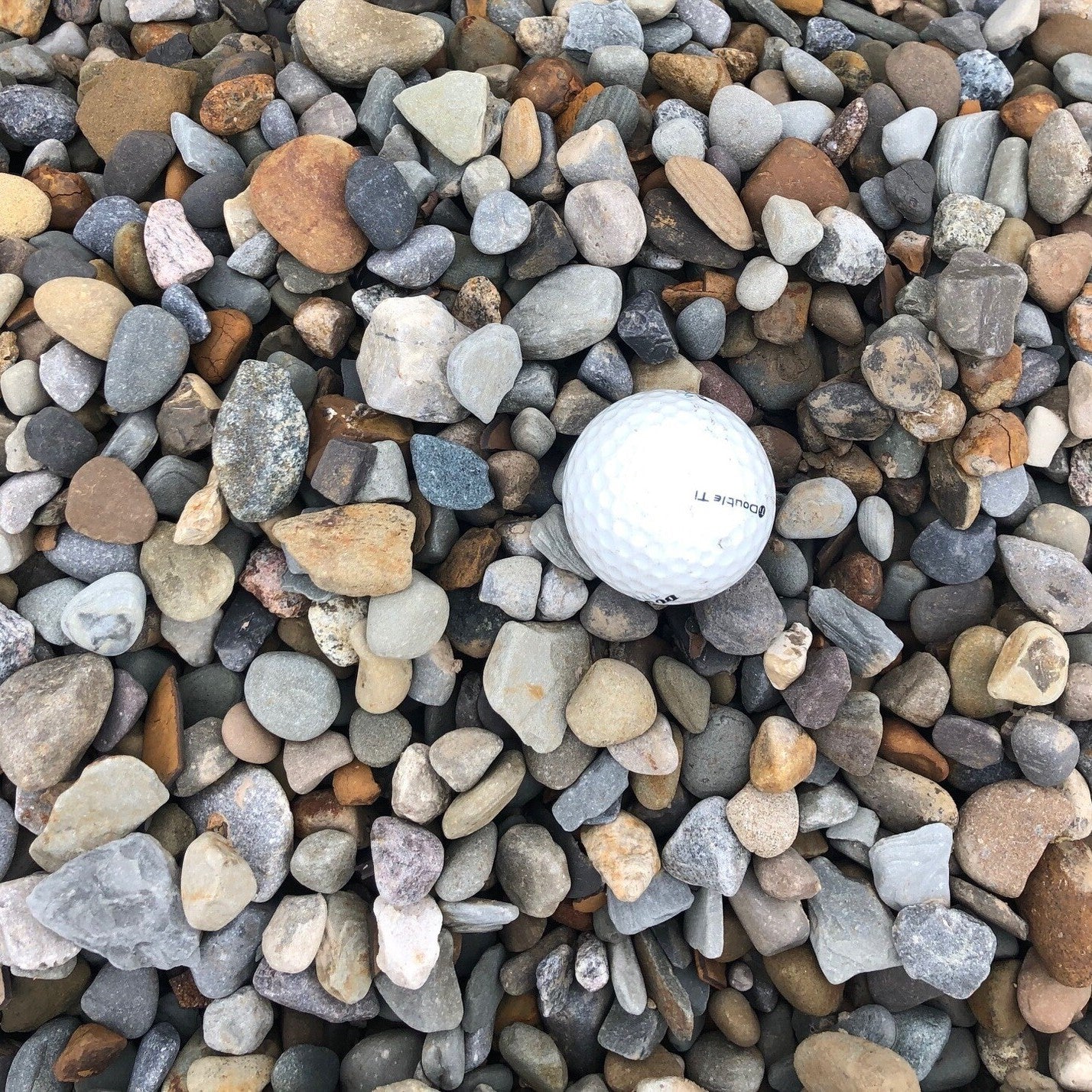
Number 57 crushed stone, angular limestone graded to about three quarters of an inch. The standard driveway, base and drainage gravel, it locks together under traffic and drains fast.
My experience with Mulch Mound was great and super easy. I ordered two yards of screened topsoil and was able to get it delivered within 2 days. They came in my requested time frame (afternoon) and dropped it off where I asked on my driveway. The topsoil was exactly what was a...
Tell us what you're looking for
Thanks! We received your request.
Something went wrong. Please try again.
How Much Material Do I Need?
For decorative and pathway coverage in Mastic Beach, plan on a 3 to 4 inch depth over sandy soil, which provides solid surface stability without the settling issues that come with thinner applications. Drainage channels and French drain backfill typically require a deeper 6 to 8 inch fill for effective water movement.
Use our free gravel calculator
What is a yard?
A yard is approximately 27 cubic feet. As a general guideline, one yard of material can cover an area of about 100-160 square feet at a 2-3 inch depth.
We can't take orders for this right now. Tell us what you need and we'll get back to you.
What do you need?
Thanks! We received your request.
Something went wrong. Please try again.
Hand-picked local yards
4,000+ regional deliveries
Dedicated support
Why order through Mulch Mound
The best local stone, without the guesswork.
We hand-pick and partner with the best yards in your region, keep only the ones our buyers rate well, and back each load with our guarantee.
Mulch Mound Guarantee
If your stone isn't the quantity or quality you ordered, we'll make it right.
About this stone
Number 57 crushed stone, angular limestone graded to about three quarters of an inch. The standard driveway, base and drainage gravel, it locks together under traffic and drains fast.
My experience with Mulch Mound was great and super easy. I ordered two yards of screened topsoil and was able to get it delivered within 2 days. They came in my requested time frame (afternoon) and dropped it off where I asked on my driveway. The topsoil was exactly what was a...
How Much Material Do I Need?
For decorative and pathway coverage in Mastic Beach, plan on a 3 to 4 inch depth over sandy soil, which provides solid surface stability without the settling issues that come with thinner applications. Drainage channels and French drain backfill typically require a deeper 6 to 8 inch fill for effective water movement.
Use our free gravel calculator
What is a yard?
A yard is approximately 27 cubic feet. As a general guideline, one yard of material can cover an area of about 100-160 square feet at a 2-3 inch depth.
My experience with Mulch Mound was great and super easy. I ordered two yards of screened topsoil and was able to get it delivered within 2 days. Th...
Read full review
My experience with Mulch Mound was great and super easy. I ordered two yards of screened topsoil and was able to get it delivered within 2 days. They came in my requested time frame (afternoon) and dropped it off where I asked on my driveway. The topsoil was exactly what was advertised, clean with no rocks or other debris. The price was reasonable. I plan to use them again in a couple weeks to order compost for my garden beds.
To estimate stone coverage for a Mastic Beach project, measure the length and width of the area in feet and multiply to get square footage, then divide by the coverage rate for your chosen depth. At a 3-inch depth, one cubic yard of stone covers roughly 100 square feet. Mastic Beach's sandy base tends to settle more than firmer soils, so ordering about 10 percent extra to account for initial settling is a smart approach.
Stone Types We Deliver in Mastic Beach
Mulch Mound brings bulk stone delivery straight to Mastic Beach homeowners and landscapers who need quality material without the hassle of hauling it themselves. Whether you are searching for bulk gravel by the yard in Mastic Beach or planning a full yard renovation, we load and drop off exactly what your project calls for. Orders are priced by the cubic yard so you pay only for what you use.
Pea Gravel
Pea gravel is a top choice for Mastic Beach properties where sandy, well-draining soil pairs naturally with this smooth, rounded stone. Its warm earth tones complement the relaxed coastal aesthetic common to homes in this part of Long Island. Use it along garden paths, around patios, or as a low-maintenance decorative ground cover that stays in place through wet seasons.
Complete Your Outdoor Stone Project
Pairing stone borders with our bulk mulch creates a clean, well-defined landscape that is easy to maintain through Mastic Beach's long growing season. Adding our garden soil to planting areas adjacent to your stone features gives those plants the nutrient-rich foundation that the native sandy soil alone cannot provide.
One of the most practical uses of bulk stone in Mastic Beach is as a buffer strip along the downhill edge of any area where you have added bulk soil or mulch for grade work. Sandy soil erodes quickly when water moves across it during heavy rain, and a 12-inch band of medium stone at the low edge of a graded area acts as a natural check that slows water flow and traps displaced material. This is especially valuable on the south-shore side of properties where prevailing storm winds drive rain at an angle across flat lots.
Mulch Mound Pro Tip
When laying stone over Mastic Beach's sandy soil for a long-term installation, use a commercial-grade woven geotextile fabric rather than the lighter plastic sheeting sold in home improvement stores. Sandy soil particles can migrate upward through coarser stone over several years, a process called pumping, especially under foot traffic. A quality woven fabric prevents the sand from contaminating your stone layer while still allowing drainage, which keeps your surface looking clean and performing correctly for many more years.
Mulch Mound Pro Tip
For foundation borders in Mastic Beach, choosing a rounded river stone rather than angular crushed stone creates a softer visual transition between the house and the surrounding landscape, and it is gentler on lawn mower blades when you are trimming nearby grass edges. River stone in the 1 to 2 inch range also stays in place well against the typical coastal winds that move through the Mastic Beach area, whereas very fine stone or stone dust can scatter across walkways and lawn areas during strong weather events.
The Unique Landscape of Mastic Beach
In Mastic Beach, where sandy coastal soil shifts easily and low elevation brings occasional standing water after heavy rain, decorative and functional stone is one of the most reliable landscape materials you can install. Stone does not decompose, does not wash away with normal rainfall, and does not require seasonal replacement the way organic mulch does, making it a long-term investment that holds up to Long Island's wet winters and humid summers alike. Because Mastic Beach's native sandy soil is so free-draining, a properly installed stone pathway or drainage channel moves water efficiently away from structures and low spots without the risk of compaction that affects clay soils elsewhere. Stone borders and gravel coverage also suppress weeds without the need for annual refreshing, which is a real advantage in a Zone 7a climate where the long growing season from April through November gives weeds ample time to establish. Whether you are creating a low-maintenance driveway apron, a decorative pathway, or a functional drainage swale, bulk stone delivery makes large coverage projects affordable and straightforward in the Mastic Beach area.
Frequently Asked Questions
Click a question to see the answer
Answer
What size stone works best for drainage areas in my Mastic Beach yard?
For drainage channels and swales in Mastic Beach, a clean 3/4-inch crushed stone or a 1-inch river stone is the most practical choice. These sizes allow water to flow through the stone matrix without washing fine particles into surrounding sandy soil, and they stay in place during the heavy rain events that can bring an inch or more of rain in a short period. For French drain backfill alongside a perforated pipe, clean crushed stone in the 3/4-inch range is the standard recommendation.
Answer
Will stone help with the water that pools near my foundation in Mastic Beach after big rainstorms?
Stone alone will not fix a foundation drainage problem, but it is an important part of a complete solution. A properly graded stone border around your foundation, typically 12 to 18 inches wide and pitched away from the house, allows surface water to drain away quickly and prevents the saturation that causes water intrusion. Given Mastic Beach's low elevation of 7 feet, even moderate rain events can produce temporary pooling on flat lots, and a stone drainage border is one of the most effective first-line defenses.
Answer
How deep should I lay stone for a gravel pathway in my Mastic Beach yard?
For a gravel pathway over Mastic Beach's sandy soil base, a depth of 3 to 4 inches is typically sufficient because sandy soil is already compact-resistant and drains well naturally. Lay a weed barrier fabric underneath if the path runs through or near a planted area, then spread your stone evenly across the surface. Over time, some settling is normal in sandy conditions, and you may want to top off the path with an additional inch of stone every few years to maintain an even surface.
Answer
Can I use decorative stone instead of mulch in my Mastic Beach planting beds?
You can, and in some areas of a Mastic Beach yard it is a great choice, particularly in low-traffic decorative borders, foundation planting areas, and spots where you want a permanent low-maintenance solution. The trade-off is that stone does not add organic matter to the soil the way mulch does, which matters more in Mastic Beach than in areas with richer native soils. If you choose stone for planting beds, consider enriching the underlying sandy soil with compost or garden soil first, since stone will lock in whatever soil quality is below it for many years to come.
Answer
What type of stone is best for the area around my Mastic Beach driveway apron?
A clean 3/4-inch crushed gravel or a decorative river stone in the 1 to 2 inch size range works well for driveway aprons in Mastic Beach. These sizes are large enough that they do not track into the driveway or house easily, and they allow rain to drain straight through rather than pool at the driveway edge. Avoid very fine stone or stone dust in this application, as they can migrate into nearby sandy soil quickly and lose their surface definition after a few rain seasons.
Answer
Will stone in my yard shift or sink over time in Mastic Beach's sandy soil?
Some settling is normal over any sandy base, particularly after the first full winter and spring cycle. Sandy soil is not as stable a subbase as compacted gravel or clay, so heavier foot traffic areas may show some sinking after a season or two. You can minimize this by tamping the base firmly before laying stone and by using a layer of compacted crusher run as a subbase for areas that will see regular use. For decorative coverage areas that are not walked on often, surface settling is minimal and easy to correct by adding a fresh layer of stone.
Answer
Is stone a good choice for the areas of my Mastic Beach yard where nothing seems to grow?
Yes, and it is one of the best permanent solutions for those stubborn bare spots that Mastic Beach homeowners often deal with. Areas of extremely poor, dry, or compacted sandy soil near driveways, under dense tree canopies, or along property edges can be difficult to establish plants in without significant soil improvement. Converting these areas to decorative stone coverage eliminates the bare-dirt look, suppresses weed growth, and requires virtually no maintenance once installed. Pair it with a weed barrier for the most long-term weed control.