


We had a great experience with mulch mound! Our mulch arrived when we requested. The delivery fee was so reasonable. We’ll use them again for sure!
About this sand
Washed and finely screened masonry sand for mortar, paver joints, and pool bases. Consistent grain, ready to screed.
We had a great experience with mulch mound! Our mulch arrived when we requested. The delivery fee was so reasonable. We’ll use them again for sure!
Tell us what you're looking for
Thanks! We received your request.
Something went wrong. Please try again.
How Much Sand Do I Need?
How Much Sand Do I Need?
One cubic yard of this sand covers about 324 square feet at a 1 inch depth, and most paver joint or bedding work only calls for 1 to 2 inches. For a typical patio or walkway project, measure your square footage and divide by 324 to get a rough yard count at 1 inch, then double that figure if you are installing at 2 inches. Mortar mixing and pool base work usually need smaller quantities, often under a yard.
What is a Yard?
What is a Yard?
FAQs
FAQs
Paterson Sand Delivery
Paterson Sand Delivery
Regular price
$74.00
per
Yard
Regular price
Sale price
$74.00
Unit price
per
Shipping calculated at checkout.
Minimum of 3 Yard
Couldn't load pickup availability
Hand-picked local yards
4,000+ regional deliveries
Dedicated support
Why order through Mulch Mound
The best local sand, without the guesswork.
We hand-pick and partner with the best yards in your region, keep only the ones our buyers rate well, and back each load with our guarantee.
Mulch Mound Guarantee
If your sand isn't the quantity or quality you ordered, we'll make it right.
About this sand
Washed and finely screened masonry sand for mortar, paver joints, and pool bases. Consistent grain, ready to screed.
We had a great experience with mulch mound! Our mulch arrived when we requested. The delivery fee was so reasonable. We’ll use them again for sure!
How Much Sand Do I Need?
How Much Sand Do I Need?
One cubic yard of this sand covers about 324 square feet at a 1 inch depth, and most paver joint or bedding work only calls for 1 to 2 inches. For a typical patio or walkway project, measure your square footage and divide by 324 to get a rough yard count at 1 inch, then double that figure if you are installing at 2 inches. Mortar mixing and pool base work usually need smaller quantities, often under a yard.
What is a Yard?
What is a Yard?
FAQs
FAQs
Tell us what you're looking for
Thanks! We received your request.
Something went wrong. Please try again.

How It Works
Getting started is easy — just follow these simple steps
1
Choose your quantity
Adjust the quantity to match your project. One cubic yard covers about 100 to 160 square feet at a 2 to 3 inch depth.
2
Select your delivery date
Select a delivery date you'd like for the product to be dropped off at your home
3
Sit back and wait
Sit back, wait, and let us work our magic to make sure the highest quality product is delivered to your driveway.


First time going with this company for mulch and it was an efficient process from start to finish. Website was easy—I told them exactly where I wan...
Read full review
First time going with this company for mulch and it was an efficient process from start to finish. Website was easy—I told them exactly where I wanted the mulch put on my driveway, and it was delivered perfectly when I got home from work the next day. Best deal around when I compared it to competitors and I will definitely be becoming back.
Complete Your Outdoor Project
Most paver and patio jobs pair this sand with a base layer of crushed stone underneath and edge restraints to keep everything locked in place. If you are mixing mortar for brick or block work, you will also want cement on hand before delivery arrives. For pool base installations, a layer of gravel below the sand helps with drainage on Paterson's heavier till soils.


Mulch Mound Pro Tip
This sand is finer and more uniform than concrete sand, which is exactly why it works for mortar but is a poor substitute in bulk concrete mixes where a coarser gradation gives better strength. If you are doing both mortar work and a concrete pour on the same Paterson job, order both sands separately rather than trying to stretch one bag or one yard to cover two different mixes.
Mulch Mound Pro Tip
A common mistake on paver jobs here is skipping polymeric jointing sand and using this sand alone in the joints, which washes out fast in heavy spring rain typical of this region. Chip stone has replaced sand as paver bedding in a lot of newer installs because it does not pump or migrate under freeze thaw cycling, worth asking your contractor about if you are repaving.
Mulch Mound Pro Tip
If you are only mixing small batches of mortar for tuckpointing on an older Paterson brick building, buying a partial yard delivered is usually more efficient than multiple bagged trips from a hardware store. Combine your sand order with a load of gravel or crushed stone on the same delivery when possible, since scheduling one drop for a multi material job saves time on a hardscape project with a tight spring or fall install window.
Working With Sand in Paterson
Paterson sits on glacial till loam, a dense mix of clay, silt, and stone left behind by retreating ice, which is not the kind of soil you want under a paver patio or a mortar mix. This sand gets used to build a clean, drainable layer that isolates your hardscape from that native soil and its freeze thaw movement. With winters that push frost into the ground well before the Nov 5 average first frost, a stable bedding layer matters more here than in milder climates. It is also the standard choice for mortar work on the brick rowhouses and older masonry common throughout the city.
Masonry vs Fill Sand
Masonry sand is washed and finely screened, the right choice for mortar work, paver joints, and sandboxes. Fill sand is coarser and less processed, better suited to leveling, bedding pipe, and filling low spots.
Bedding and Leveling
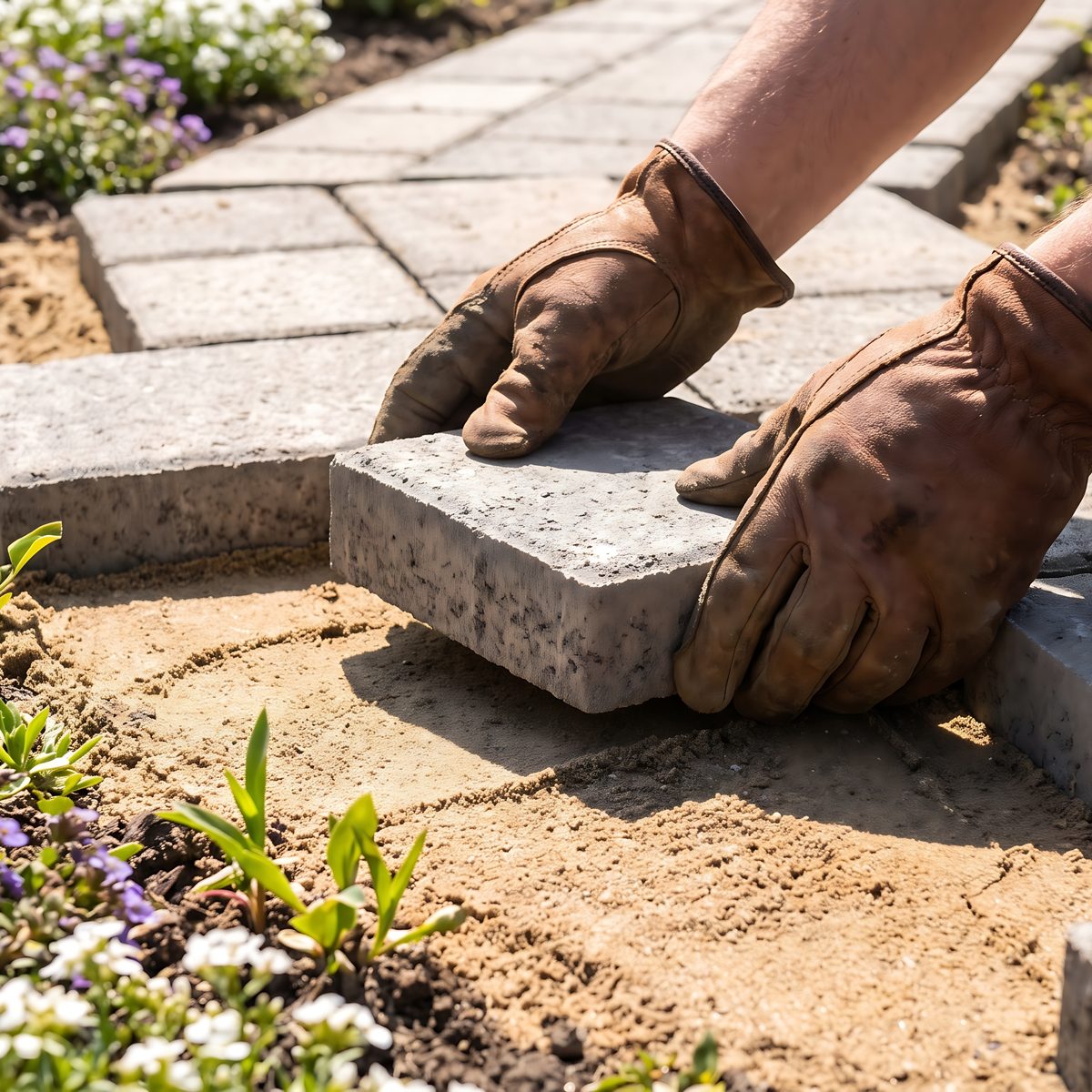
For pavers, screed a 1 inch sand bed over a compacted base rather than using sand to fix deep grade problems. A thin, even bed locks pavers in place. A thick one shifts underfoot.
Working With Moisture
Slightly damp sand spreads, screeds, and compacts far more easily than bone dry sand, which just flows back into your screed lines. Lightly wetting the pile before you work it saves real effort.