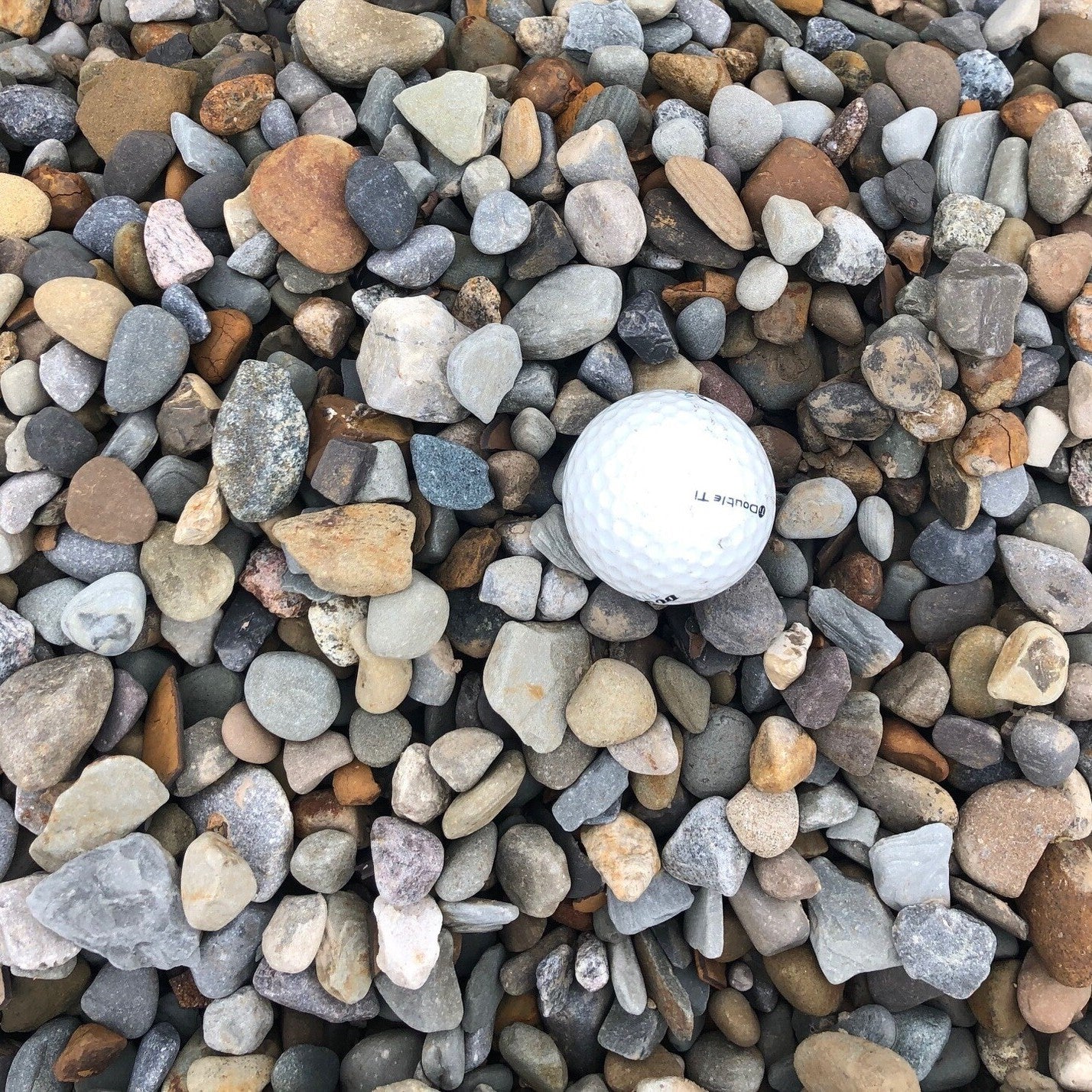
Number 57 crushed stone, angular limestone graded to about three quarters of an inch. The standard driveway, base and drainage gravel, it locks together under traffic and drains fast.
I used Mulch Mound to have 3 cubic yards of garden soil delivered. The process was easy and I love that I didn't have to call anyone. I placed my order online, picked my delivery date, laid out my tarp and the dirt was delivered. My delivery had to be pushed back, but I was ke...
Tell us what you're looking for
Thanks! We received your request.
Something went wrong. Please try again.
How Much Material Do I Need?
For decorative groundcover and pathway applications in Port Royal, a 2 to 3 inch layer of stone provides good coverage and surface stability over sandy loam without requiring excessive material volume. Drainage and erosion control applications around foundations or within swales benefit from a 4-inch minimum depth to ensure the stone layer remains fully effective after the heavy rain events Port Royal regularly experiences.
Use our free gravel calculator
What is a yard?
A yard is approximately 27 cubic feet. As a general guideline, one yard of material can cover an area of about 100-160 square feet at a 2-3 inch depth.
We can't take orders for this right now. Tell us what you need and we'll get back to you.
What do you need?
Thanks! We received your request.
Something went wrong. Please try again.
Hand-picked local yards
4,000+ regional deliveries
Dedicated support
Why order through Mulch Mound
The best local stone, without the guesswork.
We hand-pick and partner with the best yards in your region, keep only the ones our buyers rate well, and back each load with our guarantee.
Mulch Mound Guarantee
If your stone isn't the quantity or quality you ordered, we'll make it right.
About this stone
Number 57 crushed stone, angular limestone graded to about three quarters of an inch. The standard driveway, base and drainage gravel, it locks together under traffic and drains fast.
I used Mulch Mound to have 3 cubic yards of garden soil delivered. The process was easy and I love that I didn't have to call anyone. I placed my order online, picked my delivery date, laid out my tarp and the dirt was delivered. My delivery had to be pushed back, but I was ke...
How Much Material Do I Need?
For decorative groundcover and pathway applications in Port Royal, a 2 to 3 inch layer of stone provides good coverage and surface stability over sandy loam without requiring excessive material volume. Drainage and erosion control applications around foundations or within swales benefit from a 4-inch minimum depth to ensure the stone layer remains fully effective after the heavy rain events Port Royal regularly experiences.
Use our free gravel calculator
What is a yard?
A yard is approximately 27 cubic feet. As a general guideline, one yard of material can cover an area of about 100-160 square feet at a 2-3 inch depth.
I used Mulch Mound to have 3 cubic yards of garden soil delivered. The process was easy and I love that I didn't have to call anyone. I placed my o...
Read full review
I used Mulch Mound to have 3 cubic yards of garden soil delivered. The process was easy and I love that I didn't have to call anyone. I placed my order online, picked my delivery date, laid out my tarp and the dirt was delivered. My delivery had to be pushed back, but I was kept informed via text, which was great. So why not 5 stars? The description of garden soil on the website is "A balanced mix of topsoil and organic amendments ready for raised beds, flower gardens, and new planting areas. Good drainage, solid nutrients, easy to work with." What I got was more like fill dirt. It had a lot of gravel, a lot of clay, and random trash mixed in. I didn't test the soil to see if it actually had "amendments" because I already have compost and alpaca manure ready to add, but if I'd known the quality of the dirt was going to be the same as the bagged dirt I bought last year, I probably would have gotten 2 yards of top soil and a yard of leaf compost for better quality, especially since the leaf compost is cheaper. Photo of my mountain of dirt and just some of the trash I found in it.
To calculate the stone needed for a Port Royal project, measure your coverage area in square feet and determine your desired depth in inches. Dividing the square footage by 100 gives a rough cubic yard estimate at a 3-inch depth, and you can adjust that figure proportionally for shallower or deeper applications. For drainage swales in Port Royal's flat coastal terrain, measure the length and cross-section of the channel and add 15 percent to your estimate to account for voids between stones and settling that occurs after the first heavy Lowcountry downpour.
Stone Types We Deliver in Port Royal
Port Royal homeowners and landscapers count on us for bulk gravel by the yard in Port Royal, delivered straight to your driveway or job site without the hassle of hauling. Whether you are finishing a coastal garden bed, improving drainage around a low-lying yard, or laying a clean pathway beside a palmetto-lined porch, the right stone makes all the difference. We source quality material and drop it where you need it, measured by the cubic yard so you only pay for what you use.
Pea Gravel
Smooth, rounded, and naturally earth-toned, pea gravel is a go-to choice for Port Royal properties where sandy soil and warm, humid conditions call for materials that drain well and stay attractive year-round. It works beautifully as a decorative ground cover, a patio base, or a path through a coastal-style garden, and its gentle texture is comfortable underfoot.
Complete Your Outdoor Stone Project
Pairing stone borders with fresh mulch in adjacent planting beds is one of the most effective ways to create clean, defined landscape spaces that stay intact through Port Royal's rainy season without constant maintenance. If you are improving yard drainage with stone swales or channels, consider also ordering bulk topsoil to grade the surrounding lawn so surface water flows toward your new stone features rather than pooling in low spots elsewhere on the property.
Port Royal homeowners installing stepping stones or flagstone paths should consider using a compacted stone dust base rather than bare sandy loam directly under the stones. While sandy loam drains well, its loose structure allows large stones to tilt and shift after repeated heavy rains and freeze-thaw events that do occasionally occur between November and February. A 2-inch layer of compacted stone dust gives pavers and flagstones a level, firm foundation that resists the movement Port Royal's wet summers and mild winters can cause over time.
Mulch Mound Pro Tip
In Port Royal's humid Zone 9a climate, dark-colored stone mulch around heat-loving plants like ornamental grasses, agapanthus, and lantana creates a microclimate that can actually benefit plant performance. Dark stones absorb solar heat during the day and radiate warmth at night, which moderates temperature swings near the soil surface and provides a small buffer of warmth that helps tender plants survive Port Royal's occasional cold snaps after the November 1 first frost. This effect is subtle but meaningful for gardeners working the edges of Zone 9a hardiness.
Mulch Mound Pro Tip
For Port Royal properties near tidal creeks or low-lying drainage areas, choosing large-format river rock rather than small pea gravel for erosion control applications makes a significant practical difference. Small gravel displaces easily during the fast, heavy downpours common in the Lowcountry from June through September, while larger stones weighing several pounds each stay anchored even in high-velocity surface runoff. River rock in the 3 to 5 inch size range is particularly effective for stabilizing the edges of drainage swales across Port Royal's nearly flat coastal terrain.
The Unique Landscape of Port Royal
Decorative and functional stone is one of the most practical landscape investments you can make for a Port Royal property. In a coastal environment that receives 49 inches of rain annually, stone pathways, borders, and drainage features resist erosion in ways that mulch and bare soil simply cannot match over time. Port Royal's sandy loam base makes it relatively easy to set stepping stones and drainage rock without extensive excavation, but that same loose soil means areas without stable surface material can erode and settle quickly after heavy Lowcountry storms. Stone is also an ideal low-maintenance solution for homeowners along the coast who want attractive outdoor spaces without the frequent seasonal refreshing that organic materials require in Zone 9a's humid, decomposition-accelerating climate. From crushed granite walkways to river rock drainage swales, stone adds structure, durability, and lasting visual character to Port Royal landscapes through every season of the year.
Frequently Asked Questions
Click a question to see the answer
Answer
What type of stone works best for a backyard pathway in Port Royal?
For pathways in Port Royal, crushed granite and pea gravel are both popular choices that hold up well in the area's humid, rainy climate. Pea gravel has a smooth, rounded appearance that fits naturally into the coastal aesthetic of Lowcountry landscapes, while crushed granite compacts more firmly underfoot and is less likely to scatter after Port Royal's frequent summer rain events. Either material performs well over sandy loam, which provides natural drainage beneath the stone layer and prevents puddles from forming on the path surface.
Answer
Can stone help with the drainage problems in my Port Royal yard?
Absolutely. Drainage stone, typically a clean washed gravel or French drain aggregate, is one of the most effective solutions for Port Royal's low-lying areas that collect standing water after heavy rains. At just 23 feet above sea level, many Port Royal properties sit on nearly flat terrain with limited natural slope to direct water away from foundations and beds. A stone-lined swale or dry creek bed channels that excess water efficiently, and the open aggregate allows water to percolate down through the underlying sandy loam far more quickly than compacted soil alone.
Answer
How does decorative stone hold up in Port Royal's salt air near the coast?
Natural stone materials including river rock, granite, and limestone perform very well in Port Royal's coastal environment. Unlike metal edging or certain treated wood products, stone does not corrode, rust, or degrade when exposed to the salt-laden air common in the Lowcountry. Lighter-colored stones may develop a thin biological film from algae or surface moisture over time in Port Royal's humid climate, but a periodic rinse with a garden hose keeps them looking clean without any chemical treatment needed.
Answer
Will stone around my foundation actually prevent erosion in Port Royal?
Yes, and foundation borders are one of the best applications for stone in Port Royal landscapes. Placing a 2 to 3 foot wide border of crushed stone or river rock around your foundation creates a stable surface that absorbs raindrop impact and directs water away from the structure. In Port Royal's sandy loam environment, bare soil foundation borders erode quickly during heavy rains, so stone provides meaningful erosion protection alongside a clean, finished appearance that holds its form through the entire wet season.
Answer
Is stone a good option for areas in my yard where grass just won't grow in Port Royal?
Stone is an excellent alternative for shaded areas under Port Royal's large live oaks and palmetto trees where turf grass cannot establish well. Heavy shade combined with aggressive root competition makes those zones nearly impossible to maintain with grass, but a clean layer of decomposed granite or river rock creates a tidy, low-maintenance surface that looks intentional rather than neglected. Stone in those areas also eliminates the need for repeated mulch refreshing in Zone 9a's warm, humid climate where organic materials break down quickly.
Answer
How deep does gravel need to be to stay stable in Port Royal's sandy loam soil?
For a stable gravel pathway or groundcover area in Port Royal's sandy loam, plan for at least 3 to 4 inches of compacted gravel installed over a landscape fabric base. Sandy loam is loose enough that smaller stones gradually sink and disappear into the soil without a fabric barrier, especially in areas that see heavy foot traffic combined with Port Royal's frequent rain and seasonal soil movement. The fabric prevents mixing while still allowing water to drain freely down through the sandy loam below.
Answer
What stone colors and styles look best in a Lowcountry coastal landscape like Port Royal?
River rock and natural fieldstone fit beautifully into Port Royal's Lowcountry coastal aesthetic, offering warm earth tones that complement native palmettos, ornamental grasses, and crepe myrtles throughout the year. Tan and buff-colored crushed granite also pairs well with the sandy, coastal color palette common in Port Royal neighborhoods. White marble chips are popular for high-contrast accent areas but can appear stark under the intense Lowcountry sun, so they work best in partially shaded beds or as a narrow border accent rather than a large-scale groundcover.
Answer
Is crush and run the same as crusher run?
Crush and run refers to crushed stone blended with stone dust that compacts tight for driveways and paver bases. With Port Royal's 49 inches of annual rain and sandy loam soil, drainage matters more than compaction, which is why we deliver Crushed Stone #57, a clean stone that drains freely instead of trapping water.