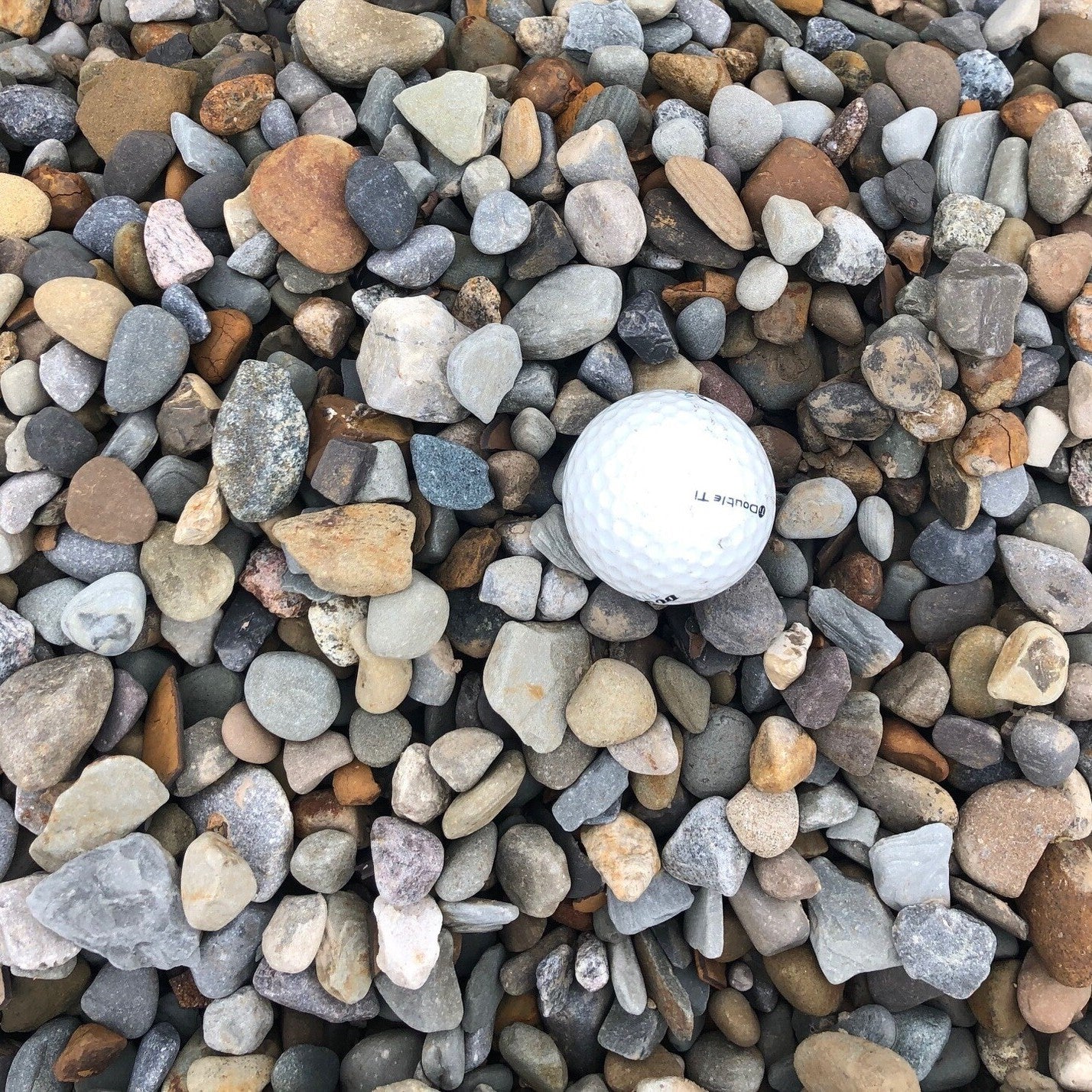
Number 57 crushed stone, angular limestone graded to about three quarters of an inch. The standard driveway, base and drainage gravel, it locks together under traffic and drains fast.
My experience with Mulch Mound was great and super easy. I ordered two yards of screened topsoil and was able to get it delivered within 2 days. They came in my requested time frame (afternoon) and dropped it off where I asked on my driveway. The topsoil was exactly what was a...
Tell us what you're looking for
Thanks! We received your request.
Something went wrong. Please try again.
How Much Material Do I Need?
For decorative stone beds in Shirley, a 2-to-3-inch layer provides solid coverage and effective fabric support, while pathways and drainage applications benefit from a 4-inch depth to maintain stability and structure over the sandy native soil base.
Use our free gravel calculator
What is a yard?
A yard is approximately 27 cubic feet. As a general guideline, one yard of material can cover an area of about 100-160 square feet at a 2-3 inch depth.
We can't take orders for this right now. Tell us what you need and we'll get back to you.
What do you need?
Thanks! We received your request.
Something went wrong. Please try again.
Hand-picked local yards
4,000+ regional deliveries
Dedicated support
Why order through Mulch Mound
The best local stone, without the guesswork.
We hand-pick and partner with the best yards in your region, keep only the ones our buyers rate well, and back each load with our guarantee.
Mulch Mound Guarantee
If your stone isn't the quantity or quality you ordered, we'll make it right.
About this stone
Number 57 crushed stone, angular limestone graded to about three quarters of an inch. The standard driveway, base and drainage gravel, it locks together under traffic and drains fast.
My experience with Mulch Mound was great and super easy. I ordered two yards of screened topsoil and was able to get it delivered within 2 days. They came in my requested time frame (afternoon) and dropped it off where I asked on my driveway. The topsoil was exactly what was a...
How Much Material Do I Need?
For decorative stone beds in Shirley, a 2-to-3-inch layer provides solid coverage and effective fabric support, while pathways and drainage applications benefit from a 4-inch depth to maintain stability and structure over the sandy native soil base.
Use our free gravel calculator
What is a yard?
A yard is approximately 27 cubic feet. As a general guideline, one yard of material can cover an area of about 100-160 square feet at a 2-3 inch depth.
My experience with Mulch Mound was great and super easy. I ordered two yards of screened topsoil and was able to get it delivered within 2 days. Th...
Read full review
My experience with Mulch Mound was great and super easy. I ordered two yards of screened topsoil and was able to get it delivered within 2 days. They came in my requested time frame (afternoon) and dropped it off where I asked on my driveway. The topsoil was exactly what was advertised, clean with no rocks or other debris. The price was reasonable. I plan to use them again in a couple weeks to order compost for my garden beds.
Really appreciate the care and follow thru that this company had with our order. A hiccup came up but they were quick to respond and address all co...
Read full review
Really appreciate the care and follow thru that this company had with our order. A hiccup came up but they were quick to respond and address all concerns, which made our garden day a success! Thank you for your prompt care.
To calculate how much stone you need, measure your project area in square feet, decide on the desired layer depth (2 to 3 inches for decorative beds, 4 inches for pathways and drainage features), then multiply square footage by depth in feet and divide by 27 to find cubic yards. Because Shirley's sandy soil compresses slightly under the weight of stone over the first few weeks, plan for a modest surplus to top off any low spots that develop after initial settling.
Stone Types We Deliver in Shirley
Mulch Mound delivers bulk stone by the cubic yard directly to Shirley, so you skip the trailer rentals and multiple hardware store runs. Homeowners searching for pea gravel near me will find our ordering process straightforward and our delivery schedule flexible. We carry the varieties Long Island landscapes call for most, whether you are finishing a patio, improving drainage, or refreshing your garden beds.
Pea Gravel
Smooth and rounded with natural earth tones, pea gravel suits the sandy, free-draining soils common across this part of Long Island. It works beautifully along walkways, patios, and garden beds, and its small size makes it easy to spread. Homeowners wanting low-maintenance curb appeal often choose it for its clean, timeless look.
Complete Your Outdoor Stone Project
Combining stone pathways and borders with mulched planting beds creates a polished, low-maintenance Shirley landscape where each material performs its best function in the right zone. Adding quality topsoil to any planting areas adjacent to your stone borders gives plants the moisture-retentive growing medium they need, while stone manages structure, drainage, and definition around the edges.
Before spreading decorative stone in Shirley, invest in a commercial-grade woven landscape fabric rather than thin plastic sheeting. Shirley's sandy soil is warm, airy, and rich in weed seeds that find their way through gaps in lower-quality barriers within a single growing season. A heavier woven fabric allows the free drainage that sandy soil naturally facilitates while genuinely blocking weed establishment for years. Securing fabric edges under edging material or burying them slightly prevents wind from lifting corners, which is especially important in the more exposed yards common across Shirley's flat coastal terrain.
Mulch Mound Pro Tip
When installing stone pathways in Shirley, build a slight center crown of roughly half an inch across the width of the path. This gentle grade change encourages rainfall to shed toward the sides rather than pooling in the center, which keeps walking surfaces drier underfoot and reduces the muddy edge zones that flat paths develop after heavy summer storms. Sandy soil below handles water quickly, but a crowned surface improves the pathway experience noticeably during and right after the intense rain events that periodically move through Long Island's South Shore.
Mulch Mound Pro Tip
Shirley homeowners in more exposed areas near the coast sometimes find that lighter decorative stones like fine pea gravel migrate during the windier stretches of fall and spring. Choosing a stone in the 1.5-to-2-inch range for exposed beds and borders cuts wind displacement significantly compared to smaller rounded products. You can also combine a larger base stone topped with a smaller decorative surface layer, creating a bed that is physically anchored at depth and visually refined at the surface, a combination that holds up well through Shirley's full range of coastal weather conditions.
The Unique Landscape of Shirley
Decorative and functional stone is a particularly well-suited choice for Shirley landscapes because the naturally sandy native soil shifts, erodes, and provides little stable base for pathways or border materials. Stone delivers long-term structural stability that holds through rain, coastal wind, and the mild freeze-thaw cycles of Zone 7a winters, which rarely bring the deep frost penetration that heaves stone in colder inland climates. Shirley receives roughly 30 inches of annual rainfall with a significant portion falling as heavy summer storms that can displace lightweight organic materials, while stone stays firmly anchored and channels water predictably toward drainage zones. Low-lying areas in Shirley yards can pool runoff during intense rain even though sandy soil drains quickly overall, and stone-filled beds or dry creek features in those areas improve surface drainage and protect foundations from repeated saturation. Stone also eliminates the annual replenishment cycle required by organic mulch, making it the genuinely maintenance-free solution for pathways, borders, foundation perimeters, and decorative no-plant zones across Shirley properties.
Frequently Asked Questions
Click a question to see the answer
Answer
What type of stone works best for a backyard pathway in Shirley?
Pea gravel and crushed stone are both strong choices for Shirley backyard pathways because they drain immediately after rain and sit comfortably over the sandy native soil without requiring deep excavation. Pea gravel feels softer underfoot and has a rounded, natural look that suits informal garden paths, while crushed stone compacts into a firmer surface that suits higher-traffic routes and formal designs. Either product performs well over Shirley's free-draining sandy base, and both hold their position far better than organic materials during heavy summer rainstorms.
Answer
Can stone help with drainage problems in low spots around my yard?
Stone is one of the most effective tools for managing drainage in Shirley yards where low spots collect runoff during the heavy summer storms common on Long Island's South Shore. A dry creek bed or simple drainage swale lined with river rock or crushed stone directs water away from your foundation and low lawn areas while resisting the erosion that bare sandy soil is prone to during high-flow events. Stone drainage features require no seasonal maintenance and look attractive as a landscape element even when they are not actively handling runoff.
Answer
Will stone shift or sink in Shirley's sandy soil over time?
Sandy soil does allow more settling than clay-based ground, so some initial movement in the first season is normal. To minimize long-term shifting, excavate 3 to 4 inches from the pathway or bed area, lay a 2-inch base of compacted crushed stone, then add your decorative top layer over it. This compacted base creates a stable platform that resists sinking and spreading even in Shirley's loose, mobile sandy ground. Solid edging along the perimeter of pathways and beds also contains stone and reduces lateral spreading after heavy rain.
Answer
Is stone a good option for the area around my house's foundation in Shirley?
Yes, a stone foundation border is one of the most practical and durable improvements a Shirley homeowner can make. A 12-to-18-inch band of crushed stone or river rock around the foundation perimeter creates a drainage buffer that directs rainfall away from the house, discourages insects and rodents from nesting in moist organic material, and eliminates the need to mow or edge right against the building. Stone foundation borders require virtually no maintenance year to year and look clean and intentional in any landscape style.
Answer
What size stone should I use for a decorative no-plant bed in Shirley?
For purely decorative low-maintenance beds in Shirley, a 1.5-to-2-inch river rock or a white marble chip product delivers a clean, polished look with minimal upkeep required. Always lay a commercial-grade woven landscape fabric beneath the stone to block weeds, since Shirley's warm sandy soil in Zone 7a creates ideal conditions for weed seed germination right through the fabric if quality is too low. Larger stone sizes also resist displacement during the windy stretches common in fall and spring on Long Island's South Shore.
Answer
How does stone compare to mulch for keeping weeds out of Shirley beds?
Stone combined with a quality woven fabric barrier provides longer-lasting weed suppression than organic mulch because it does not decompose, compact, or need annual replacement. Mulch smothers weeds effectively through its bulk alone, while stone relies on the fabric beneath it to do the blocking work. The significant advantage of stone is its permanence, since a well-installed stone bed in Shirley should remain weed-resistant for many years with only occasional touch-ups. The tradeoff is that stone adds nothing to Shirley's sandy soil organically, so it is best suited to decorative or structural zones rather than active planting beds.
Answer
When is the best time of year to install a stone pathway or decorative stone bed in Shirley?
Stone projects can be completed almost any time the ground is not frozen, which in Shirley means a working window that runs from late March through November given the Zone 7a climate and typical last frost around April 20. Spring and fall are the most physically comfortable seasons for the excavation and compaction work involved, and dry conditions make it easier to compact a base layer firmly. Summer installation works well too as long as you plan for physically demanding work in the mornings before Zone 7a heat and humidity peak in July and August.