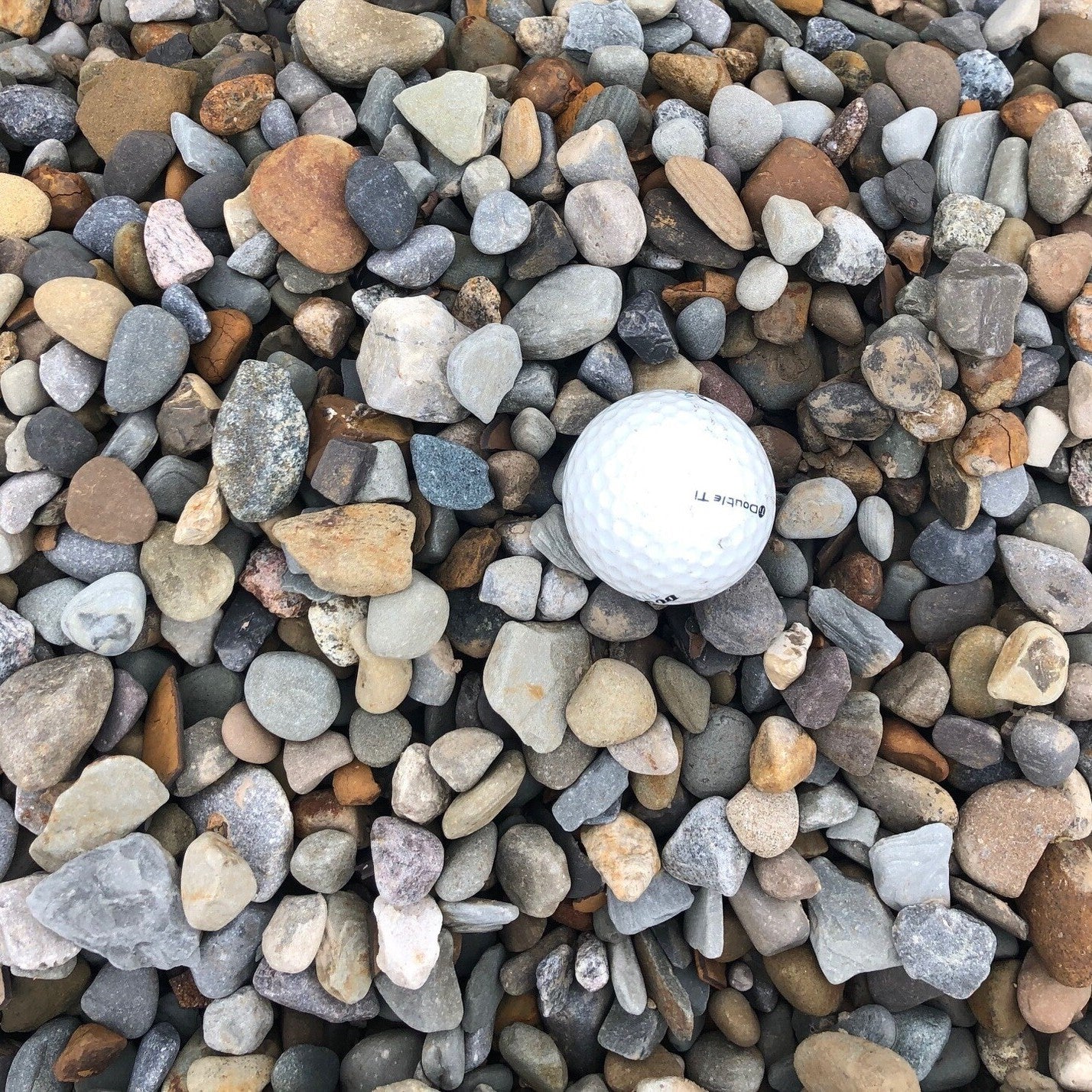
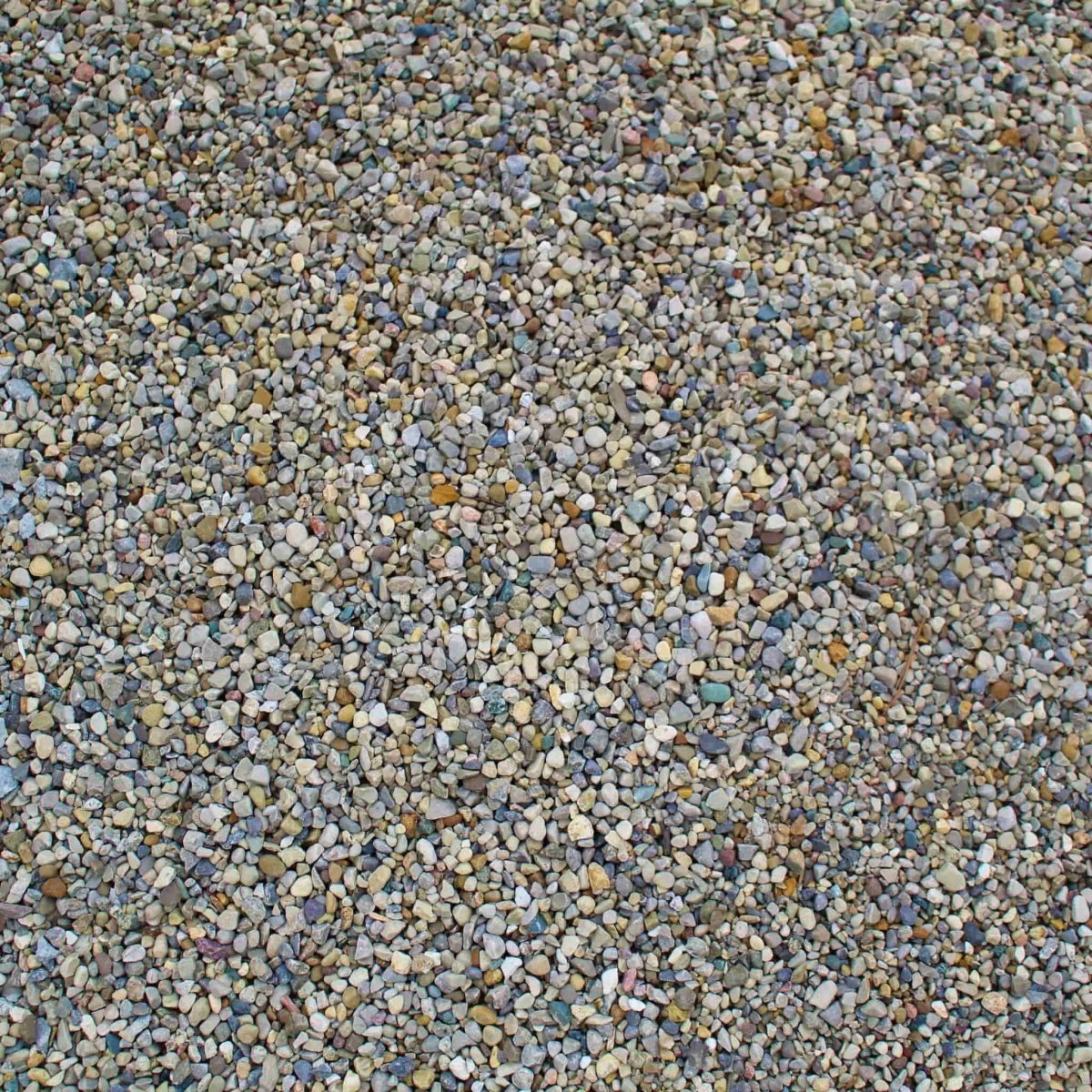
Classic pea gravel with smooth, rounded edges and natural earth tones. A versatile favorite for pathways, patios, drainage, and decorative ground cover.
Mulch Mound delivered a yard of pea gravel to us. Delivery was on time, driver was friendly and hit a bullseye on the “tarp target”. We used the pea gravel (which was diameter as specified) to fill several muskrat holes around our pond. I would definitely recommend Mulch Mo...
Classic pea gravel with smooth, rounded edges and natural earth tones. A versatile favorite for pathways, patios, drainage, and decorative ground cover.
Mulch Mound delivered a yard of pea gravel to us. Delivery was on time, driver was friendly and hit a bullseye on the “tarp target”. We used the pea gravel (which was diameter as specified) to fill several muskrat holes around our pond. I would definitely recommend Mulch Mo...
How Much Material Do I Need?
For decorative bed coverage or low-maintenance ground areas, two to three inches of stone is adequate for most Williamsport yards. For drainage applications along foundations or steep slopes where Williamsport's rainfall creates persistent runoff, a four to six inch layer ensures water can move freely through the stone rather than backing up into the surrounding silt clay loam.
Use our free stone calculator
What is a yard?
A yard is approximately 27 cubic feet. As a general guideline, one yard of material can cover an area of about 100-160 square feet at a 2-3 inch depth.
Mulch Mound delivered a yard of pea gravel to us. Delivery was on time, driver was friendly and hit a bullseye on the “tarp target”. We used the ...
Read full review
Mulch Mound delivered a yard of pea gravel to us. Delivery was on time, driver was friendly and hit a bullseye on the “tarp target”. We used the pea gravel (which was diameter as specified) to fill several muskrat holes around our pond. I would definitely recommend Mulch Mound to a friend!
Measure the length and width of your stone project area in feet and multiply together to get your square footage, then decide on the depth based on how the stone will be used. For pathways in Williamsport, plan for a three to four inch depth to account for freeze-thaw settling in the silt clay loam beneath. Drainage applications along foundations or in swales may need four to six inches of stone, so measuring your linear footage and trench dimensions separately gives you the most accurate cubic yard estimate.
Complete Your Outdoor Stone Project
Stone borders and pathways pair naturally with mulched planting beds, and having both materials delivered by MulchMound means your Williamsport landscape project comes together in one coordinated order. If drainage is your primary concern, combining stone in your swales with fresh bulk topsoil to regrade surrounding lawn areas addresses both water movement and surface appearance in a single project.
Before laying stone along a Williamsport foundation, clear away any existing silt clay loam and install a quality landscape fabric barrier beneath the stone. Because silt clay loam is fine-textured, it migrates upward into stone layers over time through a process where foot traffic and rainfall push soil particles up through the voids in the stone. Landscape fabric stops this migration and keeps your stone layer clean and functional for years instead of slowly filling with muddy native soil from below.
Mulch Mound Pro Tip
Williamsport's freeze-thaw cycle between October and March can cause stepping stone and pathway surfaces to become uneven over a single winter if the base is not prepared correctly. Before adding your decorative stone surface, compact a two-inch layer of crusher run or coarse gravel into the sub-base. This compacted layer resists the upward heaving pressure of freezing silt clay loam and keeps your pathway surface stable and safe through the full zone 6b winter season.
Mulch Mound Pro Tip
In areas of your Williamsport yard that stay consistently wet from the region's 42 inches of annual rainfall, choose stone in the one-and-a-half to two-inch range rather than pea gravel or small decorative stone. Smaller stone sizes tend to shift and scatter in areas with concentrated water flow, while larger stone stays in place even during the heavy downpours that move through the Susquehanna Valley in spring and summer. Larger stone also resists sinking into soft silt clay loam faster than fine gravel does.
The Unique Landscape of Williamsport
Stone is one of the most practical landscape materials a Williamsport homeowner can invest in because it does not break down under the region's 42 inches of annual rainfall the way organic materials do. On properties where silt clay loam creates drainage problems along foundations or in low-lying side yards, a properly placed layer of crushed stone redirects water away from structures and prevents the saturated soil conditions that cause erosion and foundation seepage. Stone pathways and ground covers also eliminate the muddy surface problems that grassy areas develop during Williamsport's wet springs, giving you a clean, passable surface from early April through the last frost on May 6. Whether used decoratively in a perennial border or functionally in a drainage swale, stone holds its form and appearance through zone 6b winters without requiring any seasonal maintenance.
Frequently Asked Questions
Click a question to see the answer
Answer
What type of stone works best for drainage along my foundation in Williamsport?
River gravel or clean crushed stone in the three-quarter inch size is ideal for foundation drainage in Williamsport. The silt clay loam soil around most homes here holds water instead of letting it percolate, so a six-inch-wide, six-inch-deep trench filled with clean stone along the foundation wall redirects surface water away before it can saturate the soil against your basement or crawl space. Clean stone, meaning stone without fine particles mixed in, allows water to move through it freely rather than clogging over time.
Answer
Will stone help with the erosion I am getting on the slopes in my yard?
Stone is one of the best erosion control solutions for Williamsport's hillside and sloped properties. The silt component in silt clay loam makes it especially vulnerable to surface erosion during heavy rain events, which Williamsport sees regularly given 42 inches of annual precipitation. A two to three inch layer of river stone or crushed gravel on bare slopes stops the surface from washing away and gives water a place to slow down and percolate rather than rushing toward the street or a neighboring property.
Answer
How deep should I lay stone for a backyard pathway in Williamsport?
For a stable pedestrian pathway in Williamsport, plan for a three to four inch depth of stone. Because the native silt clay loam tends to shift during freeze-thaw cycles between October and December, a deeper stone base resists heaving better than a shallow layer. Laying a compacted gravel base first and then adding a decorative stone surface layer gives you the most durable and level pathway through the full zone 6b freeze-thaw season.
Answer
Is decorative stone really lower maintenance than mulch in our climate?
Yes, and that is one of the main reasons Williamsport homeowners choose it for high-traffic areas or spots they would rather not maintain seasonally. Unlike mulch, stone does not break down in the rain, fade in summer UV, or need annual refreshing. The main upkeep is occasionally raking out leaves and debris that accumulate in fall, and adding a small amount of stone every few years to replace any that has shifted or settled into the silt clay loam beneath.
Answer
What stone size should I use for a decorative bed border around my perennials?
A one-inch to one-and-a-half-inch river stone or pea gravel works well as a decorative border material in Williamsport perennial beds. It is large enough to stay in place during the heavy rain events common in spring and small enough to give beds a tidy, finished appearance. For a clean separation between stone and mulched bed areas, pair your stone border with a simple plastic or metal landscape edging installed into the soil.
Answer
Can I use stone to address a low area in my yard that always stays wet?
Stone works best in that scenario as a drainage improvement rather than a true grade leveling solution. If you have a low area in your Williamsport yard that collects water, filling it with clean crushed stone improves drainage and eliminates the muddy patch, but the surface will not be level with surrounding lawn. For a level finish, bulk topsoil fill and regrading is the right approach, and stone can then be layered on top in any decorative or functional areas nearby.
Answer
How does stone hold up through a Williamsport winter compared to mulch or wood chips?
Stone outperforms organic materials in winter stability by a significant margin. While mulch can compact and mat under snow and ice, stone maintains its structure through repeated freeze-thaw cycles in zone 6b. It does not absorb water and expand the way mulch does, so pathways and drainage areas stay functional even during the wet March and April thaw periods common in Williamsport. Stone is also unaffected by the surface frost heaving that can displace lighter organic materials in poorly drained silt clay loam areas.
