


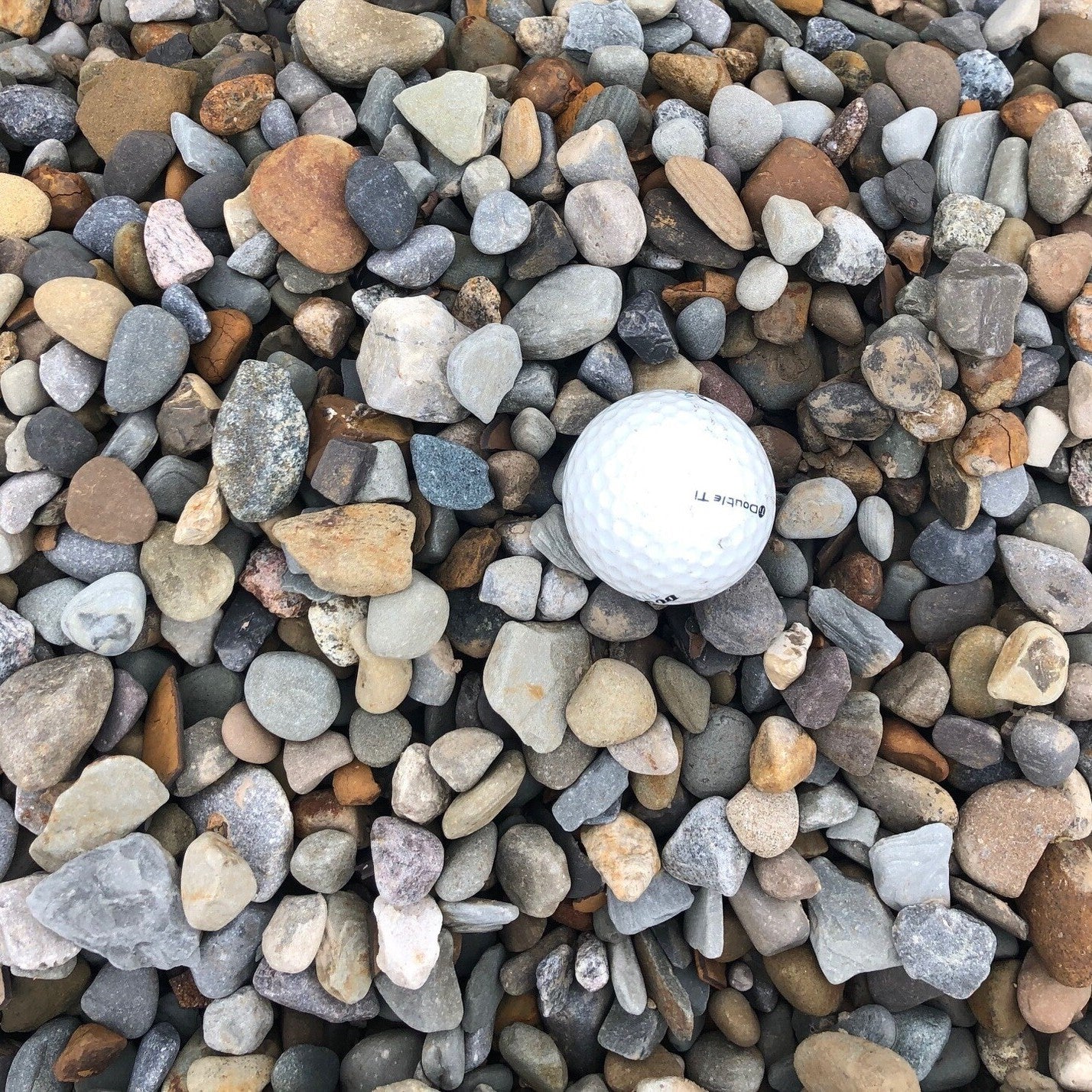

The driver nailed it on putting the gravel I ordered in front of my trailer and between the sidewalk. Very satisfied with how my flowerbeds look now.
About this stone
Number 57 crushed stone, angular limestone graded to about three quarters of an inch. The standard driveway, base and drainage gravel, it locks together under traffic and drains fast.
The driver nailed it on putting the gravel I ordered in front of my trailer and between the sidewalk. Very satisfied with how my flowerbeds look now.
Tell us what you're looking for
Thanks! We received your request.
Something went wrong. Please try again.
How Much Material Do I Need?
How Much Material Do I Need?
For most decorative and functional stone applications in Amarillo, a 2 to 3 inch depth is sufficient for pea gravel and crushed granite, while larger river rock or decorative stones work best at 3 to 4 inches. Use our calculator to convert your measured area and target depth to cubic yards before placing your order.
Use our free gravel calculator
What is a yard?
What is a yard?
FAQs
FAQs
Amarillo Gravel Delivery
Amarillo Gravel Delivery
Regular price
$133.00
per
yard
Regular price
Sale price
$133.00
Unit price
per
Shipping calculated at checkout.
Minimum of 3 yard
Couldn't load pickup availability
Not currently available
We can't take orders for this right now. Tell us what you need and we'll get back to you.
Hand-picked local yards
4,000+ regional deliveries
Dedicated support
Why order through Mulch Mound
The best local stone, without the guesswork.
We hand-pick and partner with the best yards in your region, keep only the ones our buyers rate well, and back each load with our guarantee.
Mulch Mound Guarantee
If your stone isn't the quantity or quality you ordered, we'll make it right.
About this stone
Number 57 crushed stone, angular limestone graded to about three quarters of an inch. The standard driveway, base and drainage gravel, it locks together under traffic and drains fast.
The driver nailed it on putting the gravel I ordered in front of my trailer and between the sidewalk. Very satisfied with how my flowerbeds look now.
How Much Material Do I Need?
How Much Material Do I Need?
For most decorative and functional stone applications in Amarillo, a 2 to 3 inch depth is sufficient for pea gravel and crushed granite, while larger river rock or decorative stones work best at 3 to 4 inches. Use our calculator to convert your measured area and target depth to cubic yards before placing your order.
Use our free gravel calculator
What is a yard?
What is a yard?
FAQs
FAQs
Tell us what you're looking for
Thanks! We received your request.
Something went wrong. Please try again.
How It Works
Getting started is easy — just follow these simple steps
1
Choose your stone
Make sure you adjust the quantity to your home's needs. You can use our calculator to estimate how much you'll need.
2
Select your delivery date
Select a delivery date you'd like for the product to be dropped off at your home
3
Sit back and wait
Sit back, wait, and let us work our magic to make sure the highest quality product is delivered to your driveway.


Need Help Calculating How Much Gravel You Need?
Use our NEW Trace from Satellite tool to get an estimate for your project based on an aerial view of your property
Try Our CalculatorMeasure each area in feet, multiply length by width for square footage, then determine your desired depth in inches before converting to cubic yards. Larger decorative stones like 2 to 4 inch river rock are typically laid 3 to 4 inches deep, while smaller materials like pea gravel or crushed granite are effective at 2 to 3 inches. Amarillo's wind means erring on the side of slightly more material in open, exposed areas ensures adequate coverage even after seasonal movement.
Stone Types We Deliver in Amarillo
Mulch Mound delivers bulk stone by the cubic yard straight to your Amarillo property, saving you the hassle of hauling materials across the Panhandle. Whether you are searching for bulk gravel by the yard in Amarillo or planning a larger landscape project, we bring the right stone to your driveway in a single trip. Our orders are sized to fit residential yards and commercial sites alike, with no bag fees and no middleman markup.
Pea Gravel
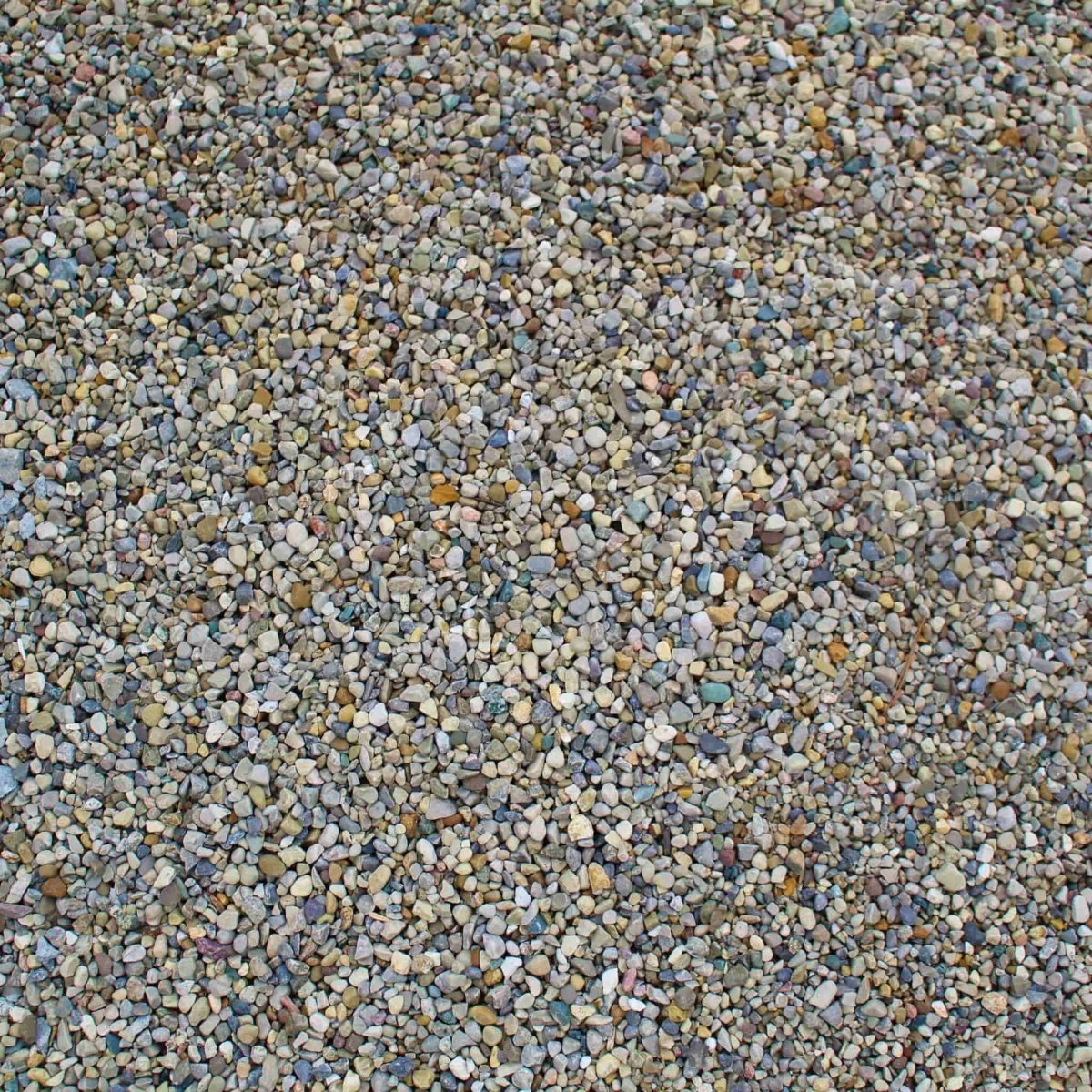
Smooth and rounded, pea gravel pairs well with the wide, open yard styles common across Amarillo homes. Its natural earth tones complement the sandy soil and neutral stucco palettes typical of the region. Use it along pathways, beneath patio furniture, or as a low-maintenance ground cover that drains well through the Panhandle's occasional heavy rain events.
Complete Your Outdoor Stone Project
For areas around your stone installation that include planting beds, pair with our bulk mulch to protect roots and retain what little moisture Amarillo's annual rainfall provides. Where your stone project meets garden beds or lawn borders, our bulk soil can be used to grade edges cleanly before stone is placed and settled.



Mulch Mound Pro Tip
Before placing any stone in an Amarillo landscape, install a quality non-woven landscape fabric rated for 10 years or more. Amarillo's constant wind carries a surprising amount of fine soil and organic particles that settle into stone beds over time, eventually creating a layer of debris that weeds can root into. A good barrier fabric slows this process significantly and extends the time between major clean-outs. Overlap fabric edges by at least 6 inches where pieces meet and pin the seams down with garden staples before covering with stone.
Mulch Mound Pro Tip
Think carefully about stone color in relation to Amarillo's summer heat. Dark stones like black lava rock or dark gray granite absorb and radiate significant heat, which can stress plants growing nearby and make adjacent patio or walkway areas uncomfortably warm on a July afternoon when temperatures are already pushing into the mid-90s. Lighter toned stones like tan crushed granite or buff-colored river rock reflect more heat and keep surrounding soil and air temperatures more moderate, which benefits both plants and outdoor comfort during the long Panhandle summer.
Mulch Mound Pro Tip
Stone is one of the few landscape materials that actually improves with Amarillo's weather extremes over time. The freeze and thaw cycles that occur between October and April can shift and settle stone slightly, which helps it compact and stabilize in pathways and border areas. After the first winter, walk through your stone areas and redistribute material to fill any gaps that opened up. By the second season, most stone installations have reached a stable settled state that requires very little attention, making them an ideal low-maintenance solution for the Panhandle's demanding climate.
The Unique Landscape of Amarillo
Stone is one of the most practical landscape materials available to Amarillo homeowners, and not just for its visual appeal. In a city that averages only 20 inches of rain per year, large areas of irrigated turf are expensive and water-intensive to maintain. Replacing portions of the lawn with decorative stone reduces irrigation demand and eliminates mowing, two significant advantages in the Panhandle. Stone also addresses erosion concerns that are very real in Amarillo, where bare sandy loam can be stripped by wind or washed by the occasional heavy thunderstorm that delivers a large portion of the annual rainfall total in a single event. Foundation borders filled with stone deflect water away from structures and reduce weed pressure along the perimeter. At Amarillo's elevation of 3,671 feet, stone absorbs heat during the day and radiates it slowly at night, which can help buffer the early frost events that arrive by mid-October.