


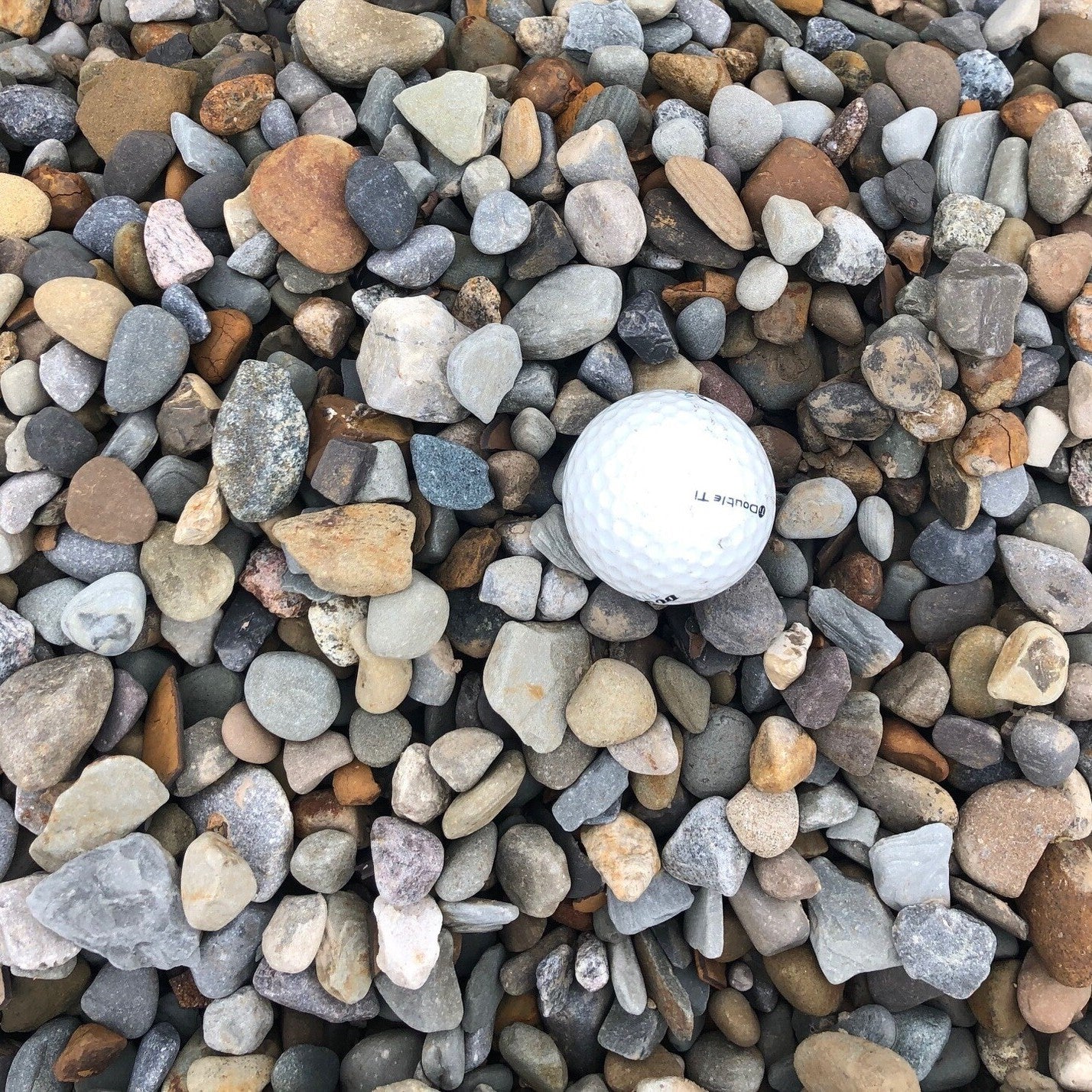

The driver nailed it on putting the gravel I ordered in front of my trailer and between the sidewalk. Very satisfied with how my flowerbeds look now.
About this stone
Number 57 crushed stone, angular limestone graded to about three quarters of an inch. The standard driveway, base and drainage gravel, it locks together under traffic and drains fast.
The driver nailed it on putting the gravel I ordered in front of my trailer and between the sidewalk. Very satisfied with how my flowerbeds look now.
Tell us what you're looking for
Thanks! We received your request.
Something went wrong. Please try again.
How Much Material Do I Need?
How Much Material Do I Need?
For decorative beds and borders in Ashtabula, two to three inches of stone is typically sufficient, while drainage applications and pathways over clay soil should use four to six inches total depth to account for the unstable base below. The extra depth is particularly important in Ashtabula where freeze-thaw cycles can cause shallow stone layers to sink unevenly into the clay over a single winter season.
Use our free gravel calculator
What is a yard?
What is a yard?
FAQs
FAQs
Ashtabula Gravel Delivery
Ashtabula Gravel Delivery
Regular price
$133.00
per
yard
Regular price
Sale price
$133.00
Unit price
per
Shipping calculated at checkout.
Minimum of 3 yard
Couldn't load pickup availability
Not currently available
We can't take orders for this right now. Tell us what you need and we'll get back to you.
Hand-picked local yards
4,000+ regional deliveries
Dedicated support
Why order through Mulch Mound
The best local stone, without the guesswork.
We hand-pick and partner with the best yards in your region, keep only the ones our buyers rate well, and back each load with our guarantee.
Mulch Mound Guarantee
If your stone isn't the quantity or quality you ordered, we'll make it right.
About this stone
Number 57 crushed stone, angular limestone graded to about three quarters of an inch. The standard driveway, base and drainage gravel, it locks together under traffic and drains fast.
The driver nailed it on putting the gravel I ordered in front of my trailer and between the sidewalk. Very satisfied with how my flowerbeds look now.
How Much Material Do I Need?
How Much Material Do I Need?
For decorative beds and borders in Ashtabula, two to three inches of stone is typically sufficient, while drainage applications and pathways over clay soil should use four to six inches total depth to account for the unstable base below. The extra depth is particularly important in Ashtabula where freeze-thaw cycles can cause shallow stone layers to sink unevenly into the clay over a single winter season.
Use our free gravel calculator
What is a yard?
What is a yard?
FAQs
FAQs
Tell us what you're looking for
Thanks! We received your request.
Something went wrong. Please try again.
How It Works
Getting started is easy — just follow these simple steps
1
Choose your stone
Make sure you adjust the quantity to your home's needs. You can use our calculator to estimate how much you'll need.
2
Select your delivery date
Select a delivery date you'd like for the product to be dropped off at your home
3
Sit back and wait
Sit back, wait, and let us work our magic to make sure the highest quality product is delivered to your driveway.


Need Help Calculating How Much Gravel You Need?
Use our NEW Trace from Satellite tool to get an estimate for your project based on an aerial view of your property
Try Our CalculatorFor stone projects, measure the length and width of the area in feet and multiply to get square footage, then determine how deep you want the stone layer before calculating yards needed. In Ashtabula, where clay soil can be uneven from frost heave, adding an extra half inch to your planned depth helps ensure even coverage after the stone settles into any low spots. One cubic yard covers about 100 square feet at a three-inch depth and about 160 square feet at a two-inch depth.
Stone Types We Deliver in Ashtabula
Mulch Mound delivers bulk stone by the cubic yard directly to your property, so finding bulk gravel by the yard in Ashtabula is straightforward and hassle free. Whether you are tackling drainage in northeast Ohio's heavy clay soil, finishing a backyard pathway, or topping a planting bed, we stock the right stone for the job.
Pea Gravel
Smooth and rounded with warm earth tones, pea gravel is a popular choice for Ashtabula homeowners finishing garden paths, patios, and decorative beds. It drains well through the region's clay soils and holds up reliably through the repeated freeze and thaw cycles of an Ohio winter.
#57 Limestone
The workhorse of the stone lineup, number 57 limestone at half inch to one inch is the top choice for driveways, french drains, and base layers. Its clean gray color and proven durability make it dependable for both utility work and landscape coverage around northeast Ohio homes.
#57 Decorative Gravel
At half inch to one inch, number 57 decorative gravel brings visual interest to borders, drainage channels, and bed topping across a wide range of landscape styles. Its neutral tones work well with the older home styles and mature plantings common to residential properties in the Ashtabula area.
#34 Decorative Gravel
Number 34 decorative gravel runs one to one and a half inches, giving it enough heft to anchor drainage areas and define borders without shifting. Its mid range sizing suits the larger open beds and wide driveways found on many northeast Ohio properties.
Complete Your Outdoor Stone Project
Pair a stone order with bulk mulch for garden beds and topsoil for any grading or planting areas on the same property, creating a complete landscape solution that addresses Ashtabula's drainage and soil challenges from every angle. Using stone for problem drainage zones while mulching planted beds and adding topsoil to raised growing areas gives each part of your yard the right material for its specific conditions.



Service area
Areas we deliver stone and gravel in Ashtabula, Ohio
Mulch Mound Pro Tip
In Ashtabula, always install a layer of landscape fabric under decorative stone in areas that sit directly over native clay soil. Clay gradually works its way up into the stone layer through a process called migration, muddying the stone and reducing drainage capacity within two to three seasons of heavy rainfall. Quality woven landscape fabric slows that migration significantly, keeping your stone clean, functional, and visually appealing much longer without needing to be excavated and replaced.
Mulch Mound Pro Tip
If you are building a stone pathway through an Ashtabula yard, use a crushed limestone base layer under your decorative finish stone rather than laying finish stone directly on the clay. Clay heaves and settles with Ashtabula's frost cycles, but a properly compacted two-inch crushed base distributes that movement more evenly and prevents individual stones from tilting or sinking in unpredictable spots. The result is a pathway that stays level and safe through multiple winters without needing constant adjustment.
Mulch Mound Pro Tip
For stone drainage swales or dry creek beds designed to manage runoff from Ashtabula's 41 inches of annual rainfall, size the stone to match the volume of water you expect to move through the channel. Fine pea gravel looks attractive but clogs with silt and clay particles after a few seasons of heavy rain flow. Larger two-inch to three-inch river stone stays open longer, handles high-flow events without washing out, and requires far less maintenance to keep drainage channels functioning properly through Ashtabula's wet spring and fall seasons.
The Unique Landscape of Ashtabula
Stone is one of the most practical landscaping materials available to Ashtabula homeowners because it addresses several problems that the region's clay soil and wet climate create on a regular basis throughout the property. Clay drains slowly and saturates quickly under Ashtabula's 41 inches of annual rainfall, and low-lying areas, walkways, and foundation borders that stay muddy for days after a storm are a common frustration for property owners throughout the area. Gravel and decorative stone provide a permeable surface that lets water move through and away rather than pool on top, eliminating muddy paths and reducing standing water in problem zones around the yard. Stone also requires virtually no maintenance through Ashtabula's long winters, standing up to freeze-thaw cycles that quickly crack pavers and heave clay-based surfaces out of alignment. Whether used for drainage swales, low-traffic pathways, garden borders, or decorative ground cover, bulk stone gives Ashtabula landscapes a durable and low-effort solution that performs better over time than organic alternatives in persistently wet conditions.