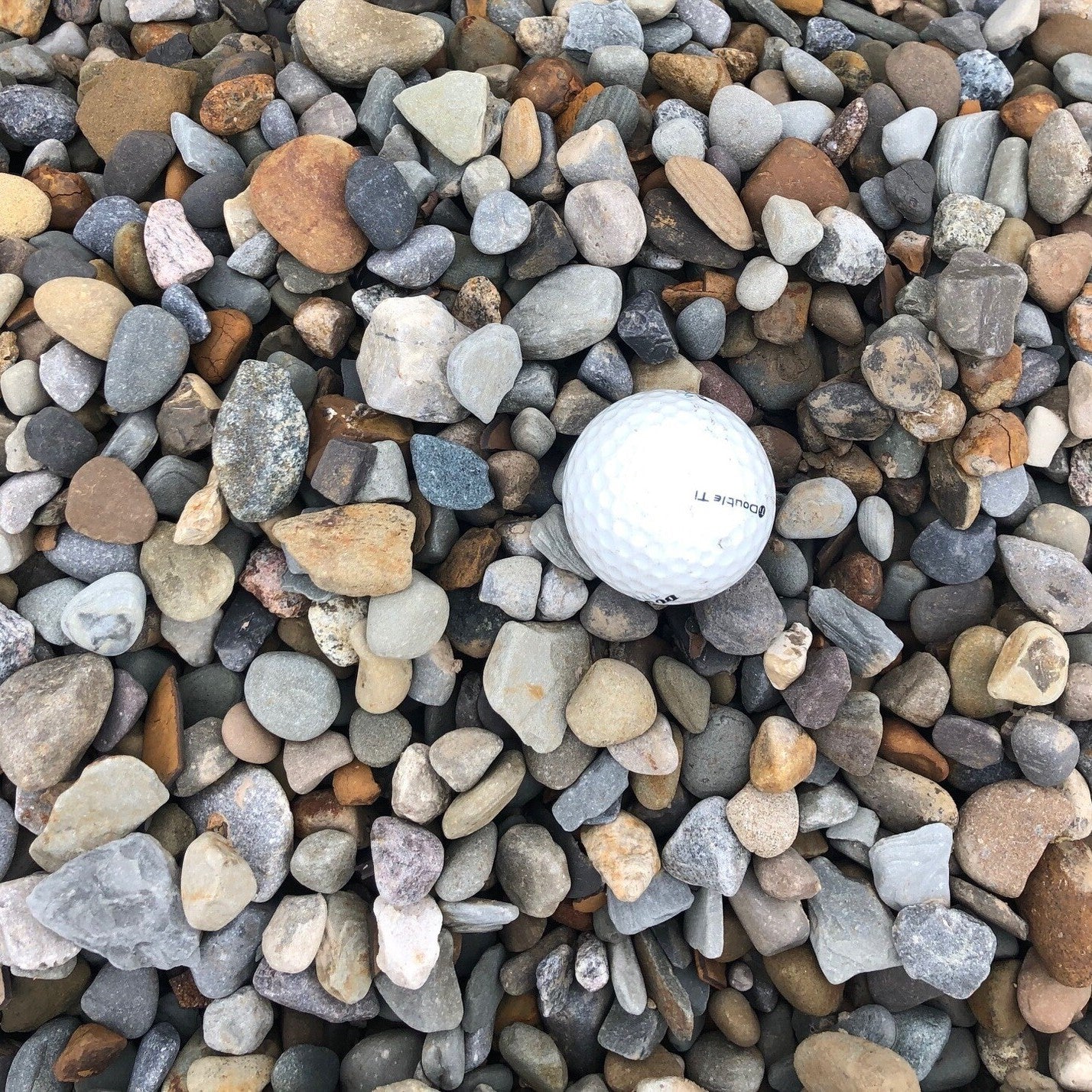
Number 57 crushed stone, angular limestone graded to about three quarters of an inch. The standard driveway, base and drainage gravel, it locks together under traffic and drains fast.
Mulch Mound delivered a yard of pea gravel to us. Delivery was on time, driver was friendly and hit a bullseye on the “tarp target”. We used the pea gravel (which was diameter as specified) to fill several muskrat holes around our pond. I would definitely recommend Mulch Mo...
Tell us what you're looking for
Thanks! We received your request.
Something went wrong. Please try again.
How Much Material Do I Need?
For decorative stone in Augusta garden beds and borders, a 2 to 3 inch layer provides solid coverage and weed suppression without requiring excessive material per project. Functional drainage installations and pathway bases need a minimum of 4 inches of compacted stone to perform reliably through Augusta's annual frost and thaw season.
Use our free gravel calculator
What is a yard?
A yard is approximately 27 cubic feet. As a general guideline, one yard of material can cover an area of about 100-160 square feet at a 2-3 inch depth.
We can't take orders for this right now. Tell us what you need and we'll get back to you.
What do you need?
Thanks! We received your request.
Something went wrong. Please try again.
Hand-picked local yards
4,000+ regional deliveries
Dedicated support
Why order through Mulch Mound
The best local stone, without the guesswork.
We hand-pick and partner with the best yards in your region, keep only the ones our buyers rate well, and back each load with our guarantee.
Mulch Mound Guarantee
If your stone isn't the quantity or quality you ordered, we'll make it right.
About this stone
Number 57 crushed stone, angular limestone graded to about three quarters of an inch. The standard driveway, base and drainage gravel, it locks together under traffic and drains fast.
Mulch Mound delivered a yard of pea gravel to us. Delivery was on time, driver was friendly and hit a bullseye on the “tarp target”. We used the pea gravel (which was diameter as specified) to fill several muskrat holes around our pond. I would definitely recommend Mulch Mo...
How Much Material Do I Need?
For decorative stone in Augusta garden beds and borders, a 2 to 3 inch layer provides solid coverage and weed suppression without requiring excessive material per project. Functional drainage installations and pathway bases need a minimum of 4 inches of compacted stone to perform reliably through Augusta's annual frost and thaw season.
Use our free gravel calculator
What is a yard?
A yard is approximately 27 cubic feet. As a general guideline, one yard of material can cover an area of about 100-160 square feet at a 2-3 inch depth.
Mulch Mound delivered a yard of pea gravel to us. Delivery was on time, driver was friendly and hit a bullseye on the “tarp target”. We used the ...
Read full review
Mulch Mound delivered a yard of pea gravel to us. Delivery was on time, driver was friendly and hit a bullseye on the “tarp target”. We used the pea gravel (which was diameter as specified) to fill several muskrat holes around our pond. I would definitely recommend Mulch Mound to a friend!
For stone projects, measure the length and width of your installation area in feet and decide on the depth in inches. Divide that depth by 12 to convert to feet, then multiply length by width by depth to get cubic feet, and divide by 27 to find cubic yards. In Augusta, drainage and pathway projects typically require a minimum 4-inch base depth to perform reliably through frost cycles, so plan your calculations around that starting point.
Stone Types We Deliver in Augusta
Homeowners and landscapers across central Maine count on us for reliable bulk stone delivery by the yard, with straightforward ordering and no hauling headaches. If you have been searching for bulk gravel by the yard in Augusta, we deliver directly to your driveway or job site with flexible load sizes to fit any project. Maine's cold winters and heavy clay soils make choosing the right stone variety an important first step, and our team is ready to help.
Pea Gravel
Smooth and naturally rounded, pea gravel is one of the most versatile stone options available for Maine properties. It drains well through the heavy clay soils common in this region, holds up through freeze-thaw cycles, and brings warm earth tones to pathways, patio edges, drainage channels, and decorative planting beds.
Complete Your Outdoor Stone Project
Pairing stone borders with a layer of bulk mulch in adjacent planting beds creates a clean, finished look while each material does its own specific job for your Augusta landscape. For areas where drainage is the primary concern, adding topsoil to regraded sections before finishing with stone can help direct surface water flow more effectively across the property.
Augusta's ground typically freezes to a significant depth during hard winters, and any stone installation that includes rigid edging should account for this reality. Thin plastic or lightweight metal edging can heave and buckle over repeated freeze-thaw cycles and require straightening every spring. Choosing heavy-gauge steel edging or relying on a deep compacted stone border without rigid edging will give you a pathway or bed border that holds its shape season after season.
Mulch Mound Pro Tip
Decorative stone in Augusta beds that receive afternoon shade tends to hold moisture underneath, which can create favorable conditions for slugs and other pests near plant crowns. If you are using stone as a mulch alternative in shadier parts of your yard, pull it back slightly from plant stems and check the area occasionally during the growing season. This is far less of a concern in full-sun exposures where the stone surface stays dry between rain events.
Mulch Mound Pro Tip
With Augusta averaging 45 inches of rain per year, runoff management around foundations is one of the most practical reasons to invest in bulk stone. A graded stone border along the foundation perimeter, sloping gently away from the house, intercepts roof runoff before it saturates the soil directly against the structure. Sandy loam is forgiving in some ways because it drains quickly, but that same drainage can channel water toward low spots near your foundation if surface grading is not properly addressed.
The Unique Landscape of Augusta
Stone is one of the most practical and durable landscape materials available to Augusta homeowners, partly because it requires no seasonal care and holds up reliably through zone 5b winters without decomposing or shifting from frost. Augusta's freeze-thaw cycles can be hard on organic ground covers and edging materials, but properly installed stone pathways and drainage borders stay stable regardless of frost depth. With 45 inches of annual rainfall, drainage is a genuine concern in many Augusta yards, and crushed stone layers under pathways and around foundations help move water away from structures efficiently. Sandy loam soil erodes more readily than clay under heavy surface runoff, making stone a protective surface choice in sloped areas or along driveways. From decorative river rock in garden beds to functional drainage gravel beneath downspouts, stone serves both aesthetic and structural roles in an Augusta landscape.
Frequently Asked Questions
Click a question to see the answer
Answer
What size crushed stone works best for drainage projects in Augusta?
Three-quarter inch crushed stone is the most commonly used size for drainage applications in Augusta. It packs loosely enough to allow water to move through quickly but is large enough to stay in place during heavy runoff. For French drain installations or downspout drainage channels, this size paired with a landscape fabric liner gives you a clean and functional solution that handles Augusta's spring rain loads well.
Answer
Can I use decorative stone instead of mulch in my Augusta garden beds?
Stone works well as a mulch alternative in low-maintenance beds, particularly around established foundation shrubs and perennials. Unlike organic mulch, stone does not break down and improve the soil over time, so it is a better fit for areas where you are not trying to build soil quality season after season. In Augusta's sandy loam beds where adding organic matter matters, mulch is the better long-term choice, but for beds you want to set and leave, decorative stone is a smart and durable option.
Answer
How do I keep stone pathways from sinking or shifting over Augusta winters?
Augusta's freeze-thaw cycles are the primary reason stone pathways shift over time. The best defense is a properly compacted base layer, typically 4 inches of compacted gravel beneath your finished stone surface. This base layer drains freely so water does not pool and freeze under the stones and create uplift. Skipping the base is the most common reason paths need releveling every spring.
Answer
Is stone a good option for controlling erosion on sloped areas in my Augusta yard?
Stone is one of the most effective erosion control solutions for sloped Augusta yards. Sandy loam loses surface particles quickly under the kind of heavy spring rain Augusta receives, particularly in March and April before vegetative cover fills back in. A layer of larger crushed or river stone on a slope holds the soil surface in place and slows the velocity of runoff without requiring any seasonal maintenance or replacement.
Answer
What stone works best for a driveway or parking pad surface in Augusta?
Three-quarter inch processed gravel or crushed stone is the standard for driveway surfaces in Augusta. It compacts well, drains efficiently, and handles freeze-thaw cycles without developing the ruts or soft spots that finer materials can create. Plan on a minimum depth of 4 inches for light vehicle traffic and 6 inches for heavier use areas to ensure the surface stays stable through winter.
Answer
How much stone do I need for a foundation border around my Augusta home?
For a decorative foundation border about 18 inches wide running around an average-sized Augusta home, most projects need between 2 and 4 cubic yards depending on perimeter length and desired depth. A depth of 2 to 3 inches is enough for decorative purposes, while drainage-focused borders along foundations where water tends to pool may benefit from a 4-inch layer to improve infiltration.
Answer
Does putting stone under my downspouts actually help prevent yard flooding in Augusta?
It makes a meaningful difference. Augusta's heavier rain events, which tend to cluster in spring and again in fall, can move significant water volume through a downspout in a short period of time. A splash pad of 2 to 3 square feet of crushed stone under each downspout disperses that concentrated flow and lets it percolate into the sandy loam below rather than channeling across your lawn or toward your foundation wall.
Answer
What is stone dust used for?
Screenings, often called stone dust, are fine crushed particles a quarter inch and down, typically used as a setting bed under pavers or a firm compactable base for walkways. Since it sheds water once packed rather than draining it, Augusta properties dealing with our 45 inches of annual rainfall are better served by our Crushed Stone #57, which drains freely instead of holding moisture near foundations or paths.
Answer
Is there a stone yard near Augusta?
Augusta's freeze and thaw cycles and 45 inches of yearly rainfall call for a firm, well draining base, and crushed stone locks together and stays put through frost. You can have it delivered by the cubic yard without driving to a stone yard or a quarry. Just order online and we drop it where you need it.