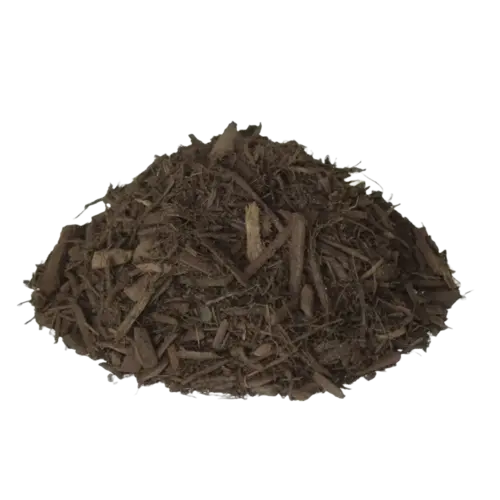
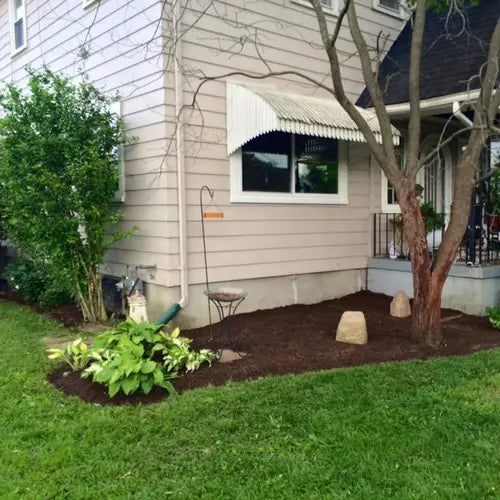
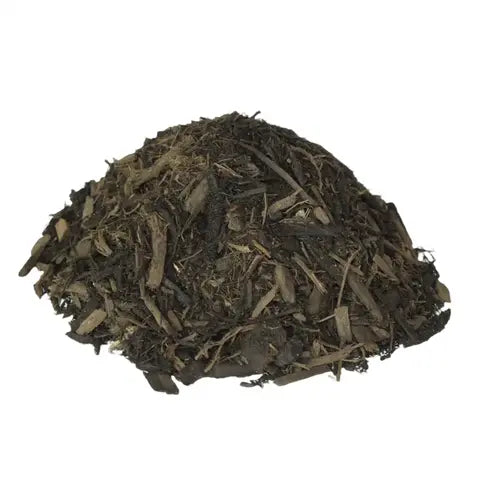
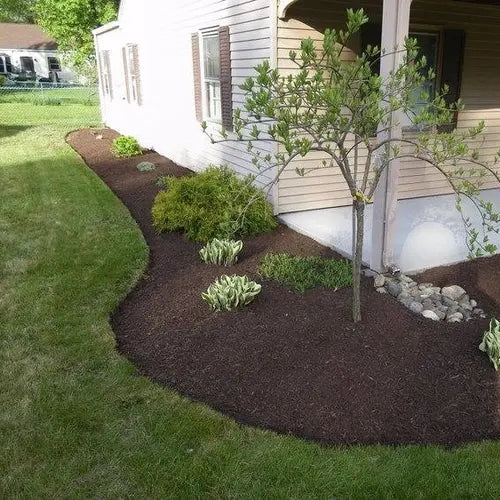
Warm brown double shredded mulch with lasting color that looks freshly applied for weeks. Spreads smooth, stays put, and gives beds a natural, polished appearance.
We had a great experience today. This was our first time using Mulch Mound, and I found the price competitive and the online ordering very easy. We are impressed with the quality of the mulch, too! It is covering well - a great value!
Tell us what you're looking for
Thanks! We received your request.
Something went wrong. Please try again.
How Much Material Do I Need?
For Bangor's silt loam planting beds, a 3-inch application depth is the standard recommendation, as this depth suppresses weeds effectively while still allowing Bangor's frequent rains to penetrate to the root zone below. Lawn areas getting a light organic topdress need only half an inch to one inch of material.
Use our free mulch calculator
What is a yard?
A yard is approximately 27 cubic feet. As a general guideline, one yard of material can cover an area of about 100-160 square feet at a 2-3 inch depth.
We can't take orders for this right now. Tell us what you need and we'll get back to you.
What do you need?
Thanks! We received your request.
Something went wrong. Please try again.
Hand-picked local yards
4,000+ regional deliveries
Dedicated support
Why order through Mulch Mound
The best local mulch, without the guesswork.
We hand-pick and partner with the best yards in your region, keep only the ones our buyers rate well, and back each load with our guarantee.
Mulch Mound Guarantee
If your mulch isn't the quantity or quality you ordered, we'll make it right.
About this mulch
Warm brown double shredded mulch with lasting color that looks freshly applied for weeks. Spreads smooth, stays put, and gives beds a natural, polished appearance.
We had a great experience today. This was our first time using Mulch Mound, and I found the price competitive and the online ordering very easy. We are impressed with the quality of the mulch, too! It is covering well - a great value!
How Much Material Do I Need?
For Bangor's silt loam planting beds, a 3-inch application depth is the standard recommendation, as this depth suppresses weeds effectively while still allowing Bangor's frequent rains to penetrate to the root zone below. Lawn areas getting a light organic topdress need only half an inch to one inch of material.
Use our free mulch calculator
What is a yard?
A yard is approximately 27 cubic feet. As a general guideline, one yard of material can cover an area of about 100-160 square feet at a 2-3 inch depth.
We had a great experience today. This was our first time using Mulch Mound, and I found the price competitive and the online ordering very easy. ...
Read full review
We had a great experience today. This was our first time using Mulch Mound, and I found the price competitive and the online ordering very easy. We are impressed with the quality of the mulch, too! It is covering well - a great value!
Great experience with mulch mound. Their online calculator made it easy to estimate how many yards of mulch I needed and delivery was quick. I woul...
Read full review
Great experience with mulch mound. Their online calculator made it easy to estimate how many yards of mulch I needed and delivery was quick. I would definitely recommend them for your future projects.
To estimate mulch for your Bangor beds, measure the length and width of each planting area in feet and multiply to get square footage, then multiply by 0.25 to account for a 3-inch depth and divide by 27 to convert to cubic yards. Because silt loam soil is relatively even in most Bangor yards, your measurements will translate fairly accurately to real coverage. Add about 10 percent to your total to account for irregular edges around trees, curves, and fence lines that are common in established Bangor landscapes.
Mulch vs. No Mulch: The Difference
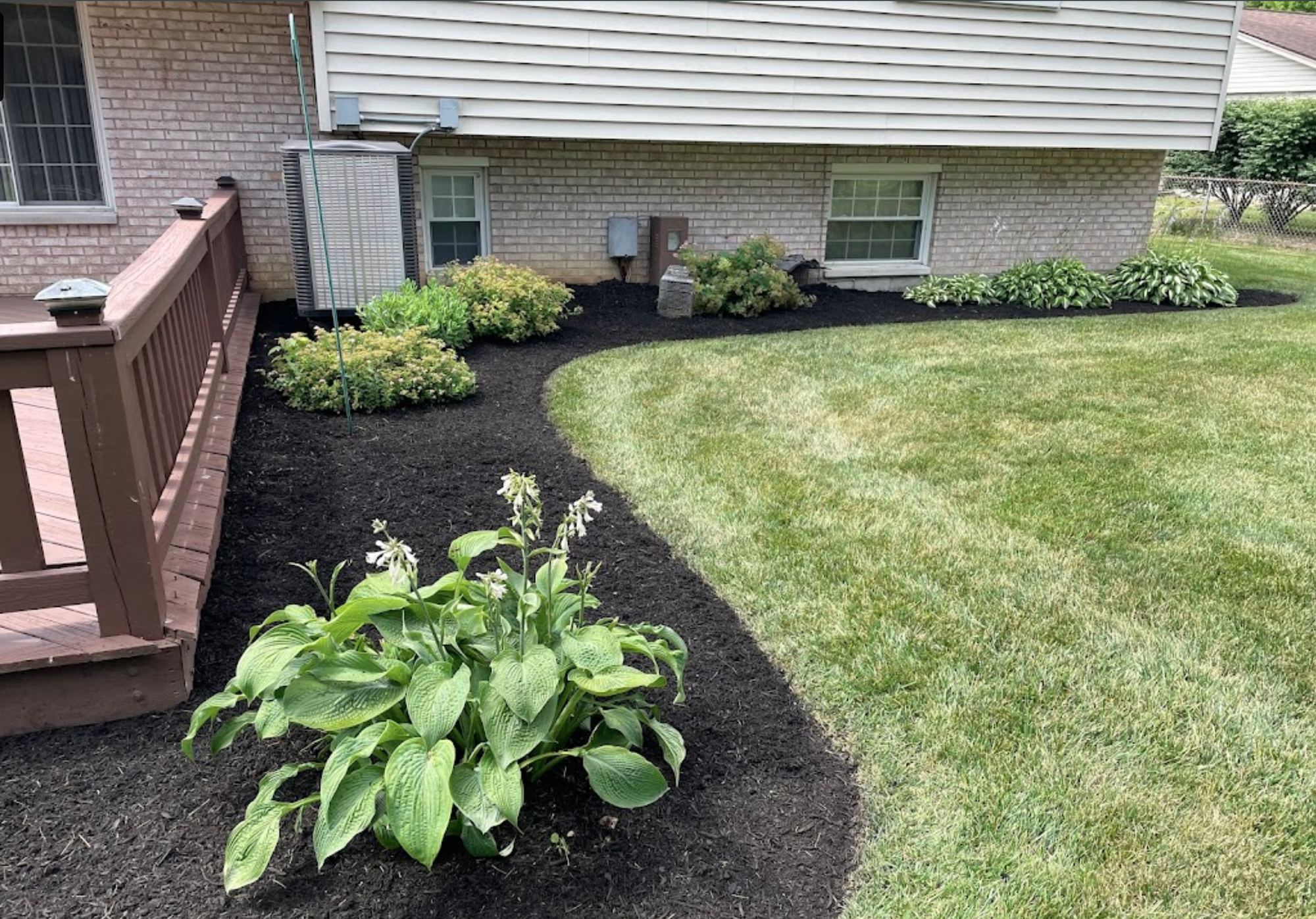
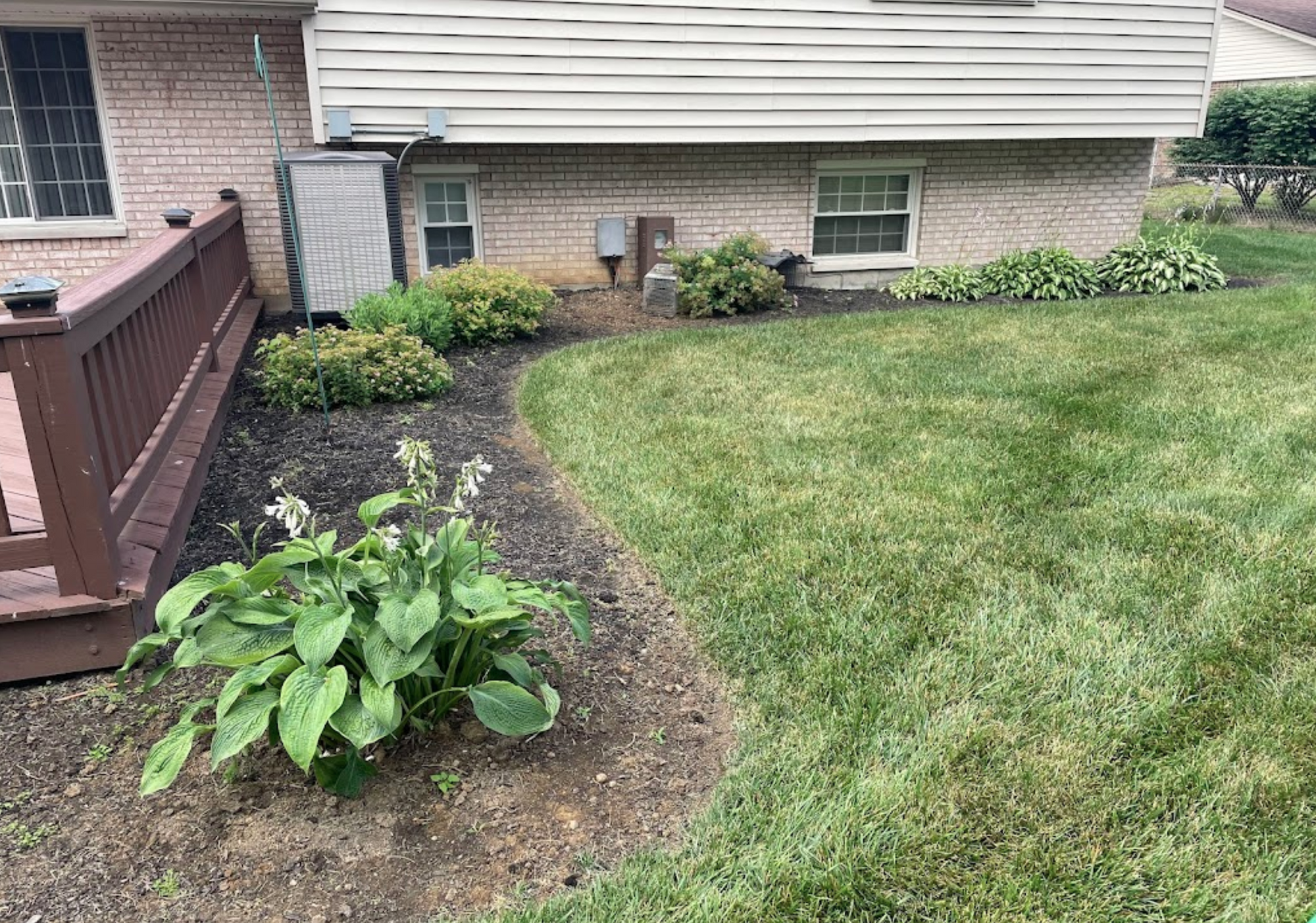
Bangor's combination of cold winters, wet springs, and humid summers means mulch breaks down faster here than in warmer or drier climates, so the type you choose has a real effect on how often you need to reapply. Natural hardwood and bark mulches decompose into organic matter that genuinely improves Bangor's silt loam soil over time, feeding the soil biology that keeps beds productive season after season. Dyed mulches tend to hold their color longer through Bangor's UV-heavy summers but decompose more slowly and return less organic value back to the soil below.
Before
After
Best Mulch Choice for Bangor Lawns
Most yards in the Bangor area sit on Silt Loam type of soil. Bangor's silt loam holds nutrients reasonably well but tends to compact gradually under repeated rainfall, making it difficult for new plant roots to penetrate deeply into the bed over time. Without a protective mulch layer, the soil surface can crust between rain events and reduce water infiltration, stressing shallow-rooted plants during dry stretches in July and August.
Hardwood Mulch
Hardwood mulch is a particularly good match for Bangor's silt loam beds because as it breaks down it adds organic carbon and improves microbial activity in a soil type that benefits from enhanced structure. The gradual decomposition of hardwood mulch in Bangor's moist climate creates a surface layer of rich humus that loosens the upper inches of silt loam and improves both drainage and root penetration progressively over multiple growing seasons.
Mulch Types We Deliver in Bangor
Mulch Mound delivers bulk mulch by the cubic yard straight to your property, making it easy to freshen beds, suppress weeds, and protect roots through Maine's cold winters and wet springs. If you have been searching for bulk mulch delivery in Bangor, we carry a focused selection of quality varieties so you can choose the look and performance that fits your landscape. Every order is measured by the cubic yard, so you get exactly what your project needs without waste.
Dyed Black Mulch
Available in double shredded style, this bold black mulch delivers a striking contrast against the green lawns and stone foundations common in homes throughout this part of Maine. The rich color holds through rainy seasons and summer sun, and the smooth texture spreads effortlessly around perennials, shrubs, and garden borders.
Dyed Brown Mulch
This warm brown double shredded mulch suits the classic Cape Cod and colonial style homes that are widespread throughout this region of Maine. The lasting color looks freshly applied for weeks even after heavy spring rains, making it a reliable choice for front beds, pathways, and property borders.
Natural Brown Mulch
For gardeners who prefer an undyed natural look, this double shredded natural brown mulch offers an earthy tone that comes straight from the wood itself. It pairs well with Maine native plantings and the rocky, well-drained soils common in this region, blending into the landscape with a clean and understated finish.
Complete Your Outdoor Mulch Project
Pair your mulch order with bulk garden soil to refresh depleted beds before you mulch over them, or add a border of decorative stone to frame your planting areas and give your Bangor landscape a clean finished edge that holds up through our wet springs and heavy fall rains.
In Bangor, the freeze-thaw cycles between October and April can push and redistribute mulch more than you might expect over a long winter. Rake your beds lightly in early May after frost risk passes to redistribute any material that shifted, and confirm your 3-inch depth is still consistent across the full bed. This quick pass also fluffs compacted surface material and refreshes the appearance of your beds before plants fully leaf out for the season.
Mulch Mound Pro Tip
Bangor's silt loam soil benefits significantly from the organic matter that mulch contributes as it breaks down through the growing season. To maximize that nutrient value, lightly incorporate the bottom layer of old mulch into the top inch of soil each spring before adding fresh material on top. This creates a slow-release organic amendment that works with Bangor's natural soil structure rather than simply layering year after year without integration.
Mulch Mound Pro Tip
With 42 inches of annual rainfall in Bangor, weed seeds receive constant moisture and can germinate quickly in unprotected beds from May through September. A consistent 3-inch mulch layer cuts off that germination window by blocking the light that weed seeds need to sprout at the soil surface. Apply your mulch right after your last spring weeding session to lock in your work and reduce the number of times you need to pull weeds throughout the rest of the growing season.
Frequently Asked Questions
Click a question to see the answer
Answer
When is the best time to apply mulch in Bangor?
The ideal window in Bangor is shortly after May 9, once the last frost risk has passed and the soil has begun to warm. Applying too early can trap cold air against plant crowns and delay root activity in our zone 5a growing conditions. A late May application gives your beds the full growing season ahead to benefit from moisture retention and weed suppression.
Answer
How thick should I apply mulch given how much rain we get in Bangor?
With 42 inches of annual rainfall in Bangor, a 3-inch layer is ideal for most planting beds. Silt loam compacts under repeated rain impact, and a consistent mulch depth cushions that impact while allowing water to filter through rather than run off the surface. Avoid going deeper than 4 inches, as overly thick layers can stay too wet during our wetter stretches and encourage rot at the base of shrubs and perennials.
Answer
Will mulch protect my plants through a Bangor winter?
Yes, especially for perennials and shrubs that are borderline hardy in zone 5a. A 3 to 4-inch mulch layer applied before October 7 insulates root zones against the freeze-thaw cycles that are common in Bangor from late fall through early spring. It moderates the soil temperature swings that cause frost heaving and can protect marginally hardy plants that might otherwise struggle through a hard Maine winter.
Answer
Does Bangor's silt loam soil change how I should think about mulching my beds?
Silt loam is prone to surface crusting after heavy rains, which Bangor receives consistently throughout the year. Mulch prevents that crust from forming by absorbing the direct impact of rainfall before it hits the bare soil surface. It also slows the gradual compaction that happens naturally in silt loam over time, keeping the soil loose enough for roots to expand without resistance throughout the growing season.
Answer
How often do I need to reapply mulch in Bangor?
Most Bangor homeowners find that one application per year, typically in late May after frost risk fades, keeps beds looking fresh and functionally effective. Our cool and moist climate does accelerate decomposition compared to warmer or drier regions, so by the following spring you may notice the layer has thinned to an inch or less. A fresh topdress each season keeps the benefits consistent without over-accumulating old decomposed material.
Answer
Is dyed mulch safe to use near my vegetable garden in Bangor?
For vegetable gardens, natural or undyed mulch is the safer choice in Bangor. While most modern dyed mulches use oxide-based colorants that are considered low-risk, the uncertainty around long-term soil impact is worth avoiding when you are growing food. In Bangor's vegetable season, which runs roughly from late May through early October, a natural wood chip or bark mulch breaks down into organic matter that genuinely improves the silt loam soil it sits on.
Answer
What happens if I pile mulch against my house foundation in Bangor?
Keeping mulch pulled back at least 6 inches from your foundation is important in Bangor because of our high annual rainfall and humid summers. Mulch piled against siding or foundation materials retains moisture directly against the structure, which invites rot and can attract carpenter ants and other pests that are common in the area. Leave a clear gap at the foundation, use stone or gravel in that border zone, and let the mulch begin a few inches out from the structure.
The Unique Landscape of Bangor
Bangor's silt loam soil holds moisture reasonably well but compacts under the repeated freeze-thaw cycles that run from October through April in zone 5a, and a consistent mulch layer is one of the most effective tools for protecting that soil structure season after season. With 42 inches of annual rainfall, bare planting beds in Bangor are exposed to direct rain impact that crusts the soil surface and washes nutrients out of the root zone before plants can use them. A proper mulch application buffers that rain impact, slows erosion on any sloped areas of the yard, and feeds the soil with organic matter as it breaks down through our cool, moist climate. Bangor's long winters also expose plant crowns and shallow roots to frost heaving when the ground cycles repeatedly between frozen and thawed states, and an insulating mulch layer moderates those swings meaningfully. Applying mulch after May 9, once the last frost risk has passed, locks in soil warmth and gives your plants the stable environment they need to establish strong roots before summer growth begins.