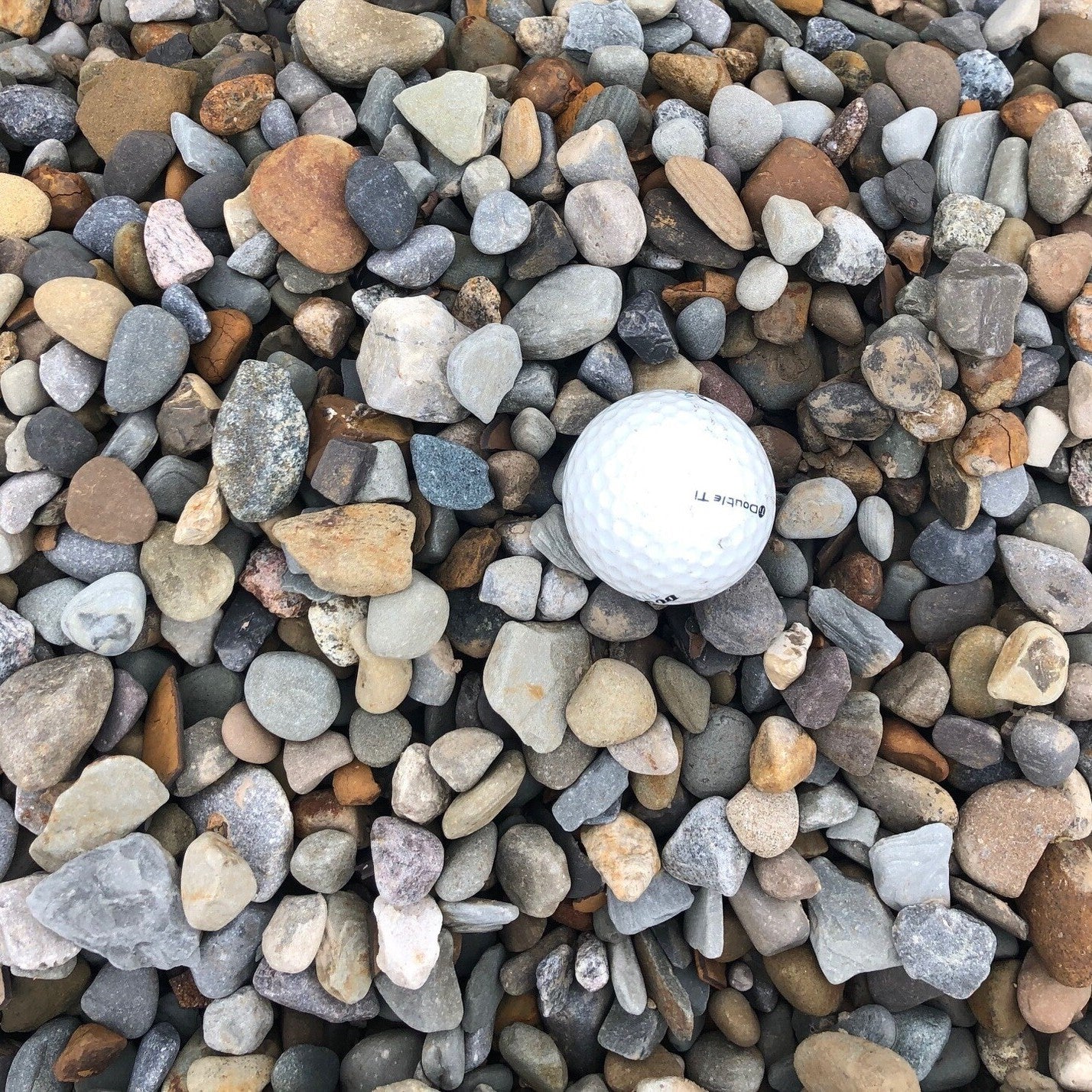
Number 57 crushed stone, angular limestone graded to about three quarters of an inch. The standard driveway, base and drainage gravel, it locks together under traffic and drains fast.
I contacted Mulch Mound for #57 river rocks and it was easy and fast to get a delivery right before the holiday weekend. Stone was delivered as promised and place exactly where I asked. Excellent service! I will be ordering mulch next!
Tell us what you're looking for
Thanks! We received your request.
Something went wrong. Please try again.
How Much Material Do I Need?
For decorative and pathway applications in Bangor, a 2 to 3-inch depth provides enough coverage to suppress weeds and deliver a finished appearance while remaining stable through freeze-thaw cycles. Drainage features and French drains in Bangor typically require 4 to 6 inches of stone depth to perform effectively given the volume of water they need to handle from our annual rainfall.
Use our free gravel calculator
What is a yard?
A yard is approximately 27 cubic feet. As a general guideline, one yard of material can cover an area of about 100-160 square feet at a 2-3 inch depth.
We can't take orders for this right now. Tell us what you need and we'll get back to you.
What do you need?
Thanks! We received your request.
Something went wrong. Please try again.
Hand-picked local yards
4,000+ regional deliveries
Dedicated support
Why order through Mulch Mound
The best local stone, without the guesswork.
We hand-pick and partner with the best yards in your region, keep only the ones our buyers rate well, and back each load with our guarantee.
Mulch Mound Guarantee
If your stone isn't the quantity or quality you ordered, we'll make it right.
About this stone
Number 57 crushed stone, angular limestone graded to about three quarters of an inch. The standard driveway, base and drainage gravel, it locks together under traffic and drains fast.
I contacted Mulch Mound for #57 river rocks and it was easy and fast to get a delivery right before the holiday weekend. Stone was delivered as promised and place exactly where I asked. Excellent service! I will be ordering mulch next!
How Much Material Do I Need?
For decorative and pathway applications in Bangor, a 2 to 3-inch depth provides enough coverage to suppress weeds and deliver a finished appearance while remaining stable through freeze-thaw cycles. Drainage features and French drains in Bangor typically require 4 to 6 inches of stone depth to perform effectively given the volume of water they need to handle from our annual rainfall.
Use our free gravel calculator
What is a yard?
A yard is approximately 27 cubic feet. As a general guideline, one yard of material can cover an area of about 100-160 square feet at a 2-3 inch depth.
I contacted Mulch Mound for #57 river rocks and it was easy and fast to get a delivery right before the holiday weekend. Stone was delivered as pro...
Read full review
I contacted Mulch Mound for #57 river rocks and it was easy and fast to get a delivery right before the holiday weekend. Stone was delivered as promised and place exactly where I asked. Excellent service! I will be ordering mulch next!
Measure the length and width of your stone coverage area in feet, multiply those together, then multiply by the depth in feet (2 inches equals roughly 0.17 feet) to get cubic feet, and divide by 27 for cubic yards. For drainage features in Bangor where depth varies along a slope, measure at three or four points and use the average depth in your calculation for a more accurate result. Keep in mind that stone is significantly denser than mulch or soil, so a single cubic yard covers a smaller surface area than you might expect from other materials.
Stone Types We Deliver in Bangor
Mulch Mound delivers bulk stone by the cubic yard directly to homes and properties throughout Bangor, saving you the hassle of hauling heavy material yourself. Whether you are searching for bulk gravel by the yard in Bangor or need a reliable source for a weekend landscaping project, we make ordering simple and straightforward. Our bulk delivery is priced by the cubic yard so you get exactly what you need without overpaying.
Pea Gravel
Pea gravel is one of the most popular choices for Bangor homeowners thanks to its smooth, rounded profile and natural earth tones that complement the wooded, rustic character common to central Maine properties. It drains well through the region's heavier glacial soils and works beautifully for pathways, patios, and decorative ground cover.
Complete Your Outdoor Stone Project
Pair your stone order with bulk soil to re-grade any areas behind your stone borders before installation, and add mulch to adjacent planting beds to create a cohesive landscape design that handles Bangor's wet seasons from both a drainage and aesthetic standpoint.
Before laying any stone in Bangor, install a quality non-woven landscape fabric underneath the entire coverage area. Our growing season brings consistent and aggressive weed pressure from May through September, and stone alone will not prevent weeds from pushing up through gaps over time. A fabric barrier combined with a proper depth of stone gives you a surface that stays clean and low-maintenance for years without the repeated weeding that unprotected stone areas require.
Mulch Mound Pro Tip
When planning a stone pathway or patio area in Bangor, account for the slight settling that happens after your first full winter. Freeze-thaw cycles shift even well-compacted stone bases slightly, and keeping a small reserve of the same stone material on hand lets you top off any low spots the following spring. This is especially true for crushed stone paths, where the top layer redistributes gradually under foot traffic and snowblower passes during Bangor's November through April winter season.
Mulch Mound Pro Tip
Bangor's 42 inches of annual rainfall means any stone installation near a building or planting area needs to be designed with a clear drainage direction from the very beginning. As you place stone for a border or low-maintenance area, ensure the surface slopes gently away from structures and toward a natural drainage outlet in your yard. Even a modest 1 to 2 percent grade in your stone surface can redirect hundreds of gallons of water away from your foundation over the course of a typical wet Bangor spring.
The Unique Landscape of Bangor
Stone is one of the most durable and weather-resistant landscape materials available for Bangor properties, where wet springs, hard winters, and the gradual erosion of sloped yards create ongoing maintenance challenges for organic ground covers. Decorative stone and crushed gravel provide stable, permeable surfaces for pathways and border areas that hold up through Bangor's long winters without heaving, washing out, or decomposing the way wood-based materials do over time. Along foundation borders, a stone buffer creates a dry zone that reduces moisture splashing against siding and discourages the insects and rodents that are attracted to wet organic mulch sitting directly against a structure. With 42 inches of annual rainfall, drainage is a genuine concern in low-lying areas of many Bangor yards, and a stone-filled dry creek bed or French drain can redirect surface water away from structures and planting areas that would otherwise stay saturated from April through June. For homeowners who want low-maintenance areas that look sharp from spring thaw through the October frost and require minimal seasonal attention, stone is the one material that delivers consistent results across every season Bangor throws at a landscape.
Frequently Asked Questions
Click a question to see the answer
Answer
What type of stone works best for a backyard pathway in Bangor?
Crushed stone in the 3/4-inch size is a popular choice for Bangor pathways because it compacts well underfoot and stays reasonably stable through our freeze-thaw cycles. Unlike smooth stone alone, a compacted crushed stone base provides a consistent walking surface that drains quickly after rain and does not become as slippery as flat materials do during Bangor's wet springs and falls. A 3 to 4-inch compacted depth gives you a pathway that holds its shape from May through the first heavy snowfall in late fall.
Answer
Can stone actually fix the drainage problems I have in my Bangor yard after heavy rains?
Stone is one of the most effective tools for managing the drainage challenges that come with Bangor's 42 inches of annual rainfall. A dry creek bed filled with river stone or a French drain lined with crushed gravel can capture and redirect surface water away from low areas that collect runoff from snowmelt and spring storms. These features work well with Bangor's silt loam soil, which drains adequately once surface water is redirected away from the saturated areas where it tends to pool.
Answer
How do I use stone around my foundation to protect my Bangor home from moisture damage?
A 12 to 18-inch wide border of washed stone or crushed gravel around your foundation creates a dry buffer zone that reduces moisture from splashing up against siding and keeps organic material away from the structure entirely. In Bangor, where annual rainfall is consistent and spring runoff can be heavy, this stone border also provides a natural break that helps grade water away from the house with every storm. Pair it with proper soil grading behind the stone for the most effective moisture management results.
Answer
Will decorative stone stay in place through a Bangor winter or will it shift around?
Larger decorative stone, 1.5 inches and up, stays very well in place through Bangor winters and is actually more stable than mulch or organic ground covers in freeze-thaw conditions. Smaller pea gravel can migrate on slopes when hit with heavy snowmelt runoff, so use a landscape fabric base and physical edging to keep it contained. Stone does not decompose or compact the way organic materials do, making it a genuinely low-maintenance choice that holds its position from the first fall frost through spring thaw.
Answer
What is the best stone for a low-maintenance ground cover area in a Bangor yard?
A 1.5-inch crushed stone or a river rock in the 2 to 3-inch size is ideal for low-maintenance areas in Bangor. These sizes are heavy enough to stay put through the freeze-thaw cycles and heavy rains typical from October through May, and they do not provide the hospitable seedbed for weeds that finer materials can create over time. Installing a quality landscape fabric underneath maximizes weed suppression, since weed pressure in Bangor is consistent and aggressive from May through September.
Answer
How much stone do I need to build a drainage swale in my Bangor yard?
For a standard drainage swale or dry creek bed in Bangor, plan on 6 to 8 inches of total stone depth using a 1.5 to 2-inch river stone for the decorative surface over a 2-inch base layer of crushed stone. Measure the length and average width of your swale and use those dimensions to calculate cubic yards at your target depth. Given Bangor's rainfall patterns, sizing your drainage features generously is worthwhile since undersized swales back up quickly during the heavy rain events that arrive in April and May.
Answer
Can stone edging keep my garden bed soil from washing away during Bangor's rainy seasons?
Stone edging is one of the most durable ways to contain garden bed soil in Bangor, where spring rains and snowmelt regularly wash loose soil and mulch off raised beds and curved garden borders. A row of larger cobblestone or a trench filled with 3 to 4-inch stone creates a physical barrier that holds its position through frost heaving and sustained rain. Unlike plastic or metal edging, stone does not warp or shift from Bangor's repeated freeze-thaw cycles and maintains its appearance through every season.
Answer
What is stone dust used for?
Screenings, often called stone dust, are fine crushed particles used as a compactable setting bed under pavers and flagstone. It packs tight but does not drain well, which matters through Bangor's wet spring thaw. For jobs needing solid drainage, our Crushed Stone #57 delivered to Bangor properties is the better choice.
Answer
Is there a stone yard near Bangor?
A pathway that has to survive a Bangor winter without heaving or washing out is a perfect job for crushed stone, and the stone for it comes to your driveway instead of a trip to a stone yard. We are not a gravel pit, so there is nothing to visit. Order by the cubic yard online and we drop it where you want it.