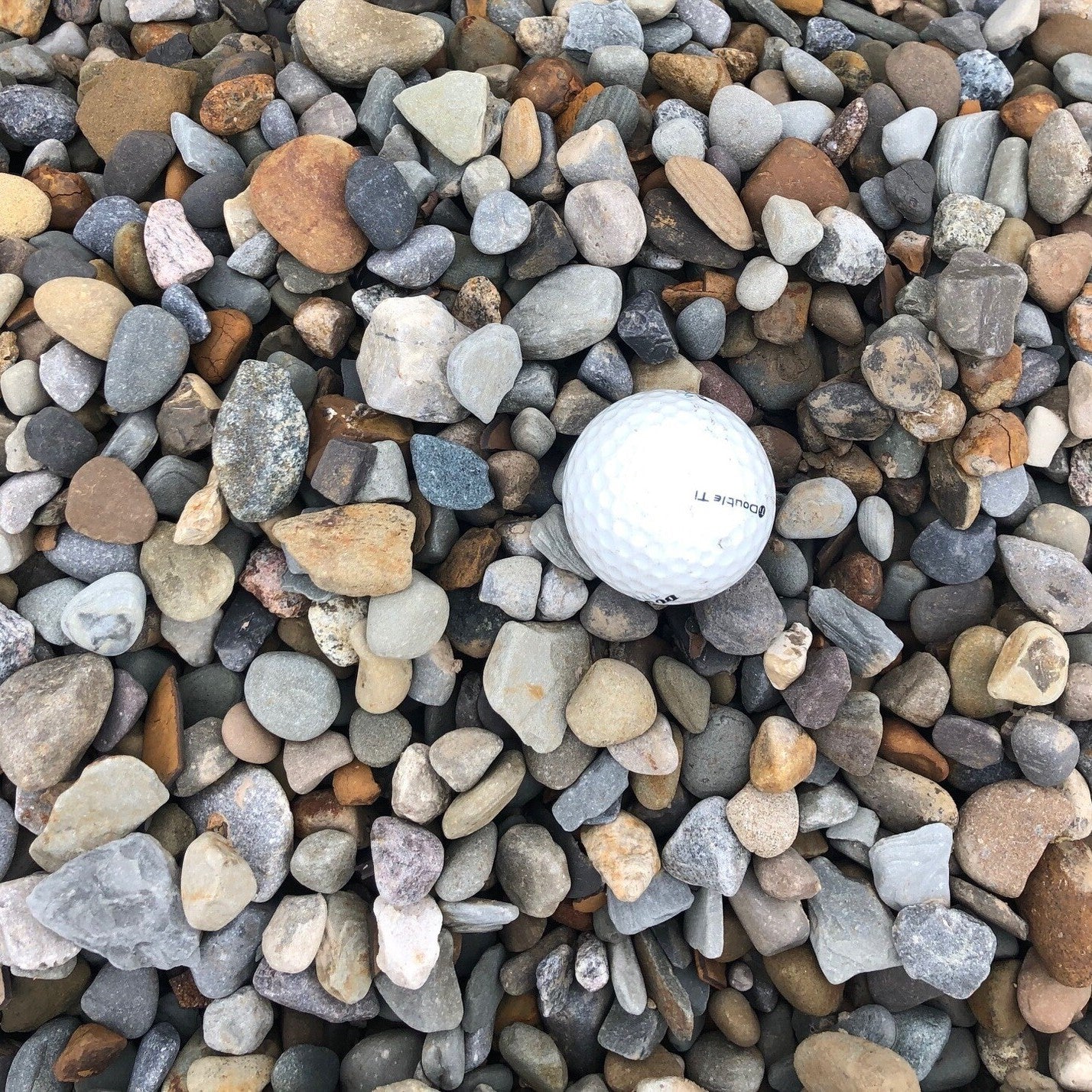
Number 57 crushed stone, angular limestone graded to about three quarters of an inch. The standard driveway, base and drainage gravel, it locks together under traffic and drains fast.
Mulch Mound delivered a yard of pea gravel to us. Delivery was on time, driver was friendly and hit a bullseye on the “tarp target”. We used the pea gravel (which was diameter as specified) to fill several muskrat holes around our pond. I would definitely recommend Mulch Mo...
Tell us what you're looking for
Thanks! We received your request.
Something went wrong. Please try again.
How Much Material Do I Need?
For pathways and decorative beds in Beaufort, 2 to 3 inches of stone provides good coverage and stability over the sandy soil base. Drainage applications and high-traffic areas benefit from 3 to 4 inches to account for settling and to ensure adequate water-flow capacity through the area's heavy rain events.
Use our free gravel calculator
What is a yard?
A yard is approximately 27 cubic feet. As a general guideline, one yard of material can cover an area of about 100-160 square feet at a 2-3 inch depth.
We can't take orders for this right now. Tell us what you need and we'll get back to you.
What do you need?
Thanks! We received your request.
Something went wrong. Please try again.
Hand-picked local yards
4,000+ regional deliveries
Dedicated support
Why order through Mulch Mound
The best local stone, without the guesswork.
We hand-pick and partner with the best yards in your region, keep only the ones our buyers rate well, and back each load with our guarantee.
Mulch Mound Guarantee
If your stone isn't the quantity or quality you ordered, we'll make it right.
About this stone
Number 57 crushed stone, angular limestone graded to about three quarters of an inch. The standard driveway, base and drainage gravel, it locks together under traffic and drains fast.
Mulch Mound delivered a yard of pea gravel to us. Delivery was on time, driver was friendly and hit a bullseye on the “tarp target”. We used the pea gravel (which was diameter as specified) to fill several muskrat holes around our pond. I would definitely recommend Mulch Mo...
How Much Material Do I Need?
For pathways and decorative beds in Beaufort, 2 to 3 inches of stone provides good coverage and stability over the sandy soil base. Drainage applications and high-traffic areas benefit from 3 to 4 inches to account for settling and to ensure adequate water-flow capacity through the area's heavy rain events.
Use our free gravel calculator
What is a yard?
A yard is approximately 27 cubic feet. As a general guideline, one yard of material can cover an area of about 100-160 square feet at a 2-3 inch depth.
Mulch Mound delivered a yard of pea gravel to us. Delivery was on time, driver was friendly and hit a bullseye on the “tarp target”. We used the ...
Read full review
Mulch Mound delivered a yard of pea gravel to us. Delivery was on time, driver was friendly and hit a bullseye on the “tarp target”. We used the pea gravel (which was diameter as specified) to fill several muskrat holes around our pond. I would definitely recommend Mulch Mound to a friend!
Measure the length and width of your project area in feet and multiply them together to get the square footage. For most decorative and pathway applications in Beaufort, plan on 2 to 3 inches of depth and divide your cubic footage by 27 to convert to cubic yards. Because Beaufort's sandy soil can cause stone to settle unevenly in the first season, ordering slightly more than your calculated amount gives you material to top off low spots after the initial settling.
Stone Types We Deliver in Beaufort
Mulch Mound delivers bulk stone by the cubic yard across the Lowcountry, making it simple to complete landscaping projects without hauling materials yourself. If you have been searching for bulk gravel by the yard in Beaufort, our yard-to-door delivery puts quality stone exactly where you need it. We carry varieties suited to the region's sandy soils, humid climate, and relaxed outdoor living spaces.
Pea Gravel
Pea Gravel brings smooth, rounded texture and warm earth tones to Lowcountry landscapes. Its excellent drainage helps manage the heavy seasonal rainfall common along the South Carolina coast. Comfortable underfoot and easy to spread, it suits pathways, patios, and decorative beds around the cottage-style and traditional homes found throughout this area.
Complete Your Outdoor Stone Project
Adding landscape fabric under your stone layer is strongly recommended in Beaufort, where sandy soil and abundant rainfall can cause stone to sink and weeds to push up through thin coverage. Pairing stone borders with a quality mulch in adjacent planting beds creates a clean visual contrast and helps keep each material in its zone during heavy summer storms.
In Beaufort's wet climate, one of the best investments you can make is a stone-lined apron at every downspout outlet on your property. Sandy soil erodes quickly when concentrated water flowing from a downspout hits it directly, and over time that erosion can undermine beds and foundation plantings. A simple 3 to 4 foot spread of river rock or crushed stone at each outlet disperses the flow and protects the soil without requiring any ongoing maintenance.
Mulch Mound Pro Tip
Beaufort's Zone 9a growing season means grass and weeds are actively trying to colonize your stone areas from late March almost to November. The most effective way to keep stone beds and pathways clean long-term is to install a quality woven landscape fabric before you place the stone, and to edge the perimeter with a physical border that turf cannot cross. Skipping the fabric to save time almost always results in a difficult weeding situation within one or two growing seasons.
Mulch Mound Pro Tip
With 49 inches of annual rainfall spread across Beaufort's warm coastal climate, hard surfaces and compacted soil in your yard can concentrate runoff and cause erosion in unexpected places. Replacing low-use paved areas or compacted dirt paths with permeable gravel allows water to infiltrate rather than run off, which reduces erosion, keeps water from pooling in low spots, and works with the way Beaufort's sandy coastal soils naturally handle rainfall.
The Unique Landscape of Beaufort
In a coastal climate like Beaufort's, where humidity stays high nearly year-round and Zone 9a conditions support aggressive weed and grass growth, stone is one of the most practical low-maintenance materials you can use in your landscape. Sandy soil shifts and erodes more easily than clay-based soils, making stone a valuable tool for stabilizing slopes, edging beds, and protecting areas subject to surface runoff during Beaufort's 49-inch annual rainfall. Pathways through garden areas benefit greatly from a gravel surface because the material allows water to pass through freely rather than pool, which matters in a landscape that regularly absorbs heavy afternoon thunderstorms. Stone also solves the persistent problem of turf and weeds colonizing areas where you do not want them, eliminating mowing and weeding in spots that would require constant attention through the warm Lowcountry growing season. From drainage channels to decorative borders around coastal cottage gardens, stone works with Beaufort's climate rather than against it.
Frequently Asked Questions
Click a question to see the answer
Answer
What size gravel works best for garden pathways in Beaufort?
A 3/8 inch to 3/4 inch crushed gravel is the most walkable and practical size for garden pathways in Beaufort. Larger stone tends to shift underfoot and is uncomfortable to walk on, while very fine gravel can compact and become muddy when wet. Given how often Beaufort gets rain, a crushed angular gravel that locks together is more stable than smooth river pebbles, which scatter easily after a hard downpour.
Answer
Can stone help with erosion around my Beaufort property?
Yes, and it is one of the best uses for stone in the Lowcountry. Sandy soil is highly susceptible to erosion because the particles are large, loose, and non-cohesive. Placing river rock or rip rap along drainage swales, at downspout outlets, and at the base of slopes dissipates the energy of moving water before it can carry soil away. A 2 to 3 inch layer of stone in these areas outlasts organic mulch by years and does not require annual replenishment.
Answer
How do I keep decorative stone from sinking into Beaufort's sandy soil?
Sandy soil is loose and porous, so stone will gradually work its way down without some kind of barrier beneath it. Landscape fabric laid under your stone layer before installation slows this process significantly. For pathways and high-traffic areas, compacting a thin base of decomposed granite or crushed limestone before laying your decorative stone gives it a firmer foundation. In very sandy areas, plan to add a refresh layer every few years as some settling is inevitable.
Answer
Is river rock or crushed stone better for drainage areas in Beaufort?
For areas where water needs to move quickly, crushed stone with angular edges is generally more effective because the irregular shapes create void space that water flows through freely. Smooth river rock is attractive but the rounded surfaces pack together tightly over time and can slow drainage. For a decorative dry creek bed or swale in a Beaufort yard, a combination works well, with crushed stone on the bottom for drainage performance and a layer of river rock on top for appearance.
Answer
What is the best stone to use around my home's foundation in Beaufort?
A clean 3/4 inch crushed granite or washed river gravel in a 12 to 18 inch band around the foundation is a practical choice for Beaufort homes. Stone here does double duty, keeping the soil surface dry after rain events which helps reduce moisture accumulation against the foundation, and eliminating the weed and grass growth that organic mulch encourages in the warm Zone 9a climate. Keep stone pulled slightly away from wood siding to maintain airflow at the base of the wall.
Answer
How much stone do I need to cover a pathway or driveway area?
Measure the length and width of your pathway in feet, multiply them together for the square footage, and plan on 2 to 3 inches of depth for a foot path or 4 inches for a driveway or parking area. Divide your cubic foot volume by 27 to get cubic yards. For Beaufort's sandy base, going with 3 to 4 inches on pathways rather than the minimum gives you more stability as the stone finds its level over the first few rain seasons.
Answer
Can I use stone instead of mulch in my landscape beds to cut down on maintenance?
Stone is a great low-maintenance alternative for certain beds, especially in Beaufort's long growing season where organic mulch needs annual replenishment and still allows weeds to push through. Decorative stone over landscape fabric will suppress weeds for years without reapplication and does not fade or decompose. The tradeoff is that stone does not improve the sandy soil beneath it the way organic mulch does, so it is best suited for ornamental areas or around established shrubs rather than for active planting beds.
Answer
Is crush and run the same as crusher run?
Crush and run refers to crushed stone blended with stone dust that compacts into a firm base for driveways and paver projects. With Beaufort's sandy soil and heavy annual rainfall, we deliver Crushed Stone #57 instead, since its clean, washed structure drains freely and holds up well without the fines washing out over time.
Answer
Is there a stone yard near Beaufort?
Ask at a stone yard for a few cubic yards of crushed stone and you would expect to haul it yourself, but we deliver that same crushed stone to your door in Beaufort. Its angular edges lock together, which helps hold sandy soil in place and resists washing out during heavy coastal rain. There is no need to visit a quarry or load anything.