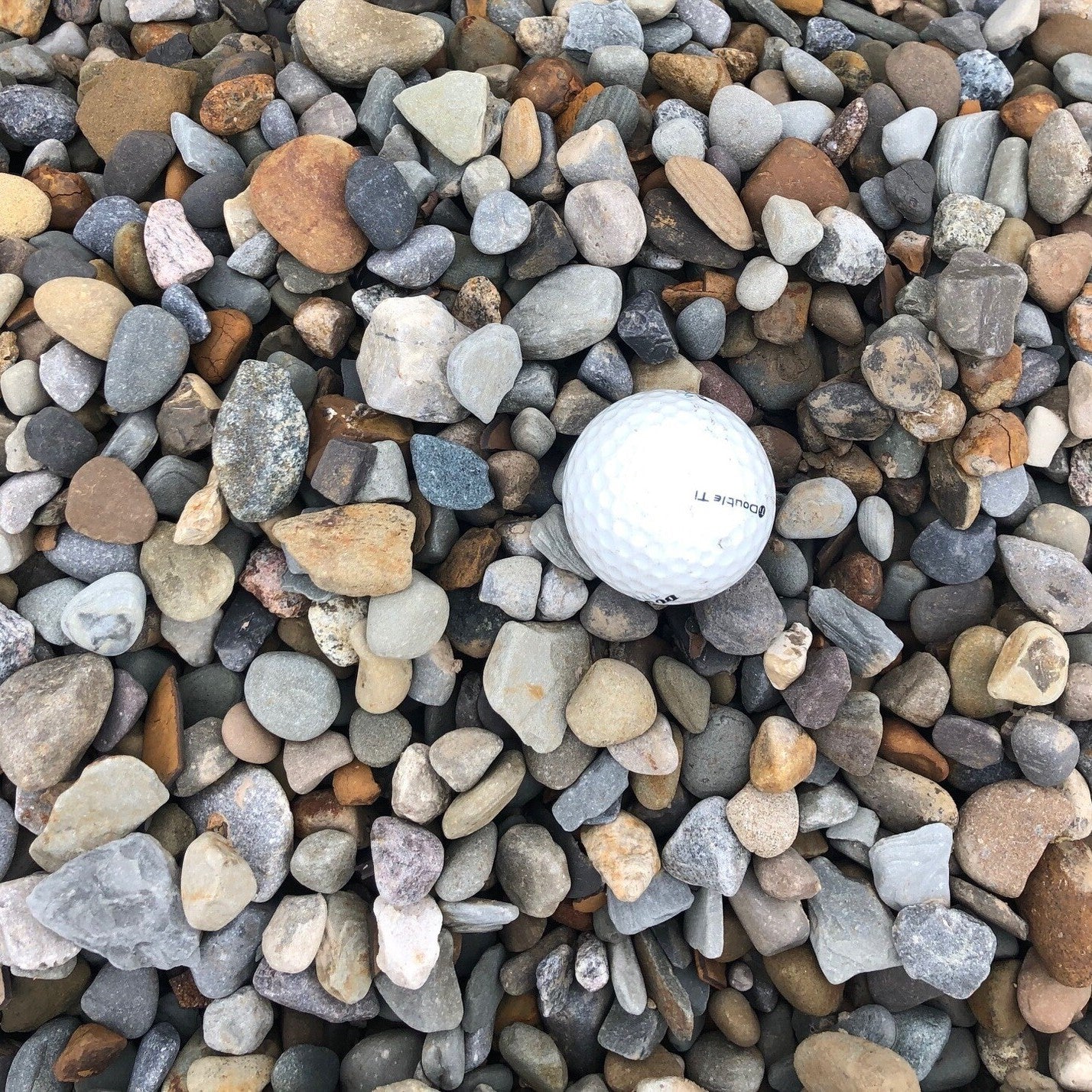
Number 57 crushed stone, angular limestone graded to about three quarters of an inch. The standard driveway, base and drainage gravel, it locks together under traffic and drains fast.
I used Mulch Mound to have 3 cubic yards of garden soil delivered. The process was easy and I love that I didn't have to call anyone. I placed my order online, picked my delivery date, laid out my tarp and the dirt was delivered. My delivery had to be pushed back, but I was ke...
Tell us what you're looking for
Thanks! We received your request.
Something went wrong. Please try again.
How Much Material Do I Need?
Most decorative groundcover stone applications in Bozeman need two to three inches of depth for good coverage and weed suppression, while functional applications like drainage trenches and dry creek beds need four to six inches. One cubic yard of gravel covers approximately 100 square feet at three inches deep, so measure your project area carefully before ordering.
Use our free gravel calculator
What is a Yard?
A yard is approximately 27 cubic feet. As a general guideline, one yard of material can cover an area of about 100-160 square feet at a 2-3 inch depth.
We can't take orders for this right now. Tell us what you need and we'll get back to you.
What do you need?
Thanks! We received your request.
Something went wrong. Please try again.
Hand-picked local yards
4,000+ regional deliveries
Dedicated support
Why order through Mulch Mound
The best local , without the guesswork.
We hand-pick and partner with the best yards in your region, keep only the ones our buyers rate well, and back each load with our guarantee.
Mulch Mound Guarantee
If your isn't the quantity or quality you ordered, we'll make it right.
About this stone
Number 57 crushed stone, angular limestone graded to about three quarters of an inch. The standard driveway, base and drainage gravel, it locks together under traffic and drains fast.
I used Mulch Mound to have 3 cubic yards of garden soil delivered. The process was easy and I love that I didn't have to call anyone. I placed my order online, picked my delivery date, laid out my tarp and the dirt was delivered. My delivery had to be pushed back, but I was ke...
How Much Material Do I Need?
Most decorative groundcover stone applications in Bozeman need two to three inches of depth for good coverage and weed suppression, while functional applications like drainage trenches and dry creek beds need four to six inches. One cubic yard of gravel covers approximately 100 square feet at three inches deep, so measure your project area carefully before ordering.
Use our free gravel calculator
What is a Yard?
A yard is approximately 27 cubic feet. As a general guideline, one yard of material can cover an area of about 100-160 square feet at a 2-3 inch depth.
I used Mulch Mound to have 3 cubic yards of garden soil delivered. The process was easy and I love that I didn't have to call anyone. I placed my o...
Read full review
I used Mulch Mound to have 3 cubic yards of garden soil delivered. The process was easy and I love that I didn't have to call anyone. I placed my order online, picked my delivery date, laid out my tarp and the dirt was delivered. My delivery had to be pushed back, but I was kept informed via text, which was great. So why not 5 stars? The description of garden soil on the website is "A balanced mix of topsoil and organic amendments ready for raised beds, flower gardens, and new planting areas. Good drainage, solid nutrients, easy to work with." What I got was more like fill dirt. It had a lot of gravel, a lot of clay, and random trash mixed in. I didn't test the soil to see if it actually had "amendments" because I already have compost and alpaca manure ready to add, but if I'd known the quality of the dirt was going to be the same as the bagged dirt I bought last year, I probably would have gotten 2 yards of top soil and a yard of leaf compost for better quality, especially since the leaf compost is cheaper. Photo of my mountain of dirt and just some of the trash I found in it.
Really appreciate the care and follow thru that this company had with our order. A hiccup came up but they were quick to respond and address all co...
Read full review
Really appreciate the care and follow thru that this company had with our order. A hiccup came up but they were quick to respond and address all concerns, which made our garden day a success! Thank you for your prompt care.
For stone projects, measure the length and width of your coverage area in feet and decide on your desired depth, then use our calculator to convert to cubic yards. Stone is heavier per cubic yard than mulch or soil, so make sure your delivery drop zone can handle the weight, especially if you are placing it near a deck or retaining wall. When in doubt, round your estimate up by ten percent to account for gaps between stones and any areas where you want extra depth.
Complete Your Outdoor Stone Project
A stone groundcover project pairs well with a bulk mulch order for the planting beds surrounding your hardscaped areas, creating a clean contrast between soft garden zones and structured stone surfaces. Quality topsoil or garden mix is also a natural companion if you are building raised beds nearby that will border your new stone pathways or edging.
Bozeman's clay soil holds water near the surface during spring snowmelt, which can undermine stone pathways and patios if drainage is not planned before installation. Before laying any decorative stone, excavate two extra inches beyond your target depth and fill that base layer with compacted road base gravel. This drainage layer prevents the moisture that saturates Bozeman clay each spring from migrating upward and destabilizing your finished stone surface through repeated freeze-thaw cycles.
Mulch Mound Pro Tip
If you are using stone mulch around trees and shrubs in Bozeman, choose lighter-colored materials like buff limestone or pale river pebble rather than dark lava rock or black basalt. Dark stone absorbs significantly more heat from Bozeman's high-elevation sun and can raise soil temperatures around root zones to stressful levels during peak July afternoons. Light-colored stone reflects more solar energy and keeps soil temperatures cooler and more consistent, which is especially important for the shade-tolerant and moisture-loving plants that need protection from our intense mountain sun.
Mulch Mound Pro Tip
For Bozeman homeowners dealing with the steep lot grades common in the hillside neighborhoods east and north of downtown, combining boulders with native grass plantings is a far more durable erosion solution than either material alone. Large angular boulders placed on contour slow runoff and create micro-terraces where soil accumulates and native plants can establish their roots. Once native grasses and wildflowers root in around the boulder placements, you have a self-maintaining slope that handles Bozeman's heaviest snowmelt runoff without erosion or the need for seasonal replanting.
The Unique Landscape of Bozeman
Decorative and functional stone is one of the most durable and low-maintenance landscape materials available to Bozeman homeowners, and in a climate with dramatic freeze-thaw cycles it significantly outperforms wood and other organic materials in hardscaping applications. Bozeman's clay soil expands and contracts seasonally as it freezes and thaws, which makes properly installed gravel and stone critical for stable pathways, drainage solutions, and erosion control. With only 18 inches of annual rainfall, dry creek beds and permeable gravel surfaces help manage the brief but intense runoff events that hit Bozeman properties during spring snowmelt and summer thunderstorms. Stone also handles Bozeman's long winters without degrading, fading, or requiring seasonal maintenance the way wood mulch or organic borders do. At nearly 5,000 feet of elevation, UV intensity is high enough to fade and degrade many synthetic materials, but natural stone looks as good after twenty winters as it did on installation day. For Bozeman landscapes, stone is a genuinely smart long-term investment that works with the local climate rather than against it.
Frequently Asked Questions
Click a question to see the answer
Answer
What type of gravel works best for Bozeman driveways that take heavy snowplow traffic each winter?
Crushed road base or compacted gravel with angular edges is the right choice for Bozeman driveways because the angular pieces lock together and resist displacement from snowplow blades better than round river rock. A depth of four to six inches of compacted crushed gravel on top of a stable base layer gives you a driveway surface that survives our winters without rutting or washing out during spring snowmelt. Avoid smooth decorative gravels in plow zones since they scatter across the yard every time a blade passes.
Answer
Will decorative river rock hold up through Bozeman's freeze-thaw cycles without shifting or sinking?
River rock holds up very well through freeze-thaw cycles because stone itself does not degrade with temperature changes. The main issue in Bozeman is the clay soil beneath shifting as it freezes and thaws, which can cause stone to migrate or settle unevenly over time. Installing a layer of landscape fabric and a two-inch base of crushed gravel beneath your decorative rock keeps everything stable and prevents the clay from swallowing the stone over multiple seasons.
Answer
How deep should I lay gravel for a garden path that stays stable through Bozeman winters?
For a pedestrian garden path in Bozeman, plan on three to four inches of compacted crushed gravel or decomposed granite over a landscape fabric barrier. The fabric is especially important here because Bozeman's clay soil tends to absorb and lock in moisture that causes heaving during hard freezes, and the barrier slows that moisture migration into your path material. A slightly deeper four-inch installation is worth the extra material cost for paths that will see daily foot traffic year-round.
Answer
Can I use landscape stone to fix the erosion problem on my sloped Bozeman yard?
Stone is one of the most effective erosion control solutions for Bozeman slopes, especially on the south and west-facing slopes that receive the most intense sun and snowmelt runoff. A dry creek bed filled with river cobble or boulders can redirect and slow runoff dramatically, and decorative rip-rap on steeper slopes holds soil in place without requiring the watering and maintenance of ground cover plants. Pair your stone installation with some native plant establishment on the slope edges for a solution that handles both water and wind erosion long-term.
Answer
What stone size should I use for a French drain system around my Bozeman foundation?
Clean washed drainage gravel in the three-quarter inch size is the standard choice for French drain systems around Bozeman homes. This size drains freely without clogging the drain pipe perforations and is large enough to stay in place as water flows through it during heavy snowmelt runoff in April and May. Always pair drainage gravel with a sock-wrapped perforated pipe and landscape fabric wrapping around the trench to keep Bozeman's fine clay particles from migrating into the gravel and reducing drainage over time.
Answer
Is crushed granite a good choice for xeriscaping in Bozeman given our low rainfall?
Crushed granite is an excellent xeriscaping material for Bozeman because it reflects heat, suppresses weeds, and requires zero supplemental irrigation once installed. With only 18 inches of annual rainfall spread across the year, replacing lawn sections with crushed granite groundcover around drought-tolerant native plants is one of the most water-efficient landscape choices you can make here. Choose a natural tan or buff-colored granite to complement the mountain surroundings and avoid darker colors that can overheat plant roots during Bozeman's sunny July afternoons.
Answer
How much stone do I need to build a dry creek bed through my Bozeman backyard?
A typical dry creek bed measuring 20 feet long and 3 feet wide filled to a depth of 6 inches requires roughly 1.1 cubic yards of river cobble or mixed stone. Most Bozeman dry creek beds also benefit from mixing two or three stone sizes, using larger boulders at the edges and smaller cobble in the center channel, which mimics how natural Montana creek beds look and creates a more convincing and attractive final result. Our calculator can help you estimate material for your specific dimensions before you order.
Answer
Is there a stone yard near Bozeman?
Bozeman's clay soil swells and shrinks with every freeze and thaw, so paths and drainage areas need a compacted crushed stone base that stays stable. You can skip the stone yard entirely, because Mulch Mound delivers crushed stone by the cubic yard straight to your property. No trip to a quarry required, just order online.