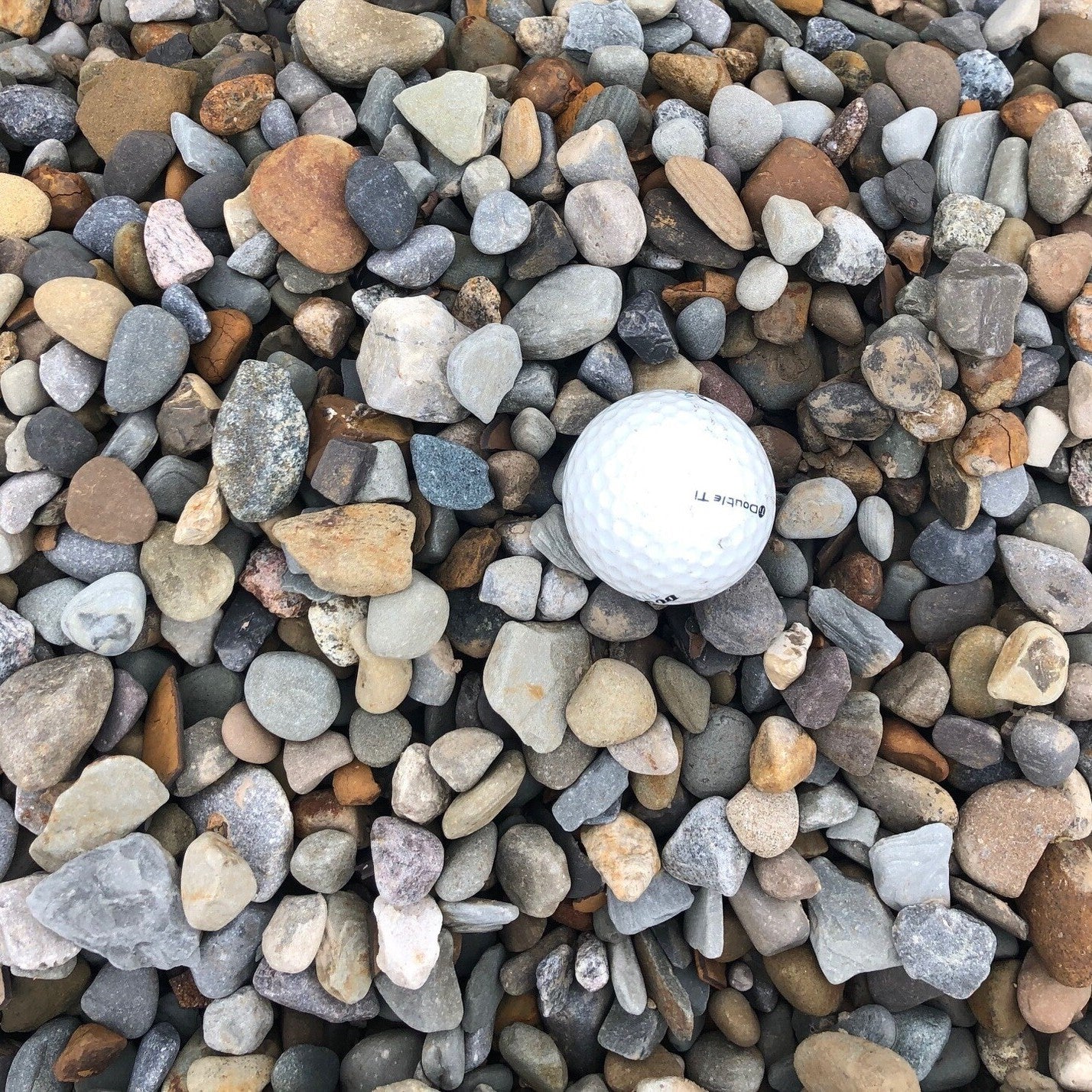
Number 57 crushed stone, angular limestone graded to about three quarters of an inch. The standard driveway, base and drainage gravel, it locks together under traffic and drains fast.
I contacted Mulch Mound for #57 river rocks and it was easy and fast to get a delivery right before the holiday weekend. Stone was delivered as promised and place exactly where I asked. Excellent service! I will be ordering mulch next!
Tell us what you're looking for
Thanks! We received your request.
Something went wrong. Please try again.
How Much Material Do I Need?
Plan for a 2 to 3 inch depth for decorative stone applications in Brownsville, and a 4-inch compacted layer for any base course under pavers or stepping stones where long-term stability matters. The native clay loam soil will not self-compact reliably under stone, so taking the time to firm up your base depth upfront prevents settling and unevenness after the first heavy rain season.
Use our free gravel calculator
What is a yard?
A yard is approximately 27 cubic feet. As a general guideline, one yard of material can cover an area of about 100-160 square feet at a 2-3 inch depth.
We can't take orders for this right now. Tell us what you need and we'll get back to you.
What do you need?
Thanks! We received your request.
Something went wrong. Please try again.
Hand-picked local yards
4,000+ regional deliveries
Dedicated support
Why order through Mulch Mound
The best local stone, without the guesswork.
We hand-pick and partner with the best yards in your region, keep only the ones our buyers rate well, and back each load with our guarantee.
Mulch Mound Guarantee
If your stone isn't the quantity or quality you ordered, we'll make it right.
About this stone
Number 57 crushed stone, angular limestone graded to about three quarters of an inch. The standard driveway, base and drainage gravel, it locks together under traffic and drains fast.
I contacted Mulch Mound for #57 river rocks and it was easy and fast to get a delivery right before the holiday weekend. Stone was delivered as promised and place exactly where I asked. Excellent service! I will be ordering mulch next!
How Much Material Do I Need?
Plan for a 2 to 3 inch depth for decorative stone applications in Brownsville, and a 4-inch compacted layer for any base course under pavers or stepping stones where long-term stability matters. The native clay loam soil will not self-compact reliably under stone, so taking the time to firm up your base depth upfront prevents settling and unevenness after the first heavy rain season.
Use our free gravel calculator
What is a yard?
A yard is approximately 27 cubic feet. As a general guideline, one yard of material can cover an area of about 100-160 square feet at a 2-3 inch depth.
I contacted Mulch Mound for #57 river rocks and it was easy and fast to get a delivery right before the holiday weekend. Stone was delivered as pro...
Read full review
I contacted Mulch Mound for #57 river rocks and it was easy and fast to get a delivery right before the holiday weekend. Stone was delivered as promised and place exactly where I asked. Excellent service! I will be ordering mulch next!
For stone coverage, measure your project area in square feet by multiplying length times width. Multiply by 0.25 for a 3-inch depth layer, which is standard for decorative stone in Brownsville yards, and divide by 27 to convert to cubic yards. Keep in mind that angular crushed stone packs tighter than round river rock, so you may need slightly more round stone by volume to achieve the same effective coverage depth.
Stone Types We Deliver in Brownsville
Mulch Mound delivers bulk stone by the cubic yard straight to homes and properties across Brownsville, making it easy to tackle any landscaping project without hauling a single bag. Whether you are searching for bulk gravel by the yard in Brownsville or need a reliable supply for a larger job, we bring the material directly to your driveway or job site. Our stone is sold loose in cubic yard quantities, so you get exactly the volume your project requires.
Pea Gravel
Smooth, rounded, and comfortable underfoot, pea gravel is a natural fit for the warm climate and sandy soils common in the Brownsville area. Its earth tones complement the stucco and adobe-style homes typical across this region, and its excellent drainage performance keeps pathways and patios looking clean through rainy seasons.
Complete Your Outdoor Stone Project
Adding a layer of mulch in the planting areas adjacent to your stone borders creates a clean visual contrast and helps keep Brownsville's clay loam soil from washing across your stone work during heavy downpours. If the project area has any grade issues before placing stone, our bulk topsoil can be used to level and direct drainage before you lay your fabric and rock.
Before spreading any bulk stone in Brownsville, remove all existing vegetation and apply a pre-emergent herbicide, then allow at least one week before laying fabric and rock. The subtropical climate in zone 10a means weed seeds germinate almost year-round, and grasses like Bermuda and nutsedge will push through gaps in fabric if their root systems are not fully addressed before installation. Skipping this step is the most common reason Brownsville homeowners end up with weeds erupting through an otherwise well-installed stone bed.
Mulch Mound Pro Tip
When using river rock or smooth pea gravel in Brownsville, plan for a solid containment edge to keep the material in place. Smooth stones migrate easily on clay loam when it becomes saturated and slick after rain, and without a steel, concrete, or plastic edging to hold the border, stone will creep onto your lawn and sidewalks over time. Edging also makes maintaining the clean transition between stone and turf far easier in a climate where grass is actively growing for the majority of the year.
Mulch Mound Pro Tip
Brownsville's clay loam soil expands slightly when saturated and contracts during dry periods, and this repeated movement can gradually shift stone borders and pathway stones out of alignment over multiple seasons. Using angular crushed stone rather than smooth river rock for base layers and pathway fill reduces this migration because the angular pieces lock together under load. For decorative top layers where appearance matters most, place angular crushed material as your base course and reserve smooth river rock for the visible top inch only.
The Unique Landscape of Brownsville
Stone is one of the most practical landscape materials for Brownsville's subtropical climate, where heat, humidity, and periodic heavy rainfall make high-maintenance organic ground covers a constant challenge. River rock, decomposed granite, and crushed limestone create ground cover that does not break down, does not require seasonal replacement, and holds up through the heat of a zone 10a summer without fading or shifting. Brownsville's clay loam soil has limited natural permeability, and strategically placed stone over a fabric base can dramatically improve how water moves across your property during the short and intense downpours that the area receives. Stone pathways and borders also eliminate the bare soil zones that turn to mud after rain and dry to a cracked crust during dry stretches, both of which are constant frustrations for Brownsville homeowners. Low-growing stone ground cover in non-turf areas reduces irrigation demand, which matters in a city where summer water bills climb quickly when you are maintaining a large yard. Whether you are building a dry creek bed for drainage, edging a driveway, or covering a side yard where nothing seems to grow, stone delivers long-term value with minimal upkeep in the Brownsville climate.
Frequently Asked Questions
Click a question to see the answer
Answer
What is the best type of stone for a backyard walkway in Brownsville?
Decomposed granite compacted to about 3 inches is a popular and functional choice for Brownsville walkways. It packs firm underfoot, drains well during rain events, and does not retain the intense heat that dark-colored crushed stone can in direct summer sun. Pea gravel is a lower-cost option that drains well but shifts underfoot and can scatter, so it works better in contained bed areas than in high-traffic pathways.
Answer
Will decorative stone get too hot for my dogs or kids to walk on during a Brownsville summer?
Dark stones like black lava rock and dark river pebbles absorb and radiate significant heat under Brownsville's direct summer sun and can reach surface temperatures that are uncomfortable for bare feet or paw pads. Light-colored stones like white river rock, cream limestone, or tan decomposed granite reflect more light and stay noticeably cooler in the same conditions. If the area receives afternoon sun, lighter-colored stone is the better choice for safety and daily comfort.
Answer
Can I use stone to solve the drainage problem along my fence line?
Yes. A dry creek bed or gravel trench filled with clean river rock or crushed stone is one of the most effective drainage solutions for Brownsville's flat landscape. Because the terrain at 33 feet of elevation offers very little natural slope, directing water through a stone-lined channel gives runoff a defined path to move rather than pooling against your fence or foundation. Pair the stone with a fabric liner underneath to prevent clay loam particles from migrating up into the rock over time.
Answer
How much stone do I need to cover a typical side yard area in Brownsville?
Measure your side yard length and width in feet, multiply them together to get square footage, and plan for a 2 to 3 inch depth for most decorative applications. Multiply your square footage by 0.25 for a 3-inch depth, then divide by 27 to get cubic yards. A typical Brownsville side yard running 5 feet wide and 30 feet long needs roughly 1.4 cubic yards of stone at a 3-inch depth.
Answer
Do I really need landscape fabric under stone in Brownsville's clay loam soil?
Yes, fabric is strongly recommended for Brownsville installations. Clay loam fine particles migrate upward into stone layers over time, especially after repeated rain and dry cycles, and within a year or two you will have a muddy and weedy mess mixed into your rock if you skip the fabric. Use a woven geotextile fabric rather than plastic sheeting, which traps water on top of the clay and worsens the drainage problem you are trying to solve.
Answer
Is crushed limestone a good base material under a patio or stepping stones in South Texas?
Crushed limestone base is an excellent choice for Brownsville projects. It compacts well, drains efficiently through its angular particle structure, and is regionally sourced throughout South Texas, which keeps the cost reasonable. A 4-inch compacted base of crushed limestone under stepping stones or a paver patio provides a stable and long-lasting foundation that handles the modest freeze events the area sees between the first frost around December 20 and the last around January 31 without heaving.
Answer
What stone should I use around my foundation to help keep moisture away from the slab?
A 12 to 18 inch wide border of clean crushed gravel or river rock around your foundation creates a dry zone that discourages moisture buildup against your slab. In Brownsville, where clay loam holds moisture and can create expansive pressure against foundations during wet periods, this stone buffer makes a real difference in long-term foundation health. Grade the stone very slightly away from the structure so that rainwater drains toward the yard rather than pooling at the base.
Answer
Is crush and run the same as crusher run?
Crush and run is a Southern term for crusher run, a mix of crushed stone and stone dust that compacts into a firm base for driveways and paver projects. For Brownsville properties dealing with heavy seasonal rainfall, our Crushed Stone #57 is the better choice since it drains freely instead of holding water like a fines based base material.
Answer
Is there a stone yard near Brownsville?
Brownsville's clay loam soil and zone 10a heat call for a durable base like crushed stone, which holds its shape through humid summers and heavy downpours. You can get it delivered by the cubic yard straight to your property, so there's no trip to a stone yard or any quarry. Just order online and tell us where to drop it.