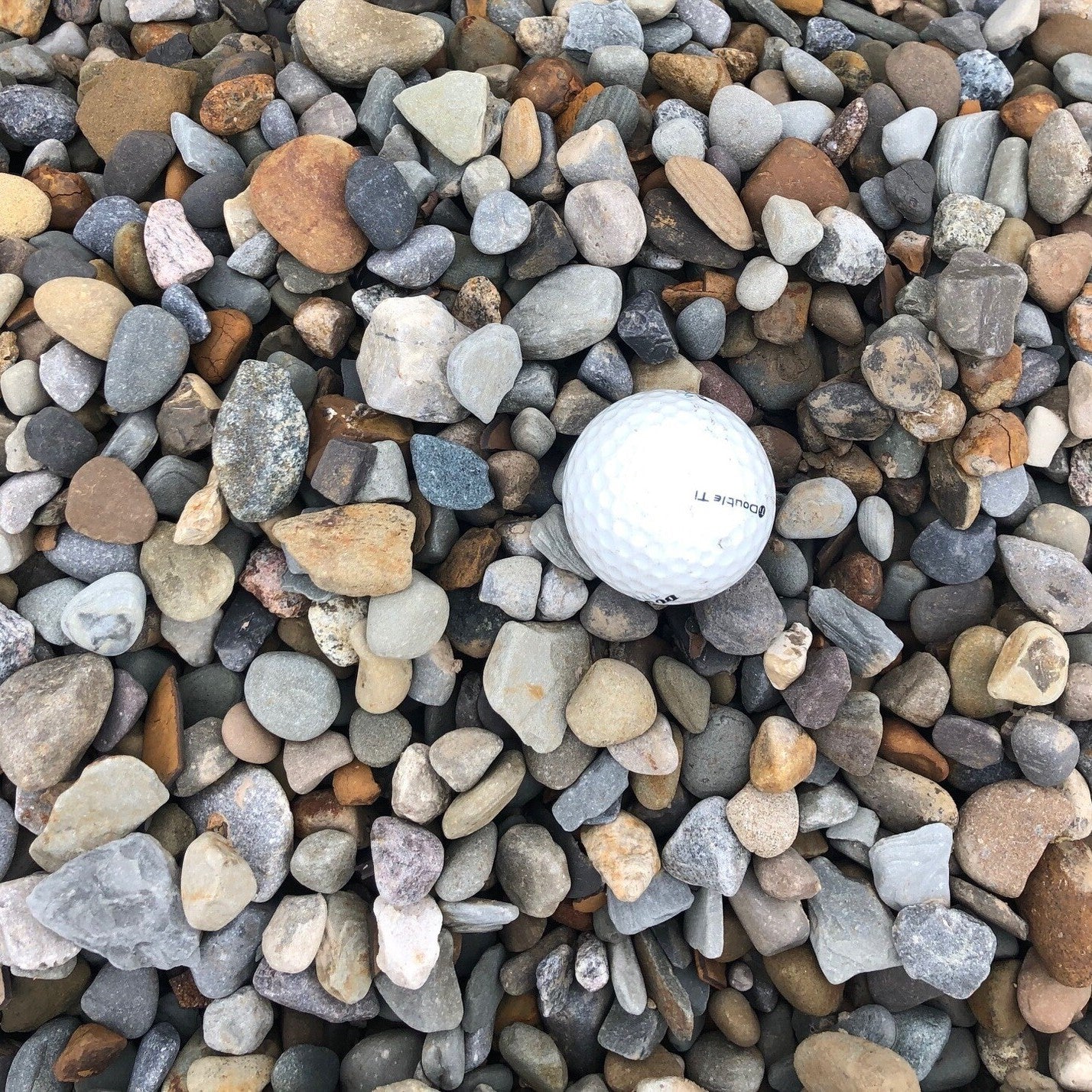
1” West Texas Black Crushed Stone landscape rock, sourced from our local supply yard. Color and gradation may vary slightly by quarry lot. Sold by the yard.
My experience with Mulch Mound was great and super easy. I ordered two yards of screened topsoil and was able to get it delivered within 2 days. They came in my requested time frame (afternoon) and dropped it off where I asked on my driveway. The topsoil was exactly what was a...
Tell us what you're looking for
Thanks! We received your request.
Something went wrong. Please try again.
How Much Material Do I Need?
For most decorative beds and pathway applications in Bryan, a 2 to 3 inch stone layer installed over landscape fabric provides solid coverage and stability on clay loam soil. Drainage applications around downspout outlets or along swales benefit from a slightly deeper 4-inch layer to ensure water can move freely through the stone profile even during Bryan's heaviest rain events when large volumes of water need to move quickly.
Use our free gravel calculator
What is a yard?
A yard is approximately 27 cubic feet. As a general guideline, one yard of material can cover an area of about 100 square feet at 3 inches deep.
We can't take orders for this right now. Tell us what you need and we'll get back to you.
What do you need?
Thanks! We received your request.
Something went wrong. Please try again.
Hand-picked local yards
4,000+ regional deliveries
Dedicated support
Why order through Mulch Mound
The best local stone, without the guesswork.
We hand-pick and partner with the best yards in your region, keep only the ones our buyers rate well, and back each load with our guarantee.
Mulch Mound Guarantee
If your stone isn't the quantity or quality you ordered, we'll make it right.
About this stone
1” West Texas Black Crushed Stone landscape rock, sourced from our local supply yard. Color and gradation may vary slightly by quarry lot. Sold by the yard.
My experience with Mulch Mound was great and super easy. I ordered two yards of screened topsoil and was able to get it delivered within 2 days. They came in my requested time frame (afternoon) and dropped it off where I asked on my driveway. The topsoil was exactly what was a...
How Much Material Do I Need?
For most decorative beds and pathway applications in Bryan, a 2 to 3 inch stone layer installed over landscape fabric provides solid coverage and stability on clay loam soil. Drainage applications around downspout outlets or along swales benefit from a slightly deeper 4-inch layer to ensure water can move freely through the stone profile even during Bryan's heaviest rain events when large volumes of water need to move quickly.
Use our free gravel calculator
What is a yard?
A yard is approximately 27 cubic feet. As a general guideline, one yard of material can cover an area of about 100 square feet at 3 inches deep.
My experience with Mulch Mound was great and super easy. I ordered two yards of screened topsoil and was able to get it delivered within 2 days. Th...
Read full review
My experience with Mulch Mound was great and super easy. I ordered two yards of screened topsoil and was able to get it delivered within 2 days. They came in my requested time frame (afternoon) and dropped it off where I asked on my driveway. The topsoil was exactly what was advertised, clean with no rocks or other debris. The price was reasonable. I plan to use them again in a couple weeks to order compost for my garden beds.
For stone projects in Bryan, measure the length and width of your coverage area in feet and decide on a depth based on the application. Use 2 to 3 inches for decorative beds and pathways, and 4 inches for drainage swales where water movement is the main goal. Multiply length by width by depth in feet, then divide by 27 to convert to cubic yards for ordering. Bryan's clay loam shifts through wet and dry weather cycles throughout the year, so adding 10 percent to your calculated order provides a useful buffer for the settling you will see after the first several rain events.
Stone Types We Deliver in Bryan
Mulch Mound makes it easy to order bulk gravel by the yard in Bryan, delivering straight to your driveway or job site without the hassle of hauling it yourself. Bryan's clay-heavy soils and warm climate make proper drainage and ground cover a priority for homeowners and contractors alike. Whether you are finishing a backyard patio or stabilizing a side yard, we bring the right stone in the quantity you need.
Pea Gravel
Smooth, rounded, and naturally earth-toned, pea gravel is a go-to choice across Bryan for pathways, patios, and flower bed borders. Its small size lets water drain freely, which matters in yards sitting on tight clay soils. The soft look pairs well with the relaxed, shaded outdoor spaces common to this part of Central Texas.
Complete Your Outdoor Stone Project
Adding crushed stone or gravel edging around mulched beds is one of the most effective ways to keep mulch from washing out during Bryan's heavy spring rainstorms while giving the overall landscape a clean and defined appearance. Pairing stone pathways and borders with quality topsoil in adjacent planting beds creates a Bryan yard that handles both the wet season and the long dry summer spells without constant attention or frequent material replacement.
Before installing stone anywhere in a Bryan yard, invest in a quality permeable landscape fabric rated for heavy landscape use rather than the lightest and cheapest option available. Bryan's clay loam is sticky and dense, and without a proper fabric barrier, stone will work its way into the clay within two or three seasons of wet and dry cycles, especially under foot traffic. A heavier woven fabric holds the stone layer cleanly separated from the soil below, makes future refresh or removal straightforward, and extends the life of your stone installation significantly in Bryan's demanding climate.
Mulch Mound Pro Tip
If you are installing stone in a drainage swale or low area of your Bryan yard, confirm that the outlet end of the swale has a clear and unobstructed path for water to exit the property or reach a designated collection point before you start placing material. Stone dramatically improves the rate at which water moves through your clay loam during a storm, but if the water has no defined exit point it will simply back up and pool at the downhill end of the swale. Tracing the natural drainage path of your yard before installation ensures the system functions as intended during Bryan's heavier rain events rather than just relocating the problem.
Mulch Mound Pro Tip
Lighter-colored stones like white marble chips, light tan crushed granite, or pale river gravel reflect sunlight and stay noticeably cooler during Bryan's intense summer afternoons compared to dark stones that absorb and radiate heat. In south-facing and west-facing beds where paving and walls are already contributing reflected heat, choosing a lighter stone color can meaningfully reduce the ambient temperature around nearby plants and root zones. This detail becomes especially important in zone 9a where the margin between a plant thriving and heat-stressing can be just a few degrees during the peak of a Bryan summer.
The Unique Landscape of Bryan
Crushed stone and decorative gravel are among the most practical landscaping materials available to Bryan homeowners dealing with clay loam soil that drains slowly and a rainfall pattern that delivers 40 inches per year in heavy, irregular bursts. Stone surfaces allow water to pass through and disperse rather than sheet across the yard and pool against foundations or collect in low spots where it damages turf and creates persistent muddy areas. In Bryan's intense summer heat, stone also outperforms organic ground covers in areas where plant life struggles, providing a clean and durable surface that requires no irrigation, no seasonal replanting, and no decomposition management. Stone pathways, drainage channels, and decorative borders remain fully functional and attractive from early spring through the first frost around November 27, covering nearly the entire calendar year in a city where winters are mild and brief. For foundation borders, utility strips, high-traffic paths, and dry creek beds, stone is one of the few materials that handles Bryan's combination of punishing heat, periodic heavy rain, and expansive clay soil without frequent replacement or labor-intensive upkeep.
Frequently Asked Questions
Click a question to see the answer
Answer
What type of stone is best for improving drainage in a Bryan yard with slow clay soil?
For drainage applications in Bryan's clay loam yards, a clean crushed limestone or washed river gravel in the quarter-inch to 1.5-inch size range is the most effective choice. The gaps between angular or rounded stone pieces allow water to percolate down and move laterally even when the clay soil beneath is saturated and slow to absorb more. Using stone in drainage swales, around downspout outlets, and in low spots that consistently collect water keeps moisture moving during Bryan's heaviest spring storms instead of pooling long enough to damage foundations or kill turfgrass roots.
Answer
Will gravel work as a ground cover in the hottest and sunniest parts of my Bryan yard?
Stone is one of the best ground cover options for Bryan's full-sun areas, especially south-facing beds, strip areas along driveways, or utility zones where reflected heat from pavement kills most plant material and burns through organic mulches quickly. Crushed granite and river rock do not dry out, do not require water, and do not break down in the heat the way wood mulch does through a Bryan summer. One important consideration is that dark stone absorbs heat and radiates it back into the surrounding area, so lighter-colored gravel tends to be a smarter choice near heat-sensitive plants at the edges of a stone bed in Bryan's zone 9a climate.
Answer
How do I keep decorative stone from slowly sinking into my Bryan clay loam over time?
Clay loam in Bryan can gradually swallow smaller stone over multiple seasons, particularly in areas with foot traffic or where the soil stays wet frequently after rain. The most reliable prevention is to install a permeable landscape fabric barrier between the soil and the stone before placing any material. This keeps the stone layer physically separated from the clay without preventing water from draining through, maintaining the drainage benefit while stopping the mixing. For heavier-use areas like pathways, adding a compacted base layer of coarser crushed stone beneath the decorative surface layer provides added stability and slows settling significantly.
Answer
Is gravel a good choice for the area right around my foundation given how much Bryan clay moves with wet and dry cycles?
Gravel is actually one of the better foundation border choices for Bryan homes precisely because of the clay soil's expansion and contraction cycle. Bryan's clay loam swells when wet and shrinks when dry, and that repeated movement is a known contributor to foundation stress over time. Keeping the soil immediately around your foundation at a more consistent moisture level reduces the severity of that cycle. A gravel border around the foundation allows excess rain to drain away quickly after a storm while also slowing surface evaporation during dry summer stretches, producing a more stable moisture environment for the soil adjacent to your slab.
Answer
How much crushed stone do I need for a backyard gravel path?
For a gravel pathway in Bryan, plan for a 2 to 3 inch depth of surface stone installed over a landscape fabric base. Measure the path length and width in feet, multiply to get square footage, then divide by 100 to get a rough cubic yard estimate for a 3-inch layer. A typical 3-foot-wide path running 20 feet would need approximately 0.6 cubic yards of stone. Ordering 10 to 15 percent more than your calculated estimate is a smart buffer in Bryan, because the wet and dry weather cycles will cause natural settling in the first season that will reduce your surface depth noticeably.
Answer
What is the best way to use stone to stop erosion on a sloped section of my Bryan yard?
Sloped areas in Bryan yards are particularly vulnerable to erosion during the intense spring storms that can drop large amounts of rain in a short window. Laying a 3 to 4 inch layer of angular crushed stone or river rock over a properly staked erosion fabric is one of the most durable immediate solutions available. Angular stone locks together and resists displacement under flowing water much better than smooth rounded gravel. For steeper slopes, pairing stone with native ground cover plants whose roots anchor the soil below gives you both immediate surface protection from rain impact and a long-term biological anchor that strengthens as the plants establish.
Answer
Can I use decorative gravel around my trees instead of mulch in Bryan?
Stone can be used around trees in Bryan yards but with meaningful limitations that are worth understanding. Unlike hardwood mulch, stone does not decompose and contribute organic matter to the soil, which trees growing in Bryan's clay loam genuinely benefit from over multiple seasons. Stone also absorbs and holds heat, which can stress the shallow feeder roots near the soil surface during Bryan's summer. If you do use stone around trees, keep it pulled back several inches from the trunk, limit the layer to 2 inches to avoid overheating the root zone, and consider maintaining an inner ring of organic mulch immediately around the trunk where the soil benefit matters most.
Answer
Is crush and run the same as crusher run?
Southern homeowners often call crusher run "crush and run," a mix of crushed stone and stone dust that compacts into a firm, stable base. For driveways and paver projects in Bryan, our Road Base 0.75 inch works as a crush and run equivalent, packing tight to handle clay soil and heavy rain better than washed stone alone.
Answer
Is there a stone yard near Bryan?
Ask for Road Base at the counter of a stone yard and you would get a load hauled out of a quarry, but you can skip the trip. Mulch Mound delivers Road Base by the cubic yard to your Bryan driveway or yard. It compacts firm and lets water drain through, which helps on slow draining clay loam.