




Online ordering was really simple and I liked the transparent pricing.
About this landscape rock
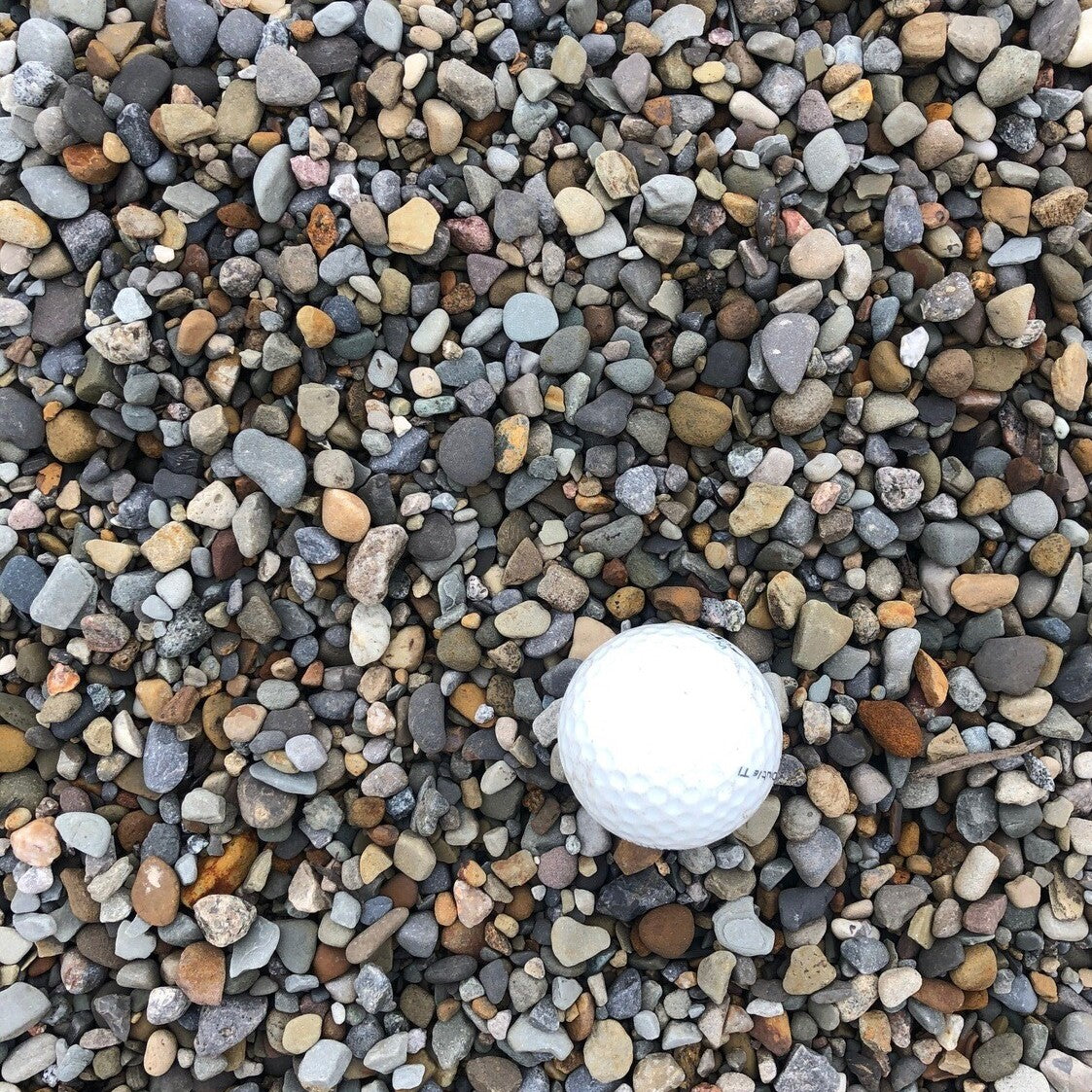
Weathered granite in a fines and chip blend that compacts into a firm natural path surface.
Online ordering was really simple and I liked the transparent pricing.
Tell us what you're looking for
Thanks! We received your request.
Something went wrong. Please try again.
How Much Landscape Rock Do I Need?
How Much Landscape Rock Do I Need?
At the standard 2 to 3 inch install depth, one cubic yard of rock covers roughly 162 square feet at the low end. Measure your bed square footage first, then decide between 2 inches for a lighter refresh or 3 inches for better weed suppression and longer-term coverage, and order in full cubic yards since this is a one time install you want to get right.
Use our free stone calculator
What is a Yard?
What is a Yard?
FAQs
FAQs
Burlington Landscape Rock Delivery
Burlington Landscape Rock Delivery
Regular price
$101.00
per
Yard
Regular price
Sale price
$101.00
Unit price
per
Shipping calculated at checkout.
Minimum of 3 Yard
Couldn't load pickup availability
Not currently available
We can't take orders for this right now. Tell us what you need and we'll get back to you.
Hand-picked local yards
4,000+ regional deliveries
Dedicated support
Why order through Mulch Mound
The best local landscape rock, without the guesswork.
We hand-pick and partner with the best yards in your region, keep only the ones our buyers rate well, and back each load with our guarantee.
Mulch Mound Guarantee
If your landscape rock isn't the quantity or quality you ordered, we'll make it right.
About this landscape rock
Weathered granite in a fines and chip blend that compacts into a firm natural path surface.
Online ordering was really simple and I liked the transparent pricing.
How Much Landscape Rock Do I Need?
How Much Landscape Rock Do I Need?
At the standard 2 to 3 inch install depth, one cubic yard of rock covers roughly 162 square feet at the low end. Measure your bed square footage first, then decide between 2 inches for a lighter refresh or 3 inches for better weed suppression and longer-term coverage, and order in full cubic yards since this is a one time install you want to get right.
Use our free stone calculator
What is a Yard?
What is a Yard?
FAQs
FAQs
Tell us what you're looking for
Thanks! We received your request.
Something went wrong. Please try again.
How It Works
Getting started is easy — just follow these simple steps
1
Choose your quantity
Adjust the quantity to match your project. One cubic yard covers about 100 to 160 square feet at a 2 to 3 inch depth.
2
Select your delivery date
Select a delivery date you'd like for the product to be dropped off at your home
3
Sit back and wait
Sit back, wait, and let us work our magic to make sure the highest quality product is delivered to your driveway.

Easy to order, great service, and great product. We enjoy the final look of a very neglected beds we inherited!

I contacted Mulch Mound for #57 river rocks and it was easy and fast to get a delivery right before the holiday weekend. Stone was delivered as pro...
Read full review
I contacted Mulch Mound for #57 river rocks and it was easy and fast to get a delivery right before the holiday weekend. Stone was delivered as promised and place exactly where I asked. Excellent service! I will be ordering mulch next!
Complete Your Outdoor Project
Landscape fabric underneath is what makes this a decade-long install instead of a weed patch by year two, especially with Vermont's freeze thaw cycles working the ground each winter. Edging helps keep rock out of the lawn and off the sidewalk near Church Street area properties where curb appeal matters. Some customers pair rock beds with mulch in the planting areas that still need organic matter, using rock only where drainage and permanence are the priority.



Service area
Areas we deliver landscape rock in Burlington, Vermont
Mulch Mound Pro Tip
In Burlington's clay loam, skip laying rock directly on bare soil. Fabric underneath keeps the stone from sinking into the clay over a few freeze thaw cycles, which is a real problem here given how many hard freezes hit between October and May. Without it, you will be raking rock out of mud within two or three winters instead of getting the decade of low-maintenance coverage this material is supposed to deliver.
Mulch Mound Pro Tip
Rock traps fallen leaves instead of letting them break down into the bed, which matters in a city with as much street tree canopy as Burlington has. Plan on blowing or raking leaves out of rock beds each fall before the first frost, otherwise you get a wet mat sitting on top of the stone all winter that looks bad and holds moisture against foundations.
Mulch Mound Pro Tip
If you are doing foundation beds and planting beds in the same yard, it is worth ordering rock and mulch as separate deliveries rather than trying to make one material do both jobs. Rock against the foundation handles drainage and permanence, mulch in planting beds feeds the clay loam soil that Burlington gardens generally need help with. Splitting the order this way saves you from re-doing a bed that was never suited to rock in the first place.
Decorative Stone in Burlington
Burlington's clay loam holds water through the wet spring melt, and a lot of homeowners near downtown and up toward the hill neighborhoods use rock to keep beds from turning to soup before the last frost clears in mid May. Rock does not compact into the clay the way bark mulch does, and it will not wash downhill the way loose material can on Burlington's slopes toward the lake. It is a common choice around foundations and downspouts here where drainage matters more than curb appeal alone. Just know it will not do anything for the clay's fertility, so keep it away from beds where you want to build better soil over time.
What Landscape Rock Is
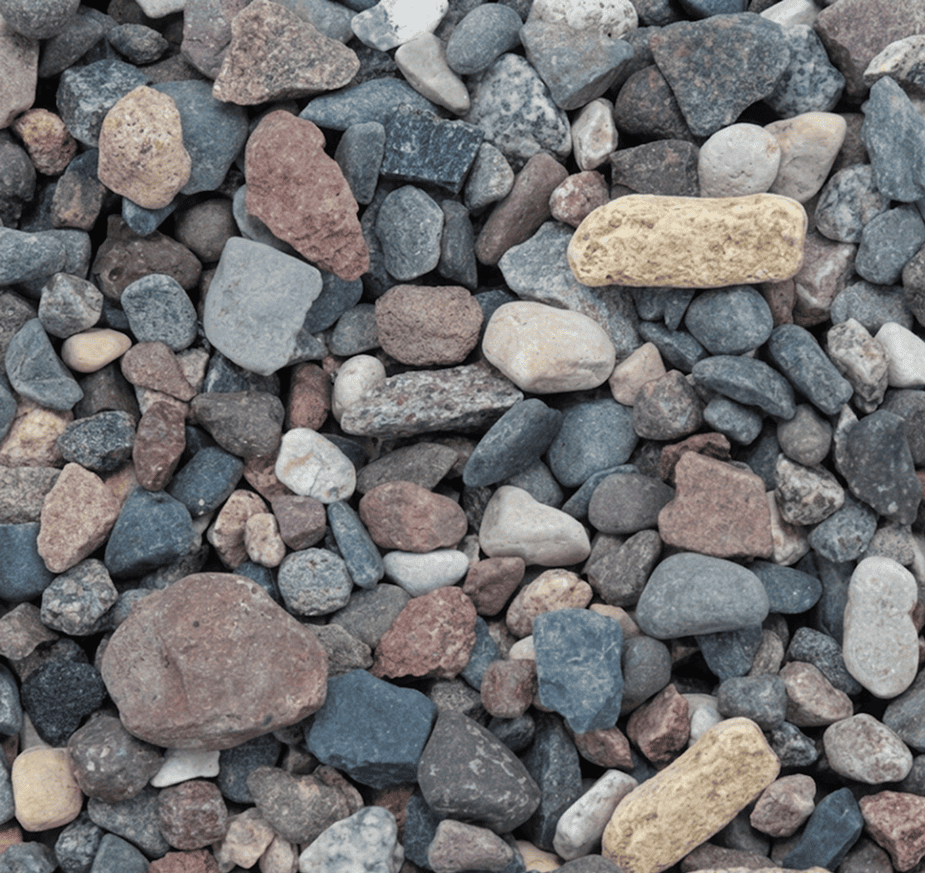
Landscape rock is stone chosen for how it looks as much as what it does. River rock is smooth and rounded, decomposed granite is fine and packs firm underfoot. Both are sold by the cubic yard for beds, borders, paths, and dry creek beds.
River Rock vs Decomposed Granite
River rock stays loose and rolls, so it suits beds, borders, and drainage runs where it can sit in place. Decomposed granite compacts into a firm surface, so it suits paths, patios, and anywhere you will walk or roll a wheelbarrow.
Depth and Coverage
Spread river rock 2 to 3 inches deep over landscape fabric so it stays put and weeds stay down. Lay decomposed granite 3 to 4 inches deep, wet it, and compact it in lifts for a surface that sheds water instead of rutting.