


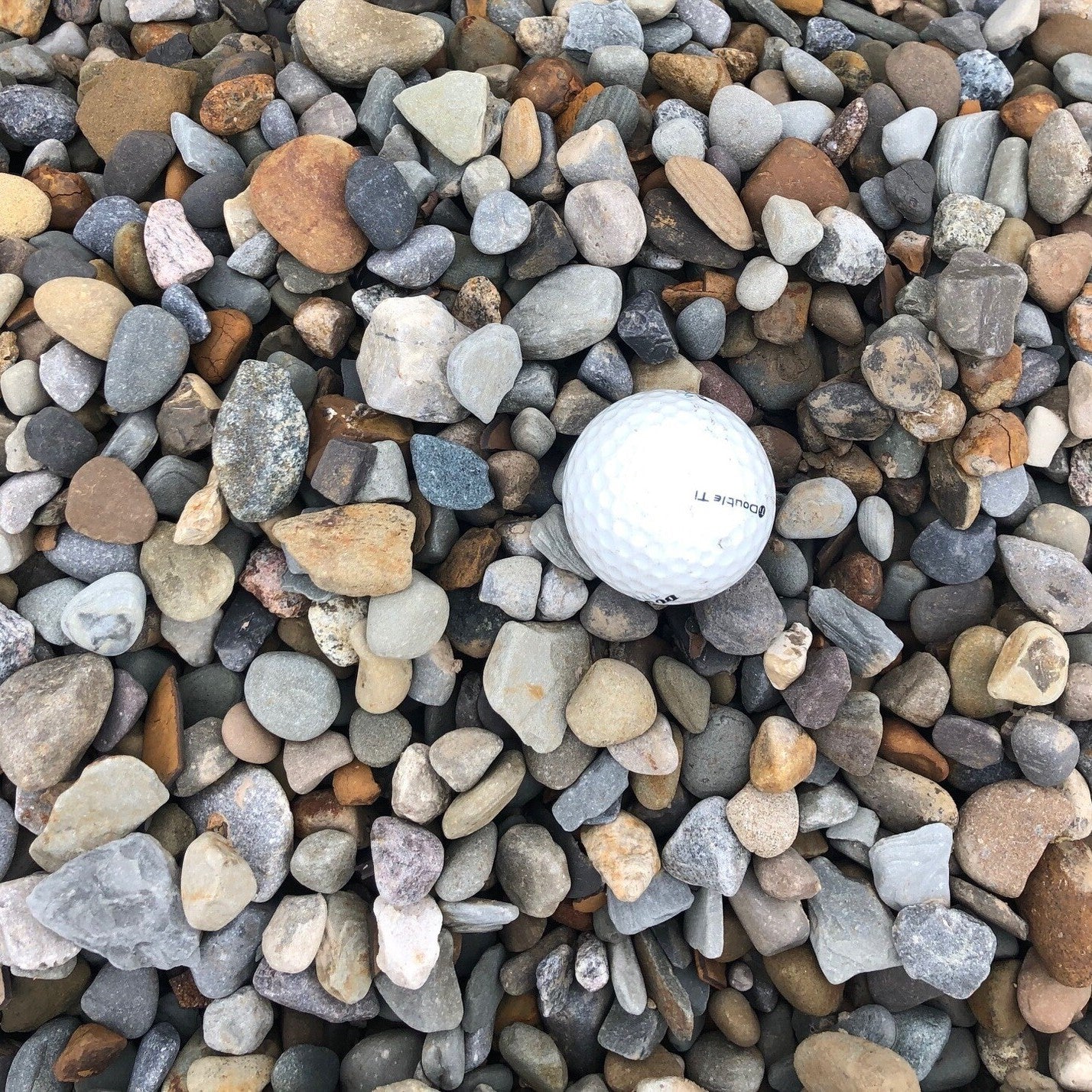

The driver nailed it on putting the gravel I ordered in front of my trailer and between the sidewalk. Very satisfied with how my flowerbeds look now.
About this stone
Granite Chip Rock landscape rock, sourced from our local supply yard. Color and gradation may vary slightly by quarry lot. Sold by the ton.
The driver nailed it on putting the gravel I ordered in front of my trailer and between the sidewalk. Very satisfied with how my flowerbeds look now.
Tell us what you're looking for
Thanks! We received your request.
Something went wrong. Please try again.
How Much Material Do I Need?
How Much Material Do I Need?
Plan on 2 to 3 inches for decorative ground cover, 3 to 4 inches for high traffic paths and downspout aprons, and 4 to 6 inches of compacted base beneath pavers. One ton of river rock covers roughly 90 to 110 square feet at 3 inches deep.
Use our free gravel calculator
What is a ton?
What is a ton?
What is a Yard?
What is a Yard?
FAQs
FAQs
Centennial Gravel Delivery
Centennial Gravel Delivery
Regular price
$111.00
per
ton
Regular price
Sale price
$111.00
Unit price
per
Shipping calculated at checkout.
Minimum of 2 ton
Couldn't load pickup availability
Not currently available
We can't take orders for this right now. Tell us what you need and we'll get back to you.
Hand-picked local yards
4,000+ regional deliveries
Dedicated support
Why order through Mulch Mound
The best local , without the guesswork.
We hand-pick and partner with the best yards in your region, keep only the ones our buyers rate well, and back each load with our guarantee.
Mulch Mound Guarantee
If your isn't the quantity or quality you ordered, we'll make it right.
About this stone
Granite Chip Rock landscape rock, sourced from our local supply yard. Color and gradation may vary slightly by quarry lot. Sold by the ton.
The driver nailed it on putting the gravel I ordered in front of my trailer and between the sidewalk. Very satisfied with how my flowerbeds look now.
How Much Material Do I Need?
How Much Material Do I Need?
Plan on 2 to 3 inches for decorative ground cover, 3 to 4 inches for high traffic paths and downspout aprons, and 4 to 6 inches of compacted base beneath pavers. One ton of river rock covers roughly 90 to 110 square feet at 3 inches deep.
Use our free gravel calculator
What is a ton?
What is a ton?
What is a Yard?
What is a Yard?
FAQs
FAQs
Tell us what you're looking for
Thanks! We received your request.
Something went wrong. Please try again.

How It Works
Getting started is easy — just follow these simple steps
1
Choose your stone
Make sure you adjust the quantity to your home's needs. You can use our calculator to estimate how much you'll need.
2
Select your delivery date
Select a delivery date you'd like for the product to be dropped off at your home
3
Sit back and wait
Sit back, wait, and let us work our magic to make sure the highest quality product is delivered to your driveway.

Placing an order online was so easy. Delivery was on time. When the driver realized we had a newly poured driveway they erred on the side of cautio...
Read full review
Placing an order online was so easy. Delivery was on time. When the driver realized we had a newly poured driveway they erred on the side of caution and opted not ti drive in it. The company even sent me a message explaining that call. Would recommend!

Online ordering was really simple and I liked the transparent pricing.
Need Help Calculating How Much Gravel You Need?
Use our NEW Trace from Satellite tool to get an estimate for your project based on an aerial view of your property
Try Our CalculatorMeasure the area in square feet, multiply by depth in inches, then divide by 324 for cubic yards. Rock is sold by weight, so multiply cubic yards by roughly 1.4 tons for river rock and cobble. Sketch out irregular Centennial beds and dry creek beds in sections, and add 10 percent for depth variation over uneven clay.
Complete Your Outdoor Stone Project
Add commercial grade weed fabric, steel edging to keep rock off the lawn, and a few yards of squeegee if you are setting flagstone. Boulders and a load of garden mix for xeric plant pockets finish the look nicely.

Mulch Mound Pro Tip
Excavate before you order. Centennial homeowners routinely dump rock on top of existing grade, then spend the next two years sweeping stone off the sidewalk. Dig out 3 to 4 inches so the finished surface sits just below your concrete edges and edging. It costs a Saturday of work but it is the single thing that separates a rock bed that still looks sharp in year five from one that has migrated across the driveway.
Mulch Mound Pro Tip
Match rock size to slope. On the sloped side yards common in Centennial's hillier neighborhoods, three quarter inch rock will creep downhill with every snowmelt and hard rain. Use 2 inch cobble or larger above a 5 percent grade, and anchor the toe of the slope with a row of larger stones or a small boulder. Angular granite also locks together better than smooth river rock on any incline.
Mulch Mound Pro Tip
Leave breathing room for plants. Rock mulch does not feed the soil, so any shrubs or xeric perennials in the bed need a generous pocket of amended soil beneath and a slightly thinner rock layer over their root zones. Keep stone a few inches back from trunks and crowns. Combining a rock field with well prepared planting pockets is how Centennial xeriscapes stay low water without looking like a bare gravel lot.
The Unique Landscape of Centennial
Decorative rock is a Centennial staple because it holds up to everything our climate throws at it, from 40 mph April gusts to intense UV at 5,837 feet to the freeze thaw cycles that run from October through May. With only about 17 inches of precipitation a year, many homeowners here are converting thirsty bluegrass and high maintenance beds into rock and xeric plantings that need almost no supplemental water. Stone also solves real drainage headaches on our clay lots, where roof runoff and snowmelt have nowhere to soak in and instead carve channels through mulch beds. Cobble lined swales, dry creek beds, and rock aprons under downspouts move water away from foundations without washing out every spring. Unlike organic material, rock never needs a yearly refresh, which is a meaningful savings on the large open lots common in Centennial. Choose the right size and color and it can look at home next to both the mature landscapes near Cherry Knolls and the newer builds off Smoky Hill Road.