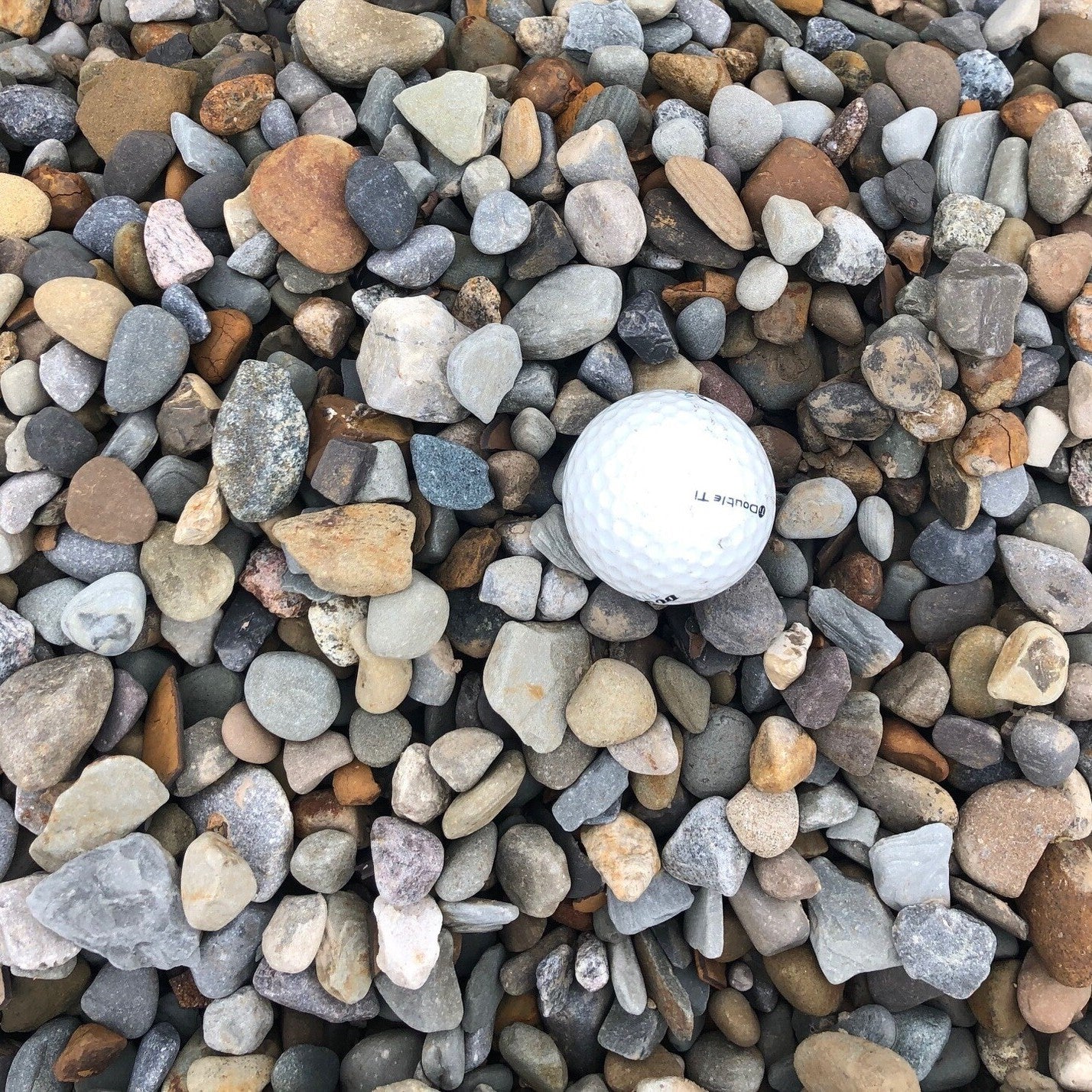
1” West Texas Black Crushed Stone landscape rock, sourced from our local supply yard. Color and gradation may vary slightly by quarry lot. Sold by the yard.
My experience with Mulch Mound was great and super easy. I ordered two yards of screened topsoil and was able to get it delivered within 2 days. They came in my requested time frame (afternoon) and dropped it off where I asked on my driveway. The topsoil was exactly what was a...
Tell us what you're looking for
Thanks! We received your request.
Something went wrong. Please try again.
How Much Material Do I Need?
For decorative ground cover and pathway applications in College Station, a depth of 2 to 3 inches is standard and provides good coverage while staying in place through our heavy spring rains. Drainage-specific applications such as French drains or dry creek beds designed to handle College Station's clay-driven runoff typically call for 4 to 6 inches of clean gravel.
Use our free gravel calculator
What is a yard?
A yard is approximately 27 cubic feet. As a general guideline, one yard of material can cover an area of about 100 square feet at 3 inches deep.
We can't take orders for this right now. Tell us what you need and we'll get back to you.
What do you need?
Thanks! We received your request.
Something went wrong. Please try again.
Hand-picked local yards
4,000+ regional deliveries
Dedicated support
Why order through Mulch Mound
The best local stone, without the guesswork.
We hand-pick and partner with the best yards in your region, keep only the ones our buyers rate well, and back each load with our guarantee.
Mulch Mound Guarantee
If your stone isn't the quantity or quality you ordered, we'll make it right.
About this stone
1” West Texas Black Crushed Stone landscape rock, sourced from our local supply yard. Color and gradation may vary slightly by quarry lot. Sold by the yard.
My experience with Mulch Mound was great and super easy. I ordered two yards of screened topsoil and was able to get it delivered within 2 days. They came in my requested time frame (afternoon) and dropped it off where I asked on my driveway. The topsoil was exactly what was a...
How Much Material Do I Need?
For decorative ground cover and pathway applications in College Station, a depth of 2 to 3 inches is standard and provides good coverage while staying in place through our heavy spring rains. Drainage-specific applications such as French drains or dry creek beds designed to handle College Station's clay-driven runoff typically call for 4 to 6 inches of clean gravel.
Use our free gravel calculator
What is a yard?
A yard is approximately 27 cubic feet. As a general guideline, one yard of material can cover an area of about 100 square feet at 3 inches deep.
My experience with Mulch Mound was great and super easy. I ordered two yards of screened topsoil and was able to get it delivered within 2 days. Th...
Read full review
My experience with Mulch Mound was great and super easy. I ordered two yards of screened topsoil and was able to get it delivered within 2 days. They came in my requested time frame (afternoon) and dropped it off where I asked on my driveway. The topsoil was exactly what was advertised, clean with no rocks or other debris. The price was reasonable. I plan to use them again in a couple weeks to order compost for my garden beds.
To estimate stone coverage, measure the length and width of your project area in feet and multiply to get square footage. Stone coverage varies by depth, so for a 2 inch application divide your square footage by 162 to get cubic yards, and for a 3 inch application divide by 108. In College Station, drainage applications around clay soil areas often benefit from a slightly deeper layer to account for any settling that occurs over our wet spring season.
Stone Types We Deliver in College Station
Whether you are refreshing a backyard patio or adding drainage around a new build, bulk stone delivery by the cubic yard in College Station puts the right material right where you need it. Our drivers navigate local streets and deliver directly to your property, saving you multiple hardware store trips. If you have been searching for bulk gravel by the yard in College Station, we make the process simple from order to drop-off.
Pea Gravel
Smooth and rounded, pea gravel is a natural fit for the yards and garden beds common across this part of Central Texas. It drains well through the heavy clay soils found in the Brazos Valley, resists shifting underfoot on pathways, and adds warm earth tones that complement the brick and neutral exteriors typical of homes in this region.
Complete Your Outdoor Stone Project
Pair your stone order with a layer of hardwood mulch around plants within stone-bordered beds to keep root zones cooler during College Station's intense summer heat, or add quality fill soil for any grading work needed alongside your drainage stone to create a complete solution for yards that struggle with standing water after spring storms.
Before laying stone in any College Station bed or pathway, install a quality woven landscape fabric beneath it. Our clay soil tends to heave and shift during wet seasons, which can push stone downward into the soil over time without a barrier layer. Fabric keeps stone clean, prevents it from sinking into the clay, and dramatically reduces the weed growth that can otherwise push up through gravel beds throughout the warm season.
Mulch Mound Pro Tip
If you are using stone for a dry creek bed to manage College Station's storm runoff, follow your yard's natural drainage path as closely as possible. Forcing water to change direction abruptly on clay soil causes it to back up and overflow the channel during heavy spring storms. A gently curving creek bed that mimics the water's natural movement handles far more volume than a sharp-angled design and looks far more natural in the landscape.
Mulch Mound Pro Tip
College Station's 41 inches of annual rainfall means any stone pathway or ground cover installation should account for where water will go when it runs off the stone surface. Slope your pathway or bed ever so slightly toward a lawn or planted area rather than toward a foundation or fence line. Even a gentle grade of 1 to 2 percent directs runoff effectively and protects adjacent structures from the water that our heavy spring storms regularly deliver.
The Unique Landscape of College Station
In College Station, decorative and functional stone is one of the most practical landscaping investments a homeowner can make given the region's heavy clay soil and frequent heavy rains. Clay soil's poor drainage means water collects quickly in low areas, along pathways, and around foundations, and properly placed stone helps manage runoff while keeping those areas usable and attractive. Stone is also a low-maintenance solution in a city where warm season turf grows aggressively and can quickly invade and overgrow beds without a defined border. With summer temperatures routinely climbing into the upper 90s, stone beds and pathways eliminate the need for constant watering and weeding in high-traffic areas. The virtually zero decomposition rate of stone makes it a long-term solution that does not require the seasonal replenishment that mulch demands in College Station's humid climate. Whether used as pathway material, drainage fill, or decorative ground cover, stone works with College Station's conditions rather than against them.
Frequently Asked Questions
Click a question to see the answer
Answer
What type of stone works best for drainage problems caused by College Station's clay soil?
For drainage applications in College Station, pea gravel and crushed limestone are the most commonly used options. Because our clay soil drains so slowly, French drains and dry creek beds filled with clean gravel help redirect surface water away from problem areas. A 1.5 to 2 inch washed gravel works well inside drainage trenches, while pea gravel can be used to surface low-lying areas that tend to stay wet and muddy after our spring storms.
Answer
Will stone help reduce erosion on a sloped area of my College Station yard?
Yes, stone is one of the most effective erosion control materials for sloped areas in College Station. Our clay soil loses its cohesion quickly under heavy rainfall, and bare slopes can shed significant topsoil during spring storms. Layering river rock or larger landscape stones over erosion cloth on slopes gives water somewhere to flow without carrying soil with it, protecting the grade you have worked to establish.
Answer
Is stone a good choice for creating a low-maintenance area during College Station's brutal summers?
Stone is an excellent low-maintenance ground cover for College Station's hot summers. Unlike mulch, stone does not decompose, fade significantly, or need seasonal replacement. It also does not require irrigation, making it ideal for areas where running a sprinkler line is impractical. The one tradeoff is that stone absorbs and radiates heat, so avoid placing it immediately around heat-sensitive plants that already struggle in our Zone 9a conditions.
Answer
How deep should I lay gravel for a backyard pathway in College Station?
For a functional pathway in College Station, a depth of 3 to 4 inches of compacted gravel over a landscape fabric base is generally sufficient. Our clay soil does not shift as dramatically as sandy soils, but it can heave slightly during wet winters when the ground absorbs excess moisture from our seasonal rains. A deeper gravel base of 4 to 6 inches is recommended for driveways or any areas that will receive regular vehicle traffic.
Answer
Can I use stone around my foundation to help with drainage in College Station?
Foundation borders of decorative stone are a popular and practical choice in College Station where clay soil's shrink-swell behavior puts stress on home foundations over time. A 12 to 18 inch band of clean gravel or river rock along the foundation perimeter helps direct water away from the structure and prevents the soil directly against the foundation from holding excessive moisture after heavy rains. Pairing this approach with proper grading gives you the best overall results.
Answer
Does stone get too hot in College Station summers to use near my plants?
Dark-colored stone can get extremely hot during College Station's peak summer months and should be kept away from plants that are already stressed by heat. Lighter colored options like white marble chips or tan pea gravel reflect more sunlight and stay cooler, making them more appropriate for use near plant borders. Placing stone a few inches away from plant stems and mulching directly around plants helps moderate temperature exposure in our hottest months.
Answer
What is the difference between pea gravel and river rock for landscaping in College Station?
Pea gravel consists of small, smooth, rounded stones typically ranging from 1/4 to 3/8 of an inch, making it ideal for pathways, playsets, and drainage applications in College Station. River rock is larger, usually 1 to 3 inches or more, and is used primarily for decorative borders, dry creek beds, and erosion control on slopes. For most College Station drainage projects pea gravel is the workhorse material, while river rock adds visual interest in feature areas of the landscape.
Answer
Is crush and run the same as crusher run?
Same product, different name. Crush and run refers to crushed stone blended with stone dust that compacts into a solid base, which matters in College Station where heavy clay soil drains poorly. We deliver our Road Base 0.75 inch as that crush and run equivalent for driveways and paver bases.
Answer
Is there a stone yard near College Station?
Ask for Road Base at a stone yard or quarry counter and you would load it yourself, but it can be delivered to your driveway in College Station instead. Heavy clay soil holds water and turns soft after big rains, and a compacted Road Base layer gives drives and paths a firm, draining surface. Order online by the cubic yard and skip the trip.