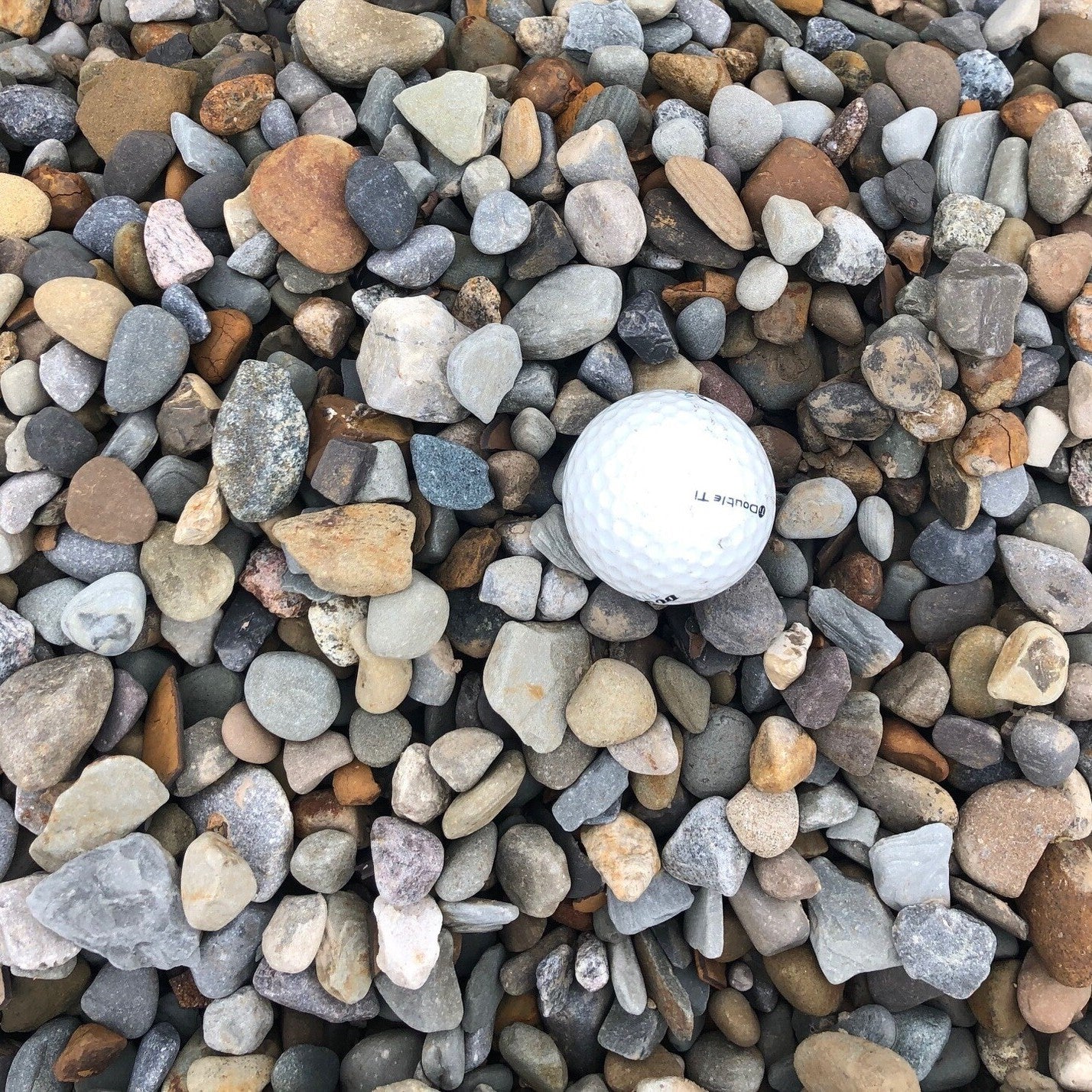
Number 57 crushed stone, angular limestone graded to about three quarters of an inch. The standard driveway, base and drainage gravel, it locks together under traffic and drains fast.
Mulch Mound delivered a yard of pea gravel to us. Delivery was on time, driver was friendly and hit a bullseye on the “tarp target”. We used the pea gravel (which was diameter as specified) to fill several muskrat holes around our pond. I would definitely recommend Mulch Mo...
Tell us what you're looking for
Thanks! We received your request.
Something went wrong. Please try again.
How Much Material Do I Need?
For decorative stone borders and ground cover in Columbia, a minimum of 3 inches of depth is recommended to suppress weeds effectively and maintain coverage as stone settles into the clay subgrade over time. For functional drainage applications, 4 to 6 inches of clean washed stone provides meaningful water movement capacity even over slow-draining clay.
Use our free gravel calculator
What is a yard?
A yard is approximately 27 cubic feet. As a general guideline, one yard of material can cover an area of about 100-160 square feet at a 2-3 inch depth.
We can't take orders for this right now. Tell us what you need and we'll get back to you.
What do you need?
Thanks! We received your request.
Something went wrong. Please try again.
Hand-picked local yards
4,000+ regional deliveries
Dedicated support
Why order through Mulch Mound
The best local stone, without the guesswork.
We hand-pick and partner with the best yards in your region, keep only the ones our buyers rate well, and back each load with our guarantee.
Mulch Mound Guarantee
If your stone isn't the quantity or quality you ordered, we'll make it right.
About this stone
Number 57 crushed stone, angular limestone graded to about three quarters of an inch. The standard driveway, base and drainage gravel, it locks together under traffic and drains fast.
Mulch Mound delivered a yard of pea gravel to us. Delivery was on time, driver was friendly and hit a bullseye on the “tarp target”. We used the pea gravel (which was diameter as specified) to fill several muskrat holes around our pond. I would definitely recommend Mulch Mo...
How Much Material Do I Need?
For decorative stone borders and ground cover in Columbia, a minimum of 3 inches of depth is recommended to suppress weeds effectively and maintain coverage as stone settles into the clay subgrade over time. For functional drainage applications, 4 to 6 inches of clean washed stone provides meaningful water movement capacity even over slow-draining clay.
Use our free gravel calculator
What is a yard?
A yard is approximately 27 cubic feet. As a general guideline, one yard of material can cover an area of about 100-160 square feet at a 2-3 inch depth.
Mulch Mound delivered a yard of pea gravel to us. Delivery was on time, driver was friendly and hit a bullseye on the “tarp target”. We used the ...
Read full review
Mulch Mound delivered a yard of pea gravel to us. Delivery was on time, driver was friendly and hit a bullseye on the “tarp target”. We used the pea gravel (which was diameter as specified) to fill several muskrat holes around our pond. I would definitely recommend Mulch Mound to a friend!
Placing an order online was so easy. Delivery was on time. When the driver realized we had a newly poured driveway they erred on the side of cautio...
Read full review
Placing an order online was so easy. Delivery was on time. When the driver realized we had a newly poured driveway they erred on the side of caution and opted not ti drive in it. The company even sent me a message explaining that call. Would recommend!
To calculate stone needed for a Columbia project, multiply the length by the width in feet to get square footage, then multiply by the depth in feet and divide by 27 to convert to cubic yards. For pathways and gravel areas over Columbia's clay soil, always plan for a 3 to 4 inch depth rather than a shallow 1 to 2 inch layer, because clay compresses and the stone will appear thinner than expected after the first season of rain and settling.
Stone Types We Deliver in Columbia
Columbia homeowners and landscapers count on us for bulk stone delivery by the cubic yard, whether you are refreshing a backyard patio or improving drainage across a wide property. If you have been searching for bulk gravel by the yard in Columbia, we make ordering simple with straightforward cubic-yard pricing and reliable drop-off. Middle Tennessee's clay-heavy soils and warm, wet summers make the right stone an essential part of any long-lasting outdoor project.
Pea Gravel
Smooth and rounded with warm earth tones, pea gravel is a go-to choice for Columbia yards where a polished, low-maintenance look matters. It works beautifully along garden beds, pathways, and patios, and its permeability helps manage runoff on properties with the dense clay soils common throughout this part of Tennessee.
Complete Your Outdoor Stone Project
Pairing stone borders with a fresh mulch application in adjacent planting beds creates a clean, defined landscape that handles Columbia's rainfall well by separating high-drainage areas from moisture-retaining bed zones. If you are building new gravel pathways or drainage features, bulk topsoil can help you establish the correct grade around stone installations before the first heavy spring rain tests your work.
Before spreading any stone in a Columbia landscape, invest in a quality commercial-grade landscape fabric rather than the lightweight woven products sold in small rolls at garden centers. Columbia's rainfall gives weed seeds constant moisture and washing action that works them right through inferior fabrics within a season or two. A heavier non-woven geotextile significantly extends the time your stone area stays clean and weed-free without requiring repeated herbicide applications or hand weeding throughout the long growing season.
Mulch Mound Pro Tip
For gravel paths and stone borders near downspout discharge areas in Columbia, use a larger aggregate stone such as 1.5 to 2 inch river rock rather than fine pea gravel. The concentrated flow from a downspout during a heavy Maury County thunderstorm will scatter and redistribute small gravel significantly, requiring frequent raking and replenishment. Larger stone stays in place under high-flow conditions and still allows water to channel away from the foundation effectively.
Mulch Mound Pro Tip
Stone is one of the few landscape materials in Columbia that holds its performance over many years rather than breaking down. As organic debris washes in from nearby mulched beds, it can collect in and around stone and gradually create a favorable seedbed for moss in shaded areas. If you want to keep your stone looking crisp in a shaded Columbia yard, an occasional application of a diluted iron sulfate solution discourages moss without harming surrounding plants and keeps the stone visually sharp through the growing season.
The Unique Landscape of Columbia
Columbia's clay soil and heavy annual rainfall create persistent drainage and erosion challenges that decorative and functional stone is uniquely suited to solve. Unlike organic mulch, stone does not wash out of beds or pathways during the intense spring storms that move through Maury County each year, making it a durable choice for high-runoff areas, slopes, and foundation borders. In a Zone 7b climate where winters are mild enough that hard freeze-thaw cycles rarely heave stone out of place, a well-laid stone pathway or drainage swale in Columbia tends to stay put and look good for many years with minimal upkeep. The contrast between Columbia's lush summer vegetation and a clean stone border or gravel pathway creates a low-maintenance aesthetic that holds up through the long growing season. For homeowners dealing with soggy clay ground, low-lying corners of the yard, or eroding slopes, stone is often the most permanent and cost-effective solution available.
Frequently Asked Questions
Click a question to see the answer
Answer
What size stone works best for drainage swales in a Columbia yard with clay soil?
For a drainage swale over clay soil in Columbia, a clean 1.5 to 2 inch river rock or washed gravel works well because the larger void spaces between stones allow water to move freely even when clay borders are slow to absorb. Smaller pea gravel can work in gentler swales but tends to migrate under the heavy flow that Columbia's rainfall can generate during a strong spring storm. Lining the swale with a permeable landscape fabric before laying stone also helps keep clay from migrating up into the rock layer over time.
Answer
Will stone mulch get too hot for plants in Columbia's summer heat?
Light-colored stones like pea gravel or tan crushed limestone reflect more heat than dark stones and are a safer choice for beds right next to heat-sensitive plants during Columbia's July and August temperatures. Dark river rock or black lava stone absorbs heat and can raise soil temperatures noticeably in full-sun beds. If you want stone near foundation plantings in Columbia, choose lighter colors and keep a small organic mulch buffer directly around plant crowns to moderate the thermal effect on roots.
Answer
How deep should I lay gravel for a walkway in my Columbia yard?
For a residential gravel path over Columbia's clay subgrade, a 4-inch depth of compacted base material topped with 2 inches of surface gravel is the standard approach. Clay soil does not drain freely, so without a proper base the gravel layer can develop soft spots and ruts after heavy rain. Installing a geotextile fabric between the clay and the gravel base significantly extends the path's lifespan by preventing clay from working up into the gravel over seasons of rain and foot traffic.
Answer
Can I use stone around my foundation to help with the drainage problems that Columbia clay creates?
A gravel border along the foundation is a practical improvement for Columbia homes built on clay subgrade. A 12 to 18 inch band of clean washed gravel sloped slightly away from the foundation helps surface water move away from the structure faster than it would over bare clay or mulch. Keep the gravel at least a couple of inches below the top of the foundation wall, and pair it with proper grade work using topsoil to make sure the overall slope of the yard carries water away from the house.
Answer
Does decorative stone require any maintenance through Columbia's winters?
Stone is about as low-maintenance as a landscape material gets in Columbia's Zone 7b climate. Winters here rarely produce the deep freeze-thaw cycles that heave stone out of beds or paths the way they do in colder zones. You may need to rake or redistribute stone that shifts during heavy spring rains, and adding a small amount of fresh material every few years keeps the coverage looking full as some stone settles into the clay below. Otherwise stone borders and pathways in Columbia are largely set-it-and-forget-it once properly installed.
Answer
What is the best stone to use for a low-maintenance area where I want to stop mowing?
Pea gravel or a mid-size decorative crushed stone works well for converting a hard-to-mow area in a Columbia yard to a no-grass zone. The key is preparing the ground properly first by removing existing vegetation and laying a heavy permeable weed barrier before spreading stone to a depth of at least 3 inches. Because Columbia gets so much rain each year, weeds can still push through inadequate fabric, so use a commercial-grade non-woven barrier rather than a lightweight garden center version to keep the area genuinely low-maintenance over time.
Answer
How much stone do I need for a 10 by 20 foot gravel area in my yard?
A 10 by 20 foot area at a 3-inch depth requires roughly 1.85 cubic yards of stone, so ordering 2 cubic yards gives you a little extra to account for settling and edge variation. Columbia's clay subgrade tends to have minor soft spots that compress when stone weight is applied, so a slightly generous order ensures you can maintain a consistent depth across the whole area. For areas that get heavy foot traffic, plan for a 4-inch depth instead to keep the surface stable.
Answer
Is crush and run the same as crusher run?
Crush and run is crusher run by another name, a mix of crushed stone and stone dust that compacts into a solid base for driveways and paver projects. Given Columbia's clay soil and heavy spring rainfall, our Crushed Stone #57 is often the better fit since it drains freely instead of holding water like a compacted base would.