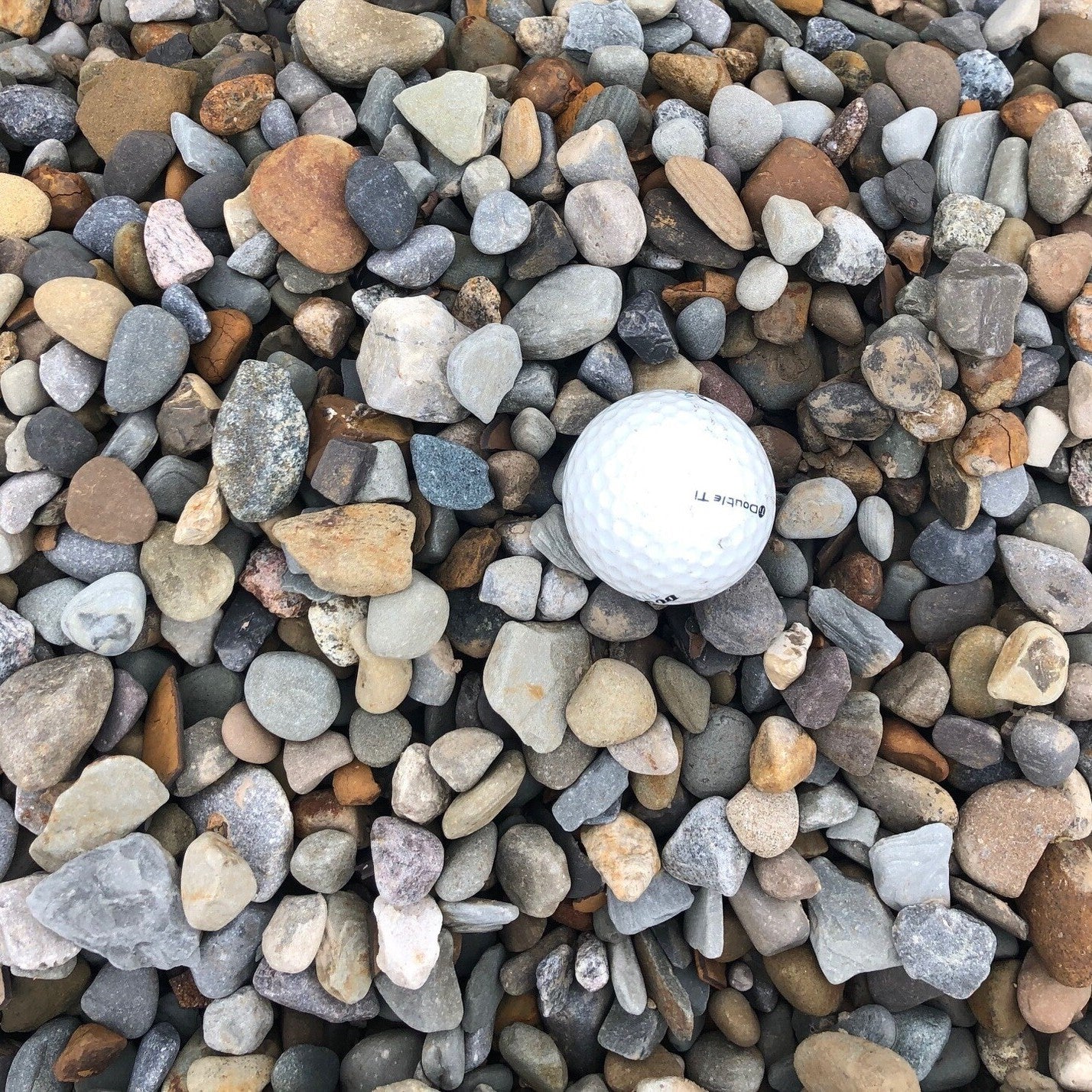
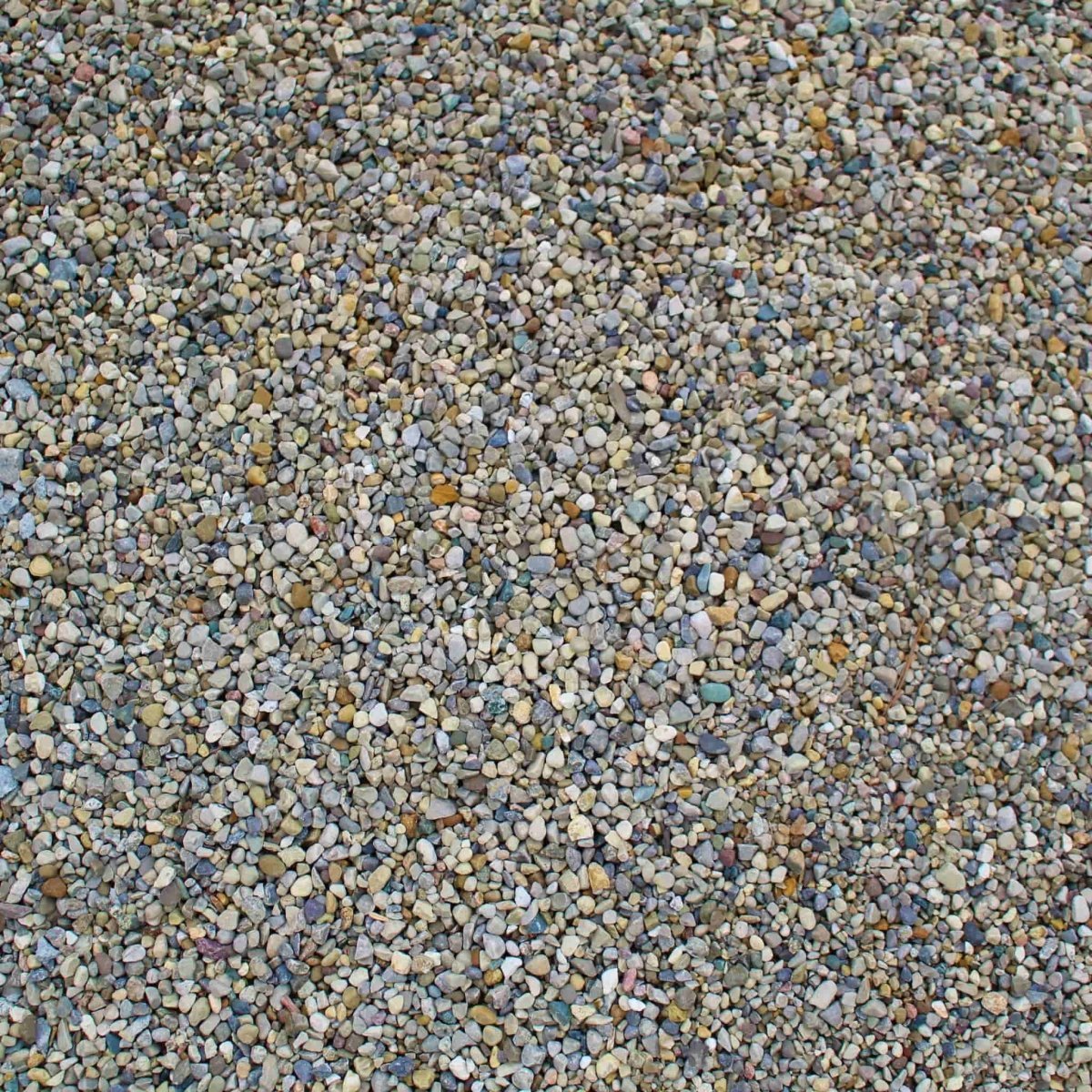
Number 57 crushed stone, angular limestone graded to about three quarters of an inch. The standard driveway, base and drainage gravel, it locks together under traffic and drains fast.
I contacted Mulch Mound for #57 river rocks and it was easy and fast to get a delivery right before the holiday weekend. Stone was delivered as promised and place exactly where I asked. Excellent service! I will be ordering mulch next!
Tell us what you're looking for
Thanks! We received your request.
Something went wrong. Please try again.
How Much Material Do I Need?
Install stone at a minimum depth of 4 inches over any area underlain by Concord's red clay — this provides enough mass to stay stable through seasonal moisture cycling and prevents clay from migrating upward into the stone layer and degrading both the function and appearance of the installation over time.
Use our free gravel calculator
What is a yard?
A yard is approximately 27 cubic feet. As a general guideline, one yard of material can cover an area of about 100-160 square feet at a 2-3 inch depth.
We can't take orders for this right now. Tell us what you need and we'll get back to you.
What do you need?
Thanks! We received your request.
Something went wrong. Please try again.
Hand-picked local yards
4,000+ regional deliveries
Dedicated support
Why order through Mulch Mound
The best local stone, without the guesswork.
We hand-pick and partner with the best yards in your region, keep only the ones our buyers rate well, and back each load with our guarantee.
Mulch Mound Guarantee
If your stone isn't the quantity or quality you ordered, we'll make it right.
About this stone
Number 57 crushed stone, angular limestone graded to about three quarters of an inch. The standard driveway, base and drainage gravel, it locks together under traffic and drains fast.
I contacted Mulch Mound for #57 river rocks and it was easy and fast to get a delivery right before the holiday weekend. Stone was delivered as promised and place exactly where I asked. Excellent service! I will be ordering mulch next!
How Much Material Do I Need?
Install stone at a minimum depth of 4 inches over any area underlain by Concord's red clay — this provides enough mass to stay stable through seasonal moisture cycling and prevents clay from migrating upward into the stone layer and degrading both the function and appearance of the installation over time.
Use our free gravel calculator
What is a yard?
A yard is approximately 27 cubic feet. As a general guideline, one yard of material can cover an area of about 100-160 square feet at a 2-3 inch depth.
I contacted Mulch Mound for #57 river rocks and it was easy and fast to get a delivery right before the holiday weekend. Stone was delivered as pro...
Read full review
I contacted Mulch Mound for #57 river rocks and it was easy and fast to get a delivery right before the holiday weekend. Stone was delivered as promised and place exactly where I asked. Excellent service! I will be ordering mulch next!
For stone coverage, plan on 1 cubic yard covering approximately 80 square feet at a 4-inch depth — the minimum effective depth over Concord's red clay, which will otherwise push up into shallower stone layers after the wet-dry cycles that Cabarrus County's 44 annual inches of rainfall drive. Irregular or sloped areas, which are common in Concord yards, typically need 10 to 15% more material than a flat-area calculation to account for filling low points and ensuring consistent coverage across grade changes.
Stone Types We Deliver in Concord
Mulch Mound delivers bulk stone by the cubic yard to homes and job sites across Concord, making it easy to tackle landscaping projects without hauling material yourself. If you have been searching for bulk gravel by the yard or a reliable local stone supplier, we have you covered with straightforward scheduling and drop-off. Our stone is sold loose by the yard, so you only pay for what your project needs.
Pea Gravel
Pea gravel is a top choice for homeowners who want a versatile, low-maintenance ground cover suited to the region's warm climate and clay-rich soils. Its smooth, rounded stones in natural earth tones look great along garden beds, patios, and walkways, and they perform well in drainage areas where water needs help moving through heavy soil.
Complete Your Outdoor Stone Project
Stone drainage solutions work best when paired with quality topsoil to re-grade problem areas before the stone goes in — and mulching adjacent planting beds reduces the surface runoff that would otherwise carry red clay sediment into your stone installation and require more frequent cleaning.
Concord's red clay creates subtle seasonal movement in the landscape — it expands when saturated during spring rains and contracts and surface-cracks during summer dry spells. If you're installing a stone pathway or patio with edging, leave small expansion gaps between edging segments and any adjacent hardscape rather than locking everything rigid. This allows for the minor ground movement that happens as the clay goes through its wet and dry cycles across Concord's eight-month growing season, preventing cracking and buckling that can make a tight installation look broken within a year or two.
Mulch Mound Pro Tip
For decorative stone beds beneath significant tree canopy — common in Concord's older established neighborhoods — plan for an annual leaf-clearing pass before fall leaf drop buries the stone. Once leaves decompose into the gaps between decorative rock, they create a thin organic layer that's prime real estate for weed seeds to germinate in the following spring. A quick leaf blower pass in early November, right around Concord's first frost on the 15th, keeps the stone surface clean heading into winter and saves considerable hand-weeding labor when the growing season reopens in March.
Mulch Mound Pro Tip
If you're using stone to manage drainage in a low-lying area of your Concord property, work with the natural grade rather than against it. With 44 inches of annual rainfall, a dry creek bed designed to carry peak storm flow is both functional hardscaping and a genuine landscape feature — it handles the intense events that overwhelm flat stone installations and looks intentional rather than remedial. Line the main channel with larger river rock to handle high-velocity flow and flank it with smaller gravel to capture and slow sheet flow coming off adjacent turf during Concord's heaviest spring storms.
The Unique Landscape of Concord
Decorative and functional stone is one of the most practical landscape investments a Concord homeowner can make given the area's challenging combination of red clay soil, 44 inches of annual rainfall, and the sloped terrain common across Cabarrus County. Red clay sheds water rather than absorbing it during intense rain events, and without proper hardscaping to manage that flow, runoff carves erosion channels through lawns and undermines planting beds. Stone pathways, dry creek beds, and drainage borders address this directly by giving water a managed path to follow rather than allowing it to move freely and destructively across the landscape. Beyond drainage, Concord's long Zone 8a growing season — nearly eight months of heat and humidity — makes stone beds and borders appealing to homeowners who want low-maintenance areas that don't require constant weeding, watering, or seasonal replanting. Stone also absorbs and holds radiant heat at Concord's 706-foot elevation, extending the comfortable usability of outdoor living spaces into the cooler shoulder months of March and November.
Frequently Asked Questions
Click a question to see the answer
Answer
What type of stone works best for managing drainage in a Concord yard?
For French drains and dry creek beds designed to handle Concord's heavy spring rainfall, washed river rock in the 1.5 to 3-inch size range is the most effective choice — large enough to allow free water movement through and between stones, but substantial enough to stay put in a defined channel during high-flow events. Angular crushed granite works well as a trench fill around perforated pipe because the irregular edges lock together and resist shifting under pressure, while larger river rock provides the surface layer that handles peak volume and looks intentional in the landscape.
Answer
How much stone do I need for a garden pathway in my Concord yard?
A standard 3-foot-wide pathway needs approximately 1 cubic yard of gravel or crushed stone per 9 linear feet at a 4-inch depth — which is the minimum recommended in Concord to stay above the red clay layer that tends to push upward after wet seasons. Because clay expands and contracts seasonally as it absorbs Concord's rainfall and then dries out in summer, a 4 to 6-inch stone base provides enough mass to resist the subtle heaving and shifting that thinner installations experience.
Answer
Do stone beds require much maintenance given Concord's rainfall?
Stone beds are genuinely low-effort compared to mulched areas, but Concord's red clay environment introduces one recurring task: fine clay particles wash into stone during the region's 44 inches of annual rainfall, gradually making the surface look dusty or reddish over time. Landscape fabric under the stone significantly slows this infiltration, but every few years you may want to rinse the surface with a garden hose after major rain events or do a light raking to freshen the appearance and clear accumulated debris.
Answer
Can stone fix the erosion problem on my sloped backyard in Concord?
Yes — and for sloped sites in Concord, stone is considerably more durable than organic solutions like mulch, which washes downhill during the intense spring storms common in Cabarrus County. Rip rap or large river rock placed along drainage swales or at the base of slopes absorbs the energy of flowing water and holds the soil surface in place. For steeper grades, combining stone with deep-rooted groundcovers that penetrate the clay beneath gives you both immediate surface protection and long-term biological stabilization as root systems develop.
Answer
What stone is best for a low-maintenance, no-grass area in my yard?
For no-grass zones in Concord, pea gravel or a decomposed granite fines product creates a clean, walkable surface that handles the area's regular rainfall without becoming muddy or rutted. These materials pack down over time and resist weed germination better than larger decorative stone, where gaps between rocks create ideal germination pockets for seeds. Applying a pre-emergent herbicide in early March — just before Concord's weed season fully activates — combined with stone coverage gets you as close to zero-maintenance as a landscape area realistically achieves.
Answer
How do I keep stone from sinking into my red clay soil over time?
Red clay's tendency to compress and shift under weight is a genuine concern for stone installations in Concord. The most reliable solution is to excavate 4 to 6 inches before placing stone and install a layer of compacted crusher run as a base — this spreads the load over a wider clay surface area and prevents individual stones from pressing unevenly into the soil. A layer of landscape fabric between the crusher run and the decorative surface stone also significantly reduces upward clay migration through the installation over the years.
Answer
Is stone a good choice for a border along my home's foundation in Concord?
Stone is an excellent foundation border material for Concord homes specifically because of the area's wet climate. Unlike mulch, stone doesn't retain moisture against siding or brick during the region's wet spring season, reducing the risk of rot and the damp conditions that subterranean termites seek out. It also doesn't decompose or thin between maintenance cycles the way organic materials do. A 12 to 18-inch gravel border at the foundation additionally creates a drainage path for roof runoff during heavy rainfall events, directing water away from the structure rather than allowing it to pool against the base.
Answer
Is crush and run the same as crusher run?
Same product, different name. Crush and run refers to crushed stone blended with stone dust that compacts into a solid base for driveways and paver projects. In Concord, where red clay and sloped lots push water fast, our washed Crushed Stone #57 drains better and resists the erosion that compacted fines can trap moisture against.
Answer
Is there a stone yard near Concord?
Crushed Stone works well in Concord for building drainage paths and stable bases that handle the red clay runoff Cabarrus County slopes can send through a yard. It is the same stone you would buy at a stone yard, delivered by the cubic yard to your driveway or wherever you want it, so there is no trip to a quarry.