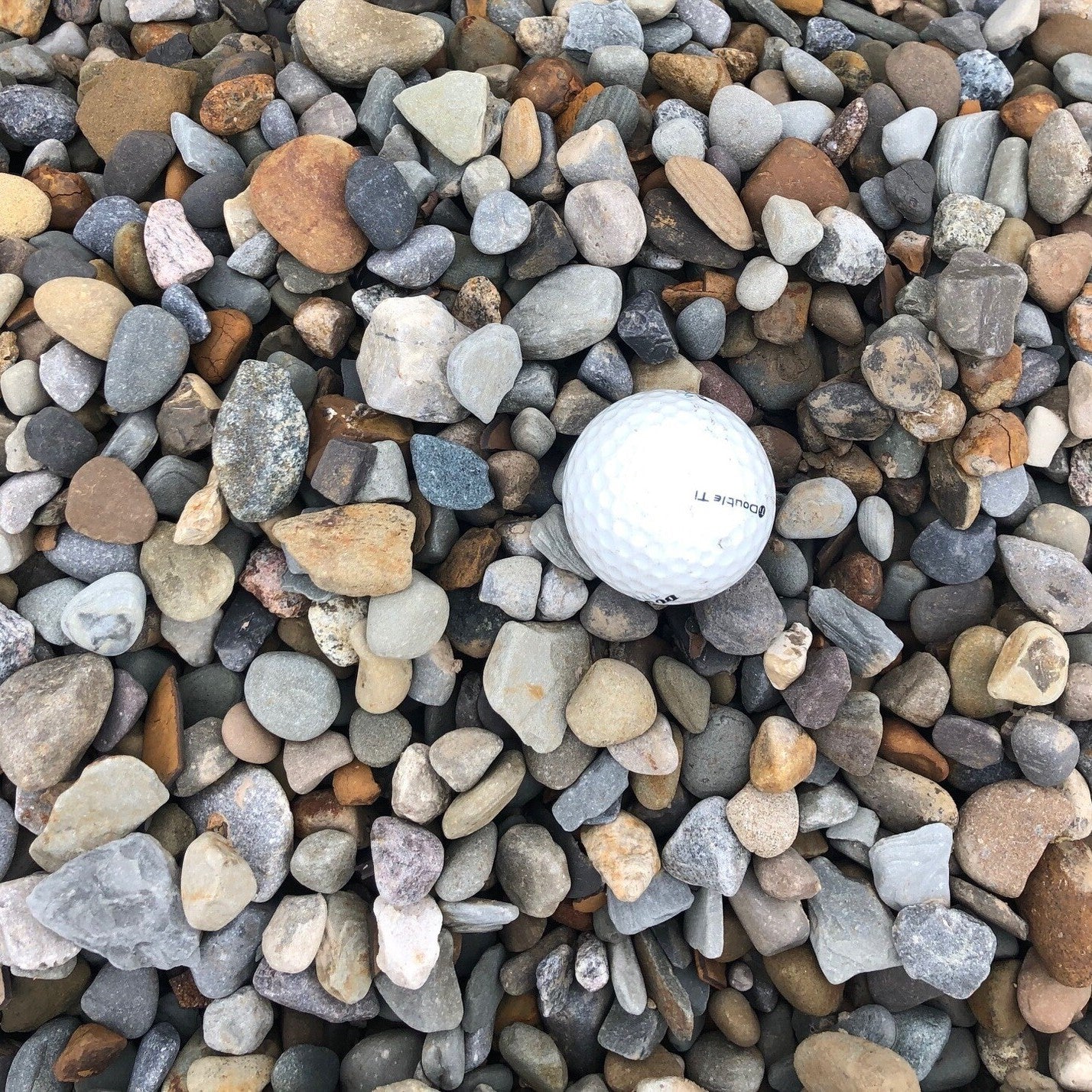
Number 57 crushed stone, angular limestone graded to about three quarters of an inch. The standard driveway, base and drainage gravel, it locks together under traffic and drains fast.
Mulch Mound delivered a yard of pea gravel to us. Delivery was on time, driver was friendly and hit a bullseye on the “tarp target”. We used the pea gravel (which was diameter as specified) to fill several muskrat holes around our pond. I would definitely recommend Mulch Mo...
Tell us what you're looking for
Thanks! We received your request.
Something went wrong. Please try again.
How Much Material Do I Need?
For decorative stone beds and borders in Conneaut, a 2 to 3 inch depth provides solid visual coverage and effective weed suppression over landscape fabric. For drainage applications where silt loam needs to be bridged and water needs to move freely, plan on 6 to 12 inches of clean stone depending on the volume of runoff the area is designed to handle.
Use our free gravel calculator
What is a yard?
A yard is approximately 27 cubic feet. As a general guideline, one yard of material can cover an area of about 100-160 square feet at a 2-3 inch depth.
We can't take orders for this right now. Tell us what you need and we'll get back to you.
What do you need?
Thanks! We received your request.
Something went wrong. Please try again.
Hand-picked local yards
4,000+ regional deliveries
Dedicated support
Why order through Mulch Mound
The best local stone, without the guesswork.
We hand-pick and partner with the best yards in your region, keep only the ones our buyers rate well, and back each load with our guarantee.
Mulch Mound Guarantee
If your stone isn't the quantity or quality you ordered, we'll make it right.
About this stone
Number 57 crushed stone, angular limestone graded to about three quarters of an inch. The standard driveway, base and drainage gravel, it locks together under traffic and drains fast.
Mulch Mound delivered a yard of pea gravel to us. Delivery was on time, driver was friendly and hit a bullseye on the “tarp target”. We used the pea gravel (which was diameter as specified) to fill several muskrat holes around our pond. I would definitely recommend Mulch Mo...
How Much Material Do I Need?
For decorative stone beds and borders in Conneaut, a 2 to 3 inch depth provides solid visual coverage and effective weed suppression over landscape fabric. For drainage applications where silt loam needs to be bridged and water needs to move freely, plan on 6 to 12 inches of clean stone depending on the volume of runoff the area is designed to handle.
Use our free gravel calculator
What is a yard?
A yard is approximately 27 cubic feet. As a general guideline, one yard of material can cover an area of about 100-160 square feet at a 2-3 inch depth.
Mulch Mound delivered a yard of pea gravel to us. Delivery was on time, driver was friendly and hit a bullseye on the “tarp target”. We used the ...
Read full review
Mulch Mound delivered a yard of pea gravel to us. Delivery was on time, driver was friendly and hit a bullseye on the “tarp target”. We used the pea gravel (which was diameter as specified) to fill several muskrat holes around our pond. I would definitely recommend Mulch Mound to a friend!
For stone projects, measure your area in length and width and decide on a finished depth before ordering so you have a clear total to work from. In Conneaut, adding a compacted base layer to any pathway or patio installation means you are often ordering stone for two separate layers, the base and the finish surface, so calculate them individually and add the totals together for your order. When estimating drainage applications, round up generously because silt loam profiles often have more irregular contour and void space than a flat square-footage calculation captures on paper.
Stone Types We Deliver in Conneaut
Mulch Mound brings bulk stone delivery straight to Conneaut doorsteps, measured and priced by the cubic yard so you only pay for what your project needs. Whether you are searching for bulk gravel by the yard in Conneaut or planning a larger landscape overhaul, we load and drop your order with care. The lake-influenced climate and clay-heavy soils common in this corner of Ohio make choosing the right stone an important first step.
Pea Gravel
Smooth and rounded with warm earth tones, pea gravel is one of the most popular choices for homeowners across northeastern Ohio. It drains exceptionally well in clay-heavy yards, making it a reliable option for pathways, patios, and garden beds. Its approachable look suits the relaxed residential landscapes typical of this region.
Complete Your Outdoor Stone Project
For pathways and hardscape projects, pairing stone with bulk topsoil to grade the surrounding lawn areas ensures clean transitions and proper drainage away from your new installation. If you are replacing a mulched bed with stone, a fresh layer of topsoil beneath the landscape fabric gives you a stable, level base that holds the stone in position through Conneaut's wet and frost-heavy seasons.
In Conneaut, any stone installation that sits directly against a building foundation benefits from a slight outward slope of about 1 inch of drop per foot to direct water away from the structure rather than toward it. Silt loam near foundations retains moisture long after rain events, and a properly graded stone apron that carries water outward reduces the hydrostatic pressure that causes basement seepage and wall damage over time. This small grading detail at installation makes a significant difference in long-term foundation health.
Mulch Mound Pro Tip
Landscape fabric under decorative stone is essential in Conneaut because saturated silt loam has a tendency to migrate upward into stone beds over multiple freeze-thaw cycles through a process called frost pumping. Without fabric, stone that looked clean and attractive at installation becomes mixed with muddy soil within two or three seasons and loses both its drainage function and its appearance. Use a woven polypropylene fabric rather than the thin non-woven type, which degrades much faster under the moisture and temperature cycling of a Lake Erie winter.
Mulch Mound Pro Tip
For low-maintenance stone areas replacing turf or mulch in Conneaut, choose angular crushed stone rather than smooth river pebble for any area that receives regular foot traffic or vehicle access. Angular stone compacts slightly over time into a firm, stable surface that handles the wet and muddy conditions of a northeast Ohio spring far better than smooth rounded stone, which shifts and rolls underfoot when the ground beneath is saturated. The interlocking angular surface also resists the displacement that concentrated rainfall causes on sloped areas around the property.
The Unique Landscape of Conneaut
Conneaut's 42 inches of annual rainfall and its silt loam soil create persistent drainage challenges that decorative and functional stone solves in ways that plants and organic materials alone cannot match. Stone pathways, drainage beds, and border installations handle heavy runoff without washing, compacting, or requiring annual replacement the way mulch and other organic ground covers do. Along the Lake Erie shoreline region, the freeze-thaw cycles of a zone 6b winter are demanding on landscape structures, but properly installed stone settles into stable configurations that hold up through repeated seasonal ground movement year after year. Silt loam, while workable when dry, becomes slippery and unstable when saturated, making stone surfaces a practical and durable choice for high-traffic areas like side yards, utility paths, and garden walkways. For homeowners dealing with erosion along slopes, foundation drainage issues near the house, or simply wanting a low-maintenance alternative to turf in difficult problem areas, bulk stone delivers lasting results. Conneaut properties with mature trees and heavy canopy also benefit from stone ground covers in areas where grass struggles to compete with shade and aggressive surface root systems.
Frequently Asked Questions
Click a question to see the answer
Answer
What kind of stone works best for a backyard drainage solution here in Conneaut where the yard stays so wet?
For drainage applications in Conneaut, clean angular gravel or crushed limestone in the 3/4-inch to 1.5-inch range is the most effective choice for moving water through saturated ground. The irregular shape of crushed stone locks together while still allowing water to move through the voids quickly, which is critical in a region where silt loam naturally slows subsurface drainage. River stone looks attractive in finished beds but its rounded surface does not interlock as well in French drain or drainage channel applications where long-term stability matters.
Answer
Will stone pathways hold up through a Conneaut winter without shifting or sinking into the silt loam underneath?
Stone pathways installed on a properly compacted gravel base handle Conneaut's freeze-thaw cycles very well over many seasons. The key is proper base preparation, typically 4 to 6 inches of compacted crushed stone beneath the finished surface, which distributes weight evenly and resists the frost heaving that is especially common in silt loam soils after a wet fall. Pathways installed directly on native silt loam without any base layer will shift and sink noticeably after the first hard winter.
Answer
How deep should I install stone in a drainage swale running along my property line?
For a surface drainage swale in Conneaut, a 6 to 8 inch depth of clean angular stone is typically sufficient to handle normal stormwater flow from a residential lot. In areas that collect concentrated runoff from a roof downspout, driveway, or long sloped lawn, going 10 to 12 inches deep gives more capacity for the intense rain events the area sees in spring and early summer. Lining the swale with woven landscape fabric before filling helps prevent silt loam from migrating up into the stone over time and reducing the drainage capacity of the installation.
Answer
Can I use decorative stone around my foundation to replace the mulch I keep having to put down every single year?
Yes, and it is a popular choice among Conneaut homeowners for exactly that reason. Stone does not decompose, fade, or wash away in heavy spring rains the way organic mulch does, and it creates a clean dry zone next to the foundation that discourages moisture accumulation and pest harborage. A 2 to 3 inch layer of decorative stone over woven landscape fabric gives the best long-term results, and choosing a stone size large enough that it does not scatter easily during downpours keeps maintenance to a minimum.
Answer
The area next to my driveway turns to mud every spring when the snow melts. Would stone help solve that problem?
A stone apron or stabilized pad in high-traffic areas adjacent to driveways is one of the most effective fixes for Conneaut's annual spring mud problem. Silt loam saturates quickly when snowmelt and spring rains coincide in April, and repeated foot and vehicle traffic pulverizes wet silt loam into a muddy mess that takes weeks to recover. A 4 to 6 inch base of angular crushed stone provides a stable, freely draining surface that stays firm and passable even when the native ground beneath is fully saturated.
Answer
What stone size looks best for a decorative border around my flower beds in the front yard?
For decorative garden borders in Conneaut, 3/4-inch to 1.5-inch river stone or natural pea gravel creates a clean visual separation between beds and lawn without appearing overly industrial or heavy. Smaller pea gravel scatters easily during heavy rain, so if your beds are on any slope at all, a slightly larger stone holds its position better through Conneaut's energetic spring downpours. Pairing a stone border with a steel or aluminum edging strip keeps the material contained and gives beds a sharp, finished edge that stays clean through the season.
Answer
How much stone do I need for a simple backyard walking path that is about 30 feet long and 3 feet wide?
For a 30-foot pathway that is 3 feet wide with a 3-inch finished stone depth, you would need approximately 1 cubic yard of surface material. Adding a 4-inch compacted base layer of crushed stone beneath the finished surface, which is strongly recommended given Conneaut's frost heaving in silt loam soils, brings the total closer to 2 cubic yards for that same path length and width. Using the calculator on the product page with your exact dimensions will give you a more precise number before you order.