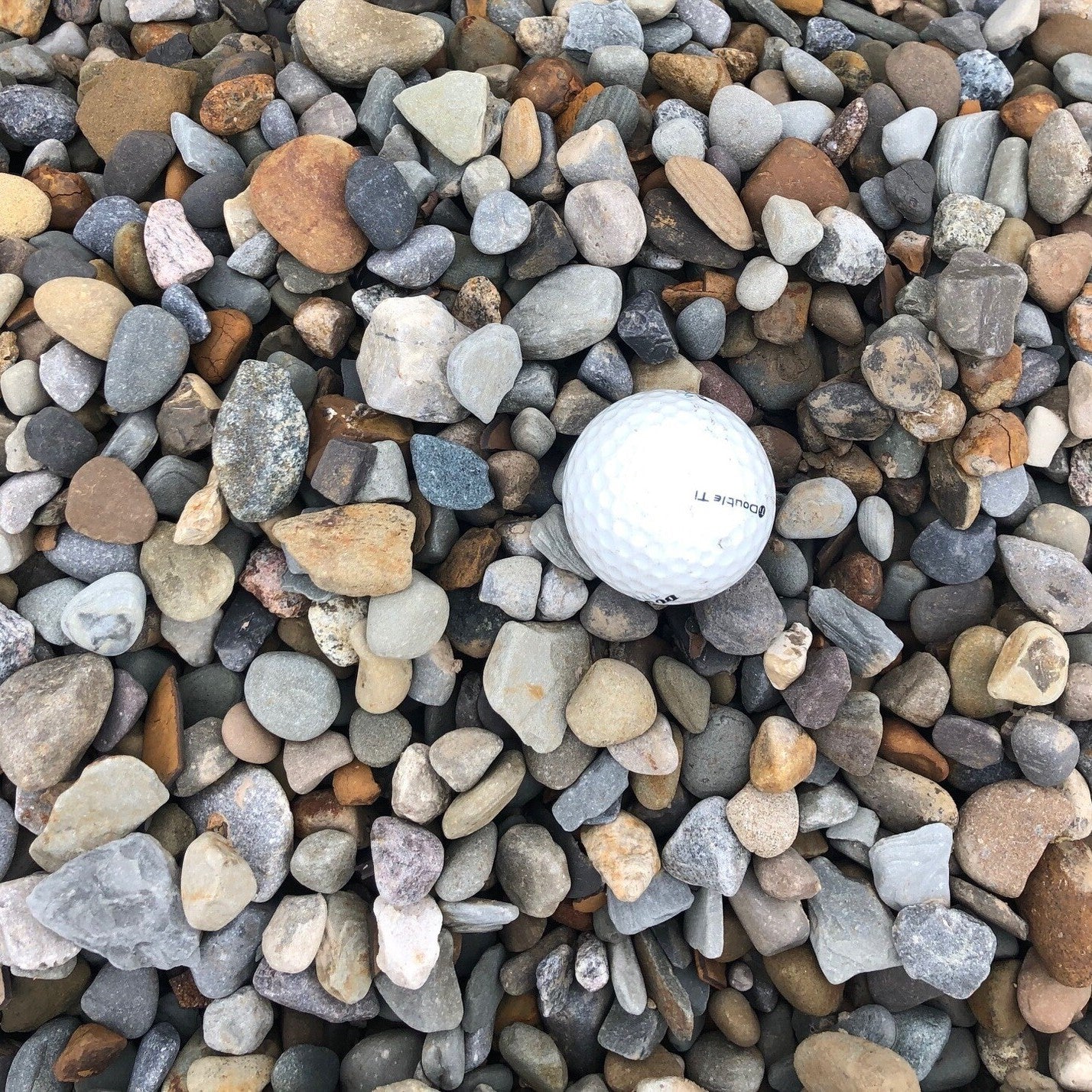
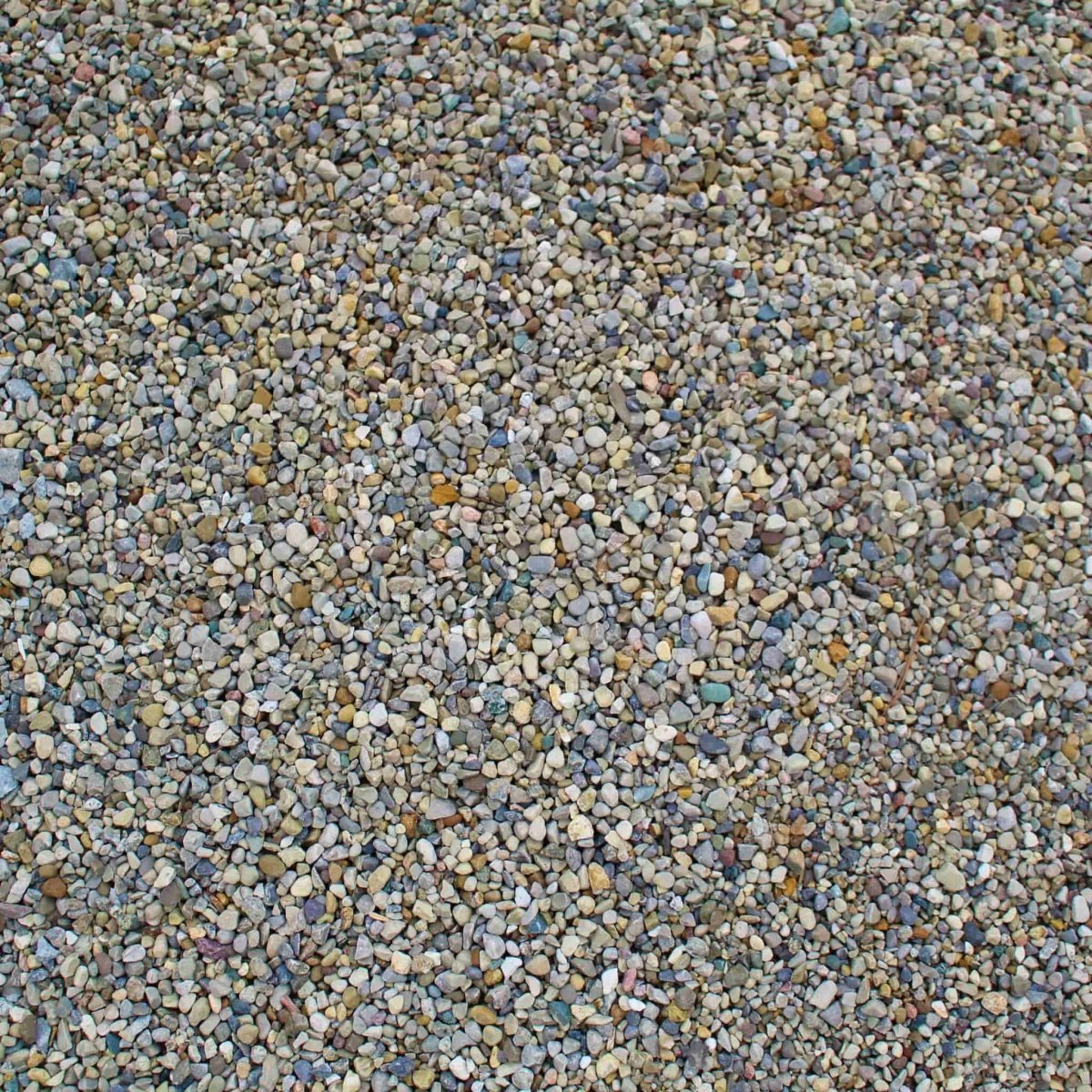
Number 57 crushed stone, angular limestone graded to about three quarters of an inch. The standard driveway, base and drainage gravel, it locks together under traffic and drains fast.
I used Mulch Mound to have 3 cubic yards of garden soil delivered. The process was easy and I love that I didn't have to call anyone. I placed my order online, picked my delivery date, laid out my tarp and the dirt was delivered. My delivery had to be pushed back, but I was ke...
Tell us what you're looking for
Thanks! We received your request.
Something went wrong. Please try again.
How Much Material Do I Need?
For decorative stone beds in Cookeville, a 2 to 3 inch layer provides solid weed suppression and a clean finished appearance over the existing silt loam soil. Drainage applications and dry creek beds typically call for 4 to 6 inches of material to handle the volume of water that moves through during Cookeville's frequent heavy rain events without displacing or channeling incorrectly.
Use our free gravel calculator
What is a yard?
A yard is approximately 27 cubic feet. As a general guideline, one yard of material can cover an area of about 100-160 square feet at a 2-3 inch depth.
We can't take orders for this right now. Tell us what you need and we'll get back to you.
What do you need?
Thanks! We received your request.
Something went wrong. Please try again.
Hand-picked local yards
4,000+ regional deliveries
Dedicated support
Why order through Mulch Mound
The best local stone, without the guesswork.
We hand-pick and partner with the best yards in your region, keep only the ones our buyers rate well, and back each load with our guarantee.
Mulch Mound Guarantee
If your stone isn't the quantity or quality you ordered, we'll make it right.
About this stone
Number 57 crushed stone, angular limestone graded to about three quarters of an inch. The standard driveway, base and drainage gravel, it locks together under traffic and drains fast.
I used Mulch Mound to have 3 cubic yards of garden soil delivered. The process was easy and I love that I didn't have to call anyone. I placed my order online, picked my delivery date, laid out my tarp and the dirt was delivered. My delivery had to be pushed back, but I was ke...
How Much Material Do I Need?
For decorative stone beds in Cookeville, a 2 to 3 inch layer provides solid weed suppression and a clean finished appearance over the existing silt loam soil. Drainage applications and dry creek beds typically call for 4 to 6 inches of material to handle the volume of water that moves through during Cookeville's frequent heavy rain events without displacing or channeling incorrectly.
Use our free gravel calculator
What is a yard?
A yard is approximately 27 cubic feet. As a general guideline, one yard of material can cover an area of about 100-160 square feet at a 2-3 inch depth.
I used Mulch Mound to have 3 cubic yards of garden soil delivered. The process was easy and I love that I didn't have to call anyone. I placed my o...
Read full review
I used Mulch Mound to have 3 cubic yards of garden soil delivered. The process was easy and I love that I didn't have to call anyone. I placed my order online, picked my delivery date, laid out my tarp and the dirt was delivered. My delivery had to be pushed back, but I was kept informed via text, which was great. So why not 5 stars? The description of garden soil on the website is "A balanced mix of topsoil and organic amendments ready for raised beds, flower gardens, and new planting areas. Good drainage, solid nutrients, easy to work with." What I got was more like fill dirt. It had a lot of gravel, a lot of clay, and random trash mixed in. I didn't test the soil to see if it actually had "amendments" because I already have compost and alpaca manure ready to add, but if I'd known the quality of the dirt was going to be the same as the bagged dirt I bought last year, I probably would have gotten 2 yards of top soil and a yard of leaf compost for better quality, especially since the leaf compost is cheaper. Photo of my mountain of dirt and just some of the trash I found in it.
To calculate stone coverage, multiply the length by the width of your area in feet to get square footage, then multiply by the desired depth in inches and divide by 324 to arrive at cubic yards needed. Stone is considerably heavier than mulch per cubic yard, so Cookeville homeowners should plan the delivery drop location carefully before the truck arrives, keeping in mind access to driveways and any sloped areas that may be difficult to navigate. Most decorative landscape applications use a 2 to 3 inch depth, while drainage channels and erosion control installations typically need 4 to 6 inches for reliable long-term performance.
Stone Types We Deliver in Cookeville
Mulch Mound delivers bulk stone by the cubic yard to residential and commercial properties throughout this part of Tennessee. If you have been searching for bulk gravel by the yard in Cookeville, we keep the process simple from order to delivery. Our stone varieties are chosen to perform well through the warm, wet summers and clay-heavy soils common across the Upper Cumberland region.
Pea Gravel
Pea gravel offers smooth, rounded stones in warm earth tones that complement the wooded lots and naturalistic gardens common in this part of Tennessee. It drains reliably in clay-heavy soils and works well along pathways, patios, and garden borders where a soft, attractive ground cover is the goal.
Complete Your Outdoor Stone Project
Pair your stone order with a quality topsoil to build up and correct grade before placing stone in drainage channels or around low foundation areas, and consider a mulch order for adjacent planting beds so your whole landscape has a cohesive finished appearance that performs well through Cookeville's weather all year long.
Before placing stone anywhere in your Cookeville yard, invest in a quality woven landscape fabric rather than the thin plastic sheeting sold at most home improvement stores. Cookeville's heavy seasonal rains will push fine silt loam particles up through inadequate fabric within a season or two, mixing soil into your stone and giving weeds a perfect germination bed right on top of the material you paid to install. A commercial-grade woven fabric rated at 3 to 4 ounces per square yard lasts 10 to 15 years and keeps stone installations looking fresh with far less ongoing maintenance.
Mulch Mound Pro Tip
For stone pathways in Cookeville, choose a compactable material like crushed limestone or decomposed granite over smooth pea gravel for any areas that receive regular foot traffic. Smooth round stones shift underfoot and migrate out of defined paths quickly, especially on Cookeville's sloped lots where foot traffic and runoff combine to work against loose material season after season. Compactable crushed stone packs down to a firm stable surface that holds its position through freeze-thaw cycles and spring downpours without constant maintenance.
Mulch Mound Pro Tip
Cookeville's freeze-thaw cycle, amplified by the area's 1,100 foot elevation, means that stone edging and border stones need to be set deep enough in the ground to resist frost heaving through winter. Set any large border stones or edging material at least 4 to 6 inches below grade so the buried portion stays below the frost line and anchors the visible surface in position through repeated temperature swings. Stones or edging set too shallow will tip and shift each spring and require constant adjustment that defeats the entire purpose of installing a low-maintenance stone feature in the first place.
The Unique Landscape of Cookeville
Cookeville's combination of 54 inches of annual rainfall and fine-textured silt loam soil creates serious drainage and erosion challenges, especially on sloped lots and along foundation borders where water concentrates after heavy storms roll through. Decorative stone is one of the most practical long-term solutions for these problem areas because unlike organic materials it does not break down, wash away in heavy rain, or require seasonal replacement. At 1,100 feet of elevation on the Cumberland Plateau, Cookeville landscapes also endure significant freeze-thaw cycles each winter, and stone holds up to those conditions far better than materials that absorb moisture and degrade with repeated freezing. Whether you are building a dry creek bed to channel runoff, lining a driveway edge, or creating a low-maintenance landscape in a sunny corner that is difficult to plant, bulk stone gives you a durable foundation that performs reliably season after season. The range of sizes and types available makes it straightforward to match both the functional and aesthetic needs of nearly any Cookeville property.
Frequently Asked Questions
Click a question to see the answer
Answer
What size stone works best for a dry creek bed designed to handle yard runoff in Cookeville?
For a dry creek bed in Cookeville, a combination of 2 to 4 inch river rock on the base and larger 4 to 8 inch fieldstone along the channel edges creates the most natural appearance and handles high-volume runoff during spring storms effectively. The larger stones along the sides keep the channel defined when water rushes through after a heavy rain, while smaller rock on the bottom allows water to percolate downward rather than just racing across the surface. Given that Cookeville averages 54 inches of rainfall annually, sizing your creek bed on the generous side is a worthwhile investment in the long-term function of the feature.
Answer
Can decorative stone help with the drainage problems I keep getting around my foundation?
River gravel or washed crushed stone around a foundation works extremely well in Cookeville because it allows rain to drain away from the house quickly rather than pooling against the sill and soaking into the soil right at the base. A 3 to 4 inch layer of washed stone in a 12 to 18 inch wide band around the foundation perimeter channels water downward and outward, which also helps protect the foundation from freeze-thaw damage during Cookeville winters. Make sure the grade beneath the stone still pitches away from the house so the water that drains through the stone has somewhere productive to go.
Answer
How much stone do I need to build a stable garden pathway that will last through our winters?
For a gravel pathway in Cookeville, plan on a 3 to 4 inch layer of compacted base material topped with 2 inches of pea gravel or crushed stone finish, which works out to roughly 0.2 cubic yards per 10 square feet of path. Cookeville's freeze-thaw cycles can heave loose paths that lack a properly compacted base, so tamping down the sub-base and edging the path with steel or concrete border material makes a significant difference in long-term stability. A path that is at least 36 inches wide stays comfortable for two people side by side and looks proportional in most residential yard settings.
Answer
Will stone in a landscape bed actually stay in place after a hard Cookeville rain, or will it shift around?
Larger stones, anything 1.5 inches in diameter or bigger, hold their position very reliably in Cookeville rain events when installed with proper preparation underneath. The most common reason stone migrates out of beds is not the rain itself but the absence of solid edging, because without a firm border the material gradually creeps outward over time. Installing steel, aluminum, or concrete edging around stone beds locks the material in place and makes lawn maintenance along the edge clean and simple.
Answer
I want to use decorative stone around my trees instead of mulch. Is that a reasonable idea for Cookeville?
Stone can work well around mature trees in Cookeville, but it comes with a trade-off that is worth understanding before you commit. Unlike hardwood mulch, stone does not decompose and feed the soil, and in Cookeville's sunny summers lighter-colored stone reflects heat while darker stone absorbs and radiates it, which can stress the shallow roots of some species. If you prefer the stone aesthetic, choose lighter-colored varieties like tan gravel or white marble chip, keep material away from the trunk flare, and apply a thinner 2-inch layer rather than 4 inches to reduce potential heat buildup against the root zone.
Answer
What type of stone is best for controlling erosion on a sloped area in my Cookeville yard?
For erosion control on slopes in Cookeville, angular crushed stone or rip rap works much better than smooth river rock because the irregular edges lock together and resist movement when water flows over them. On steeper slopes, rip rap stones in the 4 to 8 inch range provide the best long-term stability, while gentler slopes can be managed effectively with 1 to 2 inch crushed limestone or recycled concrete aggregate at a fraction of the cost. Laying a layer of woven geotextile fabric beneath the stone before installation helps prevent the fine silt loam soil particles from migrating upward through the stone over time.
Answer
How do I keep weeds from coming up through my stone beds here in Cookeville?
In Cookeville's warm and rainy climate, weeds can establish themselves in stone beds surprisingly fast if proper prep work is skipped during installation. The most effective approach is to install a heavy woven geotextile fabric rated at least 3 ounces per square yard under the stone, overlapping seams by at least 6 inches and tucking edges under the stone edging border on all sides. Even with fabric in place, some weed seeds will germinate in organic debris that collects on top of the stone over the season, so a quick blowing or raking of the bed each spring before the growing season accelerates keeps things looking clean with minimal ongoing effort.
Answer
Is crush and run the same as crusher run?
Crush and run is a Southern term for crusher run, a mix of crushed stone and stone dust that compacts into a solid base for driveways and paver projects. With Cookeville's heavy rainfall and slow draining silt loam soil, our Crushed Stone #57 is often the better choice for drainage channels and foundation borders since it lets water pass through freely instead of holding moisture against your home.