Great experience with mulch mound. Their online calculator made it easy to estimate how many yards of mulch I needed and delivery was quick. I would definitely recommend them for your future projects.
Tell us what you're looking for
Thanks! We received your request.
Something went wrong. Please try again.
How Much Material Do I Need?
For most Coshocton ornamental beds, 2 to 3 inches of mulch is the ideal depth, providing moisture retention through dry summer stretches without waterlogging roots during our wet springs. Tree rings and larger landscape areas benefit from a full 3 inch layer applied out to the drip line to protect surface roots from our late-season ground freeze cycles.
Use our free mulch calculator
What is a yard?
A yard is approximately 27 cubic feet. As a general guideline, one yard of material can cover an area of about 100-160 square feet at a 2-3 inch depth.
Great experience with mulch mound. Their online calculator made it easy to estimate how many yards of mulch I needed and delivery was quick. I would definitely recommend them for your future projects.
How Much Material Do I Need?
For most Coshocton ornamental beds, 2 to 3 inches of mulch is the ideal depth, providing moisture retention through dry summer stretches without waterlogging roots during our wet springs. Tree rings and larger landscape areas benefit from a full 3 inch layer applied out to the drip line to protect surface roots from our late-season ground freeze cycles.
Use our free mulch calculator
What is a yard?
A yard is approximately 27 cubic feet. As a general guideline, one yard of material can cover an area of about 100-160 square feet at a 2-3 inch depth.
Great experience with mulch mound. Their online calculator made it easy to estimate how many yards of mulch I needed and delivery was quick. I woul...
Read full review
Great experience with mulch mound. Their online calculator made it easy to estimate how many yards of mulch I needed and delivery was quick. I would definitely recommend them for your future projects.
We needed mulch for our HOA common areas. Local providers were all holding high prices even for 40 yards of mulch. Mulch mound was easy to wowith...
Read full review
We needed mulch for our HOA common areas. Local providers were all holding high prices even for 40 yards of mulch. Mulch mound was easy to wowith & has great price for natural mulch + delivery schedule options. They called before delivery to ensure Delivery was exactly where we wanted it.
Delivery was on time and great quality Mulch. Got it done in a reasonable time and yard looks great. Couldn’t be happier!!! Thank you and will us...
Read full review
Delivery was on time and great quality Mulch. Got it done in a reasonable time and yard looks great. Couldn’t be happier!!! Thank you and will use again!!
Measure the length and width of each bed in feet and multiply them together to get square footage, then add all your bed areas together before plugging the total into the calculator. Coshocton beds with dense shade from oaks or maples may need a slightly thinner application since those areas dry out more slowly. When in doubt, round your estimate up by 10 percent to account for settling on our local silt loam soil.
Mulch vs. No Mulch: The Difference
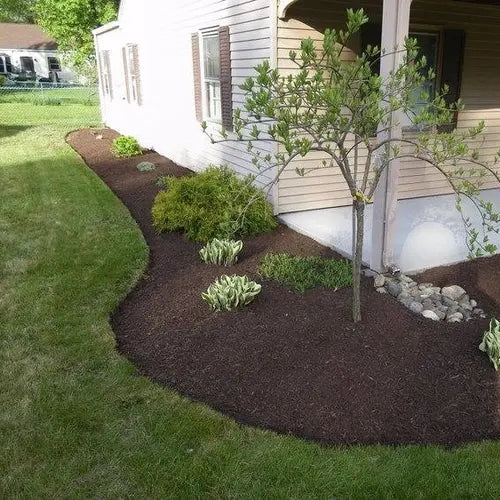
Coshocton's climate delivers a full range of seasonal stress to landscape beds, from frost events as late as May 1 and as early as October 20 to summer dry spells that follow close behind a very wet spring. Mulch is not just a cosmetic choice here. It is a functional tool for managing the moisture swings that our 40 inches of annual rainfall and silt loam soil create. Natural wood mulches also contribute organic matter as they break down, which directly improves the structure of Coshocton's dense silt loam over time.
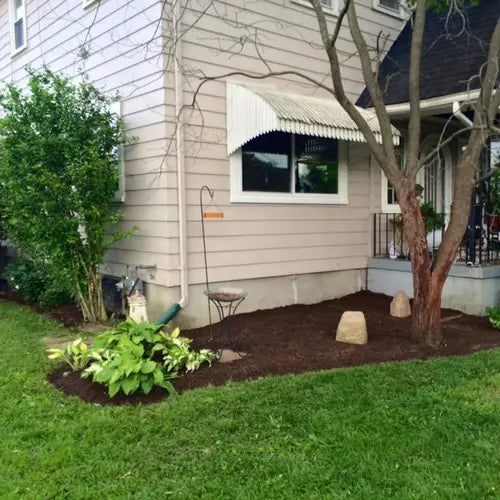
Before
After
Best Mulch Choice for Coshocton Lawns
Most yards in the Coshocton area sit on type of soil. Coshocton's silt loam soil has a tendency to compact under foot traffic and heavy rain, which squeezes out the air pockets that plant roots depend on for gas exchange and water uptake. Keeping a mulch layer over the soil surface reduces the impact of rainfall and foot traffic, preserving that loose structure in your beds through the growing season.
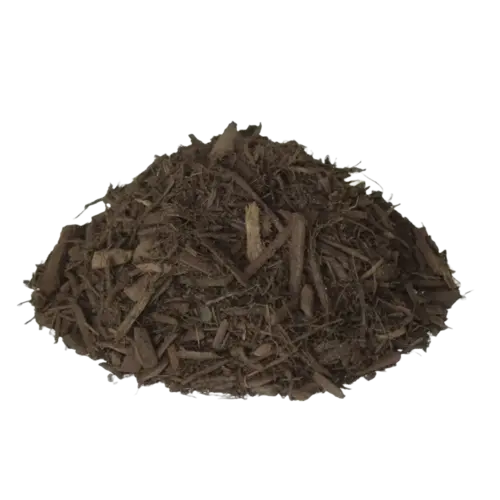
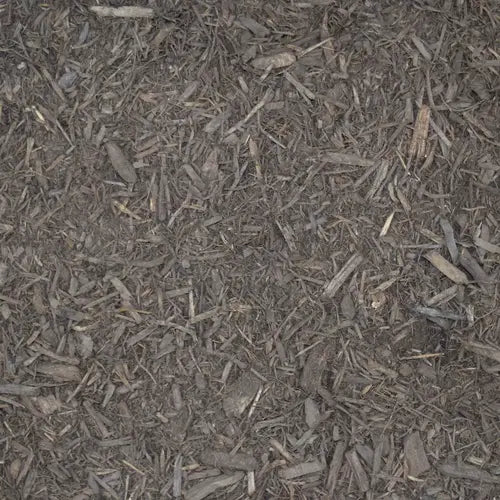
Hardwood Mulch
Hardwood mulch is a particularly good match for Coshocton's silt loam soil because as it decomposes it releases lignin and organic acids that bind silt particles together into larger aggregates, improving both drainage and aeration. Over two or three growing seasons, beds mulched with hardwood consistently show looser, darker soil beneath the mulch layer, which means better root penetration and less need for mechanical tilling.
Complete Your Outdoor Mulch Project
Pairing mulch with a quality topsoil or compost-amended garden soil in your planting holes gives Coshocton plants a strong nutritional start before the mulch layer takes over moisture and temperature management. Adding a border of natural stone edging keeps your fresh mulch in place on Coshocton's rolling terrain and gives beds a clean, defined look all season.
Coshocton gardeners often make the mistake of piling mulch right against foundation plantings, especially on the north and east sides of homes where moisture lingers longest. Our silt loam soil already drains slowly, and trapping dampness against wood or brick with a thick mulch berm invites mold and insect problems. Keep mulch at least 2 inches away from any structure and rake it level rather than mounding it for the best results in this climate.
Mulch Mound Pro Tip
Timing your mulch application around Coshocton's last frost date of May 1 makes a real difference for perennial beds. If you mulch too early in April while the ground is still fluctuating, you can lock in cold temperatures and delay plant emergence by a week or more. Wait until soil temps are consistently above 50 degrees, which in Coshocton typically happens in the first two weeks of May, then apply your full layer to hold that warmth and give roots the stable environment they need.
Mulch Mound Pro Tip
Because Coshocton receives a steady 40 inches of rain per year, weed pressure in mulched beds comes largely from wind-blown seeds landing on top of the mulch surface rather than from seeds already in the soil. Keeping your mulch layer topped up to at least 2 inches all season long reduces the seedbed that wind-deposited weed seeds need to establish. A quick rake in mid-July to break up any crusted or matted mulch also disrupts early weed roots before they get a grip.
Frequently Asked Questions
Click a question to see the answer
Answer
How thick should I apply mulch in Coshocton given how wet our springs can get?
In Coshocton, where spring rainfall averages put a lot of moisture into the soil between March and May, a 2 to 3 inch layer of mulch is the sweet spot for most ornamental beds. Going deeper than 3 inches in areas with our silt loam soil can trap too much moisture against plant crowns and encourage rot, especially in low spots along the hillsides common in this part of Coshocton County. Keep mulch pulled back an inch or two from stems and trunks to allow airflow.
Answer
Will mulch break down faster here because of all the rain we get?
Yes, Coshocton's 40 inches of annual rainfall does accelerate decomposition compared to drier parts of Ohio. Hardwood bark mulch tends to hold up better through the wet seasons than finely shredded wood, giving you a full growing season before you need to top it off. Plan on refreshing your beds every spring around the last frost date of May 1 to restore depth and appearance before the growing season peaks.
Answer
My yard is on a slope near the Muskingum River bottom and mulch keeps washing away. What can I do?
Slope erosion is a real challenge for many Coshocton properties, especially those on grades above the river bottom where runoff picks up speed. For sloped beds, a shredded hardwood mulch with irregular texture interlocks better and resists displacement compared to dyed wood chips or nuggets. On steeper grades, pairing mulch with edging or a light layer of decorative stone at the downhill edge helps hold everything in place during heavy rain events.
Answer
Does the color of dyed mulch fade quickly in our Ohio summer sun?
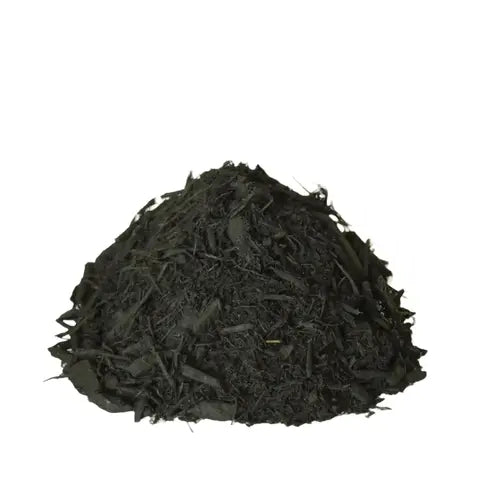
Coshocton gets a solid mix of sun and cloud cover throughout the summer, but UV exposure is still enough to fade dyed mulches noticeably by mid-August if applied in full-sun beds. Black and brown dyed mulches tend to hold color a bit longer than red in this region. If color retention matters to you, plan a light top-dressing later in the season or choose a natural hardwood mulch whose aged gray-brown tone blends naturally with the Coshocton landscape.
Answer
I have a lot of silver maples dropping seeds every spring. Will mulch help keep them from germinating in my beds?
Silver maples are prolific in Coshocton and their seeds are relentless in bare soil. A consistent 2 to 3 inch mulch layer significantly reduces germination by blocking light and creating an unstable surface for seedlings trying to root. It will not eliminate every sprout, but it cuts down hand-weeding time dramatically. Pulling the few that do emerge is much easier from mulched beds than from packed silt loam soil.
Answer
Is it okay to put mulch down before my last frost date of May 1?
You can mulch beds before May 1 in Coshocton, but pull it back from emerging perennial crowns until the threat of a hard freeze has passed. A thick mulch layer actually insulates the soil, which can slow warming for early-season plants that need soil temps to rise. Around established shrubs and trees, applying mulch in late April is perfectly fine and gets your beds looking clean before the neighborhood really greens up.
Answer
How many cubic yards of mulch do I need for a typical backyard bed in Coshocton?
A good rule for Coshocton beds is to measure the square footage of your planting area and divide by 108 to get cubic yards at a 3 inch depth. For a typical 300 square foot foundation bed around a Coshocton ranch-style home, that works out to roughly 2.8 cubic yards. It is usually worth rounding up by half a yard since our silt loam soil compresses mulch slightly faster than sandier soils, and having a little extra means you can fill thin spots without a second order.
The Unique Landscape of Coshocton
Coshocton sits at 814 feet elevation in the Muskingum River valley, where the combination of 40 inches of annual rainfall and clay-influenced silt loam soil creates landscape beds that swing between soggy and bone-dry depending on the season. Without a solid layer of mulch, that moisture evaporates quickly during Coshocton's warm July and August stretches, stressing roots just when plants need stability most. The growing season here runs from roughly May 1 through October 20, giving your plants about 172 days to establish themselves, and mulch is one of the best tools for making every one of those days count. Local gardens also contend with late spring temperature swings that can heave shallow-rooted plants when the ground thaws and refreezes near the frost window. A consistent mulch layer buffers those temperature changes and keeps beneficial soil organisms active longer into the fall. Choosing the right mulch depth and type for Coshocton's specific conditions means healthier beds with far less supplemental watering and weeding all season long.