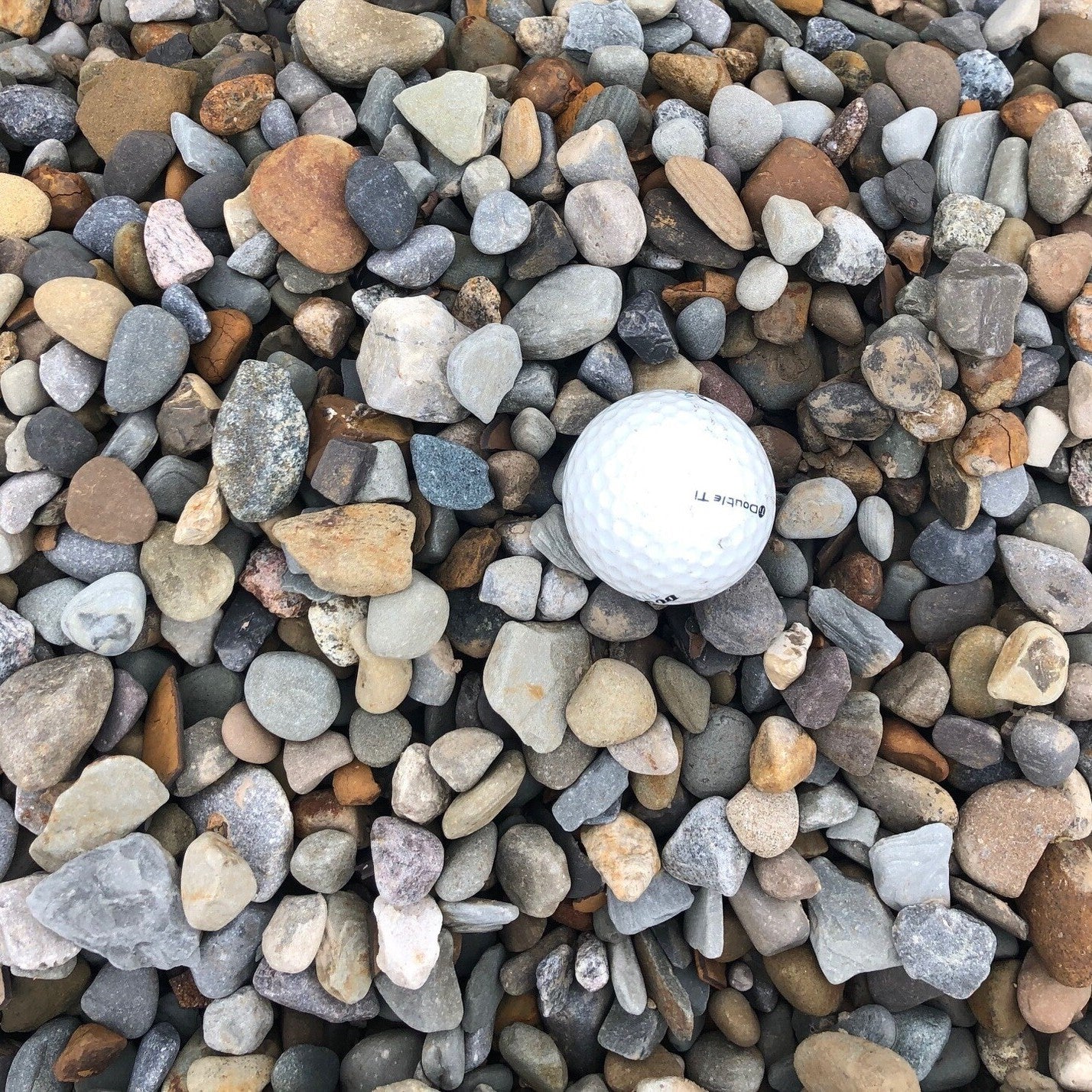
Number 57 crushed stone, angular limestone graded to about three quarters of an inch. The standard driveway, base and drainage gravel, it locks together under traffic and drains fast.
I contacted Mulch Mound for #57 river rocks and it was easy and fast to get a delivery right before the holiday weekend. Stone was delivered as promised and place exactly where I asked. Excellent service! I will be ordering mulch next!
Tell us what you're looking for
Thanks! We received your request.
Something went wrong. Please try again.
How Much Material Do I Need?
For decorative bed coverage in Culpeper, plan for two to three inches of depth, which provides good weed suppression and a finished appearance without requiring so much stone that the added weight compresses your clay soil into a harder layer beneath. For drainage features and dry creek beds, four to six inches of depth gives water a functional channel with enough stone volume to move meaningful amounts of runoff during heavy rain events.
Use our free gravel calculator
What is a Yard?
A yard is approximately 27 cubic feet. As a general guideline, one yard of material can cover an area of about 100-160 square feet at a 2-3 inch depth.
We can't take orders for this right now. Tell us what you need and we'll get back to you.
What do you need?
Thanks! We received your request.
Something went wrong. Please try again.
Hand-picked local yards
4,000+ regional deliveries
Dedicated support
Why order through Mulch Mound
The best local , without the guesswork.
We hand-pick and partner with the best yards in your region, keep only the ones our buyers rate well, and back each load with our guarantee.
Mulch Mound Guarantee
If your isn't the quantity or quality you ordered, we'll make it right.
About this stone
Number 57 crushed stone, angular limestone graded to about three quarters of an inch. The standard driveway, base and drainage gravel, it locks together under traffic and drains fast.
I contacted Mulch Mound for #57 river rocks and it was easy and fast to get a delivery right before the holiday weekend. Stone was delivered as promised and place exactly where I asked. Excellent service! I will be ordering mulch next!
How Much Material Do I Need?
For decorative bed coverage in Culpeper, plan for two to three inches of depth, which provides good weed suppression and a finished appearance without requiring so much stone that the added weight compresses your clay soil into a harder layer beneath. For drainage features and dry creek beds, four to six inches of depth gives water a functional channel with enough stone volume to move meaningful amounts of runoff during heavy rain events.
Use our free gravel calculator
What is a Yard?
A yard is approximately 27 cubic feet. As a general guideline, one yard of material can cover an area of about 100-160 square feet at a 2-3 inch depth.
I contacted Mulch Mound for #57 river rocks and it was easy and fast to get a delivery right before the holiday weekend. Stone was delivered as pro...
Read full review
I contacted Mulch Mound for #57 river rocks and it was easy and fast to get a delivery right before the holiday weekend. Stone was delivered as promised and place exactly where I asked. Excellent service! I will be ordering mulch next!
For coverage projects, multiply your bed length by width in feet to get square footage, then multiply by the depth of coverage in inches divided by 12 to get cubic feet, and divide by 27 to convert to cubic yards. Stone is also sold by the ton, and most decorative gravels weigh approximately 1.3 to 1.5 tons per cubic yard, so your total will vary by stone type. When in doubt about quantities for a Culpeper project, measure twice and round up to the nearest half yard.
Complete Your Outdoor Stone Project
Stone coverage works best when placed over a healthy soil base, so consider ordering a load of amended topsoil to build up or level any low spots in your beds before your stone goes down. Hardwood mulch is a great complement for wooded or shaded areas of your property where stone would look out of place but where you still need ground cover protection for your clay soil.
Before placing any decorative stone in Culpeper planting beds, spend time getting your edging right. Clay soil heaves and shifts through winter freeze cycles, and without a solid physical barrier between your stone and the surrounding lawn or soil, you will spend every spring pushing escaped gravel back into place. Metal or heavy-gauge plastic edging set several inches deep into the clay holds a clean line through the seasonal movement that is normal for Zone 7a gardens and protects your investment in the stone coverage.
Mulch Mound Pro Tip
Culpeper's summer thunderstorms can dump an inch or more of rain in an hour, and that volume of water moving across clay soil will dislodge and carry lighter stone from any slope or transition area. When placing crushed stone in a sloped area, choose angular material rather than smooth river pebbles and compact it firmly in place. On steeper grades, stepping the stone into level terraces with timber or steel retaining borders prevents the seasonal creep that makes sloped gravel installations look ragged within a few years.
Mulch Mound Pro Tip
If you are converting existing wood-mulched beds to decorative stone in Culpeper, take the time to remove as much of the old decomposed mulch material as you can before laying landscape fabric and stone. Decomposed organic mulch mixed into the base creates a soft, uneven layer beneath the stone that compresses unevenly, allows weeds to root easily, and contributes to the fabric bunching and shifting over time. Starting with a relatively clean, firm clay surface under your fabric gives your stone installation a longer useful life before it needs to be refreshed.
The Unique Landscape of Culpeper
Decorative and functional stone is one of the most practical landscaping materials for Culpeper properties precisely because it stands up to conditions that break down organic alternatives. With 44 inches of annual rainfall, heavy clay soil that erodes easily, and freeze-thaw cycles that run from late October through mid-April, Culpeper yards need hardscaping materials that stay put season after season. Stone paths and borders hold their position through wet winters when ground movement from freezing clay can shift lighter materials around. Crushed stone in drainage-prone areas handles runoff from summer thunderstorms far better than bare clay, which compacts and channels water destructively. Whether you are building a path, creating a dry creek bed, defining bed edges, or improving drainage around your home, bulk stone delivered by the ton or cubic yard is the most cost-effective way to get the job done right.
Frequently Asked Questions
Click a question to see the answer
Answer
What type of stone works best for paths around my Culpeper yard that will hold up through winter?
Crushed gravel with angular edges, like crusher run or #57 stone, works best for paths in Culpeper. Angular crushed stone compacts and locks together in a way that round river pebbles do not, which matters in Zone 7a where freeze-thaw cycles heave and shift loose materials through November and December. A compacted base of crusher run topped with a finer decorative gravel gives you a path that stays stable through winter and drains well during spring rains rather than turning into a muddy channel.
Answer
I have a low area near my foundation where water pools every spring. Can stone help fix that?
Yes, stone is one of the most effective tools for managing the kind of foundation drainage problems that Culpeper's clay soil and 44 inches of annual rainfall create. A dry creek bed filled with river rock or a trench filled with crushed stone and perforated pipe gives pooling water a path away from your foundation. Even a simple French drain filled with washed gravel and wrapped in landscape fabric can move a significant amount of water away from problem areas. Stone drainage features also hold up far better than bare soil channels, which erode quickly in heavy spring and summer storms.
Answer
How much stone do I need to cover my planting beds as a mulch alternative?
For a two-inch coverage layer of decorative stone over planting beds, plan on roughly one ton of material per 100 square feet, though this varies with the size and density of the stone. River rock and larger cobbles cover area less efficiently than smaller pea gravel, so adjust upward if you are using a chunkier material. Culpeper homeowners who switch from wood mulch to stone in foundation beds often find they need more material than they estimated because the beds are larger than they remembered once they start measuring.
Answer
Does stone as a ground cover actually help or hurt plants in Culpeper's hot summers?
It depends on your plant selection and bed placement. Stone absorbs and radiates heat, which can raise soil temperatures in south-facing beds to levels that stress shallow-rooted plants during Culpeper's July and August heat. For beds with drought-tolerant ornamentals, ornamental grasses, or heat-loving perennials, stone coverage works beautifully and eliminates annual mulch replacement. For beds with shade-loving plants, hostas, or moisture-sensitive perennials, organic mulch stays the better choice. The thermal mass of stone can also help extend the growing season slightly by keeping root zones warmer after the October frost date.
Answer
Will landscape fabric under my stone keep weeds from coming through in Culpeper clay soil?
Landscape fabric combined with a two-to-three-inch stone layer does a good job of suppressing weed germination from below, but Culpeper homeowners should expect that wind-blown weed seeds will eventually establish in the fine sediment and organic debris that collects on top of the stone over time. The fabric layer is absolutely worth using because it prevents your stone from sinking into the clay below and significantly reduces weed pressure in the first several years. Refreshing the stone layer every few years and occasional hand-weeding keeps the beds looking clean long-term.
Answer
What is the best stone for a driveway apron or parking area on red clay soil?
Crusher run or dense-graded aggregate is the standard choice for driveways and parking areas on Culpeper clay because it compacts into a firm stable surface that sheds water and resists ruts. A proper installation starts with four to six inches of compacted crusher run as a base, which prevents the clay beneath from heaving excessively during winter freezes and from softening into muddy sink points after heavy spring rains. A topping layer of 57 stone or pea gravel can be added for appearance if desired, but the compacted base layer is what keeps the surface functional year-round.
Answer
I want to build a dry creek bed through my back yard to handle runoff. How do I figure out how much stone to order?
Measure your planned creek bed length in feet, multiply by the average width in feet, and multiply by the average depth of your stone layer in feet, then divide by 27 to get cubic yards. A typical decorative dry creek in Culpeper is eight to twelve feet wide and filled with a mix of river rock sizes at about four to six inches of depth. For a 50-foot run at ten feet wide and five inches deep you are looking at roughly 7 to 8 cubic yards. It is always better to order slightly more than your calculation suggests because creek beds with varied depth and layered rock sizes use material quickly.
Answer
Is crush and run the same as crusher run?
Crush and run refers to crushed stone blended with stone dust that compacts into a firm base, a good description for material used under pavers or driveways. With Culpeper's clay soil and freeze-thaw winters, our Crushed Stone #57 offers clean, free-draining coverage that resists shifting without relying on fines to bind it.