


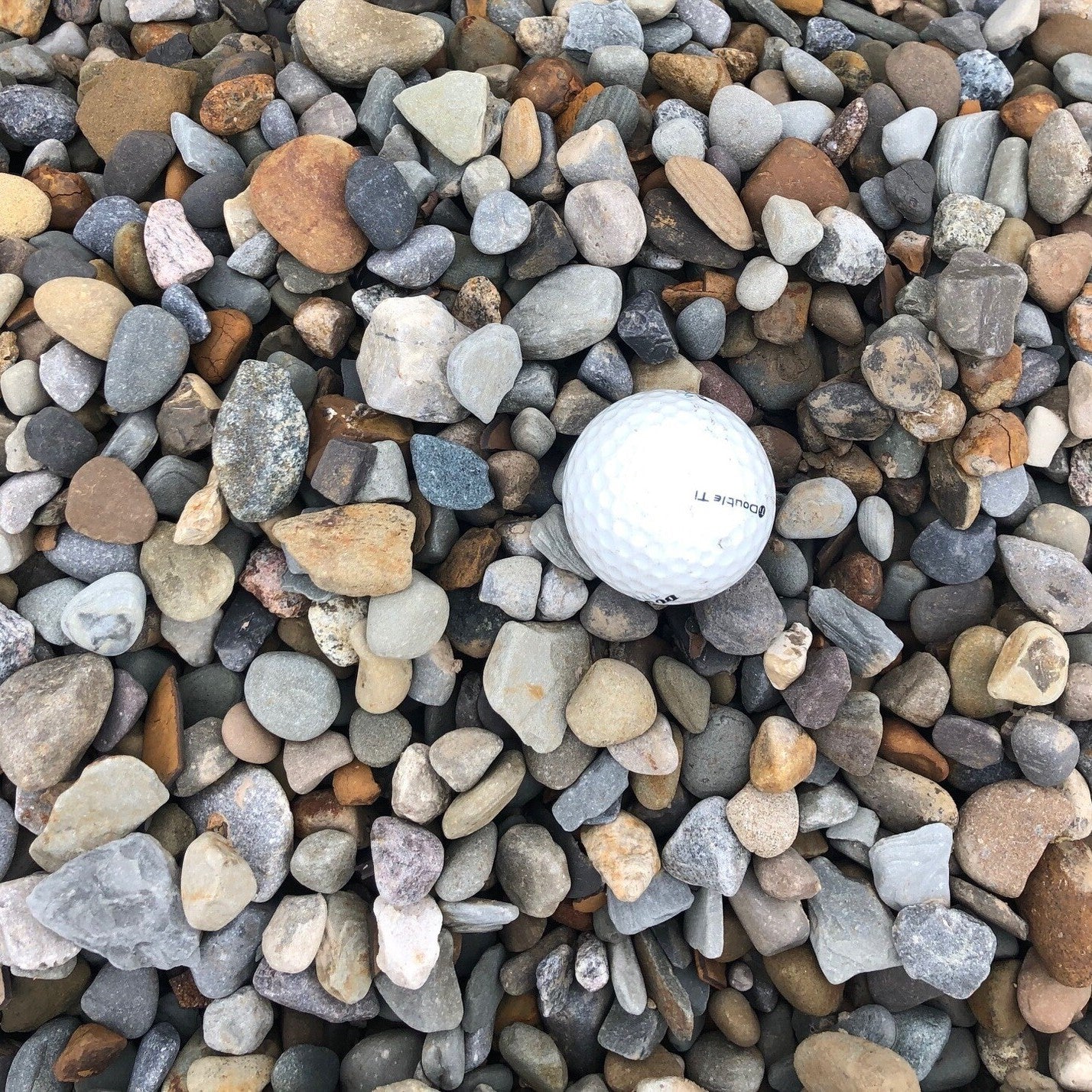

The driver nailed it on putting the gravel I ordered in front of my trailer and between the sidewalk. Very satisfied with how my flowerbeds look now.
About this stone
Number 57 crushed stone, angular limestone graded to about three quarters of an inch. The standard driveway, base and drainage gravel, it locks together under traffic and drains fast.
The driver nailed it on putting the gravel I ordered in front of my trailer and between the sidewalk. Very satisfied with how my flowerbeds look now.
Tell us what you're looking for
Thanks! We received your request.
Something went wrong. Please try again.
How Much Material Do I Need?
How Much Material Do I Need?
Most decorative stone applications in Dalton, including pathways, bed borders, and foundation bands, perform best at a 2 to 3-inch depth, which is deep enough to suppress weeds and stay in place through rain events without requiring excessive volume. Drainage channels and erosion control slopes need a minimum of 3 to 4 inches to hold up against Dalton's heavier storms.
Use our free gravel calculator
What is a yard?
What is a yard?
FAQs
FAQs
Dalton Gravel Delivery
Dalton Gravel Delivery
Regular price
$133.00
per
yard
Regular price
Sale price
$133.00
Unit price
per
Shipping calculated at checkout.
Minimum of 3 yard
Couldn't load pickup availability
Not currently available
We can't take orders for this right now. Tell us what you need and we'll get back to you.
Hand-picked local yards
4,000+ regional deliveries
Dedicated support
Why order through Mulch Mound
The best local stone, without the guesswork.
We hand-pick and partner with the best yards in your region, keep only the ones our buyers rate well, and back each load with our guarantee.
Mulch Mound Guarantee
If your stone isn't the quantity or quality you ordered, we'll make it right.
About this stone
Number 57 crushed stone, angular limestone graded to about three quarters of an inch. The standard driveway, base and drainage gravel, it locks together under traffic and drains fast.
The driver nailed it on putting the gravel I ordered in front of my trailer and between the sidewalk. Very satisfied with how my flowerbeds look now.
How Much Material Do I Need?
How Much Material Do I Need?
Most decorative stone applications in Dalton, including pathways, bed borders, and foundation bands, perform best at a 2 to 3-inch depth, which is deep enough to suppress weeds and stay in place through rain events without requiring excessive volume. Drainage channels and erosion control slopes need a minimum of 3 to 4 inches to hold up against Dalton's heavier storms.
Use our free gravel calculator
What is a yard?
What is a yard?
FAQs
FAQs
Tell us what you're looking for
Thanks! We received your request.
Something went wrong. Please try again.
How It Works
Getting started is easy — just follow these simple steps
1
Choose your stone
Make sure you adjust the quantity to your home's needs. You can use our calculator to estimate how much you'll need.
2
Select your delivery date
Select a delivery date you'd like for the product to be dropped off at your home
3
Sit back and wait
Sit back, wait, and let us work our magic to make sure the highest quality product is delivered to your driveway.


Need Help Calculating How Much Gravel You Need?
Use our NEW Trace from Satellite tool to get an estimate for your project based on an aerial view of your property
Try Our CalculatorMeasure the length and width of your project area in feet and multiply for total square footage. Divide that number by 12 to get cubic feet per inch of depth, then divide by 27 to convert to cubic yards. For most decorative and pathway applications in Dalton, a 2 to 3-inch depth is standard, but drainage and erosion control areas on clay slopes should be planned at 3 to 4 inches to hold up against heavier storm events.
Stone Types We Deliver in Dalton
Mulch Mound delivers bulk stone by the cubic yard to homes and properties throughout the area, making it easy to get exactly the material your project needs. Whether you are searching for bulk gravel by the yard in Dalton or planning a larger landscaping overhaul, we handle the hauling so you can focus on the work. Northwest Georgia's red clay soil and warm, wet summers make quality stone an essential part of any drainage or hardscape plan.
Pea Gravel
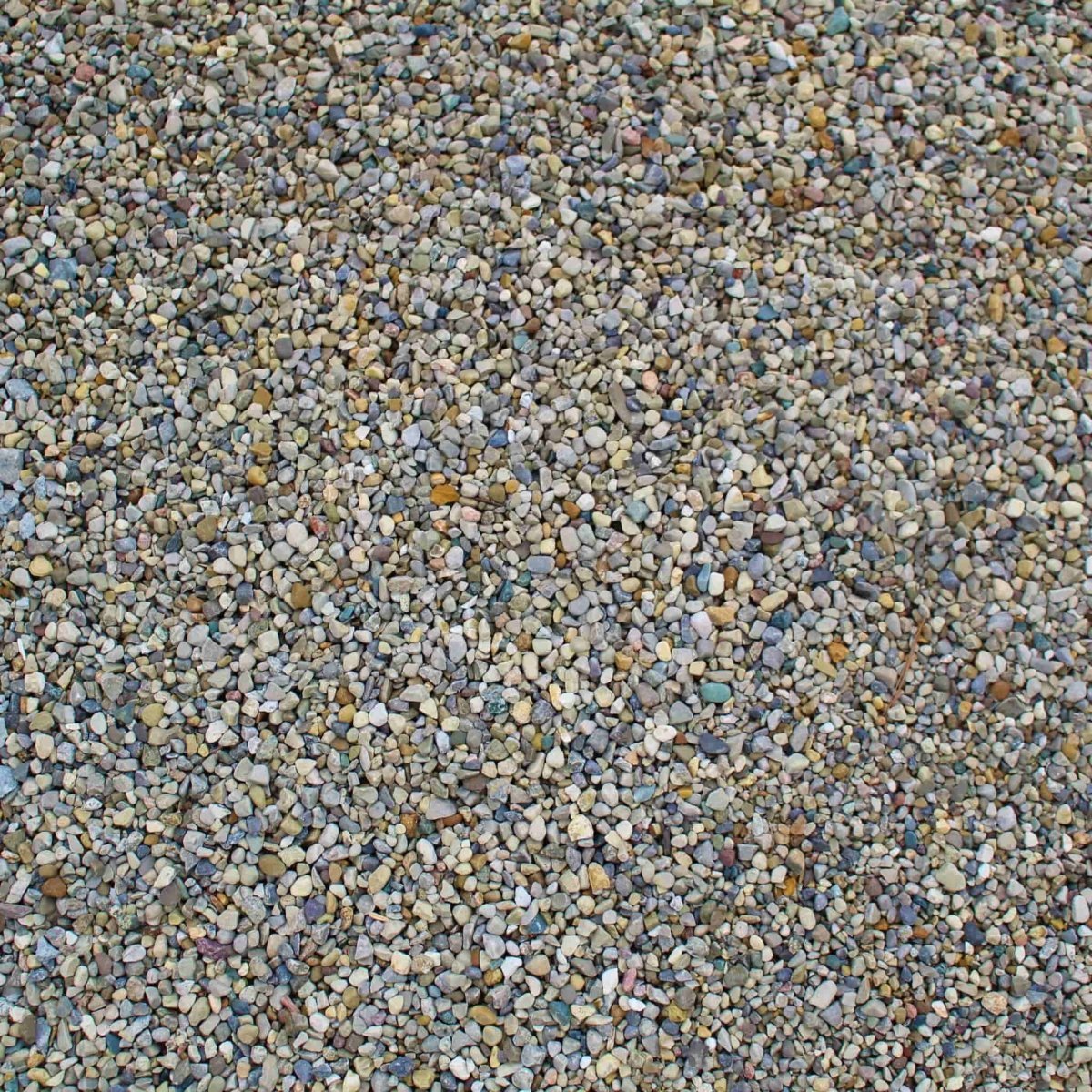
Pea gravel is a go-to choice for northwest Georgia homeowners who want a clean, low-maintenance ground cover. Its smooth, rounded edges and warm earth tones pair naturally with the wooded lots and cottage-style gardens common to this part of the state. It drains exceptionally well, which matters in a region with heavy summer rainfall.
1-2" River Stone
These larger smooth river rocks bring a natural, polished look to landscapes throughout the foothills region of Georgia. They work beautifully in dry creek beds and decorative borders around trees or garden beds, and their size makes them resistant to washing away during the heavy seasonal rains common in this area.
Complete Your Outdoor Stone Project
Stone pairs well with a layer of landscape fabric underneath to keep Dalton's red clay from working up through the rock over time. Adding bulk mulch to adjacent planting beds creates a clean visual contrast and gives organic areas the moisture retention they need while stone handles drainage and high-traffic zones nearby.



Service area
Areas we deliver stone and gravel in Dalton, Georgia
Mulch Mound Pro Tip
Dalton's red clay has a habit of migrating up through stone layers over time, a process where foot traffic and rainfall gradually push fine clay particles into the gaps between rocks and turn a clean gravel surface into a muddy mess. Installing a permeable landscape fabric or geotextile barrier beneath your stone before placement significantly slows this process. It is an extra step that many homeowners skip, but in Dalton's clay-heavy soil it can extend the clean, functional life of a stone path or drainage area by many years.
Mulch Mound Pro Tip
If you are building a dry creek bed to manage runoff in your Dalton yard, route it to follow the natural low contours of your property rather than cutting straight across the slope. Dalton's terrain has enough variation at 761 feet of elevation that working with the natural drainage direction dramatically improves how much water the feature can handle during storms. A well-routed dry creek bed can manage the runoff from a significant portion of your yard without eroding its edges or depositing stone out onto your lawn.
Mulch Mound Pro Tip
For stone pathways in Dalton, compact the base thoroughly before laying your surface stone. Red clay shrinks and swells with moisture changes throughout the year and a poorly compacted base will cause stone surfaces to heave and settle unevenly, especially after the wet winters and dry summers that northwest Georgia experiences. A firm, compacted crusher run or gravel base of 3 to 4 inches beneath your decorative stone is the single most important factor in building a path that stays level and stable through multiple seasons.
The Unique Landscape of Dalton
Stone is one of the most practical and low-maintenance materials a Dalton homeowner can invest in, especially given the challenges that red clay and heavy rainfall create for traditional landscaping. Clay soil stays saturated after rain events and erodes quickly on slopes, and stone pathways and drainage channels offer a durable solution that does not wash away or compact under foot traffic. With Dalton averaging 53 inches of rain per year, poorly managed surface water is one of the leading causes of foundation damage, erosion, and plant loss in local yards. Stone placed around foundation borders and in low-drainage areas redirects that water and prevents it from pooling against structures or drowning plant roots. Beyond function, decorative stone also dramatically reduces the maintenance burden for Dalton homeowners by replacing mulched or grassy areas that require constant seasonal attention. Whether you are building a path through a garden, creating a dry creek bed, or edging your property, bulk stone delivers results that stand up to northwest Georgia's climate year after year.