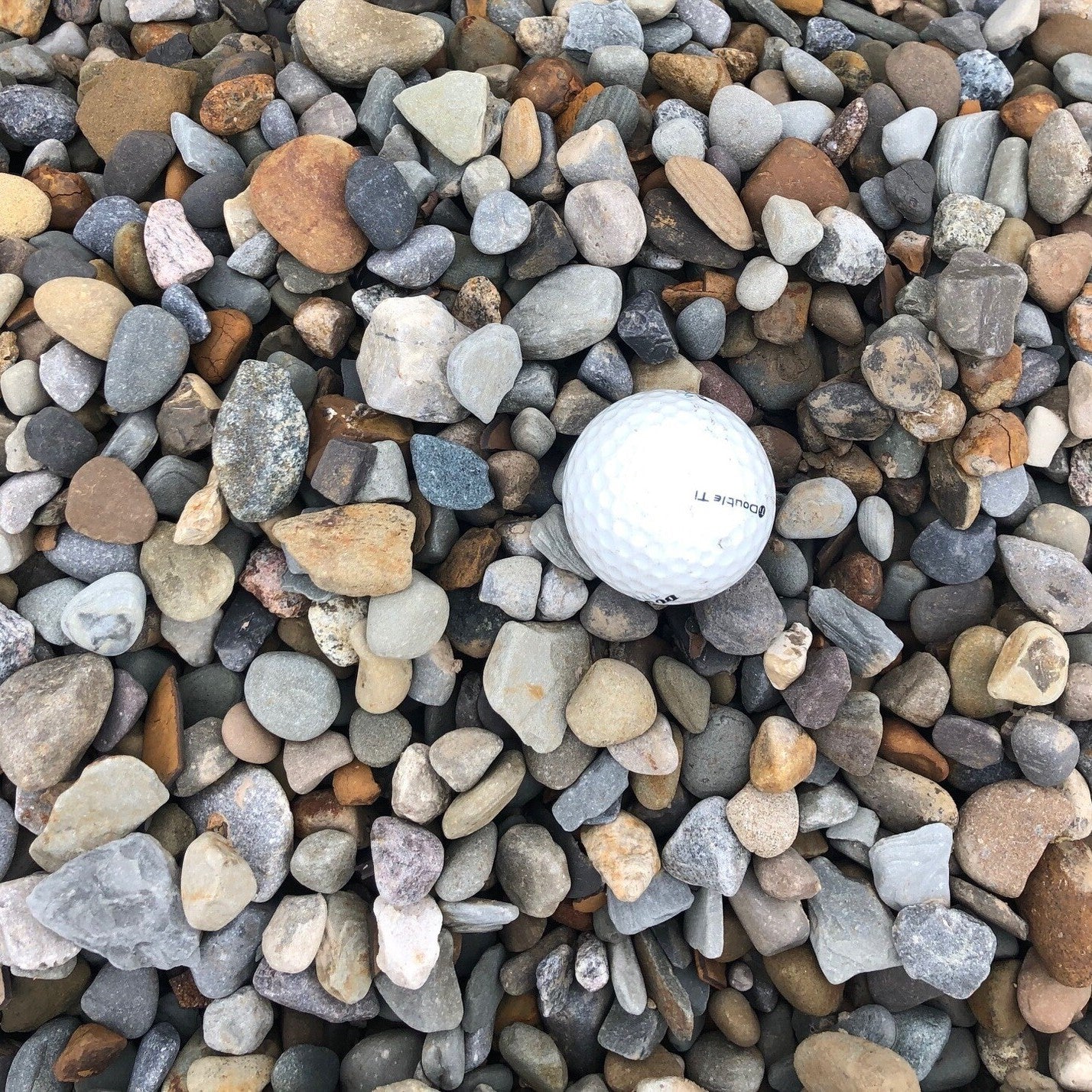
Number 57 crushed stone, angular limestone graded to about three quarters of an inch. The standard driveway, base and drainage gravel, it locks together under traffic and drains fast.
My experience with Mulch Mound was great and super easy. I ordered two yards of screened topsoil and was able to get it delivered within 2 days. They came in my requested time frame (afternoon) and dropped it off where I asked on my driveway. The topsoil was exactly what was a...
Tell us what you're looking for
Thanks! We received your request.
Something went wrong. Please try again.
How Much Material Do I Need?
For decorative and ground cover applications in Daytona Beach, a two to three inch depth provides solid visual coverage that stays in place through the region's summer storms. Drainage-focused installations along downspouts or in sandy swales perform best at three to four inches to maintain effective water flow even as fine sandy soil gradually migrates toward the stone over time.
Use our free gravel calculator
What is a yard?
A yard is approximately 27 cubic feet. As a general guideline, one yard of material can cover an area of about 100-160 square feet at a 2-3 inch depth.
We can't take orders for this right now. Tell us what you need and we'll get back to you.
What do you need?
Thanks! We received your request.
Something went wrong. Please try again.
Hand-picked local yards
4,000+ regional deliveries
Dedicated support
Why order through Mulch Mound
The best local stone, without the guesswork.
We hand-pick and partner with the best yards in your region, keep only the ones our buyers rate well, and back each load with our guarantee.
Mulch Mound Guarantee
If your stone isn't the quantity or quality you ordered, we'll make it right.
About this stone
Number 57 crushed stone, angular limestone graded to about three quarters of an inch. The standard driveway, base and drainage gravel, it locks together under traffic and drains fast.
My experience with Mulch Mound was great and super easy. I ordered two yards of screened topsoil and was able to get it delivered within 2 days. They came in my requested time frame (afternoon) and dropped it off where I asked on my driveway. The topsoil was exactly what was a...
How Much Material Do I Need?
For decorative and ground cover applications in Daytona Beach, a two to three inch depth provides solid visual coverage that stays in place through the region's summer storms. Drainage-focused installations along downspouts or in sandy swales perform best at three to four inches to maintain effective water flow even as fine sandy soil gradually migrates toward the stone over time.
Use our free gravel calculator
What is a yard?
A yard is approximately 27 cubic feet. As a general guideline, one yard of material can cover an area of about 100-160 square feet at a 2-3 inch depth.
My experience with Mulch Mound was great and super easy. I ordered two yards of screened topsoil and was able to get it delivered within 2 days. Th...
Read full review
My experience with Mulch Mound was great and super easy. I ordered two yards of screened topsoil and was able to get it delivered within 2 days. They came in my requested time frame (afternoon) and dropped it off where I asked on my driveway. The topsoil was exactly what was advertised, clean with no rocks or other debris. The price was reasonable. I plan to use them again in a couple weeks to order compost for my garden beds.
For stone projects in Daytona Beach, measure each area carefully and get square footage right before estimating volume, since different stone sizes cover differently and perform at different effective depths. Larger decorative rocks cover more area per ton than small pea gravel, and in Daytona Beach's sandy landscape a depth of two to three inches is typically adequate for decorative purposes while drainage installations benefit from three to four inches. Accurate measurements up front save you from a shortfall that leaves bare sandy patches exposed or an overage of heavy material that is difficult to move after delivery.
Stone Types We Deliver in Daytona Beach
Mulch Mound delivers bulk stone by the cubic yard to homes and properties across Daytona Beach, making it simple to upgrade your landscape without the hassle of hauling. If you have been searching for bulk gravel by the yard or need a reliable local source for your next hardscape project, we carry the varieties Florida homeowners reach for most. Our team sizes each delivery to your project, whether you need a small accent area covered or a full yard refreshed.
Pea Gravel
Pea gravel suits yards throughout this part of Florida's coast, where its excellent drainage handles heavy seasonal rains and sandy soil with ease. The smooth, rounded stones are comfortable underfoot on patios and garden paths, and their warm earth tones complement the relaxed, open landscape style common in this region.
Complete Your Outdoor Stone Project
Pair stone borders with bulk mulch in your planting beds to create a defined landscape that manages both drainage and moisture retention through Daytona Beach's heavy summer rain season. If you are building new garden beds alongside your stone features, our bulk soil gives Daytona Beach's sandy ground the nutrient content and structure it needs to support healthy plant growth right up to your stone edges.
Daytona Beach's sandy soil is soft enough that heavy stone can gradually sink over a season or two without a proper foundation underneath it. Before placing any stone pathway or large decorative area, install a quality woven landscape fabric and consider a thin compacted base of coarse material beneath the decorative layer. This preparation adds an hour or two to the installation but dramatically extends how long your stone feature stays level and attractive in Florida's shifting sandy conditions.
Mulch Mound Pro Tip
Daytona Beach gets intense sun for the majority of the year, and stone surfaces absorb and radiate significant heat compared to mulch or turf. When planning stone features near the house or outdoor seating areas, consider how afternoon sun will hit the surface before committing to a dark stone color. Lighter materials like white river rock, cream-toned pea gravel, or natural buff limestone reflect more heat and keep surrounding areas noticeably cooler during the long zone 9b summer months.
Mulch Mound Pro Tip
One of the most practical uses of stone in Daytona Beach is along downspout outlets and the edges of driveways and patios where concentrated runoff hits the ground. The area's summer rainfall can dump several inches in a short period, and bare sandy soil at those discharge points erodes quickly and creates gullies that grow worse with every storm. A generous apron of stone at each drainage point absorbs the impact, slows water velocity, and keeps sandy material from washing across hard surfaces after every major rain event.
The Unique Landscape of Daytona Beach
In Daytona Beach's sandy coastal environment, stone provides a permanent and low-maintenance ground cover that organic materials simply cannot match in high-traffic areas or problem spots prone to erosion. Sandy soil shifts and washes easily, especially during the heavy summer storm season, making stone an ideal solution for pathways, drainage channels, and foundation borders where stability and permanence are priorities. The area's 51 inches of annual rainfall, concentrated largely in summer thunderstorms, can carve visible channels through bare sandy ground, and strategically placed stone slows water velocity and protects landscape features from being undermined. Daytona Beach's year-round warm climate eliminates the frost-heave cycle that disrupts stone installations in northern states, giving well-placed stone features exceptional longevity in this zone 9b environment. Stone also reduces the square footage of beds that require regular watering, weeding, and mulching, which is a genuine maintenance benefit given how demanding Daytona Beach's long growing season is on the rest of the landscape.
Frequently Asked Questions
Click a question to see the answer
Answer
What kind of stone works best for drainage in Daytona Beach's sandy soil?
For drainage applications in Daytona Beach's sandy soil, a clean river rock or washed gravel in the half-inch to one-and-a-half-inch range works well because it allows water to move through quickly without fine particles that cause clogging over time. French drain channels alongside driveways or near downspouts benefit from a coarser stone that maintains open space between pieces even as sandy soil slowly migrates toward the edges. Clean washed stone without dust or fine material stays functional in drainage applications far longer than crusher run or decomposed granite in this environment.
Answer
Will stone get too hot to walk on barefoot during a Daytona Beach summer?
Darker stones like black lava rock or charcoal-toned gravel can become uncomfortably hot underfoot during Daytona Beach's peak summer months, especially in areas with full afternoon sun exposure. Lighter-colored stones such as white marble chips, natural pea gravel, or buff limestone reflect more sunlight and stay meaningfully cooler at the surface, making them a better choice for areas where people or pets walk regularly. For purely decorative areas away from foot traffic, color and visual appeal can take priority over heat considerations.
Answer
How do I keep stone paths from slowly sinking into the sandy ground over time?
Sinking is a common problem in Daytona Beach's soft sandy soil, and the most reliable solution is to install woven landscape fabric before placing your stone, which creates a separation layer between the stone and the shifting sandy base below. For pathways that will see regular foot traffic, a tamped base layer of coarse material before the decorative stone is placed adds structural stability that native sandy soil alone cannot provide. Edging along both sides of the path also keeps stone from migrating outward and thinning the center of your path over time.
Answer
Does stone actually help with the erosion I get around my yard during summer thunderstorms?
Stone is one of the most effective tools for managing the erosion that Daytona Beach's concentrated summer thunderstorms create across bare sandy ground. A two to three inch layer of river rock or gravel along slopes, downspout outlets, and areas prone to sheet flow slows water velocity and protects the sandy soil beneath from being displaced. Stone-lined drainage swales are particularly practical in Daytona Beach's flat terrain, where water often has no clear downhill path and instead spreads across the surface until it slowly soaks through the sandy ground.
Answer
What size gravel works best for a ground cover area in my Daytona Beach yard?
For ground cover areas in Daytona Beach, pea gravel or small river rock in the three-eighths to three-quarter inch range is popular because it is comfortable underfoot, drains quickly through sandy soil, and has a natural look that fits Florida's coastal aesthetic well. Larger decorative stones in the one to two inch range work well for purely visual areas like bed borders and foundation plantings where foot traffic is minimal. Very fine materials like decomposed granite are less ideal in Daytona Beach because the heavy summer rains and sandy base tend to cause them to compact and develop drainage issues fairly quickly.
Answer
Is stone a good choice for the shaded areas in my yard where grass just will not grow?
Stone is an excellent solution for the shaded or heavily compacted areas where turf struggles in Daytona Beach yards. Under large oak canopies, along fence lines that stay too shaded for grass, or beside driveways where foot traffic has compacted the soil, a clean stone ground cover eliminates the frustration of trying to maintain struggling turf in difficult conditions. Unlike mulch, stone does not need periodic replacement, and in Daytona Beach's humid climate it does not create the same fungal habitat that thick organic mulch can in spots that stay persistently shaded and damp.
Answer
How do I figure out how much stone to order for a large pathway or patio border?
To calculate stone for a pathway or large border area, measure the length and width in feet, multiply for total square footage, and then determine volume based on your target depth. In Daytona Beach, a two-inch depth is a common minimum for decorative ground cover, while drainage applications typically call for three to four inches to remain effective as sandy soil gradually shifts around the stone. Stone is considerably heavier than mulch per cubic foot, so accurate measurements before ordering prevent both a costly shortfall and a difficult-to-relocate overage of heavy material.
Answer
Is crush and run the same as crusher run?
Crush and run refers to crushed stone blended with stone dust that compacts into a firm base, often used under driveways and pavers. In Daytona Beach's sandy soil, especially where summer storms cause drainage issues, our clean Crushed Stone #57 is the better choice for stable, long lasting ground cover.