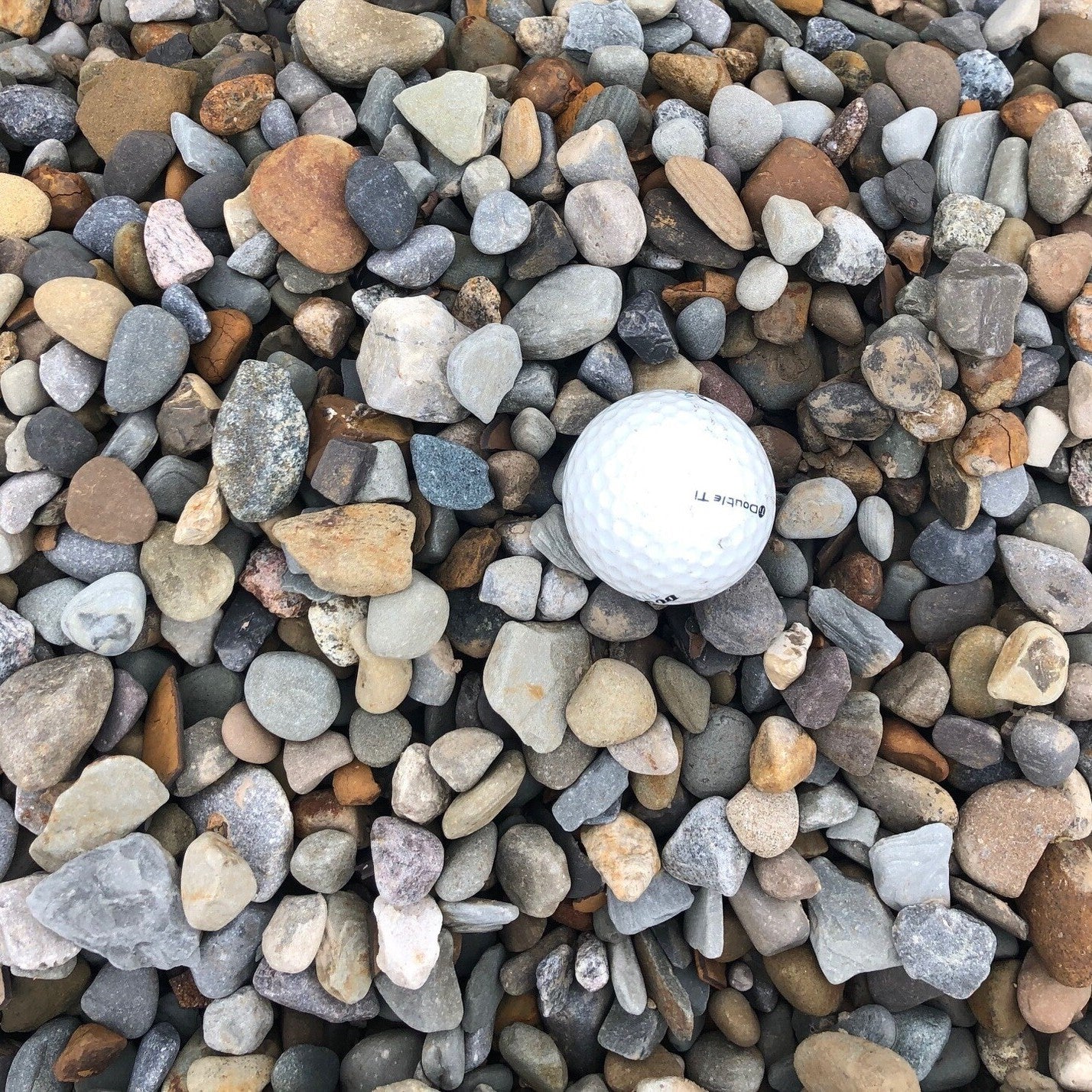
Number 57 crushed stone, angular limestone graded to about three quarters of an inch. The standard driveway, base and drainage gravel, it locks together under traffic and drains fast.
Mulch Mound delivered a yard of pea gravel to us. Delivery was on time, driver was friendly and hit a bullseye on the “tarp target”. We used the pea gravel (which was diameter as specified) to fill several muskrat holes around our pond. I would definitely recommend Mulch Mo...
Tell us what you're looking for
Thanks! We received your request.
Something went wrong. Please try again.
How Much Material Do I Need?
A two to three inch depth is the standard for decorative stone in Enid planting beds and pathways, providing solid coverage without using more material than necessary. Functional applications like drainage strips and driveway bases need four to six inches of compacted stone to perform reliably through Enid's seasonal moisture and temperature changes.
Use our free gravel calculator
What is a Yard?
A yard is approximately 27 cubic feet. As a general guideline, one yard of material can cover an area of about 100-160 square feet at a 2-3 inch depth.
We can't take orders for this right now. Tell us what you need and we'll get back to you.
What do you need?
Thanks! We received your request.
Something went wrong. Please try again.
Hand-picked local yards
4,000+ regional deliveries
Dedicated support
Why order through Mulch Mound
The best local , without the guesswork.
We hand-pick and partner with the best yards in your region, keep only the ones our buyers rate well, and back each load with our guarantee.
Mulch Mound Guarantee
If your isn't the quantity or quality you ordered, we'll make it right.
About this stone
Number 57 crushed stone, angular limestone graded to about three quarters of an inch. The standard driveway, base and drainage gravel, it locks together under traffic and drains fast.
Mulch Mound delivered a yard of pea gravel to us. Delivery was on time, driver was friendly and hit a bullseye on the “tarp target”. We used the pea gravel (which was diameter as specified) to fill several muskrat holes around our pond. I would definitely recommend Mulch Mo...
How Much Material Do I Need?
A two to three inch depth is the standard for decorative stone in Enid planting beds and pathways, providing solid coverage without using more material than necessary. Functional applications like drainage strips and driveway bases need four to six inches of compacted stone to perform reliably through Enid's seasonal moisture and temperature changes.
Use our free gravel calculator
What is a Yard?
A yard is approximately 27 cubic feet. As a general guideline, one yard of material can cover an area of about 100-160 square feet at a 2-3 inch depth.
Mulch Mound delivered a yard of pea gravel to us. Delivery was on time, driver was friendly and hit a bullseye on the “tarp target”. We used the ...
Read full review
Mulch Mound delivered a yard of pea gravel to us. Delivery was on time, driver was friendly and hit a bullseye on the “tarp target”. We used the pea gravel (which was diameter as specified) to fill several muskrat holes around our pond. I would definitely recommend Mulch Mound to a friend!
Stone is denser than mulch or soil, so the depth you choose has a big impact on how many tons or cubic yards you need to order. Measure each bed or coverage area in square feet and decide on your target depth in inches before entering the numbers in our calculator, since even a half-inch difference in depth changes your order significantly over a large area. For irregular shapes like dry creek beds or curved walkways, estimate the average width and multiply by the length to get a close approximation of your square footage.
Complete Your Outdoor Stone Project
If you are converting beds from mulch to stone, a fresh layer of quality topsoil and a weed barrier installation underneath makes the finished project look and perform better from day one. Mulch is still the better choice for active planting beds, so consider mixing stone borders with mulched interior areas for a low-maintenance and visually layered result.
Enid gets enough freeze and thaw cycles from December through February that poorly edged stone beds tend to migrate into lawns over time as the ground contracts and expands. Installing a solid steel or aluminum landscape edging border before you lay stone keeps the material contained through those winter months and makes spring cleanup much easier. The upfront investment in good edging pays off every season by keeping the crisp separation between your stone areas and the surrounding lawn or soil.
Mulch Mound Pro Tip
If you are using decorative stone near your vegetable garden or fruit trees in Enid, choose lighter-colored limestone or buff gravel rather than dark rock. The heat radiation from dark stone in July and August can raise the temperature of adjacent soil enough to stress shallow vegetable roots and speed up moisture evaporation from the bed. Lighter stone reflects more sunlight, stays cooler to the touch, and creates a more forgiving microclimate for the plants growing nearby during Enid's hottest months.
Mulch Mound Pro Tip
Enid's spring weed pressure is significant, with native species like henbit, chickweed, and crabgrass coming on strong from April through June. Before installing any stone bed, take the extra step of clearing existing weeds down to the root rather than just cutting them off at the surface. Weeds that are only topped will push through landscape fabric within weeks, but a thorough kill or manual removal at installation time gives your stone project a much cleaner start and delays weed breakthrough by a full growing season or more.
The Unique Landscape of Enid
Decorative stone and gravel have become increasingly practical choices for Enid homeowners dealing with a climate that swings between late spring downpours and summer drought. Unlike organic mulch that breaks down quickly in Enid's heat, stone is a permanent ground cover solution that holds its appearance year after year without annual replacement. Enid's silt loam soil tends to erode along slopes and driveways during heavy rain events, and a properly installed gravel or rock layer stops that erosion cycle at the surface. Stone also solves one of the most common maintenance headaches in Enid landscaping, which is keeping ground cover looking clean and uniform through a growing season that pushes weeds aggressively from April through October. Whether you are creating a dry creek bed to manage stormwater, setting a decorative path, or converting a high-traffic area to a low-maintenance surface, bulk stone delivers lasting value in Enid's demanding outdoor environment.
Frequently Asked Questions
Click a question to see the answer
Answer
What size gravel works best for a backyard walkway in Enid?
Pea gravel in the three-eighths inch range is the most popular choice for backyard walkways in Enid because it is small enough to compact slightly under foot without the sharp edges that larger angular gravel produces. It drains quickly after Enid's spring rains and does not hold standing water the way smooth flagstone or concrete can in low-lying areas. For higher-traffic paths or areas where carts or wheelbarrows will be used, a quarter-minus crushed granite compacts into a firmer, more stable surface that holds up better under repeated use.
Answer
Will decorative stone get uncomfortably hot around my Enid patio in July?
Darker stone colors like black lava rock or dark brown river gravel absorb significantly more heat than lighter options in Enid's summer sun, and they can radiate that heat into the surrounding air and toward patios in the evening. For areas directly adjacent to seating or entertaining spaces, lighter colored gravel such as white or buff limestone stays noticeably cooler during July and August afternoons. Placing stone in areas with some afternoon shade from structures or trees also reduces heat buildup considerably in Enid's Zone 7a summer conditions.
Answer
Do I need landscape fabric under my stone beds in Enid?
Landscape fabric under stone is genuinely helpful in Enid because the combination of warm temperatures and spring moisture creates aggressive weed pressure from May through September. Fabric slows weed germination significantly by blocking light at the soil surface, though it is not a permanent or complete solution since windblown debris will eventually create a thin layer of organic matter on top of the stone where weeds can still take hold. Using a quality woven geotextile fabric rather than a thin plastic sheeting makes a real difference in longevity, especially since Enid's soil movement during freeze and thaw cycles can shift and bunch cheaper fabrics over time.
Answer
How deep should I install gravel for a driveway apron in Enid?
For a functional driveway apron or parking pad in Enid, four inches of compacted gravel base material is the minimum for light vehicle traffic, and six inches is better for trucks or regular heavy use. Enid's clay-influenced subsoil in many neighborhoods can shift during wet cycles, so a well-compacted base layer of crushed angular gravel rather than round pea gravel gives you the interlocking stability needed to resist ruts and soft spots after spring rains. Adding a top layer of smaller decorative gravel over the compacted base gives the finished surface a clean appearance without sacrificing stability.
Answer
Can I use river rock to manage water drainage in my Enid yard?
River rock is one of the best natural drainage tools available for Enid homeowners dealing with water flow issues, and dry creek beds made from river rock are a common and attractive solution in this area. Enid receives around thirty-one inches of rainfall annually, and a significant portion of that comes in storm events that move large volumes of water across yards in short periods. A dry creek bed channels that flow in a controlled direction, prevents silt loam erosion along the path, and looks intentional and finished rather than like a drainage fix.
Answer
How much stone do I need to cover my flower beds in Enid and never have to mulch again?
To convert flower beds from mulch to permanent stone coverage, plan on two to three inches of stone depth as a minimum for effective weed suppression and a finished appearance. Two inches of coverage over one hundred square feet of bed space requires roughly half a cubic yard of material, so larger beds add up quickly and ordering in bulk is much more cost-effective than bagged stone from a hardware store. Keep in mind that while stone eliminates annual mulch replacement, it also reduces the organic matter cycling that benefits Enid's silt loam soil over time, so it is often a better fit for purely decorative areas than for active planting beds.
Answer
What stone type is best around my Enid home's foundation to improve drainage?
A clean washed gravel in the three-quarter inch range is ideal for foundation drainage strips because the large void space between rounded stones allows water to move down and away from the foundation quickly rather than pooling. Enid's spring rain season puts real pressure on foundation grading, and a gravel border six to twelve inches wide along the foundation perimeter helps redirect surface water before it can saturate the soil directly against the structure. Pair the gravel border with proper grading that slopes away from the foundation and you create a strong first line of defense against moisture issues.
Answer
Is there a stone yard near Enid?
Enid's silt loam erodes along slopes and driveways during heavy spring downpours, so a firm crushed stone base that locks in place holds up better than loose fill. You can skip the stone yard entirely, because Mulch Mound brings crushed stone by the cubic yard right to your site, with no trip to a quarry needed.