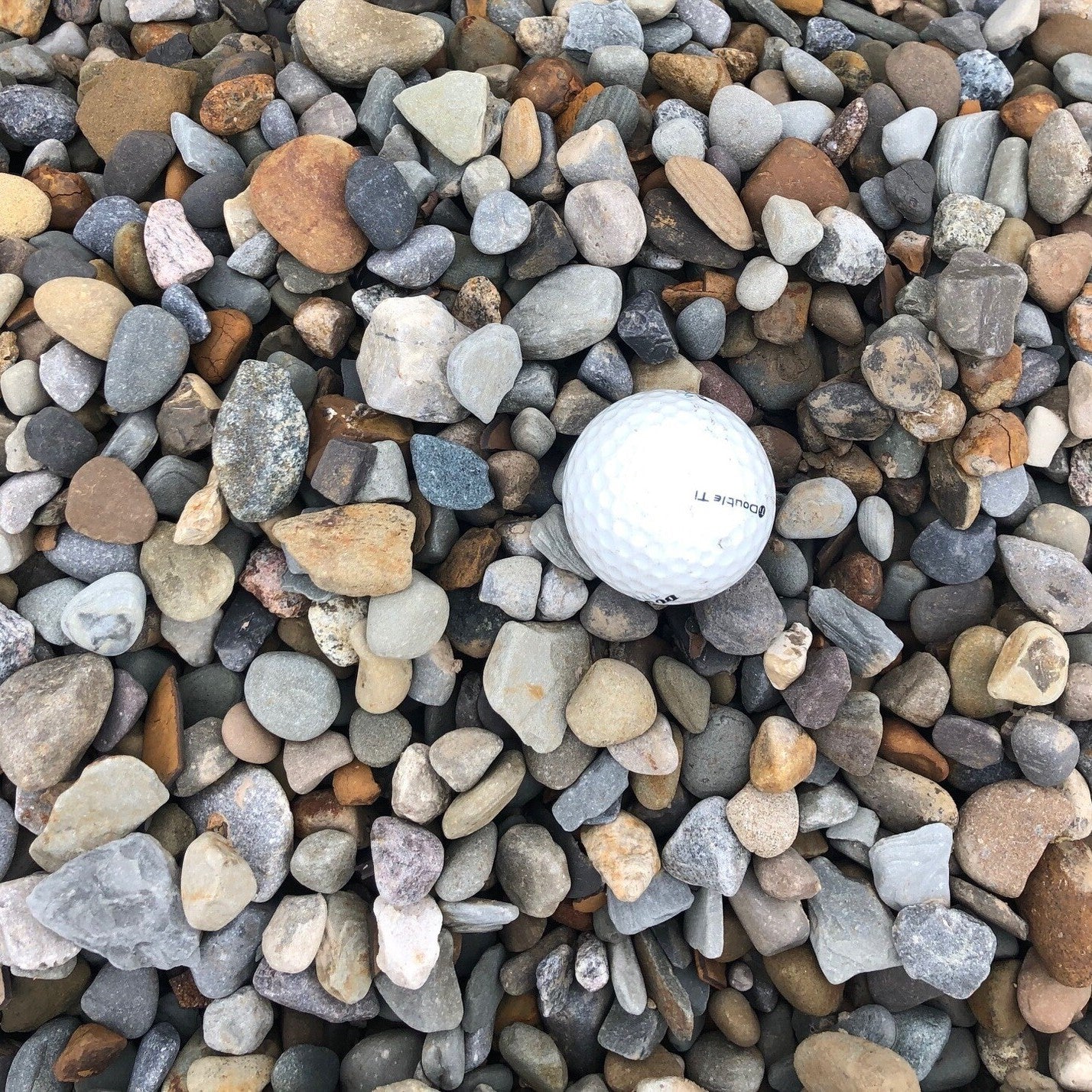
Number 57 crushed stone, angular limestone graded to about three quarters of an inch. The standard driveway, base and drainage gravel, it locks together under traffic and drains fast.
I used Mulch Mound to have 3 cubic yards of garden soil delivered. The process was easy and I love that I didn't have to call anyone. I placed my order online, picked my delivery date, laid out my tarp and the dirt was delivered. My delivery had to be pushed back, but I was ke...
Tell us what you're looking for
Thanks! We received your request.
Something went wrong. Please try again.
How Much Material Do I Need?
Two inches is enough for decorative beds with small gravel, three to four inches for river rock, and six to eight inches of compacted base for driveways and walkway foundations over Farmington Hills clay.
Use our free gravel calculator
What is a Yard?
A yard is approximately 27 cubic feet. As a general guideline, one yard of material can cover an area of about 100-160 square feet at a 2-3 inch depth.
We can't take orders for this right now. Tell us what you need and we'll get back to you.
What do you need?
Thanks! We received your request.
Something went wrong. Please try again.
Hand-picked local yards
4,000+ regional deliveries
Dedicated support
Why order through Mulch Mound
The best local , without the guesswork.
We hand-pick and partner with the best yards in your region, keep only the ones our buyers rate well, and back each load with our guarantee.
Mulch Mound Guarantee
If your isn't the quantity or quality you ordered, we'll make it right.
About this stone
Number 57 crushed stone, angular limestone graded to about three quarters of an inch. The standard driveway, base and drainage gravel, it locks together under traffic and drains fast.
I used Mulch Mound to have 3 cubic yards of garden soil delivered. The process was easy and I love that I didn't have to call anyone. I placed my order online, picked my delivery date, laid out my tarp and the dirt was delivered. My delivery had to be pushed back, but I was ke...
How Much Material Do I Need?
Two inches is enough for decorative beds with small gravel, three to four inches for river rock, and six to eight inches of compacted base for driveways and walkway foundations over Farmington Hills clay.
Use our free gravel calculator
What is a Yard?
A yard is approximately 27 cubic feet. As a general guideline, one yard of material can cover an area of about 100-160 square feet at a 2-3 inch depth.
I used Mulch Mound to have 3 cubic yards of garden soil delivered. The process was easy and I love that I didn't have to call anyone. I placed my o...
Read full review
I used Mulch Mound to have 3 cubic yards of garden soil delivered. The process was easy and I love that I didn't have to call anyone. I placed my order online, picked my delivery date, laid out my tarp and the dirt was delivered. My delivery had to be pushed back, but I was kept informed via text, which was great. So why not 5 stars? The description of garden soil on the website is "A balanced mix of topsoil and organic amendments ready for raised beds, flower gardens, and new planting areas. Good drainage, solid nutrients, easy to work with." What I got was more like fill dirt. It had a lot of gravel, a lot of clay, and random trash mixed in. I didn't test the soil to see if it actually had "amendments" because I already have compost and alpaca manure ready to add, but if I'd known the quality of the dirt was going to be the same as the bagged dirt I bought last year, I probably would have gotten 2 yards of top soil and a yard of leaf compost for better quality, especially since the leaf compost is cheaper. Photo of my mountain of dirt and just some of the trash I found in it.
Measure length by width in feet, then choose depth based on stone size, since larger river rock needs more depth to cover completely. Enter the total square footage and depth to get cubic yards, and remember stone is sold by weight as well as volume. A cubic yard covers roughly 160 square feet at two inches.
Complete Your Outdoor Stone Project
Add commercial grade landscape fabric, steel or aluminum edging to keep stone from migrating into turf, and paver base sand if you are setting a patio or walkway on top.
Always install steel or heavy aluminum edging around a stone bed, not plastic. Farmington Hills freeze and thaw cycles pop plastic edging out of the ground within two winters, and once it lifts, stone spills into the lawn and finds your mower blades. Metal edging driven eight inches into the clay stays put and gives you a clean line for a decade or more.
Mulch Mound Pro Tip
Use woven landscape fabric, not the thin spun bonded rolls sold in big box stores. Under stone the woven product resists puncturing and still lets water pass, which matters when our clay loam is already slow to drain. Overlap seams by six inches and pin every two feet, otherwise spring runoff shifts the fabric and weeds find the gaps by June.
Mulch Mound Pro Tip
For a dry creek bed, vary the stone size instead of using one uniform gravel. Set larger boulders and cobble along the edges and finer washed stone in the channel to mimic natural flow. Farmington Hills yards on gentle clay grades benefit enormously from this, because the bed handles heavy April runoff and still looks intentional during a dry August.
The Unique Landscape of Farmington Hills
Decorative and utility stone solves problems that mulch cannot in Farmington Hills, especially around downspouts and drip lines where our spring rain volume overwhelms organic material. On clay loam that sheds water rather than absorbing it, gravel beds and dry creek beds give runoff somewhere to go instead of pooling against a foundation. Stone also stands up to the freeze and thaw cycling common at 850 feet, where mulch and lighter materials get displaced by heaving and snowmelt. For driveways and walkways, a compacted crushed limestone base is essential here because unstabilized clay pumps and rutts every March. And because stone does not decompose, it is the low maintenance answer for the hot, exposed south facing beds that dry out fast during a typical rain free August week.
Frequently Asked Questions
Click a question to see the answer
Answer
What stone should I put under my downspouts?
Use two to four inch river rock or washed limestone over a filter fabric bed. Farmington Hills roofs shed a lot of water during our spring storms, and smaller gravel simply washes out onto the lawn. Extend the splash bed at least four feet from the foundation and keep the grade running away from the house.
Answer
Will landscape stone stop weeds better than mulch?
Stone lasts longer, but weeds still colonize it once dust, leaves, and silt collect in the voids, which happens fast in tree heavy Farmington Hills neighborhoods. Use a quality woven fabric underneath and plan on blowing debris out each fall after the maples drop. Expect to refresh or rake stone every few years to keep it clean.
Answer
What do I need for a gravel driveway on clay?
Excavate six to eight inches, lay geotextile fabric directly on the clay, then build a compacted base of 21AA crushed limestone with a topcoat of the same. Skipping the fabric is the number one mistake in Farmington Hills, because our clay subgrade pumps up through the stone during spring thaw and the driveway turns to mush.
Answer
Does stone make the soil around my plants too hot?
It can. Light colored limestone reflects heat and raises bed temperatures noticeably on south and west exposures, which is tough on hydrangeas and hostas during a Farmington Hills July. Use stone in beds planted with junipers, sedum, ornamental grasses, and other heat tolerant material, and stick with mulch where you want cooler roots.
Answer
Will limestone change my soil pH?
Slowly, yes. Limestone leaches calcium carbonate and pushes pH upward, and Farmington Hills clay loam already tends to run slightly alkaline. That is a real concern near azaleas, rhododendrons, blueberries, and river birch. Use granite or trap rock instead in those beds, or keep a fabric barrier between the stone and the root zone.
Answer
How much does a yard of stone weigh for delivery?
Most crushed stone and gravel runs about 2,700 pounds per cubic yard, roughly twice the weight of mulch. That matters on Farmington Hills driveways, especially older asphalt that softens in summer heat. Tell us your driveway type and we will split the load or set it on plywood.
Answer
Can I install stone in late fall here?
Yes, stone is one of the few materials you can place right up until the ground freezes, typically late November in Farmington Hills. Just make sure any compaction and base work happens before the ground gets saturated by November rains, because you cannot properly compact a clay subgrade that is holding water.
Answer
Is there a stone yard near Farmington Hills?
Clay loam in Farmington Hills sheds water instead of soaking it up, so spring runoff near downspouts needs a firm crushed stone base to drain toward rather than pool against the foundation. You can skip the trip to a stone yard or any quarry, because Mulch Mound delivers crushed stone by the cubic yard right where you want it.